

- 115.0 x 101.0 cm


The picture follows your choices: , .
Descrizione del reperto
Admire 'Mushroom Picking' by Józef Rapacki (1910). A serene watercolor landscape featuring peasant women & a birch tree in autumn hues. Inspired by Barbizon School, this piece evokes tranquility and Polish rural life.
 Espandi i dettagli
Biografia dell'artista
Scopri Józef Rapacki (1871-1929), pittore polacco celebre per i suoi paesaggi nostalgici e scene della Masovia. Esplora il suo stile realistico, influenzato dalla Scuola di Monaco, e l'arte di propaganda bellica.
Riproduzione a olio fatta a mano
Olio su tela dipinto a mano nelle tue dimensioni e con la tua cornice, realizzato su ordinazione dai nostri artisti. ( Passa alle stampe Passa all'immagine digitale)
More about this painting
 Anteprima in scala reale
 Invia
Invia Condividi
 Dettagli opera
 Guida
Guida

 Scarica
 Simili
 Radiografia
 Slideshow
 Q&A
Q&A Statistiche
Order your painting in four simple steps
Take your time. You can change any answer; the price in your order card follows each choice.
1 Step one of four
Which size would you like?
These sizes keep the proportions of the original painting. The drawing shows your choice on a wall, above a two-metre sofa.
Or give your own measurements
Scegli tra le nostre dimensioni predefinite, che rispettano le proporzioni originali dell'opera d'arte.

Inserisci la larghezza e l'altezza desiderate, per adattarle alla tua cornice o alla tua parete. Trattandosi di un'opera dipinta a mano, in caso di dimensioni con un formato differente, l'artista può estendere leggermente il dipinto oltre i bordi dell'immagine o ritagliare una piccola parte — la scelta spetta a te. Ti invieremo un mockup digitale da approvare prima che la realizzazione abbia inizio. L'immagine mostrata in questa pagina non rappresenta il risultato finale — solo il mockup lo fa.
2 Step two of four
How should it be prepared: rolled, stretched or framed?
The prices below are for the size you chose in step one.
Choose the edges of the stretched canvas
Choose your frame

White €1

Blurside €1

Extended €1

P118B €10

P118H €10

P118W €10

P438Z €10

P508JH €12

P508YH €12

P805H €10

P805Z €10

P919BZ €10

P919G €10

P919XJ €10

P959ZH €10

P968JZ €12

W106C €8

W218G €10

W218JH €8

W218Y €10

W307PJ €10

W316G €10

W316PJ €8

W316Y €10

W398PJ €8

W4111J €10

W500HY €15

W500JH €15

W692G €12

W849H €8

W940BG €15

W953PJ €8

H24-GOLD €30

H24-SILVER €30

H36-GOLD €45

H36-SILVER €45
Con cornice
Moulding: . Overall size with the frame: .
3 Step three of four
Would you like anything changed in the painting?
Most people answer no. Because each painting is made by hand, our artist can also adapt it for you.
After order, ArtsDot.com team will email client for instructions and provide a mockup preview
4 Step four of four
A few finishing options
All of them are optional. The answers already selected cost nothing extra.
Who paints it?
Consegna in tutto il mondo () in 3/4 settimane anziché nelle normali 5 settimane. (2 Novembre). Nessun compromesso sulla qualità.
A nameplate, as in a museum?
Dettagli della targhetta in bronzo inciso
This elegant plaque features the artist's name and the title of the artwork, finely engraved for a timeless presentation.
It is made from bronze with a refined, elegant finish. The text is precisely laser-engraved for a sharp and permanent result. Measuring 9x2 cm, the plaque is compact yet easy to read. It's built to be durable and scratch-resistant, offering a professional, museum-quality look. Mounting is simple thanks to the included adhesive backing.
Dettagli della targhetta in acrilico trasparente
The plaque includes essential engraved details such as the artist's name, the title of the artwork, the date it was created, the type of media used-like oil on canvas or watercolor-a brief description of the piece, and a QR code that links to the complete artwork information.
It is crafted from clear acrylic, offering a sleek, modern appearance. The text is UV-engraved in black to ensure strong visual contrast. With a size of 10x15 cm, it ensures optimal readability. It comes equipped with two metal hooks for secure wall mounting. The plaque is designed to be weather-resistant, making it suitable for various environments, and it includes interactive features that work seamlessly with smartphone scanning.
Dettagli della targhetta in acrilico nero
This elegant plaque includes engraved information such as the artist's name, the title of the artwork, the date it was created, the type of media used (like oil on canvas or watercolor), a short description of the artwork, and a QR code for quick access to more information.
The plaque itself is made from refined black acrylic with a premium finish. The text is laser-engraved in white for high contrast and readability. Its size is 10x15 cm, designed to be easy to read. It comes with two metal hooks for professional mounting. The design is sleek and fits any interior style. It is also weather-resistant and durable, with built-in digital integration for mobile compatibility.
A protective varnish?
When do you need it?
✓ Check and order
Your painting, as you ordered it

Mushroom Picking
Tecnica di riproduzione
Dimensioni riproduzione
-

Artisti di alto livello
Maggiore dettaglio, finezza e tempi di produzione dedicati
-

Cornice per riproduzione
-
-
Per opere d'arte o riproduzioni con un lato superiore a 105 cm (circa 41 pollici), la cornice verrà spedita in forma di kit smontato. Questo metodo garantisce una consegna sicura e previene danni durante il trasporto.
Montaggio professionale richiesto - non è un prodotto fai-da-te.
Il kit deve essere assemblato e la tela tesa da un esperto cornice professionista, utilizzando colla per legno (non inclusa), una pinza per tendere la tela e morsetti per mantenere i listelli in squadra durante l'asciugatura della colla. Un montaggio errato o una tensione non uniforme della tela possono danneggiare permanentemente l'opera d'arte e non sono coperti dalla nostra garanzia.
 Per opere d'arte o riproduzioni con un lato superiore a 105 cm (circa 41 pollici), la cornice verrà spedita in forma di kit smontato. Questo metodo garantisce una consegna sicura e previene danni durante il trasporto.
Tutte le barre in legno massello sono incluse, tagliate con precisione alle dimensioni corrette.
Da assemblare con le viti fornite e con la colla per legno per gli incastri degli angoli, che non è inclusa e dovrà essere reperita dal vostro corniceio.
Sono necessari strumenti professionali non inclusi: una pinza tendicanvas (tenditore) e dei morsetti per mantenere i listelli in squadra durante l'asciugatura della colla.
Importante:
Gli incastri d'angolo richiedono colla per legno, i listelli devono essere mantenuti in posizione con dei morsetti finché la colla non è completamente asciutta, e il tensionamento della tela sulla cornice assemblata richiede una pinza per tendere la tela. Nessuno di questi strumenti è incluso nel kit. Si prega di consultare un incorniciatore professionista esperto prima di ordinare questa misura.

Didascalia
-
-

Vernice protettiva
Vernice lucida (esalta i colori, protegge da luce e umidità)
-

Personalizza la mia opera
Esempi di personalizzazione: sostituire il volto con una foto del cliente; aggiungere un animale domestico (ad esempio, sostituire un gatto con un cane); inserire un messaggio nascosto nello sfondo; cambiare il paesaggio o gli elementi dello sfondo.
-

Consegna rapida
Consegna in tutto il mondo () in 3/4 settimane anziché nelle normali 5 settimane. (2 Novembre). Nessun compromesso sulla qualità.
-
Spedizione espressa
Spedizione in tutto il mondo () in 5 settimane. (9 Novembre).
Spedizione inclusa
Prezzo finale calcolato
€ 256
L'opzione vetro è disponibile solo per dimensioni inferiori a 110 cm
Included with every order
- Spedizione espressa gratuita in tutto il mondo
- Tela in lino di alta qualità
- Assicurazione completa sulla spedizione
- Garanzia di rimborso dei dazi doganali
- Garanzia di fedeltà cromatica assoluta
- Politica di reso entro 100 giorni (solo per difetti di fabbricazione)
- Garanzia di rimborso al 100%
- Offerta per acquisti multipli


A Woodland Reverie: Józef Rapacki’s “Mushroom Picking”
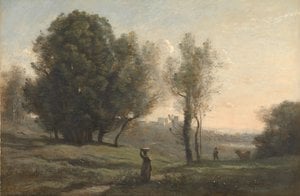
“Mushroom Picking,” painted in 1910 by the Polish landscape artist Józef Rapacki, isn't merely a depiction of a rural scene; it’s a carefully constructed evocation of a specific time and place – the heartland of Poland, steeped in nostalgia and a profound connection to the natural world. The painting captures a fleeting moment within a late autumn forest, a tableau of peasant women diligently gathering mushrooms amidst a landscape that breathes with both quiet beauty and subtle melancholy. Rapacki’s work stands as a testament to the Barbizon School's influence, blending elements of French realism with a distinctly Polish sensibility, creating an atmosphere that is both familiar and profoundly evocative.
The Scene Unfolds: Composition and Detail
At the painting’s core resides a venerable birch tree, its branches reaching skyward like supplicating arms. Positioned in the foreground, it anchors the composition while simultaneously drawing the viewer into the scene. Flanking this central figure are two women, their forms rendered with a veristic approach – a deliberate choice that emphasizes their humanity and connection to the land. They aren’t idealized figures; instead, they possess a grounded presence, actively engaged in their task, their clothing suggesting a life lived close to the rhythms of nature. Behind them, a wall of young forest—a grove of pines—provides depth and a sense of enclosure, while rolling hills fade into a hazy, clouded sky, hinting at an approaching winter. The careful placement of each element – the scattered mushrooms, the worn path, the distant trees – contributes to a meticulously crafted landscape that feels both intimate and expansive.
Brushstrokes and Palette: Technique and Style
Rapacki’s technique is characterized by a masterful use of watercolor—a medium perfectly suited to capturing the diffused light and atmospheric qualities of the Polish countryside. The brushwork is loose and expressive, prioritizing mood over precise detail. Layers of translucent washes build up color gradually, creating a sense of depth and luminosity. The dominant palette consists of rusty browns – ochres, umbers, and siennas – that imbue the scene with a warm, autumnal glow. These earthy tones are skillfully contrasted with the greens of the foliage and the muted blues of the sky, further enhancing the painting’s visual richness. The artist's attention to texture is remarkable; one can almost feel the dampness of the meadow grass beneath their feet and the rough bark of the birch tree.
Symbolism and Context: A Polish Pastoral
“Mushroom Picking” transcends a simple landscape depiction, carrying layers of symbolic meaning. The act of mushroom gathering itself represents a connection to tradition, sustenance, and the cyclical rhythms of nature. The presence of the peasant women speaks to the enduring role of rural communities in Polish society. Furthermore, the painting’s stylistic choices—the Barbizon School influence, the veristic approach—reflect a broader movement within Polish art that sought to celebrate the nation's cultural heritage and landscape. Rapacki’s work can be viewed as a nostalgic yearning for a simpler time, a romanticized vision of rural Poland rooted in folklore and tradition. The painting was created during a period of significant social and political change in Poland, and it offers a poignant glimpse into a world on the cusp of modernity.
Emotional Resonance: A Quiet Moment of Reflection
Ultimately, “Mushroom Picking” is a profoundly moving work that invites contemplation. It’s not a dramatic or overtly emotional scene; rather, it possesses a quiet dignity and a sense of serene beauty. The painting evokes feelings of tranquility, solitude, and a deep appreciation for the natural world. It's a reminder to slow down, observe, and find solace in the simple pleasures of life—a timeless message rendered with exquisite skill and sensitivity by Józef Rapacki.
Domande e risposte
A quale corrente artistica appartiene "Mushroom Picking" di Józef Rapacki?
Il movimento associato a "Mushroom Picking" di Józef Rapacki è Barbizon School. Questa classificazione colloca l'opera tra artisti e opere d'arte correlati.
Quale tonalità dominante caratterizza "Mushroom Picking" di Józef Rapacki?
Una tonalità Ochre to Sepia attraversa l'opera "Mushroom Picking" di Józef Rapacki.
Quali sono i diritti di riproduzione per "Mushroom Picking" presso il Parlamento della Polonia?
"Mushroom Picking" di Józef Rapacki, conservata presso Parlamento della Polonia, è di pubblico dominio - il copyright è scaduto. Questo stato determina se sia possibile realizzare riproduzioni dell'immagine.
Opere simili




Józef Rapacki
1871 - 1929, Polonia
Biografia dell'artista
Una visione nostalgica della Polonia: la vita e l'arte di Józef Rapacki
Józef Rapacki, nato a Varsavia nel 1871, era un pittore profondamente sintonizzato con l'anima della campagna polacca. La sua vita si è svolta sulla scia di paesaggi politici in mutamento e di nascenti movimenti artistici, eppure la sua opera è rimasta saldamente radicata in una rappresentazione nostalgica della Masovia – la regione storica che divenne sia la sua musa che la sua eredità duratura. Proveniente da una famiglia teatrale – con un padre attore, scrittore e traduttore, e fratelli che hanno seguito percorsi simili – Rapacki sembrava inizialmente destinato al palcoscenico. Tuttavia, all'età di quattordici anni, scoprì la sua vera vocazione tra le linee e i lavaggi del disegno, iscrivendosi alle lezioni tenute da Wojciech Gerson, una figura prominente del Realismo polacco. Questa precoce mentorship gli trasmise non solo abilità tecnica, ma anche un profondo apprezzamento per l'osservazione e l'interpretazione del mondo naturale. I suoi successivi studi presso l'Accademia di Belle Arti di Cracovia, sotto la guida di Izydor Jabłoński, Florian Cynk e Feliks Szynalewski, hanno ulteriormente affinato le sue capacità, preparandolo per un viaggio che avrebbe infine definito la sua identità artistica.Dalla Baviera alla Masovia: sviluppo artistico e influenze
Lo sviluppo artistico di Rapacki fu significativamente plasmato dal suo periodo a Monaco, dove studiò con Conrad Fehr a partire dal 1889. L'esposizione alla "Scuola di Monaco" ampliò la sua prospettiva, influenzando il suo approccio alla composizione e al colore. Tuttavia, fu un viaggio di studio in Italia intorno al 1898 a incendiare veramente la sua passione per la pittura di paesaggio. Tornò in Polonia intriso del desiderio di catturare l'unicità della bellezza della sua patria. Iniziando con paesaggi, vedute urbane e scene di genere, Rapacki si concentrò gradualmente sulla campagna masoviana, attratto dalle sue vaste pianure, dai boschi sparsi e dalla umile vita rurale. Il suo lavoro iniziò ad apparire in importanti periodici di Varsavia come il Tygodnik Ilustrowany, e illustrò opere di Ignacy Krasicki, dimostrando la sua versatilità di artista. Espose all'Exposition Universelle del 1900, ottenendo un riconoscimento internazionale per il suo talento. Questo periodo lo vide assorbire influenze da varie fonti, filtrandole sempre attraverso una sensibilità distintamente polacca. L'enfasi della Scuola di Barbizon sull'osservazione diretta e sulla luce naturale sarebbe diventata più evidente nel suo lavoro.Paesaggi del cuore: stile e soggetti
I dipinti di Józef Rapacki sono caratterizzati da un realismo silenzioso, un'atmosfera luminosa e un profondo senso di tranquillità. Egli catturò magistralmente le sottili sfumature di luce e ombra, infondendo i suoi paesaggi una qualità quasi eterea. La sua tavolozza prediligeva toni smorzati – verdi morbidi, marroni, grigi e ocra – che riflettevano i colori naturali della campagna masoviana. Sebbene occasionalmente dipingesse figure all'interno delle sue scene – donne contadine che raccoglievano funghi o lavoravano nei campi – esse erano raramente il punto focale; al contrario, servivano ad accrescere il senso del luogo ed evocare un sentimento di armonia tra l'umanità e la natura. Divenne noto come "il pittore delle betulle e delle eriche lilla", soggetti che ricorrevano frequentemente nella sua opera. Le sue composizioni presentano spesso ampie vedute, trascinando lo spettatore nella profondità del paesaggio e creando un senso di spaziosità. Ranuncoli, dipinto nel 1927, esemplifica questo stile: una vibrante scena di palude resa con pennellate delicate e immersa in una luce dorata. Allo stesso modo, La raccolta dei funghi (1910) mostra la sua capacità di catturare la serenità della vita rurale, ispirata all'approccio della Scuola di Barbizon nel ritrarre scene quotidiane.Riflessioni belliche e un'eredità duratura
La vita di Rapacki fu segnata da difficoltà personali; una grave malattia polmonare lo costrinse a trasferirsi da Varsavia a Cracovia e infine a Olszanka, dove trovò sollievo nei paesaggi che sarebbero diventati il suo soggetto distintivo. L'inizio della Prima Guerra Mondiale portò nuove sfide e responsabilità. Contribuì con numerosi disegni alla stampa di Varsavia, tra cui la potente serie Prusak w Polsce ("Il prussiano in Polonia"), che servì come propaganda durante le insurrezione della Slesia. Quest'opera dimostra la volontà di Rapacki di usare la sua arte per uno scopo politico, riflettendo il suo profondo patriottismo e la preoccupazione per il destino della Polonia. Morì a Olszanka nel 1929, lasciando dietro di sé una ricca eredità artistica che continua a risuonare negli spettatori di oggi. I suoi dipinti si possono trovare in importanti musei come il Muzeum w Warszawie e il Museum Pomorskie (Danzica), garantendo il suo posto nel canone della storia dell'arte polacca. L'opera di Józef Rapacki offre molto più di semplici scene pittoresche; essa fornisce uno sguardo toccante su un modo di vita che sta svanendo, un tributo nostalgico alla bellezza e allo spirito della Masovia, e una testimonianza del potere duraturo della pittura di paesaggio.

Articoli correlati

Ephemeral Echoes: Exploring the Aesthetic & Historical Significance of Vintage Watercolor Painting
Explore the captivating world of vintage watercolor painting! Discover its rich history, techniques, influential artists & collecting tips. Expert insights for enthusiasts and collectors at ArtsDot.
Ephemeral Visions: Exploring the Artistic Legacy & Nuances of Watercolor Painting
Explore the captivating world of watercolor painting! Discover its rich history, essential techniques, influential artists & collecting tips from art experts. A comprehensive guide for enthusiasts.

Ephemeral Visions: Exploring the Artistic Legacy & Contemporary Practice of Watercolor Painting
Explore the captivating world of watercolor painting! Discover its rich history, essential techniques, influential artists & collecting tips. A comprehensive guide for art enthusiasts from ArtsDot.