


 Anteprima in scala reale
 Condividi
 Condividi
 Dettagli
 Guida stampabile

 Scarica
 Articoli simili
 Radiografia
 Slideshow
 Statistiche
Self-Portrait
 Oil On Canvas
- WallArt
- Baroque
 1789
1789 70.0 x 60.0 cm
 Galleria Nazionale di Scozia
 Leggi tutto
Riproduzione a olio fatta a mano
Olio su tela dipinto a mano nelle tue dimensioni e con la tua cornice, realizzato su ordinazione dai nostri artisti. ( Passa alle stampe Passa all'immagine digitale)




P118B €10

P118H €10

P118W €10

P438Z €10

P508JH €12

P508YH €12

P805H €10

P805Z €10

P919BZ €10

P919G €10

P919XJ €10

P959ZH €10

P968JZ €12

W106C €8

W218G €10

W218JH €8

W218Y €10

W307PJ €10

W316G €10

W316PJ €8

W316Y €10

W398PJ €8

W4111J €10

W500HY €15

W500JH €15

W692G €12

W849H €8

W940BG €15

W953PJ €8




Scegli tra le nostre dimensioni predefinite, che rispettano le proporzioni originali dell'opera d'arte.

È possibile inserire dimensioni personalizzate per adattare l'opera a una cornice o a uno spazio specifico. Se la dimensione selezionata non corrisponde alle proporzioni dell'immagine originale, provvederemo a ritagliare l'opera o a estendere il dipinto con elementi aggiuntivi dipinti a mano. Un mockup digitale ti sarà inviato per approvazione prima dell'inizio della produzione.
Si prega di notare che l'anteprima a schermo non riflette il ritaglio o l'estensione effettivi. Solo il mockup mostrerà accuratamente la composizione finale.
Sebbene siano disponibili dimensioni personalizzate, consigliamo di selezionare una dimensione dall'elenco predefinito per preservare le proporzioni originali.
Dopo l'ordine, il team di ArtsDot.com contatterà il cliente via e-mail per ricevere le istruzioni e fornirà un'anteprima del mockup
Consegna in tutto il mondo () in 3/4 settimane anziché nelle normali 5 settimane. (28 Settembre). Nessun compromesso sulla qualità.

Spedizione espressa gratuita in tutto il mondo

Tela in lino di alta qualità

Assicurazione completa sulla spedizione

Garanzia di rimborso dei dazi doganali

Garanzia di perfetta fedeltà cromatica

Politica di reso entro 100 giorni (solo per difetti di fabbricazione)

Garanzia di rimborso al 100%

Sconto per acquisti multipli
 L'opzione vetro è disponibile solo per dimensioni inferiori a 110 cm

Self-Portrait
Tecnica di riproduzione
Dimensioni della riproduzione
-


Prezzo totale
€ 227
The Enigmatic Gaze: Unveiling John Opie’s Self-Portrait
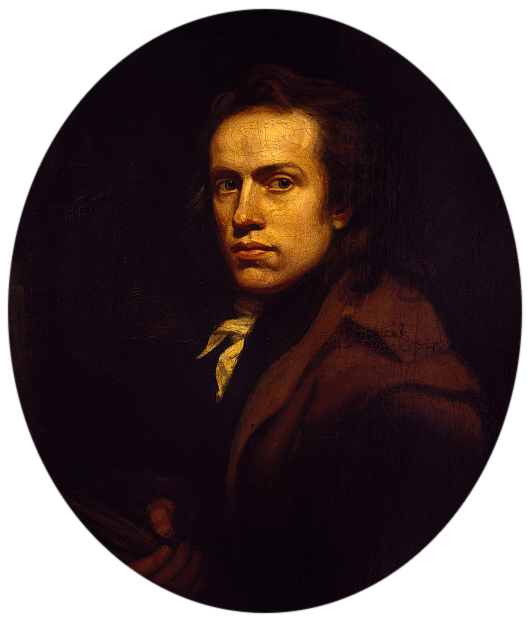
John Opie's 1789 “Self-Portrait” isn’t merely a likeness; it’s a carefully constructed window into the soul of a burgeoning artistic talent. Painted in oil on canvas, this oval composition immediately commands attention with its dramatic chiaroscuro – a masterful manipulation of light and shadow that plunges the viewer into an atmosphere of profound introspection. The portrait depicts Opie himself, not as a triumphant figure, but as a contemplative man, his gaze fixed directly upon the observer, inviting us to share in his thoughts and emotions. The choice of this particular pose—a slight turn of the head, a subtle furrowing of the brow—suggests a mind wrestling with ideas, a quiet intensity that belies the young artist’s burgeoning fame.
Baroque Drama and Cornish Roots
Opie’s style is deeply rooted in the Baroque tradition, a movement known for its theatricality, emotional intensity, and dramatic use of light. The influence of Caravaggio and Rembrandt—artists who were masters of chiaroscuro—is readily apparent in Opie's work. The stark contrast between the illuminated areas of the face and clothing and the deep shadows that envelop the background creates a sense of depth and volume, drawing our attention to the central figure. This technique wasn’t simply aesthetic; it was a deliberate choice to convey a powerful emotional state – here, a blend of seriousness, intelligence, and perhaps even melancholy. Born in Trevellas, Cornwall, Opie's artistic sensibility was profoundly shaped by his Cornish heritage, evident in the ruggedness of his features and the earthy tones that dominate the palette.
A Study in Form and Texture
Beyond the dramatic lighting, a closer examination reveals Opie’s meticulous attention to detail. The artist skillfully employs lines to define the contours of the face, clothing, and hair, creating a sense of solidity and form. The layering of paint—a technique known as impasto—adds texture to the surface, particularly in the rendering of the fabric draped over his shoulders and the delicate details of his hands. Note the subtle variations in color and tone that suggest the play of light on different surfaces. This careful observation and execution demonstrate Opie’s commitment to realism, a hallmark of his style.
Symbolism and the Portraiture of the Mind
The portrait transcends a simple likeness; it's a symbolic representation of the artist’s inner world. The direct gaze invites engagement, suggesting that Opie is not simply presenting himself but offering an invitation to share in his thoughts. The serious expression—a hallmark of many self-portraits from this period—hints at intelligence, introspection, and perhaps even a touch of melancholy. Considering the historical context – the late 18th century was a time of intellectual ferment and social change – Opie’s portrait can be interpreted as an exploration of identity in a rapidly evolving world. The choice to depict himself alone reinforces this sense of internal reflection, suggesting that the artist is grappling with profound questions about his place in society and his role as a creative force.
Further Exploration
- From Portrait to Icon: Exploring the Aesthetic and Digital Transformation of Self-Representation within Classical Art Traditions: Explore the fascinating evolution of portraiture from classical masterpieces to digital art! Discover symbolism, techniques & societal impact. Expert insights for collectors & enthusiasts at ArtsDot.
- John Opie - Wikipedia: A comprehensive overview of the artist’s life and work, including his early career, London years, and artistic influences.
- Self-Portrait by OPIE, John: A detailed examination of the painting’s composition, technique, and historical significance, with high-resolution images.
Opere correlate


Biografia dell'artista
John Opie (1761–1807): The Cornish Wonder and His Enduring Legacy
John Opie, born Mithian, nr. St Agnes, Cornwall in 1761, emerged as one of the most remarkable artistic figures of his generation—a testament to talent nurtured against considerable odds. His story is a compelling narrative of raw ability elevated by circumstance, rising from a carpenter’s son to become a celebrated portraitist and history painter, a Royal Academician, and an influential voice within the British art world. Opie's early life was characterized by an astonishing aptitude for both drawing and mathematics—a duality that perhaps informed his meticulous approach to composition and form. Even as a young boy, he demonstrated an independent spirit, establishing an evening school to teach reading, writing, and arithmetic to local children while simultaneously mastering Euclid’s geometry. This thirst for knowledge, coupled with his artistic inclination, was initially met with resistance from his father, who insisted on an apprenticeship in carpentry—a pragmatic decision that nevertheless acknowledged the burgeoning potential within his son's creative spirit.Mentorship, London, and Royal Patronage
Fate intervened decisively when Dr. John Wolcot, a physician and satirist whose discerning eye recognized Opie’s extraordinary talent, entered into his life as a mentor. Wolcot—himself an amateur artist—recognized Opie’s innate gifts and championed him relentlessly, securing his release from the carpentry apprenticeship and transporting him to London where he established himself as a portrait painter with considerable success. Wolcot skillfully presented Opie as a self-taught prodigy (“The Cornish Wonder”), capturing the imagination of the London art scene and drawing comparisons to masters like Caravaggio and Velázquez—a judgment delivered by none other than Sir Joshua Reynolds, who lauded Opie’s mastery of chiaroscuro without ever having witnessed Rembrandt’s work. This initial endorsement propelled Opie's career forward with breathtaking speed. Commissions poured in from wealthy patrons eager to adorn their homes with portraits depicting themselves and their families—individuals whose likenesses Opie captured with remarkable sensitivity and accuracy. His residence on Castle Street became a hub of fashionable society, attracting artists, writers, and intellectuals alike—a crucible where Opie honed his craft and cultivated connections that would prove invaluable throughout his artistic life.A Painter's Vision: From Cornish Rustic Scenes to Historical Grandeur
Opie’s artistic vision extended far beyond the confines of portraiture; he possessed an ardent desire to engage with grand historical narratives—a ambition that led him to explore history painting and ultimately culminated in monumental canvases like *The Assassination of James I* (1786) and *The Murder of Rizzio* (1787). The latter work, particularly, garnered immediate acclaim and propelled Opie into the spotlight as a leading figure within the Royal Academy—where he was elected an Associate in 1790 and full member in 1805. These historical paintings demonstrated a profound understanding of dramatic lighting—a technique heavily influenced by Rembrandt—and a commitment to conveying emotional intensity with breathtaking realism. Opie’s meticulous attention to detail, combined with his masterful command of composition, cemented his reputation as one of Britain's foremost painters and established him as an artist capable of capturing not only physical likeness but also the psychological complexities of his subjects.A Legacy Forged in Light and Shadow
Opie’s later life was marked by both professional triumph and personal sorrow—his first marriage dissolving in 1796 amidst considerable heartache. However, he found solace and companionship with Amelia Alderson, a writer and abolitionist whom he married in 1798—a union that fostered mutual intellectual stimulation and provided him with unwavering support. Opie’s dedication to his craft continued unabated until his untimely death in April 1807 at the age of 46—leaving behind an astonishing oeuvre comprising over 500 portraits and 250 other paintings—a testament to a lifetime devoted to artistic excellence. His influence extended beyond his own creations; he championed the establishment of a national gallery—a visionary concept that would eventually materialize in London—and offered astute commentary on the evolving landscape of British art, shaping perceptions of artistic merit and advocating for the importance of visual culture. John Opie’s enduring legacy resides not merely in the beauty of his paintings but also in his unwavering belief in the transformative power of art—a conviction that continues to inspire artists and scholars alike.
John Opie
1761 - 1807 , Regno Unito
Informazioni rapide
- Artistic Movement Or Style: Historical & Portraiture
- Artists Who Influenced This Artist:
- Sir Joshua Reynolds
- Dr. John Wolcot (Peter Pindar)
- Date Of Birth: 1761
- Date Of Death: 1807
- Full Name: John Opie
- Nationality: British
- Notable Artworks: ['Shakespeare Gallery works']
- Place Of Birth: Trevellas, UK
Articoli correlati

John Singer Sargent: I 25 Capolavori Immortali per Arredare con Stile
Esplora i 25 capolavori di John Singer Sargent, pittore americano simbolo dell'Impressionismo e del Gilded Age. Ritratti iconici, acquerelli luminosi e storie affascinanti. Trova la tua opera d'arte ideale su ArtsDot.com!

John Constable: I 25 Capolavori che Celebrano la Bellezza della Campagna Inglese
Esplora i 25 capolavori di John Constable, il maestro del Romanticismo inglese. Paesaggi suggestivi, luce naturale e colori vibranti ti aspettano. Acquista riproduzioni d'arte di alta qualità su ArtsDot.com e porta la bellezza della campagna inglese nella tua casa.

The Enduring Legacy of Oil on Canvas: Technique, History & Aesthetic Impact
Explore the rich history & techniques of oil painting – from Renaissance masters to Impressionism. Discover pigments, layering methods, and why this timeless medium endures. Expert insights for artists & art enthusiasts.

L'Eredità Duratura della Pittura a Olio: Tecnica, Storia e Pratica Contemporanea
Esplora la storia affascinante e le tecniche della pittura a olio. Scopri come i maestri hanno creato capolavori senza tempo e come questa arte vive oggi. : riproduzioni di alta qualità e consulenza esperta.

Oil on Canvas: A Historical & Technical Exploration of a Timeless Artistic Medium
Explore the rich history & enduring techniques of oil painting on canvas. Discover the science behind its longevity, conservation practices, and contemporary relevance. Expert insights for art enthusiasts.
