


 Invia
Invia Condividi
 Dettagli opera

 Scarica immagine
 Simili
 Slideshow
Madame du Barry


 Espandi i dettagli
Giclée / Stampe d'arte
Stampa giclée o su tela di qualità museale, con produzione rapida e diverse opzioni di finitura. ( Acquista il dipinto realizzato a mano Acquista immagine)




































Scegli tra le nostre dimensioni predefinite, che rispettano le proporzioni originali dell'opera d'arte.

È possibile inserire dimensioni personalizzate per adattare l'opera a una cornice o a uno spazio specifico. Se la dimensione selezionata non corrisponde alle proporzioni dell'immagine originale, procederemo al ritaglio dell'opera o all'estensione dell'immagine con un bordo specchiato o a tinta unita. Un mockup digitale ti verrà inviato per approvazione prima dell'inizio della produzione.
Si prega di notare che l'anteprima a schermo non riflette il ritaglio o l'estensione effettivi. Solo il mockup mostrerà accuratamente la composizione finale.
Sebbene siano disponibili dimensioni personalizzate, si raccomanda di selezionare una dimensione dall'elenco predefinito per preservare le proporzioni originali.
Consegna in tutto il mondo () in 2 settimane invece delle normali 4/5 settimane. (25 Agosto)

Spedizione espressa gratuita in tutto il mondo

Tela in lino di alta qualità

Assicurazione completa sulla spedizione

Garanzia di rimborso dei dazi doganali

Garanzia di fedeltà cromatica

Politica di reso entro 60 giorni (solo per difetti di fabbricazione)

Garanzia di rimborso al 100%

Offerta per acquisti multipli
 L'opzione vetro è disponibile solo per dimensioni inferiori a 110 cm

Madame du Barry
Giclée / Stampe d'arte
Dimensioni riproduzione
-


Prezzo totale calcolato
$ 62
Descrizione del pezzo
The Enigmatic Beauty: Jean-Jacques Caffieri’s “Madame du Barry”
Jean-Jacques Caffiéri's 1770 marble bust of Madame du Barry is more than a mere portrait; it’s a carefully constructed tableau vivant, a frozen moment brimming with the opulence and calculated charm of the French court. Carved by the master sculptor himself, this piece captures not just the physical likeness of the famed courtesan but also her aura – a potent blend of allure, power, and subtle melancholy. The sculpture resides within the Hermitage Museum in St. Petersburg, a testament to its enduring artistic merit and historical significance.
Caffiéri’s genius lies not simply in anatomical accuracy, though it is undeniably impressive, but in his ability to imbue stone with a sense of movement and personality. The slight tilt of the head, the delicate curve of the neck, and the suggestion of a playful smile all contribute to an impression of life captured in stillness. The choice of marble itself – cool, luminous, and possessing a remarkable capacity for detail – perfectly complements the subject’s refined beauty and the overall Rococo aesthetic.
A Masterpiece of the Rococo Era
Caffiéri was a pivotal figure in French sculpture during the Rococo period, an era defined by its embrace of naturalism, ornamentation, and playful extravagance. His work exemplifies this style perfectly, moving away from the rigid formality of Neoclassicism towards a more sensual and emotionally expressive approach. The bust is a prime example of the Rococo’s fascination with luxurious materials – gold leaf, silk, lace – all rendered in exquisite detail within the confines of marble. It's a visual feast, mirroring the lavish interiors and decadent court life that defined Louis XV’s reign.
- Technique: Caffiéri masterfully employed the technique of *subtractive sculpture*, carefully removing material to reveal the form beneath. The delicate carving of the lace collar, the intricate folds of the hair, and the subtle modeling of the face demonstrate a remarkable level of skill and precision.
- Materials: Crafted from Carrara marble, renowned for its purity and translucence, the bust showcases the stone’s natural beauty while highlighting Caffiéri's ability to manipulate it with exceptional artistry.
Symbolism and Context
Madame du Barry was a figure of immense fascination during her time – a celebrated courtesan who rose to prominence at the French court, captivating Louis XV with her beauty, wit, and political influence. The sculpture subtly reflects this complex narrative. The garland of roses encircling her head is not merely decorative; it symbolizes both beauty and fleeting pleasure—a fitting emblem for a woman whose life was defined by its ephemeral nature. The pose itself suggests a quiet confidence, a subtle defiance against the constraints imposed upon women in 18th-century society.
Furthermore, the sculpture’s placement within the context of the Comédie Française—a space dedicated to theatrical performance and artistic expression—underscores its connection to the world of entertainment and illusion. Caffiéri's portrait captures not just Madame du Barry’s physical appearance but also her carefully constructed persona, a masterful blend of reality and artifice.
A Timeless Portrait of Elegance
“Madame du Barry” remains a captivating work of art, offering a glimpse into the opulent world of the French court and the enigmatic personality of one of its most celebrated figures. Caffiéri’s masterful execution—his command of technique, his understanding of human psychology, and his ability to capture the essence of his subject—ensures that this sculpture will continue to enthrall viewers for generations to come. It is a testament to the enduring power of art to transcend time and evoke emotion.
Opere simili


Biografia dell'artista
Jean Jacques Caffiéri: A Rococo Sculptor at the Court of Louis XV
Jean Jacques Caffiéri (1678-1755) stands as a pivotal figure in French sculpture during the Rococo period, embodying the opulent aesthetic and masterful craftsmanship that defined the era. Born in Paris to Philippe Caffiéri, a prominent foundryman who established a lineage dedicated to metalworking artistry, Caffiéri’s artistic journey began within a family steeped in tradition—a heritage profoundly shaped by Italian influences. His early training under his father cemented his foundational skills as a fondeur-ciseleur (caster and finisher), granting him access to the prestigious Guilds of Paris that oversaw monumental sculptural projects alongside intricate decorative metalwork. This formative experience instilled in him an unparalleled understanding of technique and material manipulation, qualities that would characterize his entire oeuvre.Early Life & Training
Caffiéri’s upbringing within a family renowned for its artistic prowess ensured he received comprehensive instruction in the art of bronze casting and finishing—skills honed under the watchful eye of Philippe Caffiéri himself. The Caffieri family's dedication to metalworking tradition extended beyond mere craftmanship; it fostered an intellectual curiosity about classical sculpture and design, shaping Caffiéri’s aesthetic sensibilities from a young age. His father imparted invaluable knowledge regarding metallurgical processes and sculptural techniques—skills that would prove instrumental in his subsequent artistic endeavors.Guild Recognition & Initial Commissions
By 1715, Caffiéri achieved maître fondeur-ciseleur status, marking his debut as a sculptor with a commission for the Corporation des Fondeurs-Ciseleurs—a testament to his burgeoning reputation and the esteem held by Parisian artisans. This recognition underscored the importance of Guild affiliation in shaping artistic careers during the eighteenth century, demonstrating Caffiéri’s commitment to upholding established standards of excellence within the sculptural profession. The Corporation's patronage provided him with invaluable opportunities for professional development and enabled him to undertake ambitious projects that showcased his talent and skill.The Caffieri Family’s Legacy: Bronze Sculpture & Decorative Arts
The Caffiéri family's contribution to French sculpture is undeniable, largely attributed to Jacques Caffiéri’s son, Philippe Caffiéri (1714–1777). Together they formed a formidable artistic duo, particularly active in the service of Louis XV. Their workshop in Rue des Canettes produced an astonishing volume of work—primarily gilt-bronze furniture mounts and decorative objects—that adorned residences across Paris and elevated the standards of Rococo craftsmanship. Notably, Caffiéri’s designs for Versailles, Fontainebleau, Marly, Compiegne, and Choisy exemplify the grandeur and elegance synonymous with Louis XV's court. The Château de la Muette retains a remarkable testament to their collaborative spirit—the gilded bronze chimney-piece remains an exemplar of Rococo style, characterized by dynamic movement and graceful ornamentation executed with exceptional skill.- Versailles Projects: Caffiéri’s involvement in the decoration of Versailles solidified his reputation as a sculptor of distinction, contributing significantly to the palace's opulent aesthetic.
- Collaboration with Philippe Caffiéri: The partnership between Jacques and Philippe Caffiéri fostered innovation and elevated the quality of decorative arts during their time.
Royal Patronage & Artistic Achievements
Caffiéri’s dedication to royal service extended beyond architectural embellishments; he undertook numerous commissions for Louis XV, producing portraits and sculptures that captured the spirit of the era. His work gained considerable acclaim during his lifetime, securing him a place among France's most celebrated sculptors. The Wallace Collection houses Caffiéri’s masterpiece—the Royal Commode delivered by Antoine-Robert Gaudreau in 1739 for Louis XV’s bedchamber at Versailles—a stunning example of Rococo design and craftsmanship. Its intricate gilt bronze decorations continue to inspire admiration for their beauty and technical virtuosity.- Wallace Collection Commission: Caffiéri's Royal Commode exemplifies the pinnacle of Rococo artistry, showcasing exceptional skill in metalworking and decorative arts.
- Notable Portraits: Caffiéri’s portraits demonstrate his ability to convey psychological depth and elegance—characteristics that define his artistic legacy.
Influence & Historical Significance
Jean Jacques Caffiéri's influence on subsequent generations of sculptors is considerable, establishing him as a cornerstone of Rococo art history. His meticulous attention to detail, combined with his mastery of bronze casting techniques—inherited from his father—established a tradition that endured for decades after his death in 1755. Caffiéri’s work serves as an enduring symbol of French artistic excellence during the Enlightenment, reflecting the period's fascination with naturalism and refined ornamentation. His legacy continues to inspire artists today, cementing his place among France’s most revered sculptors.
Jean Jacques Caffiéri
1678 - 1755 , Francia
Dati rapidi
- Artistic Movement Or Style: Rococo
- Artists Who Influenced This Artist: ['Philippe Caffieri']
- Date Of Birth: Paris, Francia
- Date Of Death: 1755
- Full Name: Jean Jacques Caffiéri
- Nationality: Francese
- Notable Artworks:
- Royal Commode
- Chimneypiece Decoration
- Portrait of Claude Adrien Helvétius
- Place Of Birth: Parigi
Articoli correlati
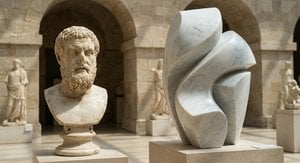
The Enduring Allure of Marble in Art History: From Classical Sculpture to Modern Abstraction
Explore the captivating history of marble sculpture from ancient Greece to modern art. Discover renowned artists like Canova & Michelangelo, carving techniques, and investment insights at ArtsDot.

I 10 Capolavori Bronzei che Hanno Rivoluzionato la Storia dell'Arte | ArtsDot
Esplora i 10 capolavori bronzei che hanno segnato la storia dell'arte! Da Rodin a Michelangelo, scopri le storie e le tecniche dietro queste sculture iconiche. Trova riproduzioni d'arte di alta qualità per decorare la tua casa con ArtsDot.com.

The Enduring Form: Exploring Themes & Techniques in Sculpture Across Historical Periods
Explore the rich history of sculpture from ancient masterpieces to contemporary innovations. Discover key techniques, influential artists & investment potential for discerning art collectors.

The Enduring Form: Sculpture Across History, Technique & Emotional Resonance
Explore the rich history of sculpture with ArtsDot. Discover key techniques, influential artists & investment potential for discerning collectors. Expert insights into valuing and collecting timeless masterpieces.

I 10 Capolavori in Bronzo che Hanno Rivoluzionato la Storia dell'Arte | ArtsDot
Esplora i 10 capolavori in bronzo che hanno segnato la storia dell'arte! Da Michelangelo a Rodin, scopri le storie e le tecniche dietro queste statue iconiche. Trova riproduzioni artistiche di alta qualità per decorare casa tua con ArtsDot.com.

