


 Anteprima in scala reale
 Condividi
 Condividi
 Dettagli
 Guida stampabile

 Scarica
 Articoli simili
 Radiografia
 Slideshow
 Statistiche
Pattern
 Acrilico su tela
- Opere da parete
- Abstract Expressionism
 1945
1945 57.0 x 39.0 cm
 Leggi tutto
Giclée / Stampe d'arte
Stampa giclée o su tela di qualità museale, con produzione rapida e diverse opzioni di finitura. ( Ordina la riproduzione dipinta a mano Passa all'immagine digitale)




P118B €10

P118H €10

P118W €10

P438Z €10

P508JH €12

P508YH €12

P805H €10

P805Z €10

P919BZ €10

P919G €10

P919XJ €10

P959ZH €10

P968JZ €12

W106C €8

W218G €10

W218JH €8

W218Y €10

W307PJ €10

W316G €10

W316PJ €8

W316Y €10

W398PJ €8

W4111J €10

W500HY €15

W500JH €15

W692G €12

W849H €8

W940BG €15

W953PJ €8




Scegli tra le nostre dimensioni predefinite, che rispettano le proporzioni originali dell'opera d'arte.

Inserisci la larghezza e l'altezza desiderate, per adattarle alla tua cornice o alla tua parete. Una stampa può essere solo ritagliata, mai resa più grande dell'immagine originale; pertanto, un formato con una forma differente comporterà la perdita di una parte dell'opera. Ti invieremo un mockup digitale da approvare prima di procedere con la stampa. L'immagine mostrata in questa pagina non rappresenta il ritaglio reale — solo il mockup lo mostra.
Consegna in tutto il mondo () in 2 settimane invece delle normali 4/5 settimane. (22 Ottobre)

Spedizione espressa gratuita in tutto il mondo

Tela in lino di alta qualità

Assicurazione completa sulla spedizione

Garanzia di rimborso dei dazi doganali

Garanzia di perfetta fedeltà cromatica

Politica di reso entro 100 giorni (solo per difetti di fabbricazione)

Garanzia di rimborso al 100%

Sconto per acquisti multipli
 L'opzione vetro è disponibile solo per dimensioni inferiori a 110 cm

Pattern
Giclée / Stampe d'arte
Dimensioni della riproduzione
-


Prezzo totale
€ 54
Pattern – Un Intrigante Abisso di Colori e Texture
“Pattern,” realizzata nel 1945 da Jackson Pollock nell’ambito del movimento Abstract Expressionismo, rappresenta un vero e proprio punto di svolta nella storia dell'arte americana del dopoguerra. Questo dipinto affascina per la sua semplicità apparente ma nasconde una profondissima complessità stilistica e concettuale che invita lo spettatore a una riflessione continua.
- Artista: Paul Jackson Pollock (1912-1956)
- Data di Creazione: 1945
- Dimensioni: 57 x 39 cm
- Tecnica: Gouache e altri materiali applicati con la tecnica del dripping (sgocciolamento).
La composizione è dominata da una coppia di figure che interagiscono in maniera enigmatica, immerse in un vortice di linee e colori vibranti. Questo stile distintivo, caratteristico dell'Abstract Expressionismo, abbandona ogni riferimento alla figurazione tradizionale per concentrarsi sull’espressione emotiva pura attraverso il gesto artistico.
Il dripping, sviluppato da Pollock nel suo laboratorio personale a Soho, New York, è una tecnica innovativa che consiste nell'applicazione del colore sulla tela tramite gocce e spruzzi controllati. Questo metodo permette all'artista di creare superfici materiche dalle quali emergono linee sottili e irregolari, dando vita a un effetto dinamico che ricorda il movimento delle onde o dei vortici.
Il colore utilizzato è una tavolozza audace composta da tonalità rosso fuoco, giallo intenso e blu profondo, creando un contrasto sorprendente che amplifica l’impatto visivo dell'opera. Questi colori evocano emozioni forti come passione, energia e inquietudine, invitando lo spettatore a lasciarsi trasportare dall'atmosfera del dipinto.
“Pattern” può essere interpretata come una rappresentazione simbolica della condizione umana contemporanea, caratterizzata dalla ricerca di equilibrio tra ordine e caos. Il disegno ripetitivo delle linee e delle forme contribuisce a creare un senso di ritmo e movimento che riflette la complessità dell'esperienza esistenziale.
- Stile: Abstract Expressionismo
- Influenza Artistica: Thomas Hart Benton (Regionalismo)
- Materiali Utilizzati: Gouache, altri materiali applicati con tecnica del dripping
- Emozioni Evocate: Passione, Energia, Inquietudine
Questo dipinto rappresenta un vero gioiello dell'arte moderna e un esempio perfetto della capacità dell’artista di comunicare emozioni profonde attraverso forme semplici ma ricche di significato. È una scelta ideale per chi cerca opere d'arte che siano allo stesso tempo stimolanti intellettualmente ed emozionalmente.
Domande e risposte
Posso usare la realtà aumentata per vedere "Pattern" di Jackson Pollock nella mia stanza?
Puoi visualizzare "Pattern" di Jackson Pollock sulla tua parete grazie alla pagina Anteprima AR dell'opera, utilizzando la realtà aumentata su un dispositivo compatibile.
Cosa rappresenta "Pattern" e quale atmosfera trasmette?
"Pattern" mostra drip painting, geometric pattern, color field, texture, composition, dynamic form, symbolism, e l'atmosfera che ne deriva è Sereno.
In quale movimento e in quale epoca si colloca "Pattern" di Jackson Pollock?
"Pattern" di Jackson Pollock si inserisce nel movimento Abstract Expressionism, all'interno dell'epoca Età Moderna del suo autore.
Opere correlate


Biografia dell'artista
Early Life and the Seeds of Innovation
Paul Jackson Pollock, born in Cody, Wyoming, in 1912, was a restless spirit from the outset. His early life was marked by frequent relocation as his father pursued work as a land surveyor across the vast landscapes of the American West. This itinerant existence instilled in young Pollock a deep connection to the natural world and an exposure to diverse cultures, particularly through encounters with Native American art during those surveying trips – impressions that would subtly permeate his artistic vision later in life.
Pollock’s formal artistic training began at the Manual Arts High School in Los Angeles, followed by studies at the Art Students League of New York under the tutelage of Thomas Hart Benton. Benton, a prominent figure in the Regionalist movement, emphasized rhythmic composition and narrative themes rooted in American life. While Pollock initially absorbed these lessons, his inherent inclination leaned toward more abstract explorations. He was also profoundly impacted by Mexican muralists like José Clemente Orozco, whose powerful depictions of social struggle resonated deeply with him. These early influences laid a foundation, but it was the burgeoning world of Surrealism that truly unlocked Pollock’s artistic potential.
The Birth of Action Painting and a Revolutionary Technique
The 1930s saw Pollock experimenting with various techniques, seeking alternatives to traditional brushwork. He began pouring paint, exploring its fluidity and unpredictable nature. However, it was around 1947 that his artistic trajectory underwent a radical transformation. Abandoning the easel altogether, Pollock laid canvases directly on the floor, initiating what would become known as his “drip painting” technique.
This wasn’t merely about applying paint; it was about embodying the act of creation itself. Pollock's canvases became arenas for physical expression, capturing the immediacy of his gestures and emotions. The resulting paintings are characterized by their “all-over” composition – a lack of central focus that invites the viewer to explore the entire surface as a unified field of energy. Intricate networks of lines and colors intertwine, creating a visual complexity that is both captivating and challenging. He employed unconventional tools—sticks, knives, even syringes—to manipulate the paint in unpredictable ways, further emphasizing the spontaneous nature of his process.
This innovative approach positioned Pollock as a central figure in the burgeoning Abstract Expressionist movement, which emerged in post-World War II New York City. Abstract Expressionism prioritized spontaneous gesture, large scale, and non-representational imagery, reflecting a broader cultural shift away from traditional artistic conventions. His marriage to fellow artist Lee Krasner was also pivotal; she provided unwavering emotional support and actively encouraged his artistic development, recognizing the groundbreaking nature of his work.
Iconic Works and Lasting Legacy
Pollock’s most celebrated works—such as Number 1, 1950 (Lavender Mist), One: Number 31, 1950, Blue Poles: Number 11, 1952, and Convergence—are testaments to his revolutionary technique. These paintings are not simply images; they are records of a performance, imbued with the artist’s physical presence and emotional intensity. The dynamic energy that emanates from these canvases is palpable, drawing viewers into a world of pure abstraction.
His style transcends mere aesthetics; it's an exploration of process over product. Pollock sought to capture the immediacy of his actions and emotions on canvas, rejecting traditional notions of composition and representation. He delved into Jungian psychology, exploring archetypes and the subconscious in his art, seeking to tap into universal symbols and primal energies.
Pollock’s impact on the history of art is immeasurable. He fundamentally altered the way artists approached painting, breaking free from easel-based methods and embracing a more performative approach. His work helped solidify New York City's position as a global center for modern art, shifting the focus away from European dominance. His influence can be seen in the work of countless artists who followed, including those associated with Color Field painting and later forms of abstract expressionism.
Though initially met with mixed reviews—some critics dismissed his work as chaotic or lacking skill—Pollock’s reputation grew steadily after his untimely death in 1956 at the age of 44. Today, he is universally recognized as one of the most important and influential artists of the 20th century, a visionary who dared to challenge conventions and redefine the boundaries of artistic expression.

Jackson Pollock
1912 - 1956 , Stati Uniti d'America
Informazioni rapide
- Artistic Movement Or Style: Abstract Expressionismo
- Artists Who Influenced This Artist:
- José Clemente Orozco
- Thomas Hart Benton
- Date Of Birth: 28 gennaio 1912
- Date Of Death: 11 agosto 1956
- Full Name: Paul Jackson Pollock
- Nationality: American
- Notable Artworks:
- Numero Uno, 1950 (Lavanda Nebulosa)
- Uno: Numero 31, 1950
- Blu Poles: Numero 11, 1952
- Convergenza
- Place Of Birth: Cody, Wyoming
Articoli correlati

Espressionismo Astratto: I 10 Capolavori che Hanno Definito un Movimento Artistico Rivoluzionario
Esplora i 10 capolavori dell'Espressionismo Astratto con ! Scopri Pollock, Rothko e De Kooning: storia, tecnica e significato di opere iconiche per arredare la tua casa con arte di alta qualità. Esplora la collezione online!
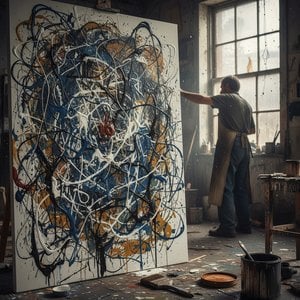
Jackson Pollock e l'Espressionismo Astratto: Rivoluzione Pittorica tra Psicoanalisi e Azione
Esplora la rivoluzionaria arte di Jackson Pollock e l'Espressionismo Astratto. Analisi approfondite, tecnica del dripping, psicoanalisi e i capolavori iconici che hanno cambiato la storia dell'arte.

Kandinsky: I 25 Capolavori che Hanno Rivoluzionato l'Arte Moderna | ArtsDot
Esplora i 25 capolavori di Wassily Kandinsky, pioniere dell'arte astratta. Scopri la storia, il significato e le tecniche dietro ogni dipinto iconico. Trova riproduzioni d'arte di alta qualità per decorare la tua casa su ArtsDot.com.

Astrazione Geometrica: 10 Capolavori che Hanno Definito un Movimento Artistico
Esplora i 10 capolavori dell'Astrazione Geometrica: Mondrian, Malevich e Kandinsky rivoluzionano l'arte moderna. Scopri la storia, i colori e le tecniche di questi movimenti iconici. Stampe d'arte di alta qualità su ArtsDot.com!

Beyond Representation: Exploring the Emotional Landscape of Abstract Expressionism
Explore the profound emotional world of Abstract Expressionism with ArtsDot. Discover key artists like Pollock & Rothko, learn about collecting, and find museum-quality reproductions to inspire your space.


