

 Anteprima in scala reale
 Condividi
 Condividi
 Dettagli

 Scarica immagine
 Articoli simili
 Radiografia
 Slideshow
Elk Buffalo
 Acrylic On Canvas
- WallArt
- Academic Realism
 1899
1899- 19th Century
 34.0 x 35.0 cm
 Amon Carter Museum of American Art
 Leggi tutto
Giclée / Stampe d'arte
Stampa giclée o su tela di qualità museale, con produzione rapida e diverse opzioni di finitura. ( Ordina la riproduzione dipinta a mano Acquista download)




P118B $10

P118H $10

P118W $10

P438Z $10

P508JH $12

P508YH $12

P805H $10

P805Z $10

P919BZ $10

P919G $10

P919XJ $10

P959ZH $10

P968JZ $12

W106C $8

W218G $10

W218JH $8

W218Y $10

W307PJ $10

W316G $10

W316PJ $8

W316Y $10

W398PJ $8

W4111J $10

W500HY $15

W500JH $15

W692G $12

W849H $8

W940BG $15

W953PJ $8




Scegli tra le nostre dimensioni predefinite, che rispettano le proporzioni originali dell'opera d'arte.

È possibile inserire dimensioni personalizzate per adattare l'opera a una cornice o a uno spazio specifico. Se la dimensione selezionata non corrisponde alle proporzioni dell'immagine originale, procederemo al ritaglio dell'opera o all'estensione dell'immagine con un bordo specchiato o a tinta unita. Un mockup digitale ti verrà inviato per approvazione prima dell'inizio della produzione.
Si prega di notare che l'anteprima a schermo non riflette il ritaglio o l'estensione effettivi. Solo il mockup mostrerà accuratamente la composizione finale.
Sebbene siano disponibili dimensioni personalizzate, si raccomanda di selezionare una dimensione dall'elenco predefinito per preservare le proporzioni originali.
Consegna in tutto il mondo () in 2 settimane invece delle normali 4/5 settimane. (16 Agosto)

Spedizione espressa gratuita in tutto il mondo

Tela in lino di alta qualità

Assicurazione completa sulla spedizione

Garanzia di rimborso dei dazi doganali

Garanzia di fedeltà cromatica dell'originale

Politica di reso entro 60 giorni (solo per difetti di fabbricazione)

Garanzia di rimborso al 100%

Sconto per acquisti multipli
 L'opzione vetro è disponibile solo per dimensioni inferiori a 110 cm

Elk Buffalo
Giclée / Stampe d'arte
Dimensioni della riproduzione
-


Prezzo totale
$ 62
Descrizione del pezzo
A Bronze Echo of the Frontier
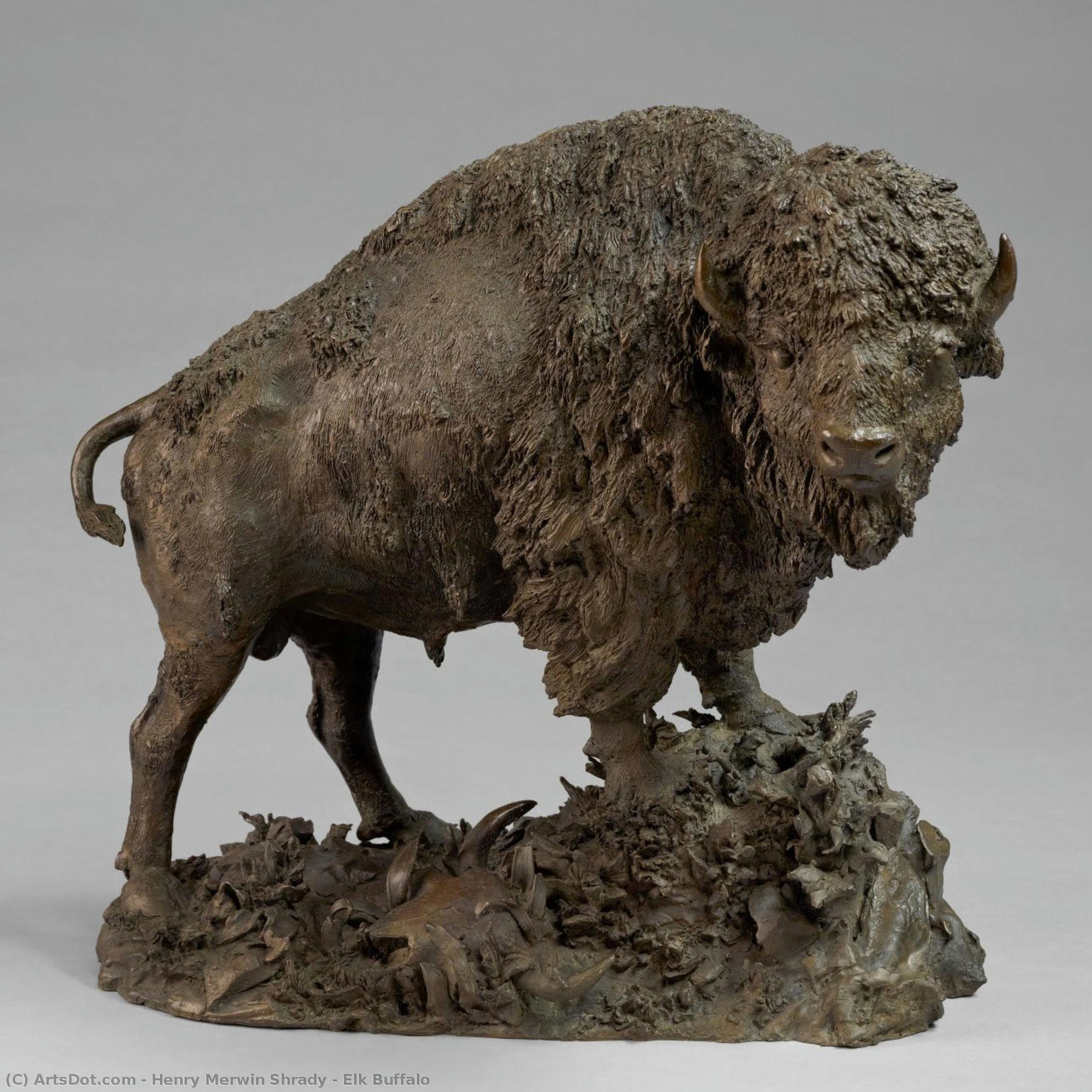
Henry Merwin Shrady’s “Elk Buffalo,” a monumental bronze sculpture created in 1899, isn't merely a depiction of an animal; it’s a powerful distillation of the American West – its rugged beauty, its untamed spirit, and the burgeoning sense of national identity taking shape at the turn of the century. Standing nearly four feet tall, this imposing figure captures a moment of quiet strength, a bison poised in contemplation against a backdrop that speaks volumes about the landscape it embodies. The sculpture’s scale alone commands attention, immediately establishing its importance within any space.
Shrady, a sculptor deeply rooted in the traditions of classical form yet profoundly influenced by the realism of the era, masterfully balances anatomical accuracy with an expressive quality that transcends simple representation. His meticulous study of animal anatomy is evident in the bison’s powerfully muscled legs and the carefully rendered details of its thick hide. Yet, it's not a cold, clinical portrayal; Shrady imbues the creature with a palpable sense of dignity and presence. The subtle tilt of the head, the slightly lowered gaze – these small gestures convey an intelligence and awareness that elevate the sculpture beyond a mere likeness.
The Sculptor’s Vision: Shrady and the American Spirit
Born in New York City in 1871, Henry Merwin Shrady's artistic journey was shaped by his family history – his father, George Frederick Shrady Sr., a physician who had attended Ulysses S. Grant during his final illness. This lineage instilled within him a meticulous attention to detail and an appreciation for the human form, qualities that would later inform his remarkable work in bronze. Shrady’s career gained significant momentum with his commission for the monumental Ulysses S. Grant Memorial at the United States Capitol, a project that cemented his reputation as one of America's leading sculptors. “Elk Buffalo” represents a pivotal moment in his artistic development, showcasing his growing confidence and mastery of the medium.
The late 19th century was a period of immense transformation in the United States – rapid westward expansion, industrialization, and a burgeoning sense of national identity were reshaping the country’s landscape and culture. Shrady's sculpture reflects this dynamic era, capturing the spirit of the frontier and the enduring connection between humanity and the natural world. The bison itself held profound symbolic significance for Native American tribes, representing strength, resilience, and the interconnectedness of all living things. By depicting a solitary bison in such a monumental scale, Shrady subtly acknowledges this rich cultural heritage while simultaneously celebrating the westward movement.
Technique and Material: Bronze’s Enduring Legacy
“Elk Buffalo” is executed in bronze, a material chosen for its durability, ability to capture intricate detail, and inherent richness of color. Shrady employed the lost-wax casting process, a technique that allowed him to create highly refined surfaces and achieve an astonishing level of realism. The sculpture’s surface exhibits a subtle sheen, reflecting light in a way that highlights the texture of the bison's hide – the ridges of its fur, the folds of its muscles, and the subtle variations in tone. The artist skillfully used techniques like *patina* to enhance the bronze’s natural color and create an aged, weathered appearance, further lending authenticity to the piece.
Roman Bronze Works, renowned for their expertise in casting large-scale bronze sculptures, collaborated with Shrady on this project. Their meticulous craftsmanship ensured that the sculpture was produced to the highest standards of quality and precision. The choice of bronze also speaks to a broader trend during this period – a fascination with industrial materials and technological innovation, reflecting America’s rapid embrace of modernity.
A Timeless Emblem: Symbolism and Emotional Resonance
Beyond its technical brilliance, “Elk Buffalo” resonates deeply on an emotional level. The sculpture evokes a sense of awe and reverence for the natural world, reminding us of the beauty and majesty of the American wilderness. The bison’s solitary presence suggests both vulnerability and resilience – a poignant reminder of the challenges faced by Native American tribes as westward expansion encroached upon their ancestral lands.
Reproductions of “Elk Buffalo” offer a remarkable opportunity to bring this iconic work of art into your home or office, transforming any space into a sanctuary of natural beauty and historical significance. Whether displayed in a grand foyer or a cozy study, this sculpture will undoubtedly serve as a timeless emblem of the American West – a testament to the enduring spirit of exploration, resilience, and connection with the land.
Opere correlate


Biografia dell'artista
Henry Merwin Shradys
Henry Merwin Shradys, un escultor estadounidense nacido en Nueva York en 1871, dejó una huella imborrable en la historia del arte americano gracias a sus obras maestras que ahora forman parte del patrimonio cultural de la nación. Aunque los detalles sobre su educación inicial y formación artística son escasos, es evidente que la pasión por la escultura impulsó su talento para crear piezas que serían recordadas por generaciones futuras.Early Life and Career
El hijo de George Frederick Shradys Sr., un destacado médico estadounidense, Henry Merwin Shradys recibió una educación privilegiada que fomentó su interés por las artes y el diseño desde temprana edad. Aunque la información sobre sus primeros años es limitada, se sabe que desarrolló habilidades técnicas excepcionales y mostró un profundo conocimiento del mundo artístico de la época. Esta formación sólida le proporcionaría los fundamentos necesarios para alcanzar la excelencia en su futura carrera como escultor.Notable Works
La obra más emblemática de Shradys fue sin duda el monumento a Ulysses S. Grant, situado en el oeste de la Plaza Capitolio en Washington D.C., un proyecto que consolidó su fama internacional y lo convirtió en uno de los escultores más importantes del siglo XIX. Este monumental trabajo refleja una comprensión profunda de la historia estadounidense y una habilidad impresionante para capturar la esencia del personaje histórico elegido como inspiración. Además, Shradys creó otras obras significativas que contribuyeron a enriquecer el panorama artístico americano, aunque menos conocidas por el público en general. Entre ellas destacan esculturas religiosas y monumentos públicos que muestran su compromiso con temas de relevancia social y cultural.Artistic Style and Influence
El estilo artístico de Shradys se caracteriza por su profundo respeto por la tradición escultórica clásica y su búsqueda constante de nuevas soluciones expresivas. Influenciado por artistas como Auguste Rodin y Michelangelo Buonarroti, desarrolló una técnica innovadora que combinaba precisión anatómica con sensibilidad emocional, creando figuras humanas llenas de vida y movimiento. Su obra tuvo un impacto significativo en generaciones posteriores de escultores estadounidenses y europeos, quienes admiraron su maestría y adoptaron algunos de sus principios estéticos.Legacy and Remembrance
El monumento a Ulysses S. Grant sigue siendo una atracción turística importante en Washington D.C., donde millones de visitantes admiran la belleza y el detalle de esta obra maestra arquitectónica y escultórica. Además, Shradys fue reconocido por instituciones culturales prestigiosas como el Museo Resource Center en Newark, Nueva Jersey, donde algunas de sus esculturas están expuestas para que puedan ser apreciadas por todos los amantes del arte. Su legado continúa inspirando artistas contemporáneos y contribuyendo a la difusión del conocimiento artístico entre las nuevas generaciones. Shradys es considerado uno de los escultores más importantes del siglo XIX y un símbolo de excelencia artística estadounidense.
Henry Merwin Shrady
1871 - 1922 , Stati Uniti d'America
Informazioni rapide
- Artistic Movement Or Style: Realism
- Date Of Birth: 1871
- Full Name: Henry Merwin Shrady
- Nationality: American
- Notable Artworks: ['Ulysses S. Grant Memorial']
- Place Of Birth: New York City, United States
Articoli correlati

I 10 Capolavori in Bronzo che Hanno Rivoluzionato la Storia dell'Arte | ArtsDot
Esplora i 10 capolavori in bronzo che hanno segnato la storia dell'arte! Da Michelangelo a Rodin, scopri le storie e le tecniche dietro queste statue iconiche. Trova riproduzioni artistiche di alta qualità per decorare casa tua con ArtsDot.com.

I 10 Capolavori Bronzei che Hanno Rivoluzionato la Storia dell'Arte | ArtsDot
Esplora i 10 capolavori bronzei che hanno segnato la storia dell'arte! Da Rodin a Michelangelo, scopri le storie e le tecniche dietro queste sculture iconiche. Trova riproduzioni d'arte di alta qualità per decorare la tua casa con ArtsDot.com.

The Enduring Legacy of Bronze: A Historical & Artistic Exploration for the Collector
Explore the rich history & enduring appeal of bronze sculpture with expert insights for collectors at ArtsDot. Learn about casting techniques, iconic artists, collecting tips & contemporary interpretations.

The Enduring Legacy of Bronze: History, Technique & Artistic Expression for the Collector
Explore the rich history & enduring appeal of bronze sculpture with expert insights for collectors at ArtsDot. Learn about casting techniques, iconic artists, and collecting tips.

The Enduring Legacy of Bronze Sculpture: Technique, Symbolism & Cultural Impact
Explore the rich history & enduring appeal of bronze sculpture with expert insights for collectors. Learn about casting techniques, iconic artists, collecting tips & contemporary interpretations at ArtsDot.

