
- Home

- Immagine digitale
- Gerard Thomas
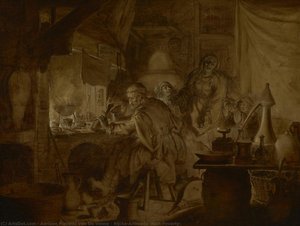
- The Alchemist’s Studio

 Anteprima
 Condividi
 Condividi
 Dettagli

 Scarica immagine
 Articoli simili
 Radiografia
 Slideshow
The Alchemist’s Studio


 Leggi tutto
Acquista un'immagine digitale ad alta risoluzione e ottimizzata, di qualità nettamente superiore all'anteprima online.
Ogni file è meticolosamente preparato dai nostri specialisti interni attraverso l'uso di strumenti avanzati e un sapiente ritocco manuale. Garantiamo che ogni immagine presenti una chiarezza eccezionale, una precisione cromatica impeccabile e dettagli raffinati.
Il file finale viene consegnato via e-mail entro 72 ore, ottimizzato per un uso immediato in contesti professionali, editoriali e di stampa. Si tratta della stessa qualità affidata dai più prestigiosi studi di design, editori e gallerie d'arte.
Immagine Digitale
Scarica un file ad alta risoluzione per uso personale, per la stampa e per progetti creativi. ( Passa alla stampa Passa alla pittura fatta a mano)
Incluso in ogni acquisto di immagini digitali
Consegna digitale professionale e garantita
Quando scegli ArtsDot.com, non riceverai solo un'immagine: riceverai un'opera d'arte digitale professionalmente ottimizzata, realizzata con la massima precisione e accompagnata da una garanzia di soddisfazione. Ecco tutto ciò che include il tuo ordine, automaticamente:

Consegna rapida via email
Riceverai il file dell'immagine digitale ad alta risoluzione via email entro 72 ore dall'ordine, pronto per un uso immediato.

File digitale potenziato dall'IA
La tua opera d'arte viene ottimizzata professionalmente attraverso l'uso di strumenti avanzati di intelligenza artificiale e una revisione manuale, garantendo il massimo livello di dettaglio, nitidezza e accuratezza cromatica.

Riconsegna gratuita a vita
Hai eliminato o perso accidentalmente il tuo file? Non preoccuparti: te lo invieremo di nuovo in qualsiasi momento, gratuitamente.

Nessun costo di importazione, mai
Goditi la tua opera d'arte istantaneamente senza costi doganali, dazi o spese di spedizione: i download digitali sono sempre esenti da tasse.

Garanzia di fedeltà cromatica
Garantiamo che la tua immagine digitale rifletta i colori originali con la massima fedeltà, grazie all'uso di strumenti professionali e a una gestione accurata del colore.

Garanzia soddisfazione 60 giorni
Se non sei soddisfatto della tua immagine digitale, la revisioneremo o ti rimborseremo il 100% entro 60 giorni, senza domande.

Garanzia di rimborso al 100%
Non sei soddisfatto? Ricevi un rimborso completo entro 60 giorni dalla ricezione del tuo file digitale, senza dover fornire spiegazioni.

Sconti per ordini multipli
Acquista 3 immagini, risparmia il 10% - Acquista 5, risparmia il 15% - Acquista 10+, risparmia il 20%. Ideale per progetti creativi, gallerie e agenzie.
Descrizione del collezionabile
Opere correlate



Biografia dell'artista
The Curious World of Gerard Thomas: A Physician’s Artistic Vision
Gerard Thomas, a name perhaps unfamiliar to many outside the circles of medical history and art connoisseurship, represents a fascinating intersection of scientific observation and artistic expression. While biographical details remain somewhat elusive – he is a living artist represented by ArtsDot – his body of work speaks volumes about Victorian sensibilities, the evolving understanding of medicine, and a unique dedication to documenting the profession through paint. Thomas’s paintings aren't simply depictions of doctors or hospitals; they are windows into a world where clinical practice was interwoven with social status, artistic patronage, and a burgeoning fascination with the human body. He stands as a testament to the idea that art can be both aesthetically pleasing and profoundly informative, serving as a historical record alongside its inherent beauty.A Legacy Rooted in Observation: Themes and Techniques
Thomas’s oeuvre is dominated by scenes of medical life, particularly those centered around St Thomas' Hospital in London. He masterfully captures the atmosphere of 19th-century hospitals – not as sterile environments but as bustling centers of activity filled with dedicated physicians, anxious patients, and a complex social hierarchy. His paintings often feature portraits of prominent doctors, rendered with meticulous detail that conveys both their professional authority and individual character. Beyond portraiture, Thomas delves into the specifics of medical procedures and diagnostic tools. Perhaps most strikingly, he is known for his depictions of urine flasks – seemingly mundane objects elevated to symbolic importance through his artistic treatment. These aren’t merely clinical specimens; they represent a crucial element in Victorian diagnosis, reflecting the era's reliance on visual observation and humoral theory. His technique leans towards realism, with a focus on accurate representation of anatomy, clothing, and hospital interiors. The lighting in his works often creates dramatic effects, highlighting key figures or objects and drawing the viewer’s eye to the core narrative. He employs a rich palette, favoring earth tones and muted colors that evoke a sense of historical authenticity.Influences and Context: Victorian Medicine & Artistic Patronage
To understand Thomas's work fully, one must consider the context of Victorian medicine. The 19th century witnessed significant advancements in medical knowledge, driven by discoveries in anatomy, physiology, and bacteriology. However, it was also a period marked by social inequalities and limited access to healthcare for many. St Thomas’ Hospital, where much of Thomas's work is set, played a pivotal role in this era, serving as both a teaching institution and a public hospital. The hospital benefited from the patronage of wealthy benefactors, including members of the aristocracy, who often commissioned portraits of themselves or prominent doctors. This system of patronage likely influenced Thomas’s career, providing him with opportunities to document the lives of those associated with the hospital. Artistically, Thomas's work reflects the influence of Realism and academic painting traditions prevalent in Victorian England. He shares similarities with artists like William Powell Frith and John Everett Millais in his attention to detail and narrative focus, though Thomas’s subject matter remains uniquely centered on the world of medicine. The Baron Gerard Museum, while not directly linked as a patron, represents the aristocratic context within which such art flourished.Major Achievements & Historical Significance
While pinpointing specific “major achievements” is difficult given the limited biographical information available, Thomas’s lasting contribution lies in his comprehensive documentation of Victorian medical life. His paintings offer invaluable insights into the practices, social dynamics, and visual culture of 19th-century hospitals. The focus on seemingly overlooked objects like urine flasks elevates them to symbolic status, prompting viewers to consider the importance of diagnostic tools and the role of observation in medical practice. His work serves as a bridge between art history and medical history, providing scholars with visual evidence of past clinical environments and patient care. Furthermore, his portraits offer glimpses into the lives of prominent physicians, capturing their personalities and professional standing within society. The enduring appeal of Thomas’s paintings lies in their ability to evoke a sense of empathy for both doctors and patients, reminding us that medicine has always been a human endeavor. His legacy is one of meticulous observation, artistic skill, and a unique dedication to documenting the evolving world of healthcare.Continuing Relevance: Thomas’s Art in the 21st Century
In an age dominated by digital imaging and advanced medical technology, Gerard Thomas's paintings offer a poignant reminder of the origins of modern medicine. His work encourages us to reflect on the historical context of clinical practice and the challenges faced by physicians in past eras.- The detailed depictions of hospital interiors provide valuable insights into the evolution of healthcare environments.
- His portraits offer a humanizing perspective on the lives of doctors, challenging stereotypical representations of medical professionals.
- The symbolic importance he assigns to everyday objects like urine flasks prompts viewers to consider the role of observation and diagnostic tools in medical practice.


