


 Anteprima in scala reale
 Condividi
 Condividi
 Dettagli
 Guida
Guida

 Scarica
 Articoli simili
 Radiografia
 Slideshow
 Statistiche
Violin On Palette


 Leggi tutto
Giclée / Stampe d'arte
Stampa giclée o su tela di qualità museale, con produzione rapida e diverse opzioni di finitura. ( Ordina la riproduzione dipinta a mano Passa all'immagine digitale)




P118B $10

P118H $10

P118W $10

P438Z $10

P508JH $12

P508YH $12

P805H $10

P805Z $10

P919BZ $10

P919G $10

P919XJ $10

P959ZH $10

P968JZ $12

W106C $8

W218G $10

W218JH $8

W218Y $10

W307PJ $10

W316G $10

W316PJ $8

W316Y $10

W398PJ $8

W4111J $10

W500HY $15

W500JH $15

W692G $12

W849H $8

W940BG $15

W953PJ $8




Scegli tra le nostre dimensioni predefinite, che rispettano le proporzioni originali dell'opera d'arte.

È possibile inserire dimensioni personalizzate per adattare l'opera a una cornice o a uno spazio specifico. Se la dimensione selezionata non corrisponde alle proporzioni dell'immagine originale, procederemo al ritaglio dell'opera o all'estensione dell'immagine con un bordo specchiato o a tinta unita. Un mockup digitale ti verrà inviato per approvazione prima dell'inizio della produzione.
Si prega di notare che l'anteprima a schermo non riflette il ritaglio o l'estensione effettivi. Solo il mockup mostrerà accuratamente la composizione finale.
Sebbene siano disponibili dimensioni personalizzate, si raccomanda di selezionare una dimensione dall'elenco predefinito per preservare le proporzioni originali.
Consegna in tutto il mondo () in 2 settimane invece delle normali 4/5 settimane. (25 Settembre)

Spedizione espressa gratuita in tutto il mondo

Tela in lino di alta qualità

Assicurazione completa sulla spedizione

Garanzia di rimborso dei dazi doganali

Garanzia di perfetta fedeltà cromatica

Politica di reso entro 100 giorni (solo per difetti di fabbricazione)

Garanzia di rimborso al 100%

Sconto per acquisti multipli
 L'opzione vetro è disponibile solo per dimensioni inferiori a 110 cm

Violin On Palette
Giclée / Stampe d'arte
Dimensioni della riproduzione
-


Prezzo totale
$ 62
Georges Braque’s Violin On Palette: A Fragmented Symphony of Color and Form
The painting “Violin On Palette,” executed by Georges Braque in 1909, stands as a cornerstone of Cubist art—a movement that irrevocably altered the course of artistic expression at the dawn of the century. More than just an image of a violin resting upon a painter’s palette; it embodies a radical rethinking of representation itself, reflecting the intellectual fervor and aesthetic experimentation characteristic of its time. Examining this artwork reveals not only Braque's masterful technique but also profound insights into the philosophical underpinnings of Cubism and its enduring legacy in contemporary art.The Style of Fragmentation: Deconstructing Reality
Cubist theory, championed by Picasso and Braque alongside Pablo Cézanne, rejected the illusionistic conventions of Impressionism and Post-Impressionism. Instead, artists sought to depict objects from multiple viewpoints simultaneously—a concept brilliantly realized in “Violin On Palette.” The violin itself is dissected into geometric planes—cubes, rectangles, and triangles—that overlap and intersect, creating a disconcerting yet compelling sense of spatial depth. These fractured forms aren’t merely stylistic choices; they represent Braque's attempt to capture the totality of an object’s essence by presenting it as seen from various angles simultaneously. This deliberate distortion mirrors the fragmented experience of perception itself, mirroring the anxieties and uncertainties of the era.Technique: Visible Brushstrokes and Textured Surfaces
Braque employed a technique that prioritized visible brushstrokes—a conscious departure from the smooth surfaces favored by earlier artists. Thick impasto—the application of paint in raised ridges—dominates the canvas, lending textural richness to the depiction of both the violin and the palette. These textured surfaces aren’t simply decorative; they contribute to the artwork's expressive power, conveying a palpable sense of physicality and immediacy. The artist meticulously layered pigments onto the canvas, building up color gradations and creating subtle variations in tone—a testament to Braque’s unwavering commitment to capturing the nuances of visual experience.Historical Context: Artistic Responses to Modernity
“Violin On Palette” emerged during a period of intense intellectual debate concerning the nature of reality and artistic representation. Cézanne's groundbreaking explorations into geometric abstraction had paved the way for Cubism, prompting artists to question traditional notions of perspective and illusion. The painting reflects the broader cultural preoccupation with scientific advancements—particularly Einstein’s theory of relativity—which challenged Newtonian physics and undermined the certainty of visual perception. Braque’s work stands as a defiant assertion of artistic autonomy in the face of these transformative developments, demonstrating that art could offer alternative ways of engaging with the world around us.Symbolism: Musical Resonance Beyond Representation
Beyond its formal innovations, “Violin On Palette” possesses symbolic resonance that extends beyond mere visual depiction. The violin itself—a symbol of musical artistry and emotion—represents Braque’s fascination with music as a source of inspiration and intellectual stimulation. Its fragmented form mirrors the fractured nature of artistic expression, suggesting that true beauty lies not in flawless imitation but in capturing the essence of experience through unconventional means. The palette—the artist's tool—further reinforces this symbolic connection, symbolizing creativity and transformation—a visual metaphor for Braque’s own artistic process.Emotional Impact: A Quiet Intensity
Despite its apparent simplicity—characterized by muted earth tones— “Violin On Palette” exudes a quiet intensity that captivates the viewer. The artwork invites contemplation rather than immediate gratification, prompting viewers to engage in a dialogue with its fractured forms and subtle textures. It speaks to a deeper yearning for understanding—a desire to grasp the totality of experience through artistic representation. Ultimately, Braque’s masterpiece transcends mere visual spectacle, resonating with an emotional core that embodies the spirit of Cubist art—a testament to its enduring power to provoke thought and inspire wonder.Opere correlate


Biografia dell'artista
**primi anni di vita e formazione**
Georges Braque, un illustre pittore francese, collageur, disegnatore, stampatore e scultore, nacque il 13 maggio 1882 ad Argenteuil, Val-d'Oise. È cresciuto a Le Havre e inizialmente si è formato per diventare pittore di facciate e decoratore come suo padre e nonno. Tuttavia, le inclinazioni artistiche di Braque lo hanno portato a studiare pittura all’École des Beaux-Arts a Le Havre dal 1897 al 1899.**evoluzione artistica e fauvismo**
Nel 1902, dopo aver completato il suo apprendistato con un decoratore a Parigi, Braque ha frequentato l'Académie Humbert fino al 1904. Questo periodo ha segnato la sua introduzione al fauvismo, uno stile caratterizzato da colori vivaci e risposte emotive. Influenzato dalle opere di Henri Matisse e André Derain, Braque ha adottato un approccio fauvista, come si può vedere nel suo dipinto La Pazienza (fauvismo, olio su tela).**contributo al cubismo**
La collaborazione di Braque con Pablo Picasso dal 1908 al 1912 ha portato allo sviluppo del cubismo. Le loro opere cubiste analitiche, come Georges Braque: La Pazienza e Pablo Picasso: Clarinet(cubismo analitico, olio su tela), sono oggi considerate pietre miliari della storia dell'arte.**eredità e opere notevoli**
* Le Case all’Éstaque: una testimonianza dell'uso innovativo di geometria e prospettiva simultanea da parte di Braque. * La Pazienza(fauvismo, olio su tela): dimostra lo stile fauvista di Braque. * Clarinet(cubismo analitico, olio su tela): un'opera cubista collaborativa con Picasso.**musei e collezioni**
* Musée d’Orsay: presenta una vasta collezione di arte impressionista e post-impressionista, inclusi lavori di Braque. * Musée de l’Orangerie: espone una vasta gamma di opere d'arte, inclusi quelle di Braque e altri artisti notevoli.- Scopri di più sulla vita e sull'opera di Georges Braque su ArtsDot.com
- Esplora la collezione del Musée d’Orsay, che include opere di Braque e altri artisti, su Musée d'Orsay - Wikipedia
- Impara di più sul fauvismo e sulla sua influenza sullo sviluppo del cubismo con Fauvismo - movimento artistico su ArtsDot.com
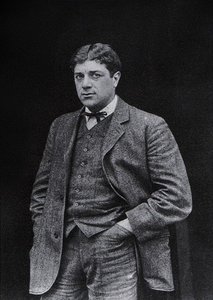
Georges Braque
1882 - 1963 , Francia
Informazioni rapide
- Artisti Influenti:
- Henri Matisse
- André Derain
- Paul Cézanne
- Artisti Influenzati: ['Pablo Picasso']
- Data Di Nascita: 13 maggio 1882
- Luogo Di Nascita: Argenteuil, Francia
- Movimento Artistico: Cubismo, Fauvismo
- Nazionalità: Francese
- Nome Completo: Georges Braque
- Opere Notevoli:
- Case a L'Estaque
- La Pazienza (fauvista)
- Chitarra, Frutta e Brocca
- Natura morta con Bass
Articoli correlati

Paul Cézanne: I 25 Capolavori che Hanno Rivoluzionato l'Arte Moderna | ArtsDot
Esplora i 25 capolavori di Paul Cézanne, il maestro dell'impressionismo e post-impressionismo. Scopri la storia, le tecniche e i colori iconici dietro opere come 'Le grandi bagnanti' e 'Mont Sainte-Victoire'. Trova riproduzioni artistiche di alta qualità per decorare la tua casa su ArtsDot.com.

I 10 Dipinti Più Famosi nei Toni del Fungo: Arte, Storia e Decorazioni Raffinate
Esplora i 10 dipinti più iconici nei toni del fungo, dai capolavori rinascimentali all'impressionismo. Scopri la storia degli artisti e lasciati ispirare per decorazioni artistiche uniche. Acquista riproduzioni di alta qualità su !

Fernand Léger: I 25 Capolavori che Hanno Definito l'Arte Moderna | ArtsDot
Esplora i 25 capolavori di Fernand Léger, pioniere del cubismo e del tubismo. Scopri la storia, le tecniche e l'impatto dell'arte moderna francese. Stampe d'arte e riproduzioni su ArtsDot.com.

Astrazione Geometrica: 10 Capolavori che Hanno Definito un Movimento Artistico
Esplora i 10 capolavori dell'Astrazione Geometrica: Mondrian, Malevich e Kandinsky rivoluzionano l'arte moderna. Scopri la storia, i colori e le tecniche di questi movimenti iconici. Stampe d'arte di alta qualità su ArtsDot.com!

I 10 Dipinti Più Famosi dai Tonalità Sabbia: Arte, Storia e Decorazioni Raffinate
Esplora i 10 dipinti più iconici dominati da tonalità sabbia e colori terra. Scopri la storia, gli artisti e le tecniche dietro questi capolavori senza tempo. Trova riproduzioni artistiche di alta qualità per decorare casa con .


