


 Anteprima in scala reale
 Condividi
 Condividi
 Dettagli
 Guida
Guida

 Scarica
 Articoli simili
 Radiografia
 Slideshow
 Statistiche
untitled (3820)


 Leggi tutto
Giclée / Stampe d'arte
Stampa giclée o su tela di qualità museale, con produzione rapida e diverse opzioni di finitura. ( Ordina la riproduzione dipinta a mano Passa all'immagine digitale)




P118B $10

P118H $10

P118W $10

P438Z $10

P508JH $12

P508YH $12

P805H $10

P805Z $10

P919BZ $10

P919G $10

P919XJ $10

P959ZH $10

P968JZ $12

W106C $8

W218G $10

W218JH $8

W218Y $10

W307PJ $10

W316G $10

W316PJ $8

W316Y $10

W398PJ $8

W4111J $10

W500HY $15

W500JH $15

W692G $12

W849H $8

W940BG $15

W953PJ $8




Scegli tra le nostre dimensioni predefinite, che rispettano le proporzioni originali dell'opera d'arte.

È possibile inserire dimensioni personalizzate per adattare l'opera a una cornice o a uno spazio specifico. Se la dimensione selezionata non corrisponde alle proporzioni dell'immagine originale, procederemo al ritaglio dell'opera o all'estensione dell'immagine con un bordo specchiato o a tinta unita. Un mockup digitale ti verrà inviato per approvazione prima dell'inizio della produzione.
Si prega di notare che l'anteprima a schermo non riflette il ritaglio o l'estensione effettivi. Solo il mockup mostrerà accuratamente la composizione finale.
Sebbene siano disponibili dimensioni personalizzate, si raccomanda di selezionare una dimensione dall'elenco predefinito per preservare le proporzioni originali.
Consegna in tutto il mondo () in 2 settimane invece delle normali 4/5 settimane. (24 Settembre)

Spedizione espressa gratuita in tutto il mondo

Tela in lino di alta qualità

Assicurazione completa sulla spedizione

Garanzia di rimborso dei dazi doganali

Garanzia di perfetta fedeltà cromatica

Politica di reso entro 100 giorni (solo per difetti di fabbricazione)

Garanzia di rimborso al 100%

Sconto per acquisti multipli
 L'opzione vetro è disponibile solo per dimensioni inferiori a 110 cm

untitled (3820)
Giclée / Stampe d'arte
Dimensioni della riproduzione
-


Prezzo totale
$ 62
Georges Braque’s “Untitled (3820)” – A Window into Cubist Harmony
Georges Braque's "Untitled (3820)" offers a captivating glimpse into the heart of early 20th-century artistic innovation. This landscape, seemingly simple in its depiction of a village nestled within a valley, is profoundly complex beneath the surface – a testament to Braque’s pioneering role in developing Cubism alongside Pablo Picasso. The painting isn't merely a representation of a scene; it’s an exploration of perception, form, and the very nature of seeing. The composition immediately draws the eye towards the central figure, standing near the center of the image, suggesting a human presence within this carefully constructed world. This element subtly anchors the viewer, inviting us to contemplate our own relationship with the depicted space.
Braque’s artistic journey began not in the avant-garde studios of Paris but within the familiar framework of his family's trade as house painters and decorators. This practical grounding—a deep understanding of materials and construction—proved invaluable, providing him with a foundational knowledge that he later brilliantly deconstructed and reimagined through his art. His early work demonstrates an impressionistic sensibility, influenced by artists like Monet and Renoir, but it was the burgeoning Fauvist movement in 1905 that truly ignited his creative spirit. The bold colors and expressive brushstrokes of the Fauves – a group including Matisse and Derain – liberated Braque from traditional representational constraints, encouraging him to prioritize emotional impact over strict adherence to reality.
The Genesis of Cubism: Fragmentation and Perspective
“Untitled (3820)” is inextricably linked to the birth of Cubism. Following his exposure to Cézanne’s work in 1907, Braque embarked on a rigorous study of the artist's geometric approach to depicting space – a radical departure from traditional perspective. Cézanne’s emphasis on analyzing objects into their fundamental shapes and reconstructing them from multiple viewpoints became the cornerstone of Cubism. Braque, alongside Picasso, began to translate this concept onto canvas, fracturing forms into interlocking planes and presenting them simultaneously from various angles. This technique, known as “simultaneous perspective,” creates a sense of dynamism and spatial ambiguity, challenging the viewer’s assumptions about depth and distance.
Notice how Braque renders the village buildings – not as solid blocks but as fragmented geometric shapes, suggesting multiple viewpoints at once. The bridge, too, is broken down into its constituent parts, creating an intriguing visual puzzle. The muted color palette—primarily blues, browns, and ochres—further enhances this sense of fragmentation, contributing to the painting’s overall atmosphere of intellectual exploration rather than straightforward representation. This deliberate simplification of form reflects a shift in artistic focus from depicting external reality to exploring the underlying structure of perception itself.
Symbolism and Emotional Resonance
While seemingly objective in its depiction, “Untitled (3820)” is rich with symbolic potential. The solitary figure in the foreground invites speculation about their role within this landscape – are they a traveler, a resident, or simply an observer? The village itself could represent a microcosm of society, while the bridge symbolizes connection and transition. The cloudy sky above adds to the painting’s contemplative mood, suggesting a sense of mystery and timelessness.
Braque's work during this period wasn't merely about visual experimentation; it was deeply rooted in philosophical inquiry. He sought to capture not just what he *saw*, but how he *perceived* – a reflection of the broader intellectual currents of the time, including ideas from thinkers like Bergson and Freud. The painting’s quiet intensity invites viewers to engage with their own interpretations, fostering a sense of personal connection to this remarkable work.
A Reproduction for Your Space
ArtsDot offers meticulously crafted hand-painted reproductions of Georges Braque's “Untitled (3820),” allowing you to bring this pivotal artwork into your home or office. Our skilled artists faithfully recreate Braque’s distinctive style, capturing the nuances of his color palette and the subtle complexities of his composition. Whether you are an art enthusiast, a collector, or simply seeking a unique piece of décor, our reproduction provides an authentic and beautiful representation of this groundbreaking masterpiece. Explore the collection today and discover how this iconic painting can enrich your space with its intellectual depth and artistic beauty.
Opere correlate


Biografia dell'artista
**primi anni di vita e formazione**
Georges Braque, un illustre pittore francese, collageur, disegnatore, stampatore e scultore, nacque il 13 maggio 1882 ad Argenteuil, Val-d'Oise. È cresciuto a Le Havre e inizialmente si è formato per diventare pittore di facciate e decoratore come suo padre e nonno. Tuttavia, le inclinazioni artistiche di Braque lo hanno portato a studiare pittura all’École des Beaux-Arts a Le Havre dal 1897 al 1899.**evoluzione artistica e fauvismo**
Nel 1902, dopo aver completato il suo apprendistato con un decoratore a Parigi, Braque ha frequentato l'Académie Humbert fino al 1904. Questo periodo ha segnato la sua introduzione al fauvismo, uno stile caratterizzato da colori vivaci e risposte emotive. Influenzato dalle opere di Henri Matisse e André Derain, Braque ha adottato un approccio fauvista, come si può vedere nel suo dipinto La Pazienza (fauvismo, olio su tela).**contributo al cubismo**
La collaborazione di Braque con Pablo Picasso dal 1908 al 1912 ha portato allo sviluppo del cubismo. Le loro opere cubiste analitiche, come Georges Braque: La Pazienza e Pablo Picasso: Clarinet(cubismo analitico, olio su tela), sono oggi considerate pietre miliari della storia dell'arte.**eredità e opere notevoli**
* Le Case all’Éstaque: una testimonianza dell'uso innovativo di geometria e prospettiva simultanea da parte di Braque. * La Pazienza(fauvismo, olio su tela): dimostra lo stile fauvista di Braque. * Clarinet(cubismo analitico, olio su tela): un'opera cubista collaborativa con Picasso.**musei e collezioni**
* Musée d’Orsay: presenta una vasta collezione di arte impressionista e post-impressionista, inclusi lavori di Braque. * Musée de l’Orangerie: espone una vasta gamma di opere d'arte, inclusi quelle di Braque e altri artisti notevoli.- Scopri di più sulla vita e sull'opera di Georges Braque su ArtsDot.com
- Esplora la collezione del Musée d’Orsay, che include opere di Braque e altri artisti, su Musée d'Orsay - Wikipedia
- Impara di più sul fauvismo e sulla sua influenza sullo sviluppo del cubismo con Fauvismo - movimento artistico su ArtsDot.com

Georges Braque
1882 - 1963 , Francia
Informazioni rapide
- Artisti Influenti:
- Henri Matisse
- André Derain
- Paul Cézanne
- Artisti Influenzati: ['Pablo Picasso']
- Data Di Nascita: 13 maggio 1882
- Luogo Di Nascita: Argenteuil, Francia
- Movimento Artistico: Cubismo, Fauvismo
- Nazionalità: Francese
- Nome Completo: Georges Braque
- Opere Notevoli:
- Case a L'Estaque
- La Pazienza (fauvista)
- Chitarra, Frutta e Brocca
- Natura morta con Bass
Articoli correlati

Georges Braque: I 25 Capolavori che Hanno Rivoluzionato l'Arte Moderna | ArtsDot
Esplora i 25 capolavori di Georges Braque, pioniere del Cubismo. Scopri la storia, le tecniche e l'impatto di opere iconiche come 'The Patience'. Trova riproduzioni d'arte di alta qualità per decorare casa tua su ArtsDot.com.

Georges Braque: La Rivoluzione Cubista e l'Evoluzione della Forma Moderna
Esplora la rivoluzione cubista di Georges Braque e l'evoluzione della forma moderna. Analisi approfondite, storia dell'arte e consigli per collezionisti esperti. Scopri il valore delle opere di Braque.

Georges Seurat: I 25 Capolavori che Rivoluzionarono la Pittura | ArtsDot
Esplora i 25 capolavori di Georges Seurat, il maestro del Pointillismo. Scopri la storia, le tecniche e l'emozione dietro dipinti iconici come 'Un dimanche à la Grande Jatte'. Trova riproduzioni d'arte di alta qualità per decorare casa tua su ArtsDot.com.

John Constable: I 25 Capolavori che Celebrano la Bellezza della Campagna Inglese
Esplora i 25 capolavori di John Constable, il maestro del Romanticismo inglese. Paesaggi suggestivi, luce naturale e colori vibranti ti aspettano. Acquista riproduzioni d'arte di alta qualità su ArtsDot.com e porta la bellezza della campagna inglese nella tua casa.
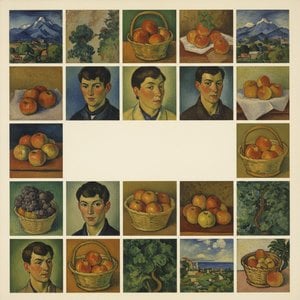
Paul Cézanne: I 25 Capolavori che Hanno Rivoluzionato l'Arte Moderna | ArtsDot
Esplora i 25 capolavori di Paul Cézanne, il maestro dell'impressionismo e post-impressionismo. Scopri la storia, le tecniche e i colori iconici dietro opere come 'Le grandi bagnanti' e 'Mont Sainte-Victoire'. Trova riproduzioni artistiche di alta qualità per decorare la tua casa su ArtsDot.com.


