


 Anteprima in scala reale
 Invia
Invia Condividi
 Dettagli opera

 Scarica immagine
 Simili
 Radiografia
 Slideshow
untitled (2561)


 Espandi i dettagli
Giclée / Stampe d'arte
Stampa giclée o su tela di qualità museale, con produzione rapida e diverse opzioni di finitura. ( Acquista il dipinto realizzato a mano Acquista immagine)




P118B $10

P118H $10

P118W $10

P438Z $10

P508JH $12

P508YH $12

P805H $10

P805Z $10

P919BZ $10

P919G $10

P919XJ $10

P959ZH $10

P968JZ $12

W106C $8

W218G $10

W218JH $8

W218Y $10

W307PJ $10

W316G $10

W316PJ $8

W316Y $10

W398PJ $8

W4111J $10

W500HY $15

W500JH $15

W692G $12

W849H $8

W940BG $15

W953PJ $8




Scegli tra le nostre dimensioni predefinite, che rispettano le proporzioni originali dell'opera d'arte.

È possibile inserire dimensioni personalizzate per adattare l'opera a una cornice o a uno spazio specifico. Se la dimensione selezionata non corrisponde alle proporzioni dell'immagine originale, procederemo al ritaglio dell'opera o all'estensione dell'immagine con un bordo specchiato o a tinta unita. Un mockup digitale ti verrà inviato per approvazione prima dell'inizio della produzione.
Si prega di notare che l'anteprima a schermo non riflette il ritaglio o l'estensione effettivi. Solo il mockup mostrerà accuratamente la composizione finale.
Sebbene siano disponibili dimensioni personalizzate, si raccomanda di selezionare una dimensione dall'elenco predefinito per preservare le proporzioni originali.
Consegna in tutto il mondo () in 2 settimane invece delle normali 4/5 settimane. (25 Agosto)

Spedizione espressa gratuita in tutto il mondo

Tela in lino di alta qualità

Assicurazione completa sulla spedizione

Garanzia di rimborso dei dazi doganali

Garanzia di fedeltà cromatica

Politica di reso entro 60 giorni (solo per difetti di fabbricazione)

Garanzia di rimborso al 100%

Offerta per acquisti multipli
 L'opzione vetro è disponibile solo per dimensioni inferiori a 110 cm

untitled (2561)
Giclée / Stampe d'arte
Dimensioni riproduzione
-


Prezzo totale calcolato
$ 62
Descrizione del pezzo
A Quiet Revolution in Monochrome
In the vast, often turbulent landscape of early 20th-century modernism, Georges Braque’s “Untitled (2561)” stands as a profound testament to the power of restraint. At first glance, the viewer is met with a deceptively simple scene: a dog nestled peacefully among a collection of fruit—bananas and an apple—resting upon a table. Yet, beneath this charming domestic tableau lies the intellectual heartbeat of Cubism. This monochrome masterpiece eschews the distractions of vibrant color to focus the observer's gaze on the fundamental essence of form and structure. It is not merely a painting of a meal; it is a deliberate deconstruction of reality, inviting us to look past the surface and engage with the very geometry of existence.
The emotional resonance of the piece lies in its unexpected warmth. Despite the analytical nature of Braque’s approach, there is an undeniable sense of comfort and intimacy radiating from the composition. The way the dog occupies the center of the scene, surrounded by the organic shapes of the fruit, creates a sanctuary of stillness. For the collector or interior designer, this artwork offers a unique duality: it possesses the sophisticated, intellectual edge required for contemporary gallery spaces, while simultaneously providing a soulful, grounding presence that can transform a living area into a place of quiet contemplation.
The Architecture of Perception
To understand “Untitled (2561)” is to witness Braque’s mastery of analytical technique. Influenced heavily by the structural innovations of Paul Cézanne, Braque moved away from the traditional illusion of three-dimensional depth achieved through single-point perspective. Instead, he employs a method of fracturing and overlapping geometric planes. The dog’s form is not defined by soft, continuous outlines but is suggested through a rhythmic interplay of light and shadow, where shapes intersect and merge. This technique forces the eye to move dynamically across the canvas, reconstructing the subject from multiple viewpoints simultaneously.
The choice of a black and white palette is a strategic stroke of genius. By stripping away color, Braque eliminates any emotional bias that hue might impose, forcing a pure confrontation with volume and spatial recession. The shadows are not merely absences of light but are structural elements that define the weight of the apple and the curve of the bananas. This meticulous attention to the underlying architecture of the image ensures that the painting remains visually stimulating even upon repeated viewings, offering a complex puzzle of shapes that rewards the patient observer.
A Legacy of Innovation and Synergy
The historical significance of this work cannot be overstated, as it captures a pivotal moment in the dialogue between Braque and his contemporary, Pablo Picasso. During their legendary period of collaboration, the boundaries between their individual styles became famously blurred. “Untitled (2561)” embodies this era of intense artistic synergy, where the shared goal was to dismantle the "mirror" of art and replace it with a new language of symbols and structures. This piece serves as a window into that transformative epoch in France, marking the transition from the sensory delights of Fauvism to the cerebral rigor of Cubism.
For those seeking to adorn their homes with pieces of historical weight, this reproduction offers more than just aesthetic beauty; it offers a connection to the very foundations of modern vision. It is an invitation to experience the "quiet genius" of Braque—a painter who did not seek to replicate the world as we see it, but rather to reveal the hidden, structural truth that lies beneath the surface of all things.
Opere simili


Biografia dell'artista
**primi anni di vita e formazione**
Georges Braque, un illustre pittore francese, collageur, disegnatore, stampatore e scultore, nacque il 13 maggio 1882 ad Argenteuil, Val-d'Oise. È cresciuto a Le Havre e inizialmente si è formato per diventare pittore di facciate e decoratore come suo padre e nonno. Tuttavia, le inclinazioni artistiche di Braque lo hanno portato a studiare pittura all’École des Beaux-Arts a Le Havre dal 1897 al 1899.**evoluzione artistica e fauvismo**
Nel 1902, dopo aver completato il suo apprendistato con un decoratore a Parigi, Braque ha frequentato l'Académie Humbert fino al 1904. Questo periodo ha segnato la sua introduzione al fauvismo, uno stile caratterizzato da colori vivaci e risposte emotive. Influenzato dalle opere di Henri Matisse e André Derain, Braque ha adottato un approccio fauvista, come si può vedere nel suo dipinto La Pazienza (fauvismo, olio su tela).**contributo al cubismo**
La collaborazione di Braque con Pablo Picasso dal 1908 al 1912 ha portato allo sviluppo del cubismo. Le loro opere cubiste analitiche, come Georges Braque: La Pazienza e Pablo Picasso: Clarinet(cubismo analitico, olio su tela), sono oggi considerate pietre miliari della storia dell'arte.**eredità e opere notevoli**
* Le Case all’Éstaque: una testimonianza dell'uso innovativo di geometria e prospettiva simultanea da parte di Braque. * La Pazienza(fauvismo, olio su tela): dimostra lo stile fauvista di Braque. * Clarinet(cubismo analitico, olio su tela): un'opera cubista collaborativa con Picasso.**musei e collezioni**
* Musée d’Orsay: presenta una vasta collezione di arte impressionista e post-impressionista, inclusi lavori di Braque. * Musée de l’Orangerie: espone una vasta gamma di opere d'arte, inclusi quelle di Braque e altri artisti notevoli.- Scopri di più sulla vita e sull'opera di Georges Braque su ArtsDot.com
- Esplora la collezione del Musée d’Orsay, che include opere di Braque e altri artisti, su Musée d'Orsay - Wikipedia
- Impara di più sul fauvismo e sulla sua influenza sullo sviluppo del cubismo con Fauvismo - movimento artistico su ArtsDot.com

Georges Braque
1882 - 1963 , Francia
Dati rapidi
- Artisti Influenti:
- Henri Matisse
- André Derain
- Paul Cézanne
- Artisti Influenzati: ['Pablo Picasso']
- Data Di Nascita: 13 maggio 1882
- Luogo Di Nascita: Argenteuil, Francia
- Movimento Artistico: Cubismo, Fauvismo
- Nazionalità: Francese
- Nome Completo: Georges Braque
- Opere Notevoli:
- Case a L'Estaque
- La Pazienza (fauvista)
- Chitarra, Frutta e Brocca
- Natura morta con Bass
Articoli correlati

Georges Braque: I 25 Capolavori che Hanno Rivoluzionato l'Arte Moderna | ArtsDot
Esplora i 25 capolavori di Georges Braque, pioniere del Cubismo. Scopri la storia, le tecniche e l'impatto di opere iconiche come 'The Patience'. Trova riproduzioni d'arte di alta qualità per decorare casa tua su ArtsDot.com.

Giclée Prints: Archival Quality & Aesthetic Nuances for the Discerning Collector
Explore the world of giclée prints with ArtsDot. Learn about archival quality, aesthetic nuances & investment potential. Expert guidance for discerning art collectors seeking museum-quality reproductions and lasting value.

The Bountiful Still Life: Symbolism & Artistic Representation of Fruit Across Art History
Explore the rich history of still life painting & the symbolism of fruit across art movements. Discover masterpieces from Caravaggio to Cézanne with ArtsDot – expert guidance & museum-quality reproductions.

The Enduring Legacy of Fine Art Prints: Technique, History & Aesthetic Impact
Explore the rich history & techniques of fine art prints. Discover investment potential, assess authenticity, and learn how to preserve your collection with expert guidance. Trusted insights for discerning collectors.
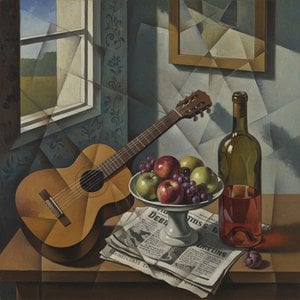
Deconstructing Reality: A Comprehensive Exploration of Cubist Still Life
Explore the revolutionary world of Cubist Still Life with ArtsDot. Discover Picasso & Braque's groundbreaking techniques, its philosophical roots, and lasting impact on modern art. Expert insights for collectors.



