
- Home

- Riproduzione olio su tela
- Georges Braque
- The Yellow Tablecloth

 Anteprima in scala reale
 Condividi
 Condividi
 Dettagli

 Scarica immagine
 Articoli simili
 Radiografia
 Slideshow
The Yellow Tablecloth

 Leggi tutto
Riproduzione a olio fatta a mano
Olio su tela dipinto a mano nelle tue dimensioni e con la tua cornice, realizzato su ordinazione dai nostri artisti. ( Passa alla stampa Passa all'immagine)




P118B $10

P118H $10

P118W $10

P438Z $10

P508JH $12

P508YH $12

P805H $10

P805Z $10

P919BZ $10

P919G $10

P919XJ $10

P959ZH $10

P968JZ $12

W106C $8

W218G $10

W218JH $8

W218Y $10

W307PJ $10

W316G $10

W316PJ $8

W316Y $10

W398PJ $8

W4111J $10

W500HY $15

W500JH $15

W692G $12

W849H $8

W940BG $15

W953PJ $8




Scegli tra le nostre dimensioni predefinite, che rispettano le proporzioni originali dell'opera d'arte.

È possibile inserire dimensioni personalizzate per adattare l'opera a una cornice o a uno spazio specifico. Se la dimensione selezionata non corrisponde alle proporzioni dell'immagine originale, provvederemo a ritagliare l'opera o a estendere il dipinto con elementi aggiuntivi dipinti a mano. Un mockup digitale ti sarà inviato per approvazione prima dell'inizio della produzione.
Si prega di notare che l'anteprima a schermo non riflette il ritaglio o l'estensione effettivi. Solo il mockup mostrerà accuratamente la composizione finale.
Sebbene siano disponibili dimensioni personalizzate, consigliamo di selezionare una dimensione dall'elenco predefinito per preservare le proporzioni originali.
Dopo l'ordine, il team di ArtsDot.com contatterà il cliente via e-mail per le istruzioni e fornirà un'anteprima del mockup
Consegna in tutto il mondo () in 3/4 settimane anziché nelle normali 5 settimane. (3 Agosto). Nessun compromesso sulla qualità.

Spedizione espressa gratuita in tutto il mondo

Tela in lino di alta qualità

Assicurazione completa sulla spedizione

Garanzia di rimborso dei dazi doganali

Garanzia di fedeltà cromatica dell'originale

Politica di reso entro 60 giorni (solo per difetti di fabbricazione)

Garanzia di rimborso al 100%

Sconto per acquisti multipli
 L'opzione vetro è disponibile solo per dimensioni inferiori a 110 cm

The Yellow Tablecloth
Tecnica di riproduzione
Dimensioni della riproduzione
-


Prezzo totale
$ 263
Descrizione dell'opera
Georges Braque’s “The Yellow Tablecloth”: A Study in Simplicity and Cubist Revelation
Georges Braque's "The Yellow Tablecloth," painted around 1956, isn’t merely a still life; it’s a distilled essence of form, color, and the burgeoning revolutionary spirit of Cubism. This deceptively simple composition – an arrangement of ripe fruit against a vibrant yellow backdrop – belies a profound exploration of perception and representation, firmly rooted in Braque's pivotal role alongside Pablo Picasso in dismantling traditional artistic conventions. The painting’s power lies not in dramatic subject matter or elaborate detail, but in its carefully constructed geometry and the deliberate flattening of space, hallmarks of the Cubist movement that was reshaping the very language of art at the time. Notice how the table itself seems to dissolve into a series of interlocking planes, mirroring the fragmentation of objects as seen from multiple viewpoints – a core principle of Braque’s approach. The yellow cloth isn't just a background; it actively participates in the composition, creating a warm, almost luminous atmosphere that subtly alters our perception of the fruits within.The Language of Cubism and its Roots in Everyday Life
Braque’s exploration of geometric abstraction began with his early work alongside Picasso, particularly during their “Blue Period” and subsequent “Rose Period.” However, it was in the 1920s that he truly embraced the tenets of Cubism, developing a distinct style characterized by fractured forms, multiple perspectives, and an emphasis on the underlying structure of objects. "The Yellow Tablecloth" exemplifies this evolution. Unlike the more overtly analytical Cubism of Picasso, Braque’s approach is often described as “synthetic,” favoring a more muted palette and a greater integration of collage elements – though not present in this particular work, the influence is undeniable. The painting reflects a shift towards a more internalized exploration of form, moving away from direct imitation of reality and instead focusing on capturing the *essence* of an object through its constituent shapes and planes. The choice of everyday objects—apples, oranges, bananas – elevates the mundane to the level of artistic contemplation, mirroring a broader trend in modern art that sought to find beauty and significance in the ordinary.Color as a Defining Element: The Significance of Yellow
The dominant presence of yellow is not accidental; it’s a deliberate and carefully considered element within the composition. Yellow, historically associated with optimism, warmth, and even madness, carries a complex symbolic weight. In Braque's work, it acts as both a visual anchor and a subtle emotional cue. It creates a sense of intimacy and comfort, drawing the viewer into the scene while simultaneously suggesting an underlying tension or instability – perhaps reflecting the inherent ambiguity of Cubist representation. The intensity of the yellow also contrasts sharply with the muted tones of the fruit, further emphasizing their fragmented forms and highlighting Braque’s focus on shape over color. Interestingly, this particular use of yellow echoes elements found in earlier works by Braque, suggesting a consistent exploration of its expressive potential.A Legacy of Innovation: Braque's Enduring Influence
Georges Braque’s "The Yellow Tablecloth" stands as a testament to his groundbreaking contributions to modern art. It’s a deceptively simple painting that encapsulates the revolutionary spirit of Cubism and demonstrates Braque’s ability to transform ordinary subjects into profound explorations of form, space, and perception. His work paved the way for subsequent movements like Surrealism and Abstract Expressionism, leaving an indelible mark on the history of art. Reproductions of this piece offer a unique opportunity to experience firsthand the intellectual rigor and artistic vision of one of the 20th century’s most influential figures. Consider how the painting's clarity and geometric precision translate into interior design – its clean lines and bold color scheme can be incorporated into contemporary spaces to create a sense of sophisticated minimalism and understated elegance.Opere correlate


Biografia dell'artista
**primi anni di vita e formazione**
Georges Braque, un illustre pittore francese, collageur, disegnatore, stampatore e scultore, nacque il 13 maggio 1882 ad Argenteuil, Val-d'Oise. È cresciuto a Le Havre e inizialmente si è formato per diventare pittore di facciate e decoratore come suo padre e nonno. Tuttavia, le inclinazioni artistiche di Braque lo hanno portato a studiare pittura all’École des Beaux-Arts a Le Havre dal 1897 al 1899.**evoluzione artistica e fauvismo**
Nel 1902, dopo aver completato il suo apprendistato con un decoratore a Parigi, Braque ha frequentato l'Académie Humbert fino al 1904. Questo periodo ha segnato la sua introduzione al fauvismo, uno stile caratterizzato da colori vivaci e risposte emotive. Influenzato dalle opere di Henri Matisse e André Derain, Braque ha adottato un approccio fauvista, come si può vedere nel suo dipinto La Pazienza (fauvismo, olio su tela).**contributo al cubismo**
La collaborazione di Braque con Pablo Picasso dal 1908 al 1912 ha portato allo sviluppo del cubismo. Le loro opere cubiste analitiche, come Georges Braque: La Pazienza e Pablo Picasso: Clarinet(cubismo analitico, olio su tela), sono oggi considerate pietre miliari della storia dell'arte.**eredità e opere notevoli**
* Le Case all’Éstaque: una testimonianza dell'uso innovativo di geometria e prospettiva simultanea da parte di Braque. * La Pazienza(fauvismo, olio su tela): dimostra lo stile fauvista di Braque. * Clarinet(cubismo analitico, olio su tela): un'opera cubista collaborativa con Picasso.**musei e collezioni**
* Musée d’Orsay: presenta una vasta collezione di arte impressionista e post-impressionista, inclusi lavori di Braque. * Musée de l’Orangerie: espone una vasta gamma di opere d'arte, inclusi quelle di Braque e altri artisti notevoli.- Scopri di più sulla vita e sull'opera di Georges Braque su ArtsDot.com
- Esplora la collezione del Musée d’Orsay, che include opere di Braque e altri artisti, su Musée d'Orsay - Wikipedia
- Impara di più sul fauvismo e sulla sua influenza sullo sviluppo del cubismo con Fauvismo - movimento artistico su ArtsDot.com

Georges Braque
1882 - 1963 , Francia
Informazioni rapide
- Artisti Influenti:
- Henri Matisse
- André Derain
- Paul Cézanne
- Artisti Influenzati: ['Pablo Picasso']
- Data Di Nascita: 13 maggio 1882
- Luogo Di Nascita: Argenteuil, Francia
- Movimento Artistico: Cubismo, Fauvismo
- Nazionalità: Francese
- Nome Completo: Georges Braque
- Opere Notevoli:
- Case a L'Estaque
- La Pazienza (fauvista)
- Chitarra, Frutta e Brocca
- Natura morta con Bass
Articoli correlati
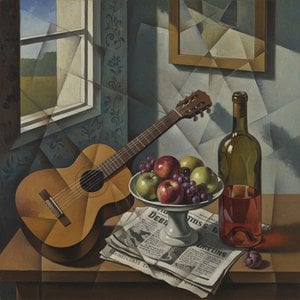
Deconstructing Reality: A Comprehensive Exploration of Cubist Still Life
Explore the revolutionary world of Cubist Still Life with ArtsDot. Discover Picasso & Braque's groundbreaking techniques, its philosophical roots, and lasting impact on modern art. Expert insights for collectors.

The Bountiful Still Life: Symbolism & Artistic Representation of Fruit Across Art History
Explore the rich history of still life painting & the symbolism of fruit across art movements. Discover masterpieces from Caravaggio to Cézanne with ArtsDot – expert guidance & museum-quality reproductions.
The Enduring Appeal of Still Life: A Historical & Contemporary Exploration
Explore the rich history & symbolism of still life painting with ArtsDot. Discover masterpieces from the Dutch Golden Age, learn about vanitas art, and find expert guidance for collecting timeless artworks.

Severin Roesen: Evoking National Identity Through American Still Life Painting
Explore the captivating world of Severin Roesen, a major American still life painter influenced by Dutch masters. Discover his lush compositions and the symbolism within his art – a window into 19th-century America.

Dalla Natura Morta Classica all'Astrazione Contemporanea: Elevare gli Spazi di Ricevimento delle Ville Attraverso la Riproduzione Artistica
Scopri l'evoluzione della natura morta e come trasformare i tuoi spazi con riproduzioni artistiche di alta qualità. Consulenza d'arte gratuita e spedizione in tutto il mondo su ArtsDot.com.



