


 Anteprima in scala reale
 Invia
Invia Condividi
 Dettagli opera

 Scarica immagine
 Simili
 Radiografia
 Slideshow
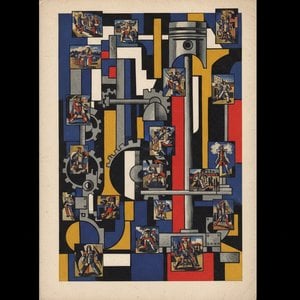
The Studio (VIII)
 Oil On Canvas
- WallArt
- Cubist Still Life
 1954
1954- Modern
 132.0 x 196.0 cm
 Espandi i dettagli
Giclée / Stampe d'arte
Stampa giclée o su tela di qualità museale, con produzione rapida e diverse opzioni di finitura. ( Acquista il dipinto realizzato a mano Acquista immagine)




P118B $10

P118H $10

P118W $10

P438Z $10

P508JH $12

P508YH $12

P805H $10

P805Z $10

P919BZ $10

P919G $10

P919XJ $10

P959ZH $10

P968JZ $12

W106C $8

W218G $10

W218JH $8

W218Y $10

W307PJ $10

W316G $10

W316PJ $8

W316Y $10

W398PJ $8

W4111J $10

W500HY $15

W500JH $15

W692G $12

W849H $8

W940BG $15

W953PJ $8




Scegli tra le nostre dimensioni predefinite, che rispettano le proporzioni originali dell'opera d'arte.

È possibile inserire dimensioni personalizzate per adattare l'opera a una cornice o a uno spazio specifico. Se la dimensione selezionata non corrisponde alle proporzioni dell'immagine originale, procederemo al ritaglio dell'opera o all'estensione dell'immagine con un bordo specchiato o a tinta unita. Un mockup digitale ti verrà inviato per approvazione prima dell'inizio della produzione.
Si prega di notare che l'anteprima a schermo non riflette il ritaglio o l'estensione effettivi. Solo il mockup mostrerà accuratamente la composizione finale.
Sebbene siano disponibili dimensioni personalizzate, si raccomanda di selezionare una dimensione dall'elenco predefinito per preservare le proporzioni originali.
Consegna in tutto il mondo () in 2 settimane invece delle normali 4/5 settimane. (2 Settembre)

Spedizione espressa gratuita in tutto il mondo

Tela in lino di alta qualità

Assicurazione completa sulla spedizione

Garanzia di rimborso dei dazi doganali

Garanzia di fedeltà cromatica

Politica di reso entro 60 giorni (solo per difetti di fabbricazione)

Garanzia di rimborso al 100%

Offerta per acquisti multipli
 L'opzione vetro è disponibile solo per dimensioni inferiori a 110 cm

The Studio (VIII)
Giclée / Stampe d'arte
Dimensioni riproduzione
-


Prezzo totale calcolato
$ 62
A Symphony of Color and Geometric Precision
In the vast pantheon of twentieth-century modernism, few works capture the rhythmic pulse of creative existence as intimately as Georges Braque’s “The Studio (VIII)”. Painted in 1954, this masterpiece serves as a profound meditation on the artist's sanctuary, transforming a familiar workspace into a complex tapestry of light and form. While many associate the Cubist movement with a certain intellectual austerity, Braque breathes a vibrant, almost lyrical life into this canvas. The painting does not merely depict a room; it orchestrates a sensory experience where the boundaries between objects dissolve into a dance of color and geometry.
The composition is a masterful exercise in deconstructing space. Braque employs the foundational tenets of Cubism—the fragmentation of subjects into multifaceted planes—to present a view that rejects traditional, singular perspective. Instead, the viewer is invited to witness multiple viewpoints simultaneously, creating a sense of depth that feels both structured and fluid. A bird, a recurring and poignant motif in Braque’s later oeuvre, appears to soar diagonally through the frame, acting as a dynamic element that guides the eye across the canvas. This movement is mirrored by the placement of figures and objects, from the subtle presence of people near the periphery to the unexpected inclusion of a car and a chair, all woven into a cohesive, rhythmic arrangement.
The Vibrant Pulse of Fauvist Influence
What distinguishes “The Studio (VIII)” from the more monochromatic experiments of early Cubism is its breathtaking embrace of a Fauvist palette. Braque utilizes bold, expressive hues—deep ochres, rich crimsons, and striking turquoises—to imbue the scene with an emotional resonance that transcends mere representation. These colors are not merely decorative; they are the very heartbeat of the painting. The interplay between these saturated tones creates a luminous surface that seems to pulsate with energy, reflecting the internal fire of the creative process itself.
For the discerning collector or interior designer, this painting offers an unparalleled opportunity to introduce a sense of sophisticated dynamism into a space. The technique involves a masterful manipulation of pigment, where each brushstroke contributes to a larger, textured landscape of light. The way the light catches the different planes of color can transform the atmosphere of a room, providing a focal point that is both intellectually stimulating and visually soothing. It is a piece that demands attention through its complexity yet rewards the viewer with a sense of profound harmony.
A Legacy of Innovation and Emotion
To look upon “The Studio (VIII)” is to witness the culmination of a lifetime of artistic evolution. Braque, a pioneer who worked alongside Picasso to redefine the limits of perception, brings his entire history—from his early training in the craft of decoration to his radical deconstructions of form—into this single, late-career triumph. The painting stands as a testament to the enduring power of the studio as a site of metamorphosis, where the mundane objects of daily life are elevated to the realm of the sublime through the lens of artistic vision.
Whether one is drawn to its historical significance within the Cubist and Fauvist traditions or moved by its evocative, swirling energy, this work remains a timeless icon. It offers more than just aesthetic beauty; it provides a window into the very soul of modern art. For those seeking to adorn their collections with a piece that embodies both technical mastery and emotional depth, Braque’s “The Studio (VIII)” remains an essential and breathtaking choice.
Opere simili


Biografia dell'artista
**primi anni di vita e formazione**
Georges Braque, un illustre pittore francese, collageur, disegnatore, stampatore e scultore, nacque il 13 maggio 1882 ad Argenteuil, Val-d'Oise. È cresciuto a Le Havre e inizialmente si è formato per diventare pittore di facciate e decoratore come suo padre e nonno. Tuttavia, le inclinazioni artistiche di Braque lo hanno portato a studiare pittura all’École des Beaux-Arts a Le Havre dal 1897 al 1899.**evoluzione artistica e fauvismo**
Nel 1902, dopo aver completato il suo apprendistato con un decoratore a Parigi, Braque ha frequentato l'Académie Humbert fino al 1904. Questo periodo ha segnato la sua introduzione al fauvismo, uno stile caratterizzato da colori vivaci e risposte emotive. Influenzato dalle opere di Henri Matisse e André Derain, Braque ha adottato un approccio fauvista, come si può vedere nel suo dipinto La Pazienza (fauvismo, olio su tela).**contributo al cubismo**
La collaborazione di Braque con Pablo Picasso dal 1908 al 1912 ha portato allo sviluppo del cubismo. Le loro opere cubiste analitiche, come Georges Braque: La Pazienza e Pablo Picasso: Clarinet(cubismo analitico, olio su tela), sono oggi considerate pietre miliari della storia dell'arte.**eredità e opere notevoli**
* Le Case all’Éstaque: una testimonianza dell'uso innovativo di geometria e prospettiva simultanea da parte di Braque. * La Pazienza(fauvismo, olio su tela): dimostra lo stile fauvista di Braque. * Clarinet(cubismo analitico, olio su tela): un'opera cubista collaborativa con Picasso.**musei e collezioni**
* Musée d’Orsay: presenta una vasta collezione di arte impressionista e post-impressionista, inclusi lavori di Braque. * Musée de l’Orangerie: espone una vasta gamma di opere d'arte, inclusi quelle di Braque e altri artisti notevoli.- Scopri di più sulla vita e sull'opera di Georges Braque su ArtsDot.com
- Esplora la collezione del Musée d’Orsay, che include opere di Braque e altri artisti, su Musée d'Orsay - Wikipedia
- Impara di più sul fauvismo e sulla sua influenza sullo sviluppo del cubismo con Fauvismo - movimento artistico su ArtsDot.com

Georges Braque
1882 - 1963 , Francia
Dati rapidi
- Artisti Influenti:
- Henri Matisse
- André Derain
- Paul Cézanne
- Artisti Influenzati: ['Pablo Picasso']
- Data Di Nascita: 13 maggio 1882
- Luogo Di Nascita: Argenteuil, Francia
- Movimento Artistico: Cubismo, Fauvismo
- Nazionalità: Francese
- Nome Completo: Georges Braque
- Opere Notevoli:
- Case a L'Estaque
- La Pazienza (fauvista)
- Chitarra, Frutta e Brocca
- Natura morta con Bass
Articoli correlati

Georges Braque: I 25 Capolavori che Hanno Rivoluzionato l'Arte Moderna | ArtsDot
Esplora i 25 capolavori di Georges Braque, pioniere del Cubismo. Scopri la storia, le tecniche e l'impatto di opere iconiche come 'The Patience'. Trova riproduzioni d'arte di alta qualità per decorare casa tua su ArtsDot.com.

Georges Seurat: I 25 Capolavori che Rivoluzionarono la Pittura | ArtsDot
Esplora i 25 capolavori di Georges Seurat, il maestro del Pointillismo. Scopri la storia, le tecniche e l'emozione dietro dipinti iconici come 'Un dimanche à la Grande Jatte'. Trova riproduzioni d'arte di alta qualità per decorare casa tua su ArtsDot.com.

Georges Braque: La Rivoluzione Cubista e l'Evoluzione della Forma Moderna
Esplora la rivoluzione cubista di Georges Braque e l'evoluzione della forma moderna. Analisi approfondite, storia dell'arte e consigli per collezionisti esperti. Scopri il valore delle opere di Braque.
Fernand Léger: I 25 Capolavori che Hanno Definito l'Arte Moderna | ArtsDot
Esplora i 25 capolavori di Fernand Léger, pioniere del cubismo e del tubismo. Scopri la storia, le tecniche e l'impatto dell'arte moderna francese. Stampe d'arte e riproduzioni su ArtsDot.com.

Deconstructing Reality: Cubism's Revolutionary Impact on 20th-Century Art
Explore the revolutionary world of Cubism with ArtsDot. Discover Picasso & Braque's groundbreaking techniques, its philosophical roots, and lasting impact on modern art. Expert insights for collectors.



