

 Anteprima in scala reale
 Condividi
 Condividi
 Dettagli

 Scarica immagine
 Articoli simili
 Radiografia
 Slideshow
The Plain

 Leggi tutto
Riproduzione a olio fatta a mano
Olio su tela dipinto a mano nelle tue dimensioni e con la tua cornice, realizzato su ordinazione dai nostri artisti. ( Ordina stampa Acquista download)




P118B $10

P118H $10

P118W $10

P438Z $10

P508JH $12

P508YH $12

P805H $10

P805Z $10

P919BZ $10

P919G $10

P919XJ $10

P959ZH $10

P968JZ $12

W106C $8

W218G $10

W218JH $8

W218Y $10

W307PJ $10

W316G $10

W316PJ $8

W316Y $10

W398PJ $8

W4111J $10

W500HY $15

W500JH $15

W692G $12

W849H $8

W940BG $15

W953PJ $8




Scegli tra le nostre dimensioni predefinite, che rispettano le proporzioni originali dell'opera d'arte.

È possibile inserire dimensioni personalizzate per adattare l'opera a una cornice o a uno spazio specifico. Se la dimensione selezionata non corrisponde alle proporzioni dell'immagine originale, provvederemo a ritagliare l'opera o a estendere il dipinto con elementi aggiuntivi dipinti a mano. Un mockup digitale ti sarà inviato per approvazione prima dell'inizio della produzione.
Si prega di notare che l'anteprima a schermo non riflette il ritaglio o l'estensione effettivi. Solo il mockup mostrerà accuratamente la composizione finale.
Sebbene siano disponibili dimensioni personalizzate, consigliamo di selezionare una dimensione dall'elenco predefinito per preservare le proporzioni originali.
Dopo l'ordine, il team di ArtsDot.com contatterà il cliente via e-mail per le istruzioni e fornirà un'anteprima del mockup
Consegna in tutto il mondo () in 3/4 settimane anziché nelle normali 5 settimane. (19 Agosto). Nessun compromesso sulla qualità.

Spedizione espressa gratuita in tutto il mondo

Tela in lino di alta qualità

Assicurazione completa sulla spedizione

Garanzia di rimborso dei dazi doganali

Garanzia di fedeltà cromatica dell'originale

Politica di reso entro 60 giorni (solo per difetti di fabbricazione)

Garanzia di rimborso al 100%

Sconto per acquisti multipli
 L'opzione vetro è disponibile solo per dimensioni inferiori a 110 cm

The Plain
Tecnica di riproduzione
Dimensioni della riproduzione
-


Prezzo totale
$ 263
Descrizione dell'opera
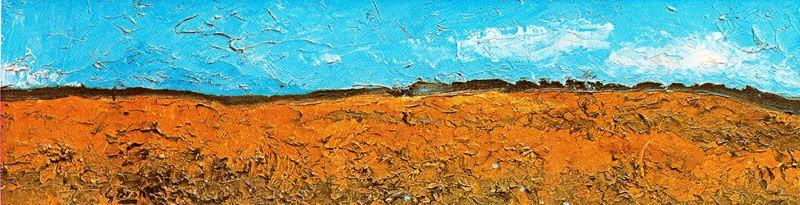
A Landscape of Dichotomy: Unveiling “The Plain”
Georges Braque’s “The Plain,” painted around 1908-1909, isn't merely a depiction of a field; it’s a carefully constructed dialogue between earth and sky, stillness and potential. Born in Argenteuil, France, in 1882, Braque’s artistic journey was deeply rooted in the practicalities of his family’s profession – house painting and decoration – an experience that instilled within him a profound understanding of form, structure, and material. This foundational knowledge, combined with his formal training at the École des Beaux-Arts, provided the bedrock for his later revolutionary explorations into Cubism. “The Plain” exemplifies this evolution, showcasing Braque’s nascent interest in deconstructing traditional perspective and presenting multiple viewpoints simultaneously.

The Palette of Earth and Sky
The painting immediately commands attention through its striking contrast. A vast expanse of ochre-toned earth dominates the left side, a rich, almost terracotta hue that speaks to the dry heat of the landscape. This isn’t simply a representation of dirt; it's imbued with a sense of ancientness, of time and weathering. Juxtaposed against this is a vibrant field of emerald green grass on the right, punctuated by patches of blue sky – an area of lightness and openness. The color choices are deliberate, creating a powerful visual tension that draws the eye across the canvas. Braque’s use of broken color, characteristic of his early Fauvist period, subtly blends these hues, suggesting a merging of earth and sky, a hint of the ephemeral nature of light and shadow.
Cubist Foundations: Fragmented Reality
While “The Plain” predates the fully realized tenets of Cubism, it’s undeniably a crucial stepping stone in Braque's development. Notice how he breaks down the forms – both the earth and the grass – into geometric shapes. The dirt isn’t rendered as a continuous mass; instead, it’s composed of angular planes and fragmented textures. Similarly, the grass is depicted with sharp edges and overlapping layers, creating an illusion of depth and volume without relying on traditional perspective. This fragmentation reflects Braque's interest in representing multiple viewpoints at once – a core principle of Cubism. The figure standing within the scene further reinforces this concept, appearing as a simplified form integrated into the fractured landscape.
Symbolic Resonance: A Quiet Contemplation
Beyond its formal innovations, “The Plain” carries a subtle symbolic weight. The vastness of the earth suggests a connection to the land, to history and tradition. The bright blue sky represents hope, freedom, and perhaps even spirituality. The solitary figure in the foreground invites contemplation – is it a shepherd, a traveler, or simply an observer? Its presence adds a human element to this otherwise serene landscape, prompting us to consider our place within the natural world. The painting’s title itself—"The Plain"—suggests a state of simplicity and openness, inviting viewers to find their own meaning within its quiet beauty.
A Reproduction for Your Space
ArtsDot offers meticulously hand-painted reproductions of “The Plain” by Georges Braque, capturing the essence of this pivotal work. Each reproduction is created using traditional oil painting techniques and archival quality materials, ensuring that it will retain its vibrancy and beauty for generations to come. Whether you’re seeking a striking statement piece for your living room or a contemplative addition to your study, our reproductions provide an authentic representation of Braque's groundbreaking vision – a testament to the power of form, color, and perspective.
Opere correlate


Biografia dell'artista
**primi anni di vita e formazione**
Georges Braque, un illustre pittore francese, collageur, disegnatore, stampatore e scultore, nacque il 13 maggio 1882 ad Argenteuil, Val-d'Oise. È cresciuto a Le Havre e inizialmente si è formato per diventare pittore di facciate e decoratore come suo padre e nonno. Tuttavia, le inclinazioni artistiche di Braque lo hanno portato a studiare pittura all’École des Beaux-Arts a Le Havre dal 1897 al 1899.**evoluzione artistica e fauvismo**
Nel 1902, dopo aver completato il suo apprendistato con un decoratore a Parigi, Braque ha frequentato l'Académie Humbert fino al 1904. Questo periodo ha segnato la sua introduzione al fauvismo, uno stile caratterizzato da colori vivaci e risposte emotive. Influenzato dalle opere di Henri Matisse e André Derain, Braque ha adottato un approccio fauvista, come si può vedere nel suo dipinto La Pazienza (fauvismo, olio su tela).**contributo al cubismo**
La collaborazione di Braque con Pablo Picasso dal 1908 al 1912 ha portato allo sviluppo del cubismo. Le loro opere cubiste analitiche, come Georges Braque: La Pazienza e Pablo Picasso: Clarinet(cubismo analitico, olio su tela), sono oggi considerate pietre miliari della storia dell'arte.**eredità e opere notevoli**
* Le Case all’Éstaque: una testimonianza dell'uso innovativo di geometria e prospettiva simultanea da parte di Braque. * La Pazienza(fauvismo, olio su tela): dimostra lo stile fauvista di Braque. * Clarinet(cubismo analitico, olio su tela): un'opera cubista collaborativa con Picasso.**musei e collezioni**
* Musée d’Orsay: presenta una vasta collezione di arte impressionista e post-impressionista, inclusi lavori di Braque. * Musée de l’Orangerie: espone una vasta gamma di opere d'arte, inclusi quelle di Braque e altri artisti notevoli.- Scopri di più sulla vita e sull'opera di Georges Braque su ArtsDot.com
- Esplora la collezione del Musée d’Orsay, che include opere di Braque e altri artisti, su Musée d'Orsay - Wikipedia
- Impara di più sul fauvismo e sulla sua influenza sullo sviluppo del cubismo con Fauvismo - movimento artistico su ArtsDot.com

Georges Braque
1882 - 1963 , Francia
Informazioni rapide
- Artisti Influenti:
- Henri Matisse
- André Derain
- Paul Cézanne
- Artisti Influenzati: ['Pablo Picasso']
- Data Di Nascita: 13 maggio 1882
- Luogo Di Nascita: Argenteuil, Francia
- Movimento Artistico: Cubismo, Fauvismo
- Nazionalità: Francese
- Nome Completo: Georges Braque
- Opere Notevoli:
- Case a L'Estaque
- La Pazienza (fauvista)
- Chitarra, Frutta e Brocca
- Natura morta con Bass
Articoli correlati

Georges Braque: I 25 Capolavori che Hanno Rivoluzionato l'Arte Moderna | ArtsDot
Esplora i 25 capolavori di Georges Braque, pioniere del Cubismo. Scopri la storia, le tecniche e l'impatto di opere iconiche come 'The Patience'. Trova riproduzioni d'arte di alta qualità per decorare casa tua su ArtsDot.com.

Georges Seurat: I 25 Capolavori che Rivoluzionarono la Pittura | ArtsDot
Esplora i 25 capolavori di Georges Seurat, il maestro del Pointillismo. Scopri la storia, le tecniche e l'emozione dietro dipinti iconici come 'Un dimanche à la Grande Jatte'. Trova riproduzioni d'arte di alta qualità per decorare casa tua su ArtsDot.com.

Verdant Visions: Exploring the Symbolism & Aesthetic Impact of Green in Art History
Explore the rich history & symbolism of green in art! Discover iconic paintings, techniques, and how to bring verdant harmony into your home with ArtsDot's expert guide.

I 10 Capolavori del Paesaggio: Arte, Storia e Decorazioni Raffinate | ArtsDot
Esplora i 10 capolavori del paesaggio artistico! Da Monet a Van Gogh, scopri la storia e le tecniche dietro quadri iconici. Trova stampe su tela di alta qualità per decorare casa con arte e stile. Scopri tutte le opere su ArtsDot.com

I 10 Dipinti Più Famosi Dominati dal Verde Oliva Scuro: Arte e Decorazioni Raffinate
Esplora i 10 dipinti più iconici dominati dal verde oliva scuro! Scopri la storia, gli artisti e le tecniche dietro capolavori senza tempo. Trova riproduzioni di alta qualità e idee per decorazioni d'arte uniche su .



