


 Anteprima in scala reale
 Condividi
 Condividi
 Dettagli
 Guida stampabile

 Scarica
 Articoli simili
 Radiografia
 Slideshow
 Statistiche
The Pink Napkin


 Leggi tutto
Riproduzione a olio fatta a mano
Olio su tela dipinto a mano nelle tue dimensioni e con la tua cornice, realizzato su ordinazione dai nostri artisti. ( Passa alle stampe Passa all'immagine digitale)




P118B $10

P118H $10

P118W $10

P438Z $10

P508JH $12

P508YH $12

P805H $10

P805Z $10

P919BZ $10

P919G $10

P919XJ $10

P959ZH $10

P968JZ $12

W106C $8

W218G $10

W218JH $8

W218Y $10

W307PJ $10

W316G $10

W316PJ $8

W316Y $10

W398PJ $8

W4111J $10

W500HY $15

W500JH $15

W692G $12

W849H $8

W940BG $15

W953PJ $8




Scegli tra le nostre dimensioni predefinite, che rispettano le proporzioni originali dell'opera d'arte.

È possibile inserire dimensioni personalizzate per adattare l'opera a una cornice o a uno spazio specifico. Se la dimensione selezionata non corrisponde alle proporzioni dell'immagine originale, provvederemo a ritagliare l'opera o a estendere il dipinto con elementi aggiuntivi dipinti a mano. Un mockup digitale ti sarà inviato per approvazione prima dell'inizio della produzione.
Si prega di notare che l'anteprima a schermo non riflette il ritaglio o l'estensione effettivi. Solo il mockup mostrerà accuratamente la composizione finale.
Sebbene siano disponibili dimensioni personalizzate, consigliamo di selezionare una dimensione dall'elenco predefinito per preservare le proporzioni originali.
Dopo l'ordine, il team di ArtsDot.com contatterà il cliente via e-mail per ricevere le istruzioni e fornirà un'anteprima del mockup
Consegna in tutto il mondo () in 3/4 settimane anziché nelle normali 5 settimane. (25 Settembre). Nessun compromesso sulla qualità.

Spedizione espressa gratuita in tutto il mondo

Tela in lino di alta qualità

Assicurazione completa sulla spedizione

Garanzia di rimborso dei dazi doganali

Garanzia di perfetta fedeltà cromatica

Politica di reso entro 100 giorni (solo per difetti di fabbricazione)

Garanzia di rimborso al 100%

Sconto per acquisti multipli
 L'opzione vetro è disponibile solo per dimensioni inferiori a 110 cm

The Pink Napkin
Tecnica di riproduzione
Dimensioni della riproduzione
-


Prezzo totale
$ 263
The Enigmatic Charm of "The Pink Napkin": A Glimpse into Braque’s Cubist World
Georges Braque's “The Pink Napkin,” painted in 1933, isn’t merely a still life; it’s a carefully constructed puzzle box inviting the viewer to contemplate the very nature of perception and representation. This vibrant canvas, brimming with familiar objects – fruit, cutlery, and a figure bathed in dappled light – immediately draws us into its world, yet subtly resists easy interpretation. The painting's power lies not just in its visual richness but also in the intellectual challenge it presents, characteristic of Braque’s pivotal role in developing Cubism alongside Pablo Picasso. It’s a testament to his exploration of fractured forms and multiple viewpoints, pushing beyond traditional notions of realistic depiction.A Fusion of Influences: Fauvism and Cézanne's Legacy
“The Pink Napkin” stands as a fascinating bridge between Braque’s early Fauvist period and the more rigorously geometric explorations of Cubism. The initial influence of Fauvism is evident in the bold, unrestrained use of color – the intense pink of the napkin itself, contrasted with the oranges and yellows of the fruit, creates an immediate visual impact. However, unlike the purely emotive approach of the Fauves, Braque’s palette feels more considered, balanced by a growing interest in structure and form. This is where the influence of Paul Cézanne becomes crucial. Cézanne's late works, with their emphasis on geometric simplification and multiple perspectives, provided Braque with a foundational model for deconstructing objects into their essential components. The painting’s fragmented forms and overlapping planes clearly echo Cézanne’s approach to capturing spatial relationships – a key element in the development of Cubism.Deconstructed Reality: The Language of Cubism
At its core, “The Pink Napkin” exemplifies Analytical Cubism. Braque doesn't aim to present a single, unified view of the scene; instead, he breaks down each object – the fruit, the cup, the spoon – into a series of interlocking geometric shapes. These fragments are then rearranged and presented simultaneously on the canvas, forcing the viewer’s eye to actively piece together the image. The figure in the background, partially obscured by the table setting, adds another layer of complexity, further disrupting any sense of conventional spatial relationships. Notice how the light itself seems fractured, cast across the objects in a way that defies easy understanding. This deliberate distortion isn't about inaccuracy; it’s about revealing the underlying structure and principles governing our perception of reality.Symbolism and Emotional Resonance: A Quiet Contemplation
While Cubism is often associated with radical experimentation, “The Pink Napkin” possesses a surprising degree of quiet contemplation. The objects depicted – fruit, tableware – are commonplace, yet their arrangement feels deliberately staged, inviting reflection on themes of abundance, consumption, and perhaps even the fleeting nature of pleasure. The pink napkin itself could be interpreted as a symbol of hospitality or intimacy, while the scattered fruit suggests a moment of shared enjoyment. The presence of the secondary figure adds an element of mystery, hinting at another participant in this intimate scene – someone observing, perhaps contemplating the arrangement itself. Braque’s masterful use of light and shadow further enhances the painting's emotional depth, creating a sense of warmth and serenity despite the fragmented composition. It’s a work that rewards careful observation and invites viewers to project their own interpretations onto its enigmatic surface.ArtsDot Reproduction: Bringing Braque’s Vision to Life
ArtsDot is proud to offer meticulously crafted, hand-painted reproductions of “The Pink Napkin.” Our artists recreate the painting's vibrant colors and complex textures with exceptional detail, ensuring that every nuance of Braque’s original vision is faithfully preserved. Whether you are an art collector, interior designer seeking a striking statement piece, or simply an admirer of this iconic work, our reproductions provide a beautiful and authentic way to experience the power and beauty of Georges Braque's masterpiece. Explore our range of sizes and canvas options to find the perfect addition to your collection – a tangible link to one of the 20th century’s most influential artists.Opere correlate


Biografia dell'artista
**primi anni di vita e formazione**
Georges Braque, un illustre pittore francese, collageur, disegnatore, stampatore e scultore, nacque il 13 maggio 1882 ad Argenteuil, Val-d'Oise. È cresciuto a Le Havre e inizialmente si è formato per diventare pittore di facciate e decoratore come suo padre e nonno. Tuttavia, le inclinazioni artistiche di Braque lo hanno portato a studiare pittura all’École des Beaux-Arts a Le Havre dal 1897 al 1899.**evoluzione artistica e fauvismo**
Nel 1902, dopo aver completato il suo apprendistato con un decoratore a Parigi, Braque ha frequentato l'Académie Humbert fino al 1904. Questo periodo ha segnato la sua introduzione al fauvismo, uno stile caratterizzato da colori vivaci e risposte emotive. Influenzato dalle opere di Henri Matisse e André Derain, Braque ha adottato un approccio fauvista, come si può vedere nel suo dipinto La Pazienza (fauvismo, olio su tela).**contributo al cubismo**
La collaborazione di Braque con Pablo Picasso dal 1908 al 1912 ha portato allo sviluppo del cubismo. Le loro opere cubiste analitiche, come Georges Braque: La Pazienza e Pablo Picasso: Clarinet(cubismo analitico, olio su tela), sono oggi considerate pietre miliari della storia dell'arte.**eredità e opere notevoli**
* Le Case all’Éstaque: una testimonianza dell'uso innovativo di geometria e prospettiva simultanea da parte di Braque. * La Pazienza(fauvismo, olio su tela): dimostra lo stile fauvista di Braque. * Clarinet(cubismo analitico, olio su tela): un'opera cubista collaborativa con Picasso.**musei e collezioni**
* Musée d’Orsay: presenta una vasta collezione di arte impressionista e post-impressionista, inclusi lavori di Braque. * Musée de l’Orangerie: espone una vasta gamma di opere d'arte, inclusi quelle di Braque e altri artisti notevoli.- Scopri di più sulla vita e sull'opera di Georges Braque su ArtsDot.com
- Esplora la collezione del Musée d’Orsay, che include opere di Braque e altri artisti, su Musée d'Orsay - Wikipedia
- Impara di più sul fauvismo e sulla sua influenza sullo sviluppo del cubismo con Fauvismo - movimento artistico su ArtsDot.com

Georges Braque
1882 - 1963 , Francia
Informazioni rapide
- Artisti Influenti:
- Henri Matisse
- André Derain
- Paul Cézanne
- Artisti Influenzati: ['Pablo Picasso']
- Data Di Nascita: 13 maggio 1882
- Luogo Di Nascita: Argenteuil, Francia
- Movimento Artistico: Cubismo, Fauvismo
- Nazionalità: Francese
- Nome Completo: Georges Braque
- Opere Notevoli:
- Case a L'Estaque
- La Pazienza (fauvista)
- Chitarra, Frutta e Brocca
- Natura morta con Bass
Articoli correlati

I 10 Dipinti Più Famosi Dominati dal Rosa Chiaro: Arte, Storia e Decorazioni Raffinate
Esplora i 10 dipinti più celebri dominati dal rosa chiaro! Da Monet a Renoir, scopri la storia e l'arte dietro queste opere iconiche. Trova stampe su tela di alta qualità e idee per decorazioni uniche su .
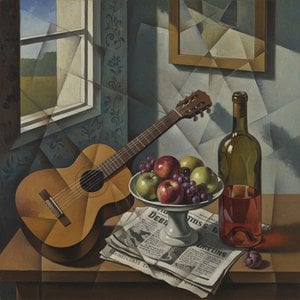
Deconstructing Reality: A Comprehensive Exploration of Cubist Still Life
Explore the revolutionary world of Cubist Still Life with ArtsDot. Discover Picasso & Braque's groundbreaking techniques, its philosophical roots, and lasting impact on modern art. Expert insights for collectors.

Georges Braque: I 25 Capolavori che Hanno Rivoluzionato l'Arte Moderna | ArtsDot
Esplora i 25 capolavori di Georges Braque, pioniere del Cubismo. Scopri la storia, le tecniche e l'impatto di opere iconiche come 'The Patience'. Trova riproduzioni d'arte di alta qualità per decorare casa tua su ArtsDot.com.

Georges Seurat: I 25 Capolavori che Rivoluzionarono la Pittura | ArtsDot
Esplora i 25 capolavori di Georges Seurat, il maestro del Pointillismo. Scopri la storia, le tecniche e l'emozione dietro dipinti iconici come 'Un dimanche à la Grande Jatte'. Trova riproduzioni d'arte di alta qualità per decorare casa tua su ArtsDot.com.

Georges Braque: La Rivoluzione Cubista e l'Evoluzione della Forma Moderna
Esplora la rivoluzione cubista di Georges Braque e l'evoluzione della forma moderna. Analisi approfondite, storia dell'arte e consigli per collezionisti esperti. Scopri il valore delle opere di Braque.


