


 Anteprima in scala reale
 Condividi
 Condividi
 Dettagli

 Scarica immagine
 Articoli simili
 Radiografia
 Slideshow
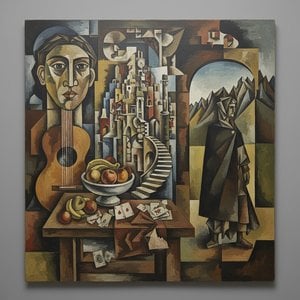
The Chariot II

 Leggi tutto
Giclée / Stampe d'arte
Stampa giclée o su tela di qualità museale, con produzione rapida e diverse opzioni di finitura. ( Passa alla versione dipinta a mano Passa all'immagine)




































Scegli tra le nostre dimensioni predefinite, che rispettano le proporzioni originali dell'opera d'arte.

È possibile inserire dimensioni personalizzate per adattare l'opera a una cornice o a uno spazio specifico. Se la dimensione selezionata non corrisponde alle proporzioni dell'immagine originale, procederemo al ritaglio dell'opera o all'estensione dell'immagine con un bordo specchiato o a tinta unita. Un mockup digitale ti verrà inviato per approvazione prima dell'inizio della produzione.
Si prega di notare che l'anteprima a schermo non riflette il ritaglio o l'estensione effettivi. Solo il mockup mostrerà accuratamente la composizione finale.
Sebbene siano disponibili dimensioni personalizzate, si raccomanda di selezionare una dimensione dall'elenco predefinito per preservare le proporzioni originali.
Consegna in tutto il mondo () in 2 settimane invece delle normali 4/5 settimane. (11 Agosto)

Spedizione espressa gratuita in tutto il mondo

Tela in lino di alta qualità

Assicurazione completa sulla spedizione

Garanzia di rimborso dei dazi doganali

Garanzia di fedeltà cromatica dell'originale

Politica di reso entro 60 giorni (solo per difetti di fabbricazione)

Garanzia di rimborso al 100%

Sconto per acquisti multipli
 L'opzione vetro è disponibile solo per dimensioni inferiori a 110 cm

The Chariot II
Giclée / Stampe d'arte
Dimensioni della riproduzione
-


Prezzo totale
$ 63
Descrizione del pezzo
Georges Braque: A Fragmented Vision of Reality
Georges Braque (1882-1963) stands as an undeniable titan amongst the architects of modern art, inextricably linked with Pablo Picasso in the genesis of Cubism – a movement that irrevocably altered artistic perception and challenged conventions established for centuries. Born in Argenteuil, France, his formative years were steeped in the atmosphere of Impressionism, nurtured by familial connections to house painters, fostering an early appreciation for meticulous observation and textural nuance. However, Braque swiftly transcended these influences, embarking on a daring intellectual voyage that propelled him toward radical experimentation and ultimately cemented his legacy as one of the most influential artists of the 20th century. His artistic trajectory began with formal training at the École des Beaux-Arts in Le Havre, where he honed his technical skills alongside fellow luminaries like Marie Laurencin and Francis Picabia – a cohort destined to reshape the visual landscape. Yet it was Paris, arriving in 1902, that truly ignited his creative fervor, immersing him within the burgeoning artistic dynamism of the Belle Époque. Here, amidst the avant-garde currents swirling through Montmartre and Montparnasse, he encountered Picasso, initiating a collaborative partnership that would yield masterpieces like “Les Demoiselles d’Avignon,” arguably the cornerstone of Cubist innovation. ### The Birth of Cubism: Deconstructing Perspective The conceptual bedrock of Braque's artistic endeavors was fundamentally rooted in a profound dissatisfaction with traditional representational art—specifically, the illusionistic techniques championed by Renaissance painters. Rejecting the single viewpoint perspective that dominated Western painting for centuries, Braque and Picasso embarked on a revolutionary project: to dismantle pictorial space and reconstruct it from multiple perspectives simultaneously. This approach, termed Analytical Cubism (roughly 1908-1912), involved fracturing objects into geometric planes—often cubes—and presenting them alongside each other on the canvas, creating an unsettling yet intellectually stimulating visual experience. The resulting images appeared flattened, devoid of depth, prioritizing form and structure over realistic depiction. Consider “Houses at L’Estaque,” painted in 1908. The scene depicts a Provençal hillside village bathed in hazy sunlight. However, Braque abandons conventional perspective entirely. Instead, he renders the buildings as fragmented planes—rectangles and triangles—overlapping and intersecting to convey not just what is visible but also how it *feels*. The muted palette—dominated by shades of ochre, gray, and brown—further enhances this sense of spatial ambiguity, mirroring the artist’s preoccupation with capturing the essence of a place rather than its literal appearance. ### Beyond Fragmentation: Synthetic Cubism and Collage As Braque continued to refine his artistic vision, he moved beyond the purely geometric explorations of Analytical Cubism toward Synthetic Cubism (roughly 1912-1914), incorporating elements of collage—the pasting together of disparate materials onto a canvas—into his compositions. This technique represented a significant departure from established artistic practices and signaled Braque’s embrace of new expressive possibilities. Influenced by the burgeoning interest in nonrepresentational art and inspired by the pioneering experiments of artists like Kazimir Malevich, he began to experiment with textures and patterns derived from everyday objects – newspaper fragments, burlap sacks, wood grain—creating visually arresting juxtapositions that challenged viewers' preconceptions about artistic materiality. “Guitar” exemplifies Synthetic Cubism’s innovative spirit. Painted in 1914, the artwork depicts a guitar rendered as a series of interlocking planes and geometric shapes. However, Braque introduces a striking element of collage – a piece of burlap fabric adhered to the canvas—creating a textural contrast that adds depth and complexity to the image. The muted color palette remains consistent with Braque’s stylistic preferences, emphasizing form and texture over chromatic vibrancy. This deliberate incorporation of non-traditional materials underscores Braque's commitment to pushing artistic boundaries and exploring new avenues for visual expression. ### Legacy and Emotional Resonance Georges Braque’s contribution to the history of art transcends mere stylistic innovation; it represents a fundamental rethinking of how artists perceive and represent reality. His unwavering dedication to experimentation—from Analytical Cubism’s geometric fragmentation to Synthetic Cubism's textural collage—established him as a pivotal figure in shaping the trajectory of modern art. More than simply replicating what is seen, Braque sought to convey an inner vision—a distillation of emotion and intellect—expressed through meticulously crafted compositions that continue to captivate audiences today. His enduring influence can be discerned not only in his own oeuvre but also in the works of countless subsequent artists who embraced Cubist principles as a springboard for their own creative endeavors.Opere correlate


Biografia dell'artista
**primi anni di vita e formazione**
Georges Braque, un illustre pittore francese, collageur, disegnatore, stampatore e scultore, nacque il 13 maggio 1882 ad Argenteuil, Val-d'Oise. È cresciuto a Le Havre e inizialmente si è formato per diventare pittore di facciate e decoratore come suo padre e nonno. Tuttavia, le inclinazioni artistiche di Braque lo hanno portato a studiare pittura all’École des Beaux-Arts a Le Havre dal 1897 al 1899.**evoluzione artistica e fauvismo**
Nel 1902, dopo aver completato il suo apprendistato con un decoratore a Parigi, Braque ha frequentato l'Académie Humbert fino al 1904. Questo periodo ha segnato la sua introduzione al fauvismo, uno stile caratterizzato da colori vivaci e risposte emotive. Influenzato dalle opere di Henri Matisse e André Derain, Braque ha adottato un approccio fauvista, come si può vedere nel suo dipinto La Pazienza (fauvismo, olio su tela).**contributo al cubismo**
La collaborazione di Braque con Pablo Picasso dal 1908 al 1912 ha portato allo sviluppo del cubismo. Le loro opere cubiste analitiche, come Georges Braque: La Pazienza e Pablo Picasso: Clarinet(cubismo analitico, olio su tela), sono oggi considerate pietre miliari della storia dell'arte.**eredità e opere notevoli**
* Le Case all’Éstaque: una testimonianza dell'uso innovativo di geometria e prospettiva simultanea da parte di Braque. * La Pazienza(fauvismo, olio su tela): dimostra lo stile fauvista di Braque. * Clarinet(cubismo analitico, olio su tela): un'opera cubista collaborativa con Picasso.**musei e collezioni**
* Musée d’Orsay: presenta una vasta collezione di arte impressionista e post-impressionista, inclusi lavori di Braque. * Musée de l’Orangerie: espone una vasta gamma di opere d'arte, inclusi quelle di Braque e altri artisti notevoli.- Scopri di più sulla vita e sull'opera di Georges Braque su ArtsDot.com
- Esplora la collezione del Musée d’Orsay, che include opere di Braque e altri artisti, su Musée d'Orsay - Wikipedia
- Impara di più sul fauvismo e sulla sua influenza sullo sviluppo del cubismo con Fauvismo - movimento artistico su ArtsDot.com

Georges Braque
1882 - 1963 , Francia
Informazioni rapide
- Artisti Influenti:
- Henri Matisse
- André Derain
- Paul Cézanne
- Artisti Influenzati: ['Pablo Picasso']
- Data Di Nascita: 13 maggio 1882
- Luogo Di Nascita: Argenteuil, Francia
- Movimento Artistico: Cubismo, Fauvismo
- Nazionalità: Francese
- Nome Completo: Georges Braque
- Opere Notevoli:
- Case a L'Estaque
- La Pazienza (fauvista)
- Chitarra, Frutta e Brocca
- Natura morta con Bass
Articoli correlati

Dalla Stampa alla Tavolozza: L'Ascesa della Fan Art Dipinta a Mano e la Ridefinizione del Collezionismo Fandom
Scopri l'ascesa della fan art dipinta a mano! Guide esperte per collezionisti esigenti, riproduzioni di alta qualità e commissioni personalizzate. Investi in arte unica e autentica.

Cubismo: I 10 Capolavori Che Hanno Rivoluzionato l'Arte Moderna | ArtsDot
Esplora i 10 capolavori del Cubismo con ArtsDot. Scopri Picasso, Braque e Gris e la rivoluzione artistica delle forme geometriche e dei colori audaci. Quadri iconici per decorare casa con stile! Esplora la collezione online.

Le 10 Opere d'Arte che Definiscono lo Stile Moderno | ArtsDot
Esplora le 10 opere d'arte che hanno rivoluzionato il mondo moderno! Da Kandinsky a Picasso, scopri la storia e l'impatto di capolavori iconici. Trova riproduzioni di alta qualità e idee per decorare casa con stile su ArtsDot.com.

Cubismo: I 10 Capolavori che Hanno Rivoluzionato l'Arte Moderna |
Esplora i 10 capolavori del Cubismo con ! Scopri Picasso, Braque e Gris e la rivoluzione dell'arte moderna. Quadri iconici, storie affascinanti e riproduzioni di alta qualità per decorare la tua casa. Esplora la collezione online!
Cubismo Espressivo: 10 Capolavori che Hanno Definito un Movimento Artistico Rivoluzionario
Esplora i 10 capolavori del Cubismo Espressivo con ArtsDot.com! Scopri Picasso, Braque e Gris, la storia di questo rivoluzionario movimento artistico e lasciati ispirare per decorare casa con arte di alta qualità. Esplora la collezione online!



