


 Anteprima in scala reale
 Condividi
 Condividi
 Dettagli

 Scarica immagine
 Articoli simili
 Radiografia
 Slideshow
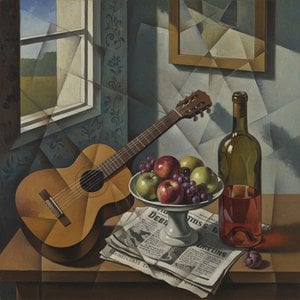
Still Life: The Table
 Acrylic On Canvas
- WallArt
- Cubism
 1928
1928 117.0 x 167.0 cm
 Leggi tutto
Giclée / Stampe d'arte
Stampa giclée o su tela di qualità museale, con produzione rapida e diverse opzioni di finitura. ( Passa alla versione dipinta a mano Passa all'immagine)




P118B $10

P118H $10

P118W $10

P438Z $10

P508JH $12

P508YH $12

P805H $10

P805Z $10

P919BZ $10

P919G $10

P919XJ $10

P959ZH $10

P968JZ $12

W106C $8

W218G $10

W218JH $8

W218Y $10

W307PJ $10

W316G $10

W316PJ $8

W316Y $10

W398PJ $8

W4111J $10

W500HY $15

W500JH $15

W692G $12

W849H $8

W940BG $15

W953PJ $8




Scegli tra le nostre dimensioni predefinite, che rispettano le proporzioni originali dell'opera d'arte.

È possibile inserire dimensioni personalizzate per adattare l'opera a una cornice o a uno spazio specifico. Se la dimensione selezionata non corrisponde alle proporzioni dell'immagine originale, procederemo al ritaglio dell'opera o all'estensione dell'immagine con un bordo specchiato o a tinta unita. Un mockup digitale ti verrà inviato per approvazione prima dell'inizio della produzione.
Si prega di notare che l'anteprima a schermo non riflette il ritaglio o l'estensione effettivi. Solo il mockup mostrerà accuratamente la composizione finale.
Sebbene siano disponibili dimensioni personalizzate, si raccomanda di selezionare una dimensione dall'elenco predefinito per preservare le proporzioni originali.
Consegna in tutto il mondo () in 2 settimane invece delle normali 4/5 settimane. (9 Agosto)

Spedizione espressa gratuita in tutto il mondo

Tela in lino di alta qualità

Assicurazione completa sulla spedizione

Garanzia di rimborso dei dazi doganali

Garanzia di fedeltà cromatica dell'originale

Politica di reso entro 60 giorni (solo per difetti di fabbricazione)

Garanzia di rimborso al 100%

Sconto per acquisti multipli
 L'opzione vetro è disponibile solo per dimensioni inferiori a 110 cm

Still Life: The Table
Giclée / Stampe d'arte
Dimensioni della riproduzione
-


Prezzo totale
$ 63
Descrizione del pezzo
The Genesis of a Still Life
Georges Braque’s “Still Life: The Table,” painted in 1928, isn't merely a depiction of objects; it’s an invitation into a carefully constructed world of fragmented perception and deliberate ambiguity. Born in Argenteuil, France, in 1882, Braque’s artistic journey was deeply rooted in the practicalities of his family’s trade – house painting and decoration – which instilled within him a profound understanding of materials and form. This foundation, combined with rigorous academic training at the École des Beaux-Arts, provided him with an unusual blend of technical skill and a nascent desire to deconstruct traditional artistic conventions. “Still Life: The Table” embodies this spirit perfectly, representing a pivotal moment in Braque’s exploration of Cubism and his fascination with how we perceive reality.
The painting emerged during a period of intense experimentation within the Parisian art scene – a time when artists were actively dismantling established notions of space, perspective, and representation. Influenced by Paul Cézanne's emphasis on geometric forms and multiple viewpoints, Braque began to explore ways to capture the essence of an object not through a single, fixed image, but through a series of intersecting planes and angles. This approach, central to Cubism, sought to convey the totality of an object’s appearance – its various facets and perspectives – simultaneously on a two-dimensional surface.
A Symphony of Muted Tones and Geometric Forms
The painting's visual impact is immediately striking due to its carefully orchestrated palette. Braque employs a restrained range of muted fawn browns, creams, whites, greens, grays, and blacks – colors that evoke a sense of quiet contemplation and understated elegance. These tones are not applied with broad strokes but rather in precisely delineated areas, creating the illusion of flat planes stacked upon one another. This technique, characteristic of Cubism, contributes to the painting’s fragmented appearance, as if the objects themselves have been broken down into their constituent parts and reassembled in a new, unconventional arrangement.
The forms within the still life are equally intriguing. The musical instrument – likely a lute – sits alongside tableware, fruit, and various domestic items, all rendered with simplified geometric shapes. Outlines are sharply defined, creating a sense of artificiality and emphasizing the constructed nature of the composition. Notice how Braque doesn’t attempt to realistically portray these objects; instead, he presents them as abstracted elements within a larger, more conceptual framework. The use of black outlines further reinforces this effect, lending a slightly two-dimensional quality to the scene.
Symbolism and Emotional Resonance
Beyond its formal qualities, “Still Life: The Table” is rich in symbolic potential. The arrangement itself – a collection of seemingly random objects gathered on a tabletop – can be interpreted as a meditation on domesticity, leisure, and the fleeting nature of time. The presence of musical instruments suggests themes of creativity, harmony, and perhaps even melancholy. The scattered fruit hints at abundance and decay, while the rolled-up sheet music evokes memories and forgotten melodies.
Furthermore, the painting’s rough surface – scratched and uneven – adds to its emotional resonance. It feels as though the canvas itself is bearing witness to a process of creation, revealing the artist's hand and the imperfections inherent in any artistic endeavor. This tactile quality invites us to engage with the work on a deeper level, sensing the energy and intention that went into its making. The signed and dated inscription – “G Braque 28” – serves as a quiet testament to this moment in time, anchoring the painting within its historical context.
A Legacy of Innovation
“Still Life: The Table” stands as a quintessential example of Braque’s pioneering work in Cubism. It exemplifies his ability to transform familiar objects into enigmatic symbols and to challenge traditional notions of representation. The painting's influence extends far beyond the confines of the 1920s, continuing to inspire artists and designers today. Reproductions of this captivating artwork offer a unique opportunity to experience Braque’s innovative vision firsthand, bringing a touch of fragmented reality into any space.
Opere correlate


Biografia dell'artista
**primi anni di vita e formazione**
Georges Braque, un illustre pittore francese, collageur, disegnatore, stampatore e scultore, nacque il 13 maggio 1882 ad Argenteuil, Val-d'Oise. È cresciuto a Le Havre e inizialmente si è formato per diventare pittore di facciate e decoratore come suo padre e nonno. Tuttavia, le inclinazioni artistiche di Braque lo hanno portato a studiare pittura all’École des Beaux-Arts a Le Havre dal 1897 al 1899.**evoluzione artistica e fauvismo**
Nel 1902, dopo aver completato il suo apprendistato con un decoratore a Parigi, Braque ha frequentato l'Académie Humbert fino al 1904. Questo periodo ha segnato la sua introduzione al fauvismo, uno stile caratterizzato da colori vivaci e risposte emotive. Influenzato dalle opere di Henri Matisse e André Derain, Braque ha adottato un approccio fauvista, come si può vedere nel suo dipinto La Pazienza (fauvismo, olio su tela).**contributo al cubismo**
La collaborazione di Braque con Pablo Picasso dal 1908 al 1912 ha portato allo sviluppo del cubismo. Le loro opere cubiste analitiche, come Georges Braque: La Pazienza e Pablo Picasso: Clarinet(cubismo analitico, olio su tela), sono oggi considerate pietre miliari della storia dell'arte.**eredità e opere notevoli**
* Le Case all’Éstaque: una testimonianza dell'uso innovativo di geometria e prospettiva simultanea da parte di Braque. * La Pazienza(fauvismo, olio su tela): dimostra lo stile fauvista di Braque. * Clarinet(cubismo analitico, olio su tela): un'opera cubista collaborativa con Picasso.**musei e collezioni**
* Musée d’Orsay: presenta una vasta collezione di arte impressionista e post-impressionista, inclusi lavori di Braque. * Musée de l’Orangerie: espone una vasta gamma di opere d'arte, inclusi quelle di Braque e altri artisti notevoli.- Scopri di più sulla vita e sull'opera di Georges Braque su ArtsDot.com
- Esplora la collezione del Musée d’Orsay, che include opere di Braque e altri artisti, su Musée d'Orsay - Wikipedia
- Impara di più sul fauvismo e sulla sua influenza sullo sviluppo del cubismo con Fauvismo - movimento artistico su ArtsDot.com

Georges Braque
1882 - 1963 , Francia
Informazioni rapide
- Artisti Influenti:
- Henri Matisse
- André Derain
- Paul Cézanne
- Artisti Influenzati: ['Pablo Picasso']
- Data Di Nascita: 13 maggio 1882
- Luogo Di Nascita: Argenteuil, Francia
- Movimento Artistico: Cubismo, Fauvismo
- Nazionalità: Francese
- Nome Completo: Georges Braque
- Opere Notevoli:
- Case a L'Estaque
- La Pazienza (fauvista)
- Chitarra, Frutta e Brocca
- Natura morta con Bass
Articoli correlati

Georges Braque: I 25 Capolavori che Hanno Rivoluzionato l'Arte Moderna | ArtsDot
Esplora i 25 capolavori di Georges Braque, pioniere del Cubismo. Scopri la storia, le tecniche e l'impatto di opere iconiche come 'The Patience'. Trova riproduzioni d'arte di alta qualità per decorare casa tua su ArtsDot.com.
Deconstructing Reality: A Comprehensive Exploration of Cubist Still Life
Explore the revolutionary world of Cubist Still Life with ArtsDot. Discover Picasso & Braque's groundbreaking techniques, its philosophical roots, and lasting impact on modern art. Expert insights for collectors.

Oltre il Ritratto: La Natura Morta Personalizzata, Eredità Artistica per Spazi di Lusso
Crea una natura morta personalizzata per il tuo hotel con ArtsDot! Artisti esperti realizzano riproduzioni su tela di alta qualità, trasformando le tue foto in opere d'arte uniche. Consulenza gratuita e spedizione internazionale.

The Bountiful Still Life: Symbolism & Artistic Representation of Fruit Across Art History
Explore the rich history of still life painting & the symbolism of fruit across art movements. Discover masterpieces from Caravaggio to Cézanne with ArtsDot – expert guidance & museum-quality reproductions.

Cubismo: I 10 Capolavori Che Hanno Rivoluzionato l'Arte Moderna | ArtsDot
Esplora i 10 capolavori del Cubismo con ArtsDot. Scopri Picasso, Braque e Gris e la rivoluzione artistica delle forme geometriche e dei colori audaci. Quadri iconici per decorare casa con stile! Esplora la collezione online.



