


 Anteprima in scala reale
 Condividi
 Condividi
 Dettagli

 Scarica immagine
 Articoli simili
 Radiografia
 Slideshow
Still Life II


 Leggi tutto
Giclée / Stampe d'arte
Stampa giclée o su tela di qualità museale, con produzione rapida e diverse opzioni di finitura. ( Ordina la riproduzione dipinta a mano Acquista download)




P118B $10

P118H $10

P118W $10

P438Z $10

P508JH $12

P508YH $12

P805H $10

P805Z $10

P919BZ $10

P919G $10

P919XJ $10

P959ZH $10

P968JZ $12

W106C $8

W218G $10

W218JH $8

W218Y $10

W307PJ $10

W316G $10

W316PJ $8

W316Y $10

W398PJ $8

W4111J $10

W500HY $15

W500JH $15

W692G $12

W849H $8

W940BG $15

W953PJ $8




Scegli tra le nostre dimensioni predefinite, che rispettano le proporzioni originali dell'opera d'arte.

È possibile inserire dimensioni personalizzate per adattare l'opera a una cornice o a uno spazio specifico. Se la dimensione selezionata non corrisponde alle proporzioni dell'immagine originale, procederemo al ritaglio dell'opera o all'estensione dell'immagine con un bordo specchiato o a tinta unita. Un mockup digitale ti verrà inviato per approvazione prima dell'inizio della produzione.
Si prega di notare che l'anteprima a schermo non riflette il ritaglio o l'estensione effettivi. Solo il mockup mostrerà accuratamente la composizione finale.
Sebbene siano disponibili dimensioni personalizzate, si raccomanda di selezionare una dimensione dall'elenco predefinito per preservare le proporzioni originali.
Consegna in tutto il mondo () in 2 settimane invece delle normali 4/5 settimane. (15 Agosto)

Spedizione espressa gratuita in tutto il mondo

Tela in lino di alta qualità

Assicurazione completa sulla spedizione

Garanzia di rimborso dei dazi doganali

Garanzia di fedeltà cromatica dell'originale

Politica di reso entro 60 giorni (solo per difetti di fabbricazione)

Garanzia di rimborso al 100%

Sconto per acquisti multipli
 L'opzione vetro è disponibile solo per dimensioni inferiori a 110 cm

Still Life II
Giclée / Stampe d'arte
Dimensioni della riproduzione
-


Prezzo totale
$ 62
Descrizione del pezzo
Deconstructing Perception: An Exploration of Braque’s *Still Life II*
Georges Braque's Still Life II is not merely a depiction of objects; it’s an intellectual and visual dismantling of how we perceive reality. Created during the fervent years of Cubism’s genesis, this striking black and white composition embodies the movement’s revolutionary spirit. It doesn’t offer a straightforward representation of a scene but instead presents a fragmented world reassembled into a complex interplay of planes and angles. Looking at it feels akin to piecing together a puzzle – one where the image remains tantalizingly elusive even as its components become clearer upon sustained observation.
A Symphony in Monochrome: Style and Technique
Braque, alongside Pablo Picasso, spearheaded Analytical Cubism, a style defined by its radical deconstruction of form. In Still Life II, this is powerfully evident. The artwork features an intricate arrangement where recognizable elements – perhaps musical instruments, bottles, or architectural fragments – dissolve into overlapping geometric shapes. This deliberate ambiguity isn’t accidental; it's central to the Cubist project of challenging traditional representation. Braque masterfully restricts his palette to black and white, intensifying the focus on form and structure. The technique is predominantly linear, employing precise lines—likely charcoal or graphite—to define shapes and create a sense of depth through layering. Varying line weights subtly suggest spatial recession, despite the absence of conventional perspective. The overall effect is one of controlled chaos, a dynamic tension between order and fragmentation that captivates the eye and stimulates the mind.
The Birth of a New Vision: Historical Context
To truly appreciate Still Life II, it’s essential to understand its historical context. Early 20th-century Paris was a crucible of artistic innovation, a place where artists actively questioned established norms and sought new ways to capture the complexities of modern experience. Braque and Picasso's collaboration during this period (roughly 1908-1914) fundamentally altered the course of art history. They weren’t simply trying to *represent* reality; they aimed for a more comprehensive understanding by presenting multiple viewpoints simultaneously – an approach profoundly influenced by contemporary advancements in science and philosophy, particularly ideas concerning relativity and perception. This wasn’t just about changing how things looked on canvas; it was about challenging the very foundations of visual representation.
Beyond Representation: Symbolism and Emotional Resonance
While not overtly symbolic in a traditional sense, the fragmented nature of Still Life II can be interpreted as representing a deconstruction of conventional ways of seeing and understanding the world. The overlapping planes suggest a rejection of singular perspectives, embracing instead a more holistic—albeit fractured—view of reality. Some art historians argue that this fragmentation reflects the anxieties and uncertainties inherent in the modern age. It’s also possible to see an exploration of the relationship between space, form, and perception itself unfolding within the artwork's composition. Still Life II isn’t designed for immediate emotional gratification; its power lies in its intellectual rigor and visual complexity. However, beneath the analytical surface, there is a compelling aesthetic appeal. The dynamic composition, subtle interplay of light and shadow, and masterful use of line create a visually engaging experience that evokes a sense of mystery and invites active participation from the viewer. For collectors and interior designers, a reproduction of this piece offers a sophisticated touch of modernism, its monochromatic palette lending itself beautifully to diverse décor styles—from minimalist spaces to more eclectic interiors.
A Legacy of Innovation
Braque’s *Still Life II* stands as a cornerstone of Cubist achievement—a testament to the movement's daring departure from traditional artistic conventions. Its influence extends far beyond its own time, inspiring subsequent generations of artists and shaping the trajectory of abstract art. Examining this artwork prompts contemplation on how perception itself is constructed, urging viewers to consider multiple viewpoints and embrace the inherent ambiguity of visual experience. The enduring fascination with *Still Life II* underscores its significance as a pivotal moment in artistic history.
Opere correlate


Biografia dell'artista
**primi anni di vita e formazione**
Georges Braque, un illustre pittore francese, collageur, disegnatore, stampatore e scultore, nacque il 13 maggio 1882 ad Argenteuil, Val-d'Oise. È cresciuto a Le Havre e inizialmente si è formato per diventare pittore di facciate e decoratore come suo padre e nonno. Tuttavia, le inclinazioni artistiche di Braque lo hanno portato a studiare pittura all’École des Beaux-Arts a Le Havre dal 1897 al 1899.**evoluzione artistica e fauvismo**
Nel 1902, dopo aver completato il suo apprendistato con un decoratore a Parigi, Braque ha frequentato l'Académie Humbert fino al 1904. Questo periodo ha segnato la sua introduzione al fauvismo, uno stile caratterizzato da colori vivaci e risposte emotive. Influenzato dalle opere di Henri Matisse e André Derain, Braque ha adottato un approccio fauvista, come si può vedere nel suo dipinto La Pazienza (fauvismo, olio su tela).**contributo al cubismo**
La collaborazione di Braque con Pablo Picasso dal 1908 al 1912 ha portato allo sviluppo del cubismo. Le loro opere cubiste analitiche, come Georges Braque: La Pazienza e Pablo Picasso: Clarinet(cubismo analitico, olio su tela), sono oggi considerate pietre miliari della storia dell'arte.**eredità e opere notevoli**
* Le Case all’Éstaque: una testimonianza dell'uso innovativo di geometria e prospettiva simultanea da parte di Braque. * La Pazienza(fauvismo, olio su tela): dimostra lo stile fauvista di Braque. * Clarinet(cubismo analitico, olio su tela): un'opera cubista collaborativa con Picasso.**musei e collezioni**
* Musée d’Orsay: presenta una vasta collezione di arte impressionista e post-impressionista, inclusi lavori di Braque. * Musée de l’Orangerie: espone una vasta gamma di opere d'arte, inclusi quelle di Braque e altri artisti notevoli.- Scopri di più sulla vita e sull'opera di Georges Braque su ArtsDot.com
- Esplora la collezione del Musée d’Orsay, che include opere di Braque e altri artisti, su Musée d'Orsay - Wikipedia
- Impara di più sul fauvismo e sulla sua influenza sullo sviluppo del cubismo con Fauvismo - movimento artistico su ArtsDot.com

Georges Braque
1882 - 1963 , Francia
Informazioni rapide
- Artisti Influenti:
- Henri Matisse
- André Derain
- Paul Cézanne
- Artisti Influenzati: ['Pablo Picasso']
- Data Di Nascita: 13 maggio 1882
- Luogo Di Nascita: Argenteuil, Francia
- Movimento Artistico: Cubismo, Fauvismo
- Nazionalità: Francese
- Nome Completo: Georges Braque
- Opere Notevoli:
- Case a L'Estaque
- La Pazienza (fauvista)
- Chitarra, Frutta e Brocca
- Natura morta con Bass
Articoli correlati
L'Eleganza Essenziale: L'Uso dell'Astrazione Monocromatica per Esaltare Luce, Texture e Architettura Moderna nell'Interior Design
Scopri come l'astrazione monocromatica trasforma gli interni con eleganza e funzionalità. Guide esperte su luce, materiali e colori neutri per spazi armoniosi e di design. Consulenza gratuita!
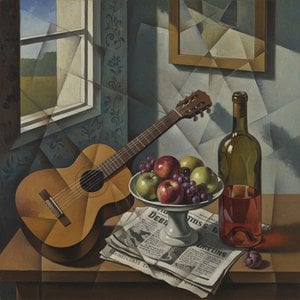
Deconstructing Reality: A Comprehensive Exploration of Cubist Still Life
Explore the revolutionary world of Cubist Still Life with ArtsDot. Discover Picasso & Braque's groundbreaking techniques, its philosophical roots, and lasting impact on modern art. Expert insights for collectors.

Maurice Prendergast: Pionierismo dell'Astrazione e la Poetica della Vita Moderna Americana
Esplora il pionierismo di Maurice Prendergast nell'astrazione americana. Analisi approfondita del suo stile, l'uso rivoluzionario del colore e l'influenza sull'arte moderna. Scopri la sua eredità con ArtsDot.

Cubismo: I 10 Capolavori Che Hanno Rivoluzionato l'Arte Moderna | ArtsDot
Esplora i 10 capolavori del Cubismo con ArtsDot. Scopri Picasso, Braque e Gris e la rivoluzione artistica delle forme geometriche e dei colori audaci. Quadri iconici per decorare casa con stile! Esplora la collezione online.

Dalla Natura Morta Classica all'Astrazione Contemporanea: Elevare gli Spazi di Ricevimento delle Ville Attraverso la Riproduzione Artistica
Scopri l'evoluzione della natura morta e come trasformare i tuoi spazi con riproduzioni artistiche di alta qualità. Consulenza d'arte gratuita e spedizione in tutto il mondo su ArtsDot.com.



