


 Anteprima in scala reale
 Condividi
 Condividi
 Dettagli
 Guida stampabile

 Scarica
 Articoli simili
 Radiografia
 Slideshow
 Statistiche
Il fruttoio


 Leggi tutto
L'opera d'arte visualizzata in questa pagina è protetta dalle leggi sul diritto d'autore, il che significa che non possiamo legalmente creare o vendere una riproduzione identica. Tale protezione è garantita da accordi internazionali quali la Convenzione di Berna e dalle leggi nazionali, incluse quelle stabilite da Legge sul copyright degli Stati Uniti - Titolo 17. Tutti i diritti riservati. Le immagini presenti su questo sito sono protette da copyright e non possono essere riprodotte o utilizzate senza l'autorizzazione scritta di WahooArt.com o dei rispettivi proprietari del copyright.
Questo metodo è pienamente conforme alle normative sul diritto d'autore poiché non prevede la copia o la duplicazione dell'opera protetta. Si tratta invece di una rielaborazione creativa: un nuovo dipinto che trae ispirazione dall'originale, senza tuttavia esserne identico.
Giclée / Stampe d'arte
Stampa giclée o su tela di qualità museale, con produzione rapida e diverse opzioni di finitura. ( Ordina la riproduzione dipinta a mano Passa all'immagine digitale)




P118B €10

P118H €10

P118W €10

P438Z €10

P508JH €12

P508YH €12

P805H €10

P805Z €10

P919BZ €10

P919G €10

P919XJ €10

P959ZH €10

P968JZ €12

W106C €8

W218G €10

W218JH €8

W218Y €10

W307PJ €10

W316G €10

W316PJ €8

W316Y €10

W398PJ €8

W4111J €10

W500HY €15

W500JH €15

W692G €12

W849H €8

W940BG €15

W953PJ €8




Scegli tra le nostre dimensioni predefinite, che rispettano le proporzioni originali dell'opera d'arte.

Inserisci la larghezza e l'altezza desiderate, per adattarle alla tua cornice o alla tua parete. Una stampa può essere solo ritagliata, mai resa più grande dell'immagine originale; pertanto, un formato con una forma differente comporterà la perdita di una parte dell'opera. Ti invieremo un mockup digitale da approvare prima di procedere con la stampa. L'immagine mostrata in questa pagina non rappresenta il ritaglio reale — solo il mockup lo mostra.
Consegna in tutto il mondo () in 2 settimane invece delle normali 4/5 settimane. (23 Ottobre)

Spedizione espressa gratuita in tutto il mondo

Tela in lino di alta qualità

Assicurazione completa sulla spedizione

Garanzia di rimborso dei dazi doganali

Garanzia di perfetta fedeltà cromatica

Politica di reso entro 100 giorni (solo per difetti di fabbricazione)

Garanzia di rimborso al 100%

Sconto per acquisti multipli
 L'opzione vetro è disponibile solo per dimensioni inferiori a 110 cm

Il fruttoio
Giclée / Stampe d'arte
Dimensioni della riproduzione
-


Prezzo totale
€ 54
Georges Braque: Pioneering Cubism & The Fruitdish’s Quiet Revolution
Georges Braque (1882-1963) stands as one of the titans of modern art, inextricably linked to Pablo Picasso in the genesis of Cubism—a movement that irrevocably altered the trajectory of Western painting. Born in Argenteuil, France, his formative years instilled within him a profound appreciation for craftsmanship alongside an innate artistic sensibility honed by formal training at the École des Beaux-Arts in Le Havre. This dual foundation proved crucial as he dismantled traditional representational conventions, embracing geometric abstraction and challenging viewers to reconsider their perception of reality. Moving to Paris in 1902, Braque immersed himself in the vibrant artistic milieu of the city, fostering collaborations that would propel him to international acclaim.- Early Life & Artistic Foundations: Braque’s upbringing within a family of house painters nurtured not only technical mastery but also an early understanding of form and structure—skills he would later translate into groundbreaking visual explorations.
- The École des Beaux-Arts & Marie Laurencin: His studies at Le Havre provided him with the academic grounding necessary to confront established artistic dogma, while his association with Marie Laurencin fostered a shared commitment to innovative aesthetic experimentation.
- Parisian Influences & Francis Picabia: Braque’s Parisian life exposed him to influential contemporaries like Francis Picabia, whose explorations of Surrealism would complement Braque's Cubist endeavors.
The Birth of Cubism – A Dialogue with Picasso
Braque’s artistic journey intersected decisively with Picasso’s in 1907, sparking a collaborative effort that birthed the revolutionary aesthetic known as Cubism. Influenced by Cézanne's radical simplification of form and perspective—particularly his masterful depiction of Mont Sainte-Victoire—Braque embarked on a quest to capture multiple viewpoints simultaneously within a single image. This ambition manifested in works like “Houses at L’Estaque,” where Braque fragmented architectural structures into interlocking planes, mirroring Cézanne’s approach to representing space. The resulting paintings defied conventional illusionism, prioritizing geometric abstraction and challenging viewers to engage with the artwork on an intellectual level.- Cézanne's Influence: Braque recognized Cézanne’s profound impact on his artistic vision, adopting techniques that mirrored Cézanne’s simplification of form and perspective.
- Collaborative Exploration: The partnership with Picasso fueled a dynamic exchange of ideas, resulting in paintings that were indistinguishable for years—a testament to their shared commitment to pushing the boundaries of artistic expression.
- Analyzing Space & Form: Braque meticulously scrutinized Cézanne’s methods for representing space and form, incorporating these insights into his own Cubist compositions.
“The Fruitdish” – A Study in Texture & Illusion
“The FruitDish,” created in 1912, exemplifies Braque's masterful manipulation of texture and illusionistic representation—a hallmark of Synthetic Cubism. This still life oil painting on canvas is more than just a depiction of fruit; it’s an intellectual exercise in challenging viewers’ perceptions of reality. Inspired by the discovery of mass-produced faux bois wallpaper purchased in Avignon, Braque employed *papier collé* – a technique pioneered by Picasso—to integrate fragments of printed paper into his charcoal drawings. The wallpaper's geometric patterns and wood grain texture served as a deliberate counterpoint to the fragmented forms of Cubism, prompting contemplation about how artists represent space and materiality.- The Role of Papier Collé: Braque’s use of papier collé—a technique championed by Picasso—represents a pivotal moment in Cubist art history.
- Texture & Illusionistic Representation: The interplay between charcoal lines and the textured surface of faux bois wallpaper underscores Braque's commitment to exploring both visual elements simultaneously.
- Symbolic Significance: The inclusion of geometric forms alongside naturalistic depictions—such as the grapes—suggests a broader exploration of artistic conventions and their ability to convey meaning beyond mere appearance.
Legacy & Impact – Beyond Fragmentation
Georges Braque’s contribution to Cubism transcends mere stylistic innovation; it represents a fundamental rethinking of how artists engage with the visual world. By prioritizing geometric abstraction alongside illusionistic representation—a strategy mirrored in “The FruitDish”—Braque ushered in an era of artistic experimentation that continues to inspire contemporary artists. His work stands as a beacon of modernist thought, demonstrating the transformative potential of challenging established norms and embracing new perspectives on form, space, and perception. Reproductions of "The Fruitdish" offer viewers a chance to experience Braque’s groundbreaking vision firsthand—a testament to his enduring influence on the history of art.Domande e risposte
Quale origine nazionale si cela dietro il Synthetic Cubism di "Il fruttoio"?
"Il fruttoio" è stata creata da Georges Braque, nato in Francia, all'interno del movimento Synthetic Cubism. L'origine dell'artista lega l'opera al Synthetic Cubism così come praticato dagli artisti di Francia.
Quali soggetti appaiono in "Il fruttoio" di Georges Braque?
I temi presenti in "Il fruttoio" di Georges Braque includono fruit dish, cubism style, collage technique, geometric forms, multiple perspectives, texture, avant garde. Insieme, essi riassumono il soggetto dell'opera.
A quale artista è attribuito "Il fruttoio"?
"Il fruttoio" è attribuito a Georges Braque.
Opere correlate


Biografia dell'artista
**primi anni di vita e formazione**
Georges Braque, un illustre pittore francese, collageur, disegnatore, stampatore e scultore, nacque il 13 maggio 1882 ad Argenteuil, Val-d'Oise. È cresciuto a Le Havre e inizialmente si è formato per diventare pittore di facciate e decoratore come suo padre e nonno. Tuttavia, le inclinazioni artistiche di Braque lo hanno portato a studiare pittura all’École des Beaux-Arts a Le Havre dal 1897 al 1899.**evoluzione artistica e fauvismo**
Nel 1902, dopo aver completato il suo apprendistato con un decoratore a Parigi, Braque ha frequentato l'Académie Humbert fino al 1904. Questo periodo ha segnato la sua introduzione al fauvismo, uno stile caratterizzato da colori vivaci e risposte emotive. Influenzato dalle opere di Henri Matisse e André Derain, Braque ha adottato un approccio fauvista, come si può vedere nel suo dipinto La Pazienza (fauvismo, olio su tela).**contributo al cubismo**
La collaborazione di Braque con Pablo Picasso dal 1908 al 1912 ha portato allo sviluppo del cubismo. Le loro opere cubiste analitiche, come Georges Braque: La Pazienza e Pablo Picasso: Clarinet(cubismo analitico, olio su tela), sono oggi considerate pietre miliari della storia dell'arte.**eredità e opere notevoli**
* Le Case all’Éstaque: una testimonianza dell'uso innovativo di geometria e prospettiva simultanea da parte di Braque. * La Pazienza(fauvismo, olio su tela): dimostra lo stile fauvista di Braque. * Clarinet(cubismo analitico, olio su tela): un'opera cubista collaborativa con Picasso.**musei e collezioni**
* Musée d’Orsay: presenta una vasta collezione di arte impressionista e post-impressionista, inclusi lavori di Braque. * Musée de l’Orangerie: espone una vasta gamma di opere d'arte, inclusi quelle di Braque e altri artisti notevoli.- Scopri di più sulla vita e sull'opera di Georges Braque su ArtsDot.com
- Esplora la collezione del Musée d’Orsay, che include opere di Braque e altri artisti, su Musée d'Orsay - Wikipedia
- Impara di più sul fauvismo e sulla sua influenza sullo sviluppo del cubismo con Fauvismo - movimento artistico su ArtsDot.com

Georges Braque
1882 - 1963 , Francia
Informazioni rapide
- Artisti Influenti:
- Henri Matisse
- André Derain
- Paul Cézanne
- Artisti Influenzati: ['Pablo Picasso']
- Data Di Nascita: 13 maggio 1882
- Luogo Di Nascita: Argenteuil, Francia
- Movimento Artistico: Cubismo, Fauvismo
- Nazionalità: Francese
- Nome Completo: Georges Braque
- Opere Notevoli:
- Case a L'Estaque
- La Pazienza (fauvista)
- Chitarra, Frutta e Brocca
- Natura morta con Bass
Articoli correlati

Deconstructing Reality: Cubism's Revolutionary Impact on 20th-Century Art
Explore the revolutionary world of Cubism with ArtsDot. Discover Picasso & Braque's groundbreaking techniques, its philosophical roots, and lasting impact on modern art. Expert insights for collectors.

Georges Seurat: I 25 Capolavori che Rivoluzionarono la Pittura | ArtsDot
Esplora i 25 capolavori di Georges Seurat, il maestro del Pointillismo. Scopri la storia, le tecniche e l'emozione dietro dipinti iconici come 'Un dimanche à la Grande Jatte'. Trova riproduzioni d'arte di alta qualità per decorare casa tua su ArtsDot.com.

Georges Braque: La Rivoluzione Cubista e l'Evoluzione della Forma Moderna
Esplora la rivoluzione cubista di Georges Braque e l'evoluzione della forma moderna. Analisi approfondite, storia dell'arte e consigli per collezionisti esperti. Scopri il valore delle opere di Braque.
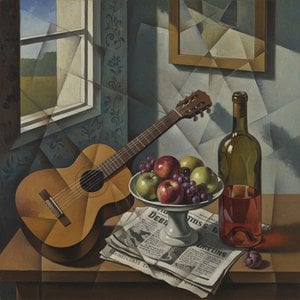
Deconstructing Reality: A Comprehensive Exploration of Cubist Still Life
Explore the revolutionary world of Cubist Still Life with ArtsDot. Discover Picasso & Braque's groundbreaking techniques, its philosophical roots, and lasting impact on modern art. Expert insights for collectors.

Georges Braque: I 25 Capolavori che Hanno Rivoluzionato l'Arte Moderna | ArtsDot
Esplora i 25 capolavori di Georges Braque, pioniere del Cubismo. Scopri la storia, le tecniche e l'impatto di opere iconiche come 'The Patience'. Trova riproduzioni d'arte di alta qualità per decorare casa tua su ArtsDot.com.


