


 Anteprima in scala reale
 Invia
Invia Condividi
 Dettagli opera

 Scarica immagine
 Simili
 Radiografia
 Slideshow
The Station
 Acrylic
- WallArt
- Geometric Abstraction
 1918
1918 65.0 x 81.0 cm
 Espandi i dettagli
Riproduzione a olio fatta a mano
Olio su tela dipinto a mano nelle tue dimensioni e con la tua cornice, realizzato su ordinazione dai nostri artisti. ( Acquista stampa Acquista immagine)




P118B $10

P118H $10

P118W $10

P438Z $10

P508JH $12

P508YH $12

P805H $10

P805Z $10

P919BZ $10

P919G $10

P919XJ $10

P959ZH $10

P968JZ $12

W106C $8

W218G $10

W218JH $8

W218Y $10

W307PJ $10

W316G $10

W316PJ $8

W316Y $10

W398PJ $8

W4111J $10

W500HY $15

W500JH $15

W692G $12

W849H $8

W940BG $15

W953PJ $8




Scegli tra le nostre dimensioni predefinite, che rispettano le proporzioni originali dell'opera d'arte.

È possibile inserire dimensioni personalizzate per adattare l'opera a una cornice o a uno spazio specifico. Se la dimensione selezionata non corrisponde alle proporzioni dell'immagine originale, provvederemo a ritagliare l'opera o a estendere il dipinto con elementi aggiuntivi dipinti a mano. Un mockup digitale ti sarà inviato per approvazione prima dell'inizio della produzione.
Si prega di notare che l'anteprima a schermo non riflette il ritaglio o l'estensione effettivi. Solo il mockup mostrerà accuratamente la composizione finale.
Sebbene siano disponibili dimensioni personalizzate, consigliamo di selezionare una dimensione dall'elenco predefinito per preservare le proporzioni originali.
Dopo l'ordine, il team di ArtsDot.com contatterà il cliente via e-mail per le istruzioni e fornirà un'anteprima del mockup
Consegna in tutto il mondo () in 3/4 settimane anziché nelle normali 5 settimane. (29 Agosto). Nessun compromesso sulla qualità.

Spedizione espressa gratuita in tutto il mondo

Tela in lino di alta qualità

Assicurazione completa sulla spedizione

Garanzia di rimborso dei dazi doganali

Garanzia di fedeltà cromatica

Politica di reso entro 60 giorni (solo per difetti di fabbricazione)

Garanzia di rimborso al 100%

Offerta per acquisti multipli
 L'opzione vetro è disponibile solo per dimensioni inferiori a 110 cm

The Station
Tecnica di riproduzione
Dimensioni riproduzione
-


Prezzo totale calcolato
$ 263
A Symphony of Form: Exploring Fernand Léger’s “The Station”
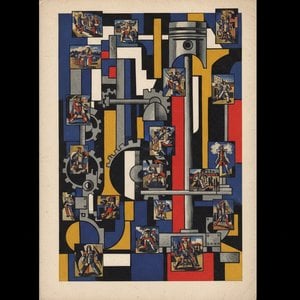
Fernand Léger's "The Station," completed in 1918, isn’t merely a depiction of a train station; it’s an embodiment of the anxieties and aspirations surrounding the burgeoning industrial revolution. Painted during a period marked by profound societal transformation – the aftermath of World War I and the rapid expansion of mechanized production – Léger sought to translate the relentless rhythm of this new era into a visual language that defied traditional representation.
- Subject Matter: The painting captures a quintessential urban scene: a bustling train station, populated by figures moving through its spaces. Léger deliberately eschewed sentimental landscapes, opting instead for an objective portrayal of everyday life within the industrial landscape.
- Style: Léger’s style is undeniably geometric abstraction. He abandons illusionistic perspective and employs simplified forms—primarily cubes and cylinders—to construct his compositions. This stylistic choice reflects a broader trend in early 20th-century art, driven by influences from Cubism and Constructivism.
- Technique: Léger utilized tempera on canvas, a technique known for its durability and vibrancy. The resulting surface is characterized by bold colors—primarily reds, yellows, and blues—applied with thick impasto strokes. This textural approach emphasizes the materiality of the paint itself, mirroring the physicality of industrial production.
Historical Context: Capturing the Spirit of Change
The painting’s creation coincided with a pivotal moment in European history. The devastation wrought by World War I fueled debates about progress and destruction, prompting artists to grapple with how to represent the complexities of modernity. Léger wasn't simply documenting a place; he was articulating a feeling—a sense of unease mingled with optimism—about humanity’s relationship with technology.
"The Station" speaks powerfully to the concerns of its time regarding urbanization and the dehumanizing effects of industrialization. However, Léger’s vision transcends mere critique. He presents these forms as symbols of dynamism and potential, suggesting that even within rigid geometric structures lies an inherent energy.
Symbolism Beyond Geometry
While Léger's dominant stylistic approach is geometric abstraction, subtle symbolic elements enrich the artwork’s narrative. The prominent clock in the upper right corner serves as a visual reminder of time—a concept often associated with mortality and change—but also represents the relentless march forward of industrial progress. The figures themselves are stylized representations of human beings, reduced to simplified forms that convey movement and anonymity.
Emotional Impact: Resonance of Modernity
"The Station" isn’t intended to evoke emotional sentimentality; rather, it aims to provoke contemplation about the human condition within a technologically driven world. Léger's bold colors and textured surface contribute to an atmosphere of energy and immediacy, mirroring the pulse of the station itself. Ultimately, the painting invites viewers to consider how art can capture not just what we see but also what we *feel*—the anxieties and hopes inherent in embracing the transformative forces shaping our lives.
Opere simili


Biografia dell'artista
vitae e formazione
Fernand Léger, pittore, scultore e filmmaker francese, nacque il 4 febbraio 1881 ad Argentan, Orne, nella bassa Normandia. Suo padre allevava bovini e Léger iniziò la sua formazione come architetto nel 1897-1899. Successivamente si trasferì a Parigi nel 1900, sostenendosi con il lavoro di disegnatore architettonico.sviluppo artistico
Le prime opere di Léger furono influenzate dall'impressionismo, come visto in Le jardin de ma mère (Il giardino di mia madre) (1905). Dopo aver frequentato la scuola d'arte decorativa e l'Académie Julian, iniziò a lavorare seriamente come pittore a 25 anni. Il suo stile si evolse in una forma personale di cubismo, che i critici definirono "tubismo" per la sua enfasi su forme cilindriche.Cubismo e il gruppo dei Puteaux
Nel 1910, Léger espose al Salon d'automne insieme a Jean Metzinger e Henri Le Fauconnier. Entrò nel gruppo dei Puteaux, noto anche come la sezione d'or (la sezione aurea), insieme ad altri artisti come Francis Picabia e Marcel Duchamp.Guerra e la sua influenza sull'opera di Léger
Le esperienze di Léger nella Prima Guerra Mondiale ebbero un impatto significativo sulla sua opera. Durante il suo tempo al fronte, produsse schizzi di pezzi d'artiglieria, aerei e soldati. Il suo dipinto Soldier with a Pipe (1916) riflette questo periodo.Lavoro successivo e eredità
Il lavoro post-bellico di Léger, caratterizzato da forme meccaniche lisce, lo legò alla tradizione della pittura figurativa francese. I suoi paesaggi animati del 1921 mostrarono figure e animali in forme armoniose e razionalizzate.- visualizza le opere di Fernand Léger su ArtsDot
- altro sul Fernand Léger su Wikipedia
- scopri il Musée National Fernand Légère (Francia) con ArtsDot
- La donna seduta (100 x 81 cm, tubismo)
- Elemento macchina (cubismo)

Fernand Léger
1881 - 1955 , Francia
Dati rapidi
- Artisti Influenti:
- Cézanne
- Impressionismo
- Artisti Influenzati: ['Pop Art']
- Data Di Nascita: 4 febbraio 1881
- Luogo Di Nascita: Argentan, Francia
- Movimento Artistico: Cubismo, Tubismo
- Nazionalità: Francese
- Nome Completo: Fernand Léger
- Opere Notevoli:
- La Grande Parata
- L'Elemento Macchina
- Donna Seduta
- The City
Articoli correlati
Fernand Léger: I 25 Capolavori che Hanno Definito l'Arte Moderna | ArtsDot
Esplora i 25 capolavori di Fernand Léger, pioniere del cubismo e del tubismo. Scopri la storia, le tecniche e l'impatto dell'arte moderna francese. Stampe d'arte e riproduzioni su ArtsDot.com.

Astrazione Geometrica: 10 Capolavori che Hanno Definito un Movimento Artistico
Esplora i 10 capolavori dell'Astrazione Geometrica: Mondrian, Malevich e Kandinsky rivoluzionano l'arte moderna. Scopri la storia, i colori e le tecniche di questi movimenti iconici. Stampe d'arte di alta qualità su ArtsDot.com!

Beyond Form & Color: Geometric Abstraction's Evolution in 20th/21st Century Art
Explore the evolution of geometric abstraction from Cubism to contemporary art. Discover key artists like Malevich & Mondrian, investment insights, and expert collecting advice at ArtsDot.

Kandinsky: I 25 Capolavori che Hanno Rivoluzionato l'Arte Moderna | ArtsDot
Esplora i 25 capolavori di Wassily Kandinsky, pioniere dell'arte astratta. Scopri la storia, il significato e le tecniche dietro ogni dipinto iconico. Trova riproduzioni d'arte di alta qualità per decorare la tua casa su ArtsDot.com.

Beyond Form & Color: Geometric Abstraction's Enduring Legacy in Art History
Explore the captivating world of geometric abstraction! Discover its origins, key artists like Malevich & Mondrian, and why this movement remains highly valued by art collectors today. Expert insights at ArtsDot.



