


 Anteprima in scala reale
 Invia
Invia Condividi
 Dettagli opera

 Scarica immagine
 Simili
 Radiografia
 Slideshow
 Stats
Stats'The album ''Circus''' (25)
 Acrylic On Canvas
- WallArt
- Cubist Modernity
 1950
1950 42.0 x 32.0 cm
 Espandi i dettagli
Riproduzione a olio fatta a mano
Olio su tela dipinto a mano nelle tue dimensioni e con la tua cornice, realizzato su ordinazione dai nostri artisti. ( Switch to Print Switch to Digital Image)




P118B $10

P118H $10

P118W $10

P438Z $10

P508JH $12

P508YH $12

P805H $10

P805Z $10

P919BZ $10

P919G $10

P919XJ $10

P959ZH $10

P968JZ $12

W106C $8

W218G $10

W218JH $8

W218Y $10

W307PJ $10

W316G $10

W316PJ $8

W316Y $10

W398PJ $8

W4111J $10

W500HY $15

W500JH $15

W692G $12

W849H $8

W940BG $15

W953PJ $8




Scegli tra le nostre dimensioni predefinite, che rispettano le proporzioni originali dell'opera d'arte.

È possibile inserire dimensioni personalizzate per adattare l'opera a una cornice o a uno spazio specifico. Se la dimensione selezionata non corrisponde alle proporzioni dell'immagine originale, provvederemo a ritagliare l'opera o a estendere il dipinto con elementi aggiuntivi dipinti a mano. Un mockup digitale ti sarà inviato per approvazione prima dell'inizio della produzione.
Si prega di notare che l'anteprima a schermo non riflette il ritaglio o l'estensione effettivi. Solo il mockup mostrerà accuratamente la composizione finale.
Sebbene siano disponibili dimensioni personalizzate, consigliamo di selezionare una dimensione dall'elenco predefinito per preservare le proporzioni originali.
Dopo l'ordine, il team di ArtsDot.com contatterà il cliente via e-mail per le istruzioni e fornirà un'anteprima del mockup
Consegna in tutto il mondo () in 3/4 settimane anziché nelle normali 5 settimane. (8 Settembre). Nessun compromesso sulla qualità.

Spedizione espressa gratuita in tutto il mondo

Tela in lino di alta qualità

Assicurazione completa sulla spedizione

Garanzia di rimborso dei dazi doganali

Garanzia di fedeltà cromatica

Politica di reso entro 100 giorni (solo per difetti)

Garanzia di rimborso al 100%

Offerta per acquisti multipli
 L'opzione vetro è disponibile solo per dimensioni inferiori a 110 cm

'The album ''Circus''' (25)
Tecnica di riproduzione
Dimensioni riproduzione
-


Prezzo totale calcolato
$ 263
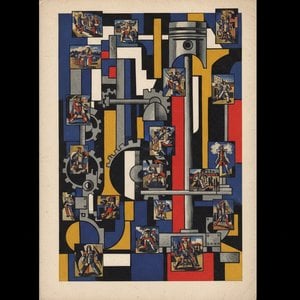
The Album ''Circus'' by Fernand Léger: A Symphony of Modernity
Fernand Léger’s “The Album ‘Circus’,” painted in 1950, is more than just a depiction of a vibrant scene; it's a potent distillation of the artist’s lifelong fascination with the burgeoning world of modernity. Born Joseph Fernand Henri Léger in 1881 in Argentan, Normandy, his early experiences – the physicality of farm labor – provided a crucial counterpoint to the mechanized landscapes he would later portray with such bold conviction. This painting, measuring 42 x 32 cm, exemplifies Léger’s signature style: a dynamic blend of abstraction and recognizable form, capturing the energy and spirit of the machine age with remarkable intensity.
- Subject Matter: The scene unfolds around a central female figure adorned with a striking sunflower – a recurring motif in Léger's work symbolizing vitality and optimism. Surrounding her are a diverse group of individuals engaged in various postures, creating a sense of bustling activity reminiscent of a circus or public gathering.
- Style & Technique: Léger’s technique is characterized by bold, geometric shapes and flattened perspectives, reflecting his interest in the forms of industrial machinery. He employs a vibrant color palette – yellows, greens, reds, blues, and whites – to heighten the visual impact and convey a sense of movement and excitement. The brushwork is loose and expressive, contributing to the painting’s overall dynamism.
Decoding the Symbolism: Form and Function
Léger wasn't simply illustrating a scene; he was constructing a visual language that spoke directly to the anxieties and aspirations of his time. The sunflower itself is a key element, representing not just beauty but also resilience and adaptation – qualities essential for navigating the rapidly changing world. The figures themselves are often depicted with simplified, almost robotic forms, reflecting Léger’s fascination with the impact of industrialization on the human body. The composition deliberately avoids traditional notions of perspective and depth, instead prioritizing the simultaneous presentation of multiple viewpoints, mirroring the fragmented experience of modern life.
- Geometric Forms: The dominant use of geometric shapes – circles, squares, triangles – reflects Léger’s belief that these forms were inherent in both nature and machine design.
- Human Figure as Machine: The figures are often stylized to resemble mechanical components, blurring the lines between human and machine.
Historical Context & Léger's Vision
Created in 1950, “The Album ‘Circus’” reflects a pivotal moment in art history – the aftermath of World War II and the continued rise of industrialization. Léger was a key figure in the development of Cubism, but he ultimately forged his own path, creating a unique style that anticipated many of the concerns of later abstract expressionists. His work is deeply rooted in the social and technological changes of the 20th century, offering a powerful commentary on humanity’s relationship with technology and its impact on our perception of reality. Léger's artistic journey, from his rural origins to his embrace of modernism, demonstrates an unwavering commitment to capturing the essence of his time.
Emotional Impact & Artistic Value
“The Album ‘Circus’” possesses a captivating energy and immediacy that draws the viewer into its vibrant world. The painting's dynamic composition, bold colors, and symbolic imagery create a powerful emotional response, inviting contemplation on themes of progress, adaptation, and the human condition. This hand-painted reproduction offers an exceptional opportunity to own a piece of art history – a testament to Fernand Léger’s genius and his enduring legacy as one of the most important artists of the 20th century.
Opere simili


Biografia dell'artista
vitae e formazione
Fernand Léger, pittore, scultore e filmmaker francese, nacque il 4 febbraio 1881 ad Argentan, Orne, nella bassa Normandia. Suo padre allevava bovini e Léger iniziò la sua formazione come architetto nel 1897-1899. Successivamente si trasferì a Parigi nel 1900, sostenendosi con il lavoro di disegnatore architettonico.sviluppo artistico
Le prime opere di Léger furono influenzate dall'impressionismo, come visto in Le jardin de ma mère (Il giardino di mia madre) (1905). Dopo aver frequentato la scuola d'arte decorativa e l'Académie Julian, iniziò a lavorare seriamente come pittore a 25 anni. Il suo stile si evolse in una forma personale di cubismo, che i critici definirono "tubismo" per la sua enfasi su forme cilindriche.Cubismo e il gruppo dei Puteaux
Nel 1910, Léger espose al Salon d'automne insieme a Jean Metzinger e Henri Le Fauconnier. Entrò nel gruppo dei Puteaux, noto anche come la sezione d'or (la sezione aurea), insieme ad altri artisti come Francis Picabia e Marcel Duchamp.Guerra e la sua influenza sull'opera di Léger
Le esperienze di Léger nella Prima Guerra Mondiale ebbero un impatto significativo sulla sua opera. Durante il suo tempo al fronte, produsse schizzi di pezzi d'artiglieria, aerei e soldati. Il suo dipinto Soldier with a Pipe (1916) riflette questo periodo.Lavoro successivo e eredità
Il lavoro post-bellico di Léger, caratterizzato da forme meccaniche lisce, lo legò alla tradizione della pittura figurativa francese. I suoi paesaggi animati del 1921 mostrarono figure e animali in forme armoniose e razionalizzate.- visualizza le opere di Fernand Léger su ArtsDot
- altro sul Fernand Léger su Wikipedia
- scopri il Musée National Fernand Légère (Francia) con ArtsDot
- La donna seduta (100 x 81 cm, tubismo)
- Elemento macchina (cubismo)

Fernand Léger
1881 - 1955 , Francia
Dati rapidi
- Artisti Influenti:
- Cézanne
- Impressionismo
- Artisti Influenzati: ['Pop Art']
- Data Di Nascita: 4 febbraio 1881
- Luogo Di Nascita: Argentan, Francia
- Movimento Artistico: Cubismo, Tubismo
- Nazionalità: Francese
- Nome Completo: Fernand Léger
- Opere Notevoli:
- La Grande Parata
- L'Elemento Macchina
- Donna Seduta
- The City
Articoli correlati

Giclée Prints: Archival Quality & Aesthetic Nuances for the Discerning Collector
Explore the world of giclée prints with ArtsDot. Learn about archival quality, aesthetic nuances & investment potential. Expert guidance for discerning art collectors seeking museum-quality reproductions and lasting value.

Kandinsky: I 25 Capolavori che Hanno Rivoluzionato l'Arte Moderna | ArtsDot
Esplora i 25 capolavori di Wassily Kandinsky, pioniere dell'arte astratta. Scopri la storia, il significato e le tecniche dietro ogni dipinto iconico. Trova riproduzioni d'arte di alta qualità per decorare la tua casa su ArtsDot.com.
Fernand Léger: I 25 Capolavori che Hanno Definito l'Arte Moderna | ArtsDot
Esplora i 25 capolavori di Fernand Léger, pioniere del cubismo e del tubismo. Scopri la storia, le tecniche e l'impatto dell'arte moderna francese. Stampe d'arte e riproduzioni su ArtsDot.com.

Espressionismo Astratto: I 10 Capolavori che Hanno Definito un Movimento Artistico Rivoluzionario
Esplora i 10 capolavori dell'Espressionismo Astratto con ! Scopri Pollock, Rothko e De Kooning: storia, tecnica e significato di opere iconiche per arredare la tua casa con arte di alta qualità. Esplora la collezione online!

Astrazione Geometrica: 10 Capolavori che Hanno Definito un Movimento Artistico
Esplora i 10 capolavori dell'Astrazione Geometrica: Mondrian, Malevich e Kandinsky rivoluzionano l'arte moderna. Scopri la storia, i colori e le tecniche di questi movimenti iconici. Stampe d'arte di alta qualità su ArtsDot.com!


