


 Anteprima in scala reale
 Condividi
 Condividi
 Dettagli

 Scarica immagine
 Articoli simili
 Radiografia
 Slideshow
Painting
 Acrylic
- WallArt
- Cubist Abstraction
 1926
1926 65.0 x 46.0 cm
 Leggi tutto
Acquista un'immagine digitale ad alta risoluzione e ottimizzata, di qualità nettamente superiore all'anteprima online.
Ogni file è meticolosamente preparato dai nostri specialisti interni attraverso l'uso di strumenti avanzati e un sapiente ritocco manuale. Garantiamo che ogni immagine presenti una chiarezza eccezionale, una precisione cromatica impeccabile e dettagli raffinati.
Il file finale viene consegnato via e-mail entro 72 ore, ottimizzato per un uso immediato in contesti professionali, editoriali e di stampa. Si tratta della stessa qualità affidata ai più prestigiosi studi di design, editori e gallerie d'arte.
Immagine Digitale
Scarica un file ad alta risoluzione per uso personale, per la stampa e per progetti creativi. ( Ordina stampa Ordina la riproduzione dipinta a mano)
Incluso in ogni acquisto di immagini digitali
Consegna digitale professionale e garantita
Quando scegli ArtsDot.com, non riceverai solo un'immagine: riceverai un'opera d'arte digitale professionalmente ottimizzata, realizzata con la massima precisione e accompagnata da una garanzia di soddisfazione. Ecco tutto ciò che include il tuo ordine, automaticamente:

Consegna rapida via email
Riceverai il file dell'immagine digitale ad alta risoluzione via email entro 72 ore dall'ordine, pronto per un uso immediato.

File digitale potenziato dall'IA
La tua opera d'arte viene ottimizzata professionalmente attraverso l'uso di strumenti avanzati di intelligenza artificiale e una revisione manuale, garantendo il massimo livello di dettaglio, nitidezza e accuratezza cromatica.

Riconsegna gratuita a vita
Hai eliminato o perso accidentalmente il tuo file? Non preoccuparti: te lo invieremo di nuovo in qualsiasi momento, gratuitamente.

Nessun costo di importazione, mai
Goditi la tua opera d'arte istantaneamente senza costi doganali, dazi o spese di spedizione: i download digitali sono sempre esenti da tasse.

Garanzia di fedeltà cromatica
Garantiamo che la tua immagine digitale rifletta i colori originali con la massima fedeltà, grazie all'uso di strumenti professionali e a una gestione accurata del colore.

Garanzia soddisfazione 60 giorni
Se non sei soddisfatto della tua immagine digitale, la revisioneremo o ti rimborseremo il 100% entro 60 giorni, senza domande.

Garanzia di rimborso al 100%
Non sei soddisfatto? Ricevi un rimborso completo entro 60 giorni dal ricevimento del tuo file digitale, senza dover fornire spiegazioni.

Sconti per ordini multipli
Acquista 3 immagini, risparmia il 10% - Acquista 5, risparmia il 15% - Acquista 10+, risparmia il 20%. Ideale per progetti creativi, gallerie e agenzie.
Descrizione del collezionabile
A Fragmented Reality: Léger’s ‘Painting’ (1926) – An Exploration of Modernity
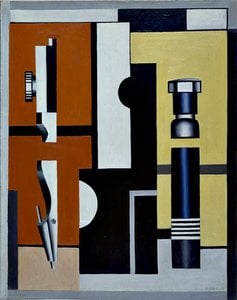
Fernand Léger's 1926 work, simply titled 'Painting,' is a captivating and unsettling meditation on the burgeoning world of industrial modernity. This intimate canvas, measuring 65 x 46 cm, immediately draws the viewer into a carefully constructed tableau – a collision of domestic objects and human figures that speaks volumes about the anxieties and aspirations of the interwar period. The composition itself feels deliberately fragmented, mirroring the sense of dislocation experienced as traditional ways of life were irrevocably altered by technological advancement. Léger wasn't simply depicting machinery; he was attempting to capture its *spirit*, a restless energy that permeated every aspect of urban existence.
- Subject Matter: The painting’s subject matter is deliberately ambiguous, presenting a collection of tools – a knife, scissors, and pliers – alongside two human figures. This juxtaposition immediately raises questions about labor, utility, and the increasingly mechanized nature of work.
- Compositional Dynamics: The placement of these objects and figures creates a dynamic tension. The knife’s assertive presence on the left, contrasted with the more passive positioning of the scissors and pliers, suggests a struggle between control and vulnerability.
The Language of Cubism and Machine Aesthetics
Léger's style is firmly rooted in the principles of Cubism, but he pushed beyond its purely analytical concerns. While Picasso and Braque sought to dissect objects into geometric forms, Léger embraced a more constructive approach, integrating these fractured elements back together to represent not just form, but also movement and energy. The bold, angular shapes – particularly evident in the tools themselves – evoke the sharp lines of industrial machinery, reflecting Léger’s fascination with the dynamism of the machine age. Notice how he avoids smooth transitions; instead, he favors abrupt shifts in tone and texture, further amplifying the sense of disruption.
The clock, subtly placed on the left side, adds another layer of complexity. It's not merely a decorative element but a potent symbol of time – a relentless force accelerating towards an uncertain future. This detail underscores Léger’s concern with the impact of modernity on human experience and the potential for alienation within a rapidly changing world.
Symbolism and Emotional Resonance
The two figures, positioned at opposite ends of the canvas, are equally enigmatic. Their anonymity suggests that they represent humanity as a whole – individuals caught in the currents of industrialization. Their postures, though not overtly expressive, convey a sense of quiet contemplation or perhaps even apprehension. The overall effect is one of unease and disorientation, reflecting the anxieties of a society grappling with profound social and technological shifts.
Léger’s use of color – primarily muted tones punctuated by flashes of brighter hues – contributes to this emotional impact. The cool blues and grays evoke a sense of distance and detachment, while the occasional bursts of red or yellow inject moments of intensity and urgency. This careful manipulation of color further enhances the painting's symbolic weight.
A Legacy of Modern Art
Created in 1926, ‘Painting’ exemplifies Léger’s pivotal role in shaping modern art. His work bridged the gap between abstraction and representation, offering a uniquely insightful commentary on the challenges and possibilities of modernity. This hand-painted reproduction captures not only the visual details of the original but also the profound emotional and intellectual depth that makes it such a compelling masterpiece. It's a piece that invites contemplation – a reminder of our relationship with technology, time, and the ever-evolving nature of reality.
Opere correlate




Biografia dell'artista
vitae e formazione
Fernand Léger, pittore, scultore e filmmaker francese, nacque il 4 febbraio 1881 ad Argentan, Orne, nella bassa Normandia. Suo padre allevava bovini e Léger iniziò la sua formazione come architetto nel 1897-1899. Successivamente si trasferì a Parigi nel 1900, sostenendosi con il lavoro di disegnatore architettonico.sviluppo artistico
Le prime opere di Léger furono influenzate dall'impressionismo, come visto in Le jardin de ma mère (Il giardino di mia madre) (1905). Dopo aver frequentato la scuola d'arte decorativa e l'Académie Julian, iniziò a lavorare seriamente come pittore a 25 anni. Il suo stile si evolse in una forma personale di cubismo, che i critici definirono "tubismo" per la sua enfasi su forme cilindriche.Cubismo e il gruppo dei Puteaux
Nel 1910, Léger espose al Salon d'automne insieme a Jean Metzinger e Henri Le Fauconnier. Entrò nel gruppo dei Puteaux, noto anche come la sezione d'or (la sezione aurea), insieme ad altri artisti come Francis Picabia e Marcel Duchamp.Guerra e la sua influenza sull'opera di Léger
Le esperienze di Léger nella Prima Guerra Mondiale ebbero un impatto significativo sulla sua opera. Durante il suo tempo al fronte, produsse schizzi di pezzi d'artiglieria, aerei e soldati. Il suo dipinto Soldier with a Pipe (1916) riflette questo periodo.Lavoro successivo e eredità
Il lavoro post-bellico di Léger, caratterizzato da forme meccaniche lisce, lo legò alla tradizione della pittura figurativa francese. I suoi paesaggi animati del 1921 mostrarono figure e animali in forme armoniose e razionalizzate.- visualizza le opere di Fernand Léger su ArtsDot
- altro sul Fernand Léger su Wikipedia
- scopri il Musée National Fernand Légère (Francia) con ArtsDot
- La donna seduta (100 x 81 cm, tubismo)
- Elemento macchina (cubismo)

Fernand Léger
1881 - 1955 , Francia
In breve
- Artisti Influenti:
- Cézanne
- Impressionismo
- Artisti Influenzati: ['Pop Art']
- Data Di Nascita: 4 febbraio 1881
- Luogo Di Nascita: Argentan, Francia
- Movimento Artistico: Cubismo, Tubismo
- Nazionalità: Francese
- Nome Completo: Fernand Léger
- Opere Notevoli:
- La Grande Parata
- L'Elemento Macchina
- Donna Seduta
- The City

