


 Anteprima in scala reale
 Condividi
 Condividi
 Dettagli
 Guida stampabile

 Scarica
 Articoli simili
 Radiografia
 Slideshow
 Statistiche
Mural
 Oil On Canvas
- WallArt
- Geometric Abstraction
 1924
1924- Modern
 162.0 x 130.0 cm
 Leggi tutto
Riproduzione a olio fatta a mano
Olio su tela dipinto a mano nelle tue dimensioni e con la tua cornice, realizzato su ordinazione dai nostri artisti. ( Passa alle stampe Passa all'immagine digitale)




P118B €10

P118H €10

P118W €10

P438Z €10

P508JH €12

P508YH €12

P805H €10

P805Z €10

P919BZ €10

P919G €10

P919XJ €10

P959ZH €10

P968JZ €12

W106C €8

W218G €10

W218JH €8

W218Y €10

W307PJ €10

W316G €10

W316PJ €8

W316Y €10

W398PJ €8

W4111J €10

W500HY €15

W500JH €15

W692G €12

W849H €8

W940BG €15

W953PJ €8




Scegli tra le nostre dimensioni predefinite, che rispettano le proporzioni originali dell'opera d'arte.

Inserisci la larghezza e l'altezza di cui hai bisogno, per adattarle alla tua cornice o alla tua parete. Trattandosi di un'opera dipinta a mano, in caso di dimensioni con una forma differente, l'artista può dipingere un po' più oltre i bordi dell'immagine o ritagliare leggermente — la scelta spetta a te. Ti invieremo un mockup digitale da approvare prima che la pittura abbia inizio. L'immagine mostrata in questa pagina non rappresenta il risultato reale — solo il mockup lo fa.
Dopo l'ordine, il team di ArtsDot.com contatterà il cliente via e-mail per ricevere le istruzioni e fornirà un'anteprima del mockup
Consegna in tutto il mondo () in 3/4 settimane anziché nelle normali 5 settimane. (22 Ottobre). Nessun compromesso sulla qualità.

Spedizione espressa gratuita in tutto il mondo

Tela in lino di alta qualità

Assicurazione completa sulla spedizione

Garanzia di rimborso dei dazi doganali

Garanzia di perfetta fedeltà cromatica

Politica di reso entro 100 giorni (solo per difetti di fabbricazione)

Garanzia di rimborso al 100%

Sconto per acquisti multipli
 L'opzione vetro è disponibile solo per dimensioni inferiori a 110 cm

Mural
Tecnica di riproduzione
Dimensioni della riproduzione
-


Prezzo totale
€ 230
A Symphony of Geometric Forms: The Pulse of Modernity
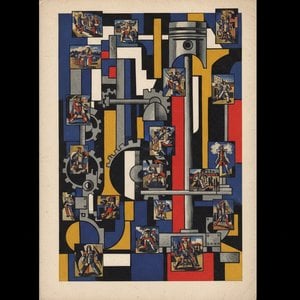
In the vast landscape of early twentieth-century avant-garde art, few works capture the electric tension of the Machine Age as vibrantly as Fernand Léger’s Mural. Painted in 1924, this monumental canvas is far more than a mere arrangement of shapes; it is a rhythmic manifesto of progress and industrial optimism. As one gazes upon its complex composition, there is an immediate sense of movement, as if the very pigments are caught in the gears of a great, unseen engine. Léger does not merely depict a scene; he constructs a visual language that mirrors the burgeoning dynamism of a world being reshaped by steel, speed, and structural innovation.
The artwork functions as a breathtaking exploration of geometric abstraction, where the boundaries between object and space begin to dissolve. Through a deliberate flattening of perspective, Léger invites the viewer into a realm where squares, triangles, and interlocking planes dance in a choreographed chaos. This is not the soft, fleeting light of the Impressionists, but rather a bold, assertive geometry that demands attention. For the discerning collector or interior designer, this piece offers a profound sense of structural order wrapped in an energetic, modern aesthetic, making it a commanding centerpiece for any sophisticated contemporary space.
The Art of Construction: Technique and Color
Léger’s technical mastery lies in his ability to marry the rigid principles of Constructivism with a palpable, tactile energy. His approach to the canvas is deeply physical, characterized by a thick, expressive impasto that lends a sculptural quality to the flat shapes. This heavy application of paint creates a surface texture that catches the light, adding depth to the primary colors and making the geometric forms feel as though they possess their own weight and mass. It is a technique that honors the industrial process—raw, powerful, and unapologetically direct.
The palette of Mural is a masterclass in visual impact. Léger utilizes a striking spectrum of reds, greens, yellows, whites, and blacks, strategically deploying these hues to guide the eye through the labyrinthine composition. The way certain colors bleed into borders or contrast sharply against dark voids creates a sense of optical vibration. This interplay of light and saturated pigment ensures that the artwork remains visually stimulating from every angle, providing an enduring source of inspiration for those who appreciate art that possesses both intellectual depth and visceral, decorative power.
A Legacy of Industrial Harmony
To understand Mural is to understand the soul of the post-World War I era. Emerging from a period of profound societal upheaval, Léger’s work reflects a desire to find beauty in the new, mechanical reality of human existence. While many artists of his time retreated into pure abstraction or clung to nostalgic realism, Léger embraced the machine. He saw in the precision of the square and the strength of the line a way to communicate the underlying order of an increasingly complex industrial society. His work serves as a bridge between the organic world of his French upbringing and the metallic future of the modern age.
For those seeking to adorn a home or gallery with a piece that embodies historical significance and timeless elegance, this reproduction of Léger’s masterpiece offers an unparalleled opportunity. It is an invitation to live alongside a fragment of history—a piece that celebrates the courage to innovate and the beauty found in the structured rhythm of modern life. Whether placed in a minimalist loft or a classic study, Mural brings with it an aura of intellectual vigor and a sophisticated, avant-garde spirit that never fades.
Domande e risposte
Che intensità cromatica ha "Mural" di Fernand Léger?
L'intensità cromatica di "Mural" è Balanced. L'intensità descrive quanto appaiano marcati i colori.
È disponibile un download ad alta risoluzione di "Mural"?
"Mural" è disponibile come download di un'immagine digitale ad alta risoluzione, acquistabile direttamente sulla sua pagina Immagine Digitale.
Quale tavolozza e quale emozione unisce "Mural"?
In "Mural", i colori di Neutrals accompagnano una sensazione Energetic.
Opere correlate


Biografia dell'artista
vitae e formazione
Fernand Léger, pittore, scultore e filmmaker francese, nacque il 4 febbraio 1881 ad Argentan, Orne, nella bassa Normandia. Suo padre allevava bovini e Léger iniziò la sua formazione come architetto nel 1897-1899. Successivamente si trasferì a Parigi nel 1900, sostenendosi con il lavoro di disegnatore architettonico.sviluppo artistico
Le prime opere di Léger furono influenzate dall'impressionismo, come visto in Le jardin de ma mère (Il giardino di mia madre) (1905). Dopo aver frequentato la scuola d'arte decorativa e l'Académie Julian, iniziò a lavorare seriamente come pittore a 25 anni. Il suo stile si evolse in una forma personale di cubismo, che i critici definirono "tubismo" per la sua enfasi su forme cilindriche.Cubismo e il gruppo dei Puteaux
Nel 1910, Léger espose al Salon d'automne insieme a Jean Metzinger e Henri Le Fauconnier. Entrò nel gruppo dei Puteaux, noto anche come la sezione d'or (la sezione aurea), insieme ad altri artisti come Francis Picabia e Marcel Duchamp.Guerra e la sua influenza sull'opera di Léger
Le esperienze di Léger nella Prima Guerra Mondiale ebbero un impatto significativo sulla sua opera. Durante il suo tempo al fronte, produsse schizzi di pezzi d'artiglieria, aerei e soldati. Il suo dipinto Soldier with a Pipe (1916) riflette questo periodo.Lavoro successivo e eredità
Il lavoro post-bellico di Léger, caratterizzato da forme meccaniche lisce, lo legò alla tradizione della pittura figurativa francese. I suoi paesaggi animati del 1921 mostrarono figure e animali in forme armoniose e razionalizzate.- visualizza le opere di Fernand Léger su ArtsDot
- altro sul Fernand Léger su Wikipedia
- scopri il Musée National Fernand Légère (Francia) con ArtsDot
- La donna seduta (100 x 81 cm, tubismo)
- Elemento macchina (cubismo)

Fernand Léger
1881 - 1955 , Francia
Informazioni rapide
- Artisti Influenti:
- Cézanne
- Impressionismo
- Artisti Influenzati: ['Pop Art']
- Data Di Nascita: 4 febbraio 1881
- Luogo Di Nascita: Argentan, Francia
- Movimento Artistico: Cubismo, Tubismo
- Nazionalità: Francese
- Nome Completo: Fernand Léger
- Opere Notevoli:
- La Grande Parata
- L'Elemento Macchina
- Donna Seduta
- The City
Articoli correlati

Tendenze Murali 2024: Dalle Scene Tropicali all'Oro Geometrico, le Scelte Più Gettonate
Scopri le tendenze murali più richieste nel design d'interni! Murales tropicali, geometrici in oro e molto altro. Trova ispirazione e soluzioni personalizzate per il tuo progetto con .

Beyond Form & Color: Geometric Abstraction's Evolution in 20th/21st Century Art
Explore the evolution of geometric abstraction from Cubism to contemporary art. Discover key artists like Malevich & Mondrian, investment insights, and expert collecting advice at ArtsDot.

Murales in Cucina e Bagno: L'Eleganza del Design di Alto Livello
Scopri come i murales trasformano cucine e bagni in spazi unici! Consigli di esperti, materiali pregiati e soluzioni personalizzate per un design d'interni di lusso. : arte su misura per il tuo stile.
Fernand Léger: I 25 Capolavori che Hanno Definito l'Arte Moderna | ArtsDot
Esplora i 25 capolavori di Fernand Léger, pioniere del cubismo e del tubismo. Scopri la storia, le tecniche e l'impatto dell'arte moderna francese. Stampe d'arte e riproduzioni su ArtsDot.com.

Astrazione Geometrica: 10 Capolavori che Hanno Definito un Movimento Artistico
Esplora i 10 capolavori dell'Astrazione Geometrica: Mondrian, Malevich e Kandinsky rivoluzionano l'arte moderna. Scopri la storia, i colori e le tecniche di questi movimenti iconici. Stampe d'arte di alta qualità su ArtsDot.com!


