


 Anteprima in scala reale
 Invia
Invia Condividi
 Dettagli opera

 Scarica immagine
 Simili
 Radiografia
 Slideshow
Model of a mural


 Espandi i dettagli
Giclée / Stampe d'arte
Stampa giclée o su tela di qualità museale, con produzione rapida e diverse opzioni di finitura. ( Acquista il dipinto realizzato a mano Acquista immagine)




P118B $10

P118H $10

P118W $10

P438Z $10

P508JH $12

P508YH $12

P805H $10

P805Z $10

P919BZ $10

P919G $10

P919XJ $10

P959ZH $10

P968JZ $12

W106C $8

W218G $10

W218JH $8

W218Y $10

W307PJ $10

W316G $10

W316PJ $8

W316Y $10

W398PJ $8

W4111J $10

W500HY $15

W500JH $15

W692G $12

W849H $8

W940BG $15

W953PJ $8




Scegli tra le nostre dimensioni predefinite, che rispettano le proporzioni originali dell'opera d'arte.

È possibile inserire dimensioni personalizzate per adattare l'opera a una cornice o a uno spazio specifico. Se la dimensione selezionata non corrisponde alle proporzioni dell'immagine originale, procederemo al ritaglio dell'opera o all'estensione dell'immagine con un bordo specchiato o a tinta unita. Un mockup digitale ti verrà inviato per approvazione prima dell'inizio della produzione.
Si prega di notare che l'anteprima a schermo non riflette il ritaglio o l'estensione effettivi. Solo il mockup mostrerà accuratamente la composizione finale.
Sebbene siano disponibili dimensioni personalizzate, si raccomanda di selezionare una dimensione dall'elenco predefinito per preservare le proporzioni originali.
Consegna in tutto il mondo () in 2 settimane invece delle normali 4/5 settimane. (23 Agosto)

Spedizione espressa gratuita in tutto il mondo

Tela in lino di alta qualità

Assicurazione completa sulla spedizione

Garanzia di rimborso dei dazi doganali

Garanzia di fedeltà cromatica

Politica di reso entro 60 giorni (solo per difetti di fabbricazione)

Garanzia di rimborso al 100%

Offerta per acquisti multipli
 L'opzione vetro è disponibile solo per dimensioni inferiori a 110 cm

Model of a mural
Giclée / Stampe d'arte
Dimensioni riproduzione
-


Prezzo totale calcolato
$ 62
Descrizione del pezzo
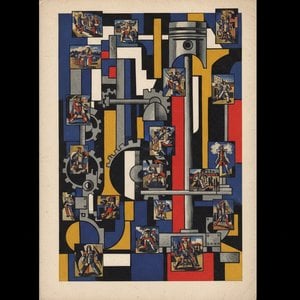
Fernand Léger’s “Model of a Mural”: A Symphony of Form and Modernity
“Model of a Mural,” painted by Fernand Léger in 1924, is more than just a colorful depiction of musical instruments; it's a profound statement about the burgeoning relationship between humanity and machinery. This vibrant canvas embodies Léger’s pivotal role as one of the earliest champions of Cubism’s integration with the realities of the industrial age. Born Joseph Fernand Henri Léger in 1881 in Argentan, Normandy, Léger’s formative years spent observing agricultural life instilled a deep appreciation for natural forms – an understanding he would later translate into a radically new visual language. The painting's genesis coincided with a period of intense societal transformation, marked by the rise of factories, urban sprawl, and the increasingly dominant presence of mechanical objects in daily life. Léger wasn’t simply depicting instruments; he was capturing the *essence* of their impact – a dynamic, fragmented representation of a world rapidly being reshaped by technology.
- Subject Matter: The scene is dominated by a collection of musical instruments, including a prominent guitar, violins, and other assorted pieces.
- Style: A quintessential example of Cubist influence, the work showcases fractured forms, geometric shapes, and multiple perspectives simultaneously presented.
- Technique: Léger’s application of color is bold and assertive, utilizing a palette of primary hues – reds, blues, yellows – layered with contrasting blacks and whites to create a sense of energetic movement and visual tension. The brushwork is loose and expressive, contributing to the overall dynamism of the composition.
The Language of Modernity: Léger’s Cubist Vision
Léger's approach to Cubism was uniquely his own. While artists like Picasso and Braque were exploring abstract fragmentation, Léger sought to translate the visible world – particularly the forms of machines – into a new artistic vocabulary. He rejected pure abstraction, instead striving for a synthesis between recognizable objects and geometric simplification. This is evident in the way he renders the instruments: they are broken down into their constituent shapes—cylinders, spheres, planes—yet retain a palpable sense of their function and materiality. The guitar, centrally positioned, isn’t merely an object; it's a powerful symbol of human creativity and expression within this mechanized landscape.
- Geometric Forms: The painting is characterized by its emphasis on geometric shapes – circles, squares, triangles – reflecting Léger’s fascination with the mechanical.
- Multiple Perspectives: Like other Cubist works, “Model of a Mural” presents multiple viewpoints simultaneously, challenging traditional notions of perspective and representation.
- Color as Form: Léger used color not just for decorative effect but as an integral element of form, further emphasizing the geometric qualities of his subjects.
Symbolism and Emotional Impact
Beyond its formal qualities, “Model of Mural” carries a significant symbolic weight. The instruments themselves represent human creativity and artistic expression – a vital counterpoint to the perceived dehumanizing effects of industrialization. Léger’s work can be interpreted as an optimistic vision of modernity, suggesting that humanity could not only adapt to technological advancements but also find beauty and meaning within them. The painting evokes a sense of energy, dynamism, and even a touch of melancholy – reflecting both the excitement and anxiety surrounding this period of rapid change. It's a testament to Léger’s ability to capture the spirit of his time, offering a powerful meditation on the relationship between art, technology, and human experience.
Historical Context & Legacy
Created in 1924, “Model of a Mural” reflects the broader artistic currents of the early 20th century. Léger’s work anticipated developments in design and architecture, influencing the aesthetic sensibilities of the machine age. His exploration of geometric abstraction paved the way for subsequent movements such as Constructivism and De Stijl. The painting's influence can be seen in numerous works of art and design that followed, solidifying Léger’s place as a foundational figure in modern art.
Opere simili


Biografia dell'artista
vitae e formazione
Fernand Léger, pittore, scultore e filmmaker francese, nacque il 4 febbraio 1881 ad Argentan, Orne, nella bassa Normandia. Suo padre allevava bovini e Léger iniziò la sua formazione come architetto nel 1897-1899. Successivamente si trasferì a Parigi nel 1900, sostenendosi con il lavoro di disegnatore architettonico.sviluppo artistico
Le prime opere di Léger furono influenzate dall'impressionismo, come visto in Le jardin de ma mère (Il giardino di mia madre) (1905). Dopo aver frequentato la scuola d'arte decorativa e l'Académie Julian, iniziò a lavorare seriamente come pittore a 25 anni. Il suo stile si evolse in una forma personale di cubismo, che i critici definirono "tubismo" per la sua enfasi su forme cilindriche.Cubismo e il gruppo dei Puteaux
Nel 1910, Léger espose al Salon d'automne insieme a Jean Metzinger e Henri Le Fauconnier. Entrò nel gruppo dei Puteaux, noto anche come la sezione d'or (la sezione aurea), insieme ad altri artisti come Francis Picabia e Marcel Duchamp.Guerra e la sua influenza sull'opera di Léger
Le esperienze di Léger nella Prima Guerra Mondiale ebbero un impatto significativo sulla sua opera. Durante il suo tempo al fronte, produsse schizzi di pezzi d'artiglieria, aerei e soldati. Il suo dipinto Soldier with a Pipe (1916) riflette questo periodo.Lavoro successivo e eredità
Il lavoro post-bellico di Léger, caratterizzato da forme meccaniche lisce, lo legò alla tradizione della pittura figurativa francese. I suoi paesaggi animati del 1921 mostrarono figure e animali in forme armoniose e razionalizzate.- visualizza le opere di Fernand Léger su ArtsDot
- altro sul Fernand Léger su Wikipedia
- scopri il Musée National Fernand Légère (Francia) con ArtsDot
- La donna seduta (100 x 81 cm, tubismo)
- Elemento macchina (cubismo)

Fernand Léger
1881 - 1955 , Francia
Dati rapidi
- Artisti Influenti:
- Cézanne
- Impressionismo
- Artisti Influenzati: ['Pop Art']
- Data Di Nascita: 4 febbraio 1881
- Luogo Di Nascita: Argentan, Francia
- Movimento Artistico: Cubismo, Tubismo
- Nazionalità: Francese
- Nome Completo: Fernand Léger
- Opere Notevoli:
- La Grande Parata
- L'Elemento Macchina
- Donna Seduta
- The City
Articoli correlati
Fernand Léger: I 25 Capolavori che Hanno Definito l'Arte Moderna | ArtsDot
Esplora i 25 capolavori di Fernand Léger, pioniere del cubismo e del tubismo. Scopri la storia, le tecniche e l'impatto dell'arte moderna francese. Stampe d'arte e riproduzioni su ArtsDot.com.

Murales in Cucina e Bagno: L'Eleganza del Design di Alto Livello
Scopri come i murales trasformano cucine e bagni in spazi unici! Consigli di esperti, materiali pregiati e soluzioni personalizzate per un design d'interni di lusso. : arte su misura per il tuo stile.

Tendenze Murali 2024: Dalle Scene Tropicali all'Oro Geometrico, le Scelte Più Gettonate
Scopri le tendenze murali più richieste nel design d'interni! Murales tropicali, geometrici in oro e molto altro. Trova ispirazione e soluzioni personalizzate per il tuo progetto con .

Trasforma il Tuo Atrio in un'Opera d'Arte: Murales per un Impatto Indimenticabile
Trasforma il tuo atrio in un'opera d'arte con murales personalizzati di alta qualità! Scopri artisti esperti, design esclusivi e soluzioni su misura per hotel e spazi di lusso. : la tua garanzia di eccellenza.

Astrazione Geometrica: 10 Capolavori che Hanno Definito un Movimento Artistico
Esplora i 10 capolavori dell'Astrazione Geometrica: Mondrian, Malevich e Kandinsky rivoluzionano l'arte moderna. Scopri la storia, i colori e le tecniche di questi movimenti iconici. Stampe d'arte di alta qualità su ArtsDot.com!



