


 Anteprima in scala reale
 Condividi
 Condividi
 Dettagli
 Guida
Guida

 Scarica
 Articoli simili
 Radiografia
 Slideshow
 Statistiche
Cecile Walton
 Impressionism
 107.0 x 152.0 cm
 La Collezione Fleming
 Leggi tutto
Giclée / Stampe d'arte
Stampa giclée o su tela di qualità museale, con produzione rapida e diverse opzioni di finitura. ( Ordina la riproduzione dipinta a mano Passa all'immagine digitale)




































Scegli tra le nostre dimensioni predefinite, che rispettano le proporzioni originali dell'opera d'arte.

È possibile inserire dimensioni personalizzate per adattare l'opera a una cornice o a uno spazio specifico. Se la dimensione selezionata non corrisponde alle proporzioni dell'immagine originale, procederemo al ritaglio dell'opera o all'estensione dell'immagine con un bordo specchiato o a tinta unita. Un mockup digitale ti verrà inviato per approvazione prima dell'inizio della produzione.
Si prega di notare che l'anteprima a schermo non riflette il ritaglio o l'estensione effettivi. Solo il mockup mostrerà accuratamente la composizione finale.
Sebbene siano disponibili dimensioni personalizzate, si raccomanda di selezionare una dimensione dall'elenco predefinito per preservare le proporzioni originali.
Consegna in tutto il mondo () in 2 settimane invece delle normali 4/5 settimane. (22 Settembre)

Spedizione espressa gratuita in tutto il mondo

Tela in lino di alta qualità

Assicurazione completa sulla spedizione

Garanzia di rimborso dei dazi doganali

Garanzia di perfetta fedeltà cromatica

Politica di reso entro 100 giorni (solo per difetti di fabbricazione)

Garanzia di rimborso al 100%

Sconto per acquisti multipli
 L'opzione vetro è disponibile solo per dimensioni inferiori a 110 cm

Cecile Walton
Giclée / Stampe d'arte
Dimensioni della riproduzione
-


Prezzo totale
$ 62
Opere correlate


Biografia dell'artista
The Luminous Legacy of Dorothy Johnstone
In the quiet, mist-shrouded landscapes of Scotland, where the light dances between silvered clouds and verdant hills, the work of Dorothy Johnstone (1892–1980) finds its most profound expression. Born on Christmas Day in Edinburgh, Johnstone emerged as a singular voice within the Scottish painting tradition, an artist capable of capturing both the monumental stillness of the Highlands and the intimate, fleeting nuances of human character. Her journey was one deeply rooted in her heritage, shaped by the atmospheric beauty of her homeland and a technical mastery that bridged the gap between classical realism and the soft, emotive qualities of Impressionism.
The foundations of her artistry were laid within the prestigious halls of the Edinburgh College of Art, where she began her formal training at the tender age of sixteen. This period of education was not merely about technical acquisition but was a time of profound artistic awakening. Under the guidance of influential mentors, including the renowned Ernest Stephen Lumsden, Johnstone honed her ability to navigate the complexities of life drawing and portraiture. Her father, the landscape artist George Whitton Johnstone, served as an early beacon, instilling in her a deep reverence for tonal harmony and the delicate balance of composition that would become the hallmark of her mature style.
A Symphony of Light and Atmosphere
To encounter a painting by Johnstone is to step into a world defined by subtle gradations and luminous color palettes. While many of her contemporaries sought the dramatic or the avant-garde, Johnstone found her inspiration in the quietude of nature, drawing heavily from the aesthetic ideals of Jean-Baptiste Camille Corot. Like Corot, she possessed a remarkable ability to convey atmosphere—to paint not just the trees and the earth, but the very air that surrounds them. Her landscapes, particularly those of the Scottish Highlands, are characterized by a sense of tranquility and a meticulous observation of how light interacts with texture.
Her technical repertoire was equally diverse, allowing her to move seamlessly between the fluid transparency of watercolours and the rich, tactile depth of oils. In her portraits, such as the evocative 'Cecile' or the delicate 'Marguerites', she demonstrated a profound psychological sensitivity. She did not merely record a likeness; she captured a mood. Her brushwork often balanced a disciplined realism with an expressive freedom, creating works that felt both grounded in reality and elevated by a poetic, almost dreamlike, quality. This duality allowed her to explore themes of leisure, nature, and identity with a grace that resonated far beyond the borders of Scotland.
Artistic Significance and Enduring Spirit
Throughout her prolific career, which spanned several decades, Johnstone’s influence extended into the very fabric of the Scottish art community. Her transition from a brilliant student to a respected member of the faculty at the Edinburgh College of Art in 1914 marked the beginning of a period where she contributed significantly to the pedagogical landscape of her era. She stood as a bridge between the traditions of the nineteenth century—influenced by the romanticism of Wordsworth and Ruskin—and the burgeoning modernism of the twentieth.
The historical significance of Dorothy Johnstone lies in her ability to maintain an unwavering connection to the pastoral and the personal amidst a rapidly changing world. Her oeuvre remains a testament to the power of observation and the enduring beauty of the natural world. Today, her works serve as windows into a bygone era of Scottish art, reminding us of a time when the mastery of light, color, and emotion could transform a simple vista or a quiet portrait into an eternal moment of grace.

Informazioni rapide
- Artistic Movement Or Style: Corot Inspired Art
- Artists Who Influenced This Artist:
- George Whitton Johnstone
- Jean-Baptiste Corot
- Date Of Birth: December 25, 1892
- Date Of Death: July 15, 1980
- Full Name: Dorothy Johnstone
- Nationality: Scottish
- Notable Artworks:
- The Old Mill
- The Heather Moor
- Place Of Birth: Edinburgh, Scotland
Articoli correlati

I 10 Capolavori del Paesaggio Romantico: Arte, Storia e Decorazioni di Lusso
Esplora i 10 capolavori del Paesaggio Romantico con ArtsDot.com! Caspar David Friedrich, Turner e altri maestri: storia, tecnica e colori che definiscono un'epoca. Trova riproduzioni d'arte di lusso per la tua casa. Scopri la collezione completa online!

John Constable: I 25 Capolavori che Celebrano la Bellezza della Campagna Inglese
Esplora i 25 capolavori di John Constable, il maestro del Romanticismo inglese. Paesaggi suggestivi, luce naturale e colori vibranti ti aspettano. Acquista riproduzioni d'arte di alta qualità su ArtsDot.com e porta la bellezza della campagna inglese nella tua casa.

I 10 Capolavori Impressionisti che Hanno Rivoluzionato il Paesaggio Pittorico
Esplora i 10 capolavori impressionisti che hanno rivoluzionato il paesaggio pittorico! Monet, Renoir e altri maestri catturati in stampe su tela di alta qualità. Scopri la storia dell'arte e trova l'opera perfetta per arredare casa tua con ArtsDot.com.
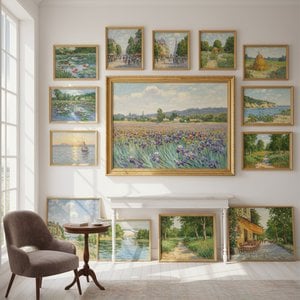
I 10 Capolavori Impressionisti che Hanno Rivoluzionato il Paesaggio Pittorico
Esplora i 10 capolavori impressionisti che hanno rivoluzionato il paesaggio pittorico! Monet, Renoir e altri maestri catturati in stampe su tela di alta qualità. Trova l'arte perfetta per la tua casa su ArtsDot.com.

Evocations of Place: A Historical Journey Through Landscape Art
Explore the rich history of landscape art with ArtsDot. Discover renowned artists, movements like Impressionism & Romanticism, and expert guidance for collecting timeless pieces. Find your perfect serene escape today!