

 Anteprima in scala reale
 Invia
Invia Condividi
 Dettagli opera
 Guida
Guida

 Scarica
 Simili
 Radiografia
 Slideshow
 Q&A
Q&A Statistiche
Self-Portrait with Hat

- 41.0 x 32.0 cm


 Espandi i dettagli
Giclée / Stampe d'arte
Stampa giclée o su tela di qualità museale, con produzione rapida e diverse opzioni di finitura. ( Acquista il dipinto realizzato a mano Passa all'immagine digitale)




P118B €10

P118H €10

P118W €10

P438Z €10

P508JH €12

P508YH €12

P805H €10

P805Z €10

P919BZ €10

P919G €10

P919XJ €10

P959ZH €10

P968JZ €12

W106C €8

W218G €10

W218JH €8

W218Y €10

W307PJ €10

W316G €10

W316PJ €8

W316Y €10

W398PJ €8

W4111J €10

W500HY €15

W500JH €15

W692G €12

W849H €8

W940BG €15

W953PJ €8




Scegli tra le nostre dimensioni predefinite, che rispettano le proporzioni originali dell'opera d'arte.

Inserisci la larghezza e l'altezza desiderate, per adattarle alla tua cornice o alla tua parete. Una stampa può essere solo ritagliata, mai resa più grande dell'immagine originale; pertanto, un formato con una forma differente comporterà la perdita di una parte dell'opera. Ti invieremo un mockup digitale da approvare prima di procedere con la stampa. L'immagine mostrata in questa pagina non rappresenta il ritaglio reale — solo il mockup lo mostra.
Consegna in tutto il mondo () in 2 settimane invece delle normali 4/5 settimane. (2 Novembre)

Spedizione espressa gratuita in tutto il mondo

Tela in lino di alta qualità

Assicurazione completa sulla spedizione

Garanzia di rimborso dei dazi doganali

Garanzia di fedeltà cromatica assoluta

Politica di reso entro 100 giorni (solo per difetti di fabbricazione)

Garanzia di rimborso al 100%

Offerta per acquisti multipli
 L'opzione vetro è disponibile solo per dimensioni inferiori a 110 cm

Self-Portrait with Hat
Giclée / Stampe d'arte
Dimensioni riproduzione
-


Prezzo finale calcolato
€ 55
A Glimpse into Modern Conversation: Self-Portrait with Hat
August Macke’s Self-Portrait with Hat, painted in 1909, captures more than just a likeness; it arrests a moment of vibrant, almost theatrical engagement. The central figure dominates the canvas, presented in an air of studied elegance, clad in a sharp suit and tie. Yet, this portrait is far from static. With his mouth slightly open—whether caught mid-sentence or in a soft yawn—the subject seems to breathe life into the painted surface, inviting the viewer not merely to observe, but to participate in the unfolding dialogue.
The Echoes of Modern Life and Company
What elevates this piece beyond a simple study is the inclusion of surrounding figures. To the left and right, two other individuals are visible, smaller yet integral to the composition's narrative weight. They serve as silent witnesses to the main subject’s momentary expression. This grouping suggests a social gathering, a moment plucked from the bustling energy of early 20th-century urban life. Macke masterfully uses these secondary figures to frame and amplify the central personality, creating a dynamic tension between individual focus and communal experience.
Macke's Brushwork: A Symphony of Color and Expression
Technically, this work is deeply rooted in the currents of German Expressionism, though it retains echoes of Impressionist light that Macke absorbed during his formative years. His palette, characteristic of his time, pulses with bold color choices applied with a confident, visible hand. One can almost feel the texture beneath the paint—the quick, decisive strokes that give the figures and their attire a palpable energy. It is a style that refuses to be purely academic; instead, it vibrates with an inner emotional truth, making the painting feel immediate and intensely alive.
Historical Resonance and Emotional Depth
Painted just before the seismic shifts of World War I, this portrait carries an undercurrent of poignant anticipation. Macke’s career, tragically cut short by the war, imbues his work with a bittersweet quality—a celebration of vibrant life against the backdrop of impending historical upheaval. Owning a reproduction of Self-Portrait with Hat is to possess a piece of that pre-war effervescence; it speaks to the confidence and intellectual curiosity of an era at its zenith, while simultaneously whispering of the fragility of human connection.
Bringing the Salon Home
For the discerning collector or interior designer, this artwork offers unparalleled versatility. Its sophisticated blend of formal portraiture with expressive color allows it to anchor a room—be it a study demanding intellectual gravitas or a drawing-room celebrating vibrant social life. The energy contained within Macke’s brushstrokes ensures that the piece remains captivating, inviting contemplation on conversation, identity, and the fleeting beauty of shared moments.
Domande e risposte
In che modo tecnica e movimento si fondono in "Self-Portrait with Hat"?
"Self-Portrait with Hat" di Augusto Macke unisce la tecnica Oil On Canvas allo stile German Expressionism. La tecnica e il movimento definiscono la realizzazione e l'estetica dell'opera.
È possibile ordinare una riproduzione a olio di "Self-Portrait with Hat"?
Puoi ordinare una riproduzione dipinta a mano di "Self-Portrait with Hat" di Augusto Macke direttamente nella sua pagina Riproduzione dipinta a mano: una riproduzione a olio dipinta a mano su tela di lino, realizzata su ordinazione.
A quale fase della carriera di Augusto Macke appartiene "Self-Portrait with Hat"?
"Self-Portrait with Hat" rappresenta il Early Career di Augusto Macke.
Opere simili


Biografia dell'artista
Le prime esperienze e la formazione artistica
August Robert Ludwig Macke, pittore espressionista tedesco di spicco, nacque il 3 gennaio 1887 a Meschede, nella Vestfalia. Il suo percorso artistico iniziò alla Kunstakademie di Düsseldorf (1904-1906), sotto la guida di Adolf Maennchen. Lo stile di Macke fu plasmato dall'impressionismo francese e dal post-impressionismo, per poi essere influenzato dal fauvismo.Influenze artistiche e stile
L’incontro con Robert Delaunay a Parigi (1912) introdusse Macke al cubismo cromatico, noto anche come orfismo. Questa influenza è visibile nel suo dipinto Shops Windows, una personale interpretazione dello stile di Delaunay combinata con la simultaneità delle immagini riscontrabile nel futurismo italiano. Macke fece parte del gruppo espressionista tedesco Der Blaue Reiter (Il Cavaliere Azzurro), insieme a Wassily Kandinsky, Franz Marc e Paul Klee. I suoi dipinti, come Bathing Girls with Town in the Background (100 x 80 cm, Staatsgalerie Moderner Kunst, Monaco di Baviera, Germania), mostrano il suo stile unico caratterizzato da colori vivaci e disegno audace.Opere significative e eredità
- Woman in a Green Jacket (1913, Museum Ludwig Colonia, Germania), un esempio emblematico dell'espressionismo.
- Landscape with Cows and Camel (1914, Kunsthaus Zurigo, Svizzera), un esempio paradigmatico del suo stile.
- Türkisches Café (1914), un capolavoro che mostra il suo approccio luminista durante il suo ultimo periodo.
Un tragico destino e un impatto duraturo
La vita di Macke fu interrotta prematuramente quando morì il 26 settembre 1914 al fronte, in Champagne, in Francia. Il suo ultimo dipinto, Farewell, cattura l’atmosfera cupa che si abbatté sull'Europa durante la prima guerra mondiale. Esplora altre opere di August Macke e il movimento dell'espressionismo tedesco su ArtsDot:- Woman in a Green Jacket
- Franz Marc's Fighting Forms, che mostra la collaborazione all’interno di Der Blaue Reiter
- August Macke's artist page on ArtsDot

Augusto Macke
1887 - 1914 , Germania
Dettagli rapidi
- Artisti Influenti:
- Robert Delaunay
- Franz Marc
- Wassily Kandinsky
- Paul Klee
- Data Di Nascita: 3 gennaio 1887
- Luogo Di Nascita: Meschede, Germania
- Movimento Artistico: Espressionismo tedesco
- Nazionalità: Germana
- Nome Completo: August Macke
- Opere Notevoli:
- Donna con una giacca verde
- Bagnanti con città sullo sfondo
- Finestre di negozi
- Caffè turco
Articoli correlati

The Visceral Cry of a Nation: Exploring Emotion & Distortion in German Expressionism
Explore the powerful world of German Expressionism with ArtsDot. Discover Kirchner, Nolde & Die Brücke's emotive masterpieces. Learn about this pivotal art movement and its lasting impact on modern art.
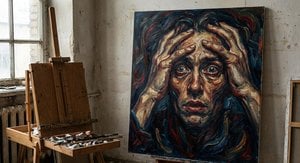
Figurative Expressionism: Emotional Intensity & Subjective Reality in 20th-Century Art
Explore the powerful world of Figurative Expressionism with ArtsDot. Discover key artists like Kirchner & Beckmann, understand its emotional depth, and learn how to collect this influential 20th-century art movement.

Espressionismo: I 10 Capolavori che Hanno Definito un Movimento Artistico | .it
Esplora i 10 capolavori dell'Espressionismo con .it! Scopri Munch, Kirchner e altri artisti iconici, le loro emozioni intense e tecniche rivoluzionarie. Trova riproduzioni di alta qualità per arredare la tua casa con arte senza tempo. Esplora la collezione online!

August Macke: Visioni Espressioniste di Armonia e Vita Moderna
Esplora il mondo di August Macke e l'Espressionismo tedesco con ArtsDot. Scopri la sua arte innovativa, le collaborazioni con Der Blaue Reiter e i temi della vita moderna. Consulenza gratuita e riproduzioni di alta qualità.

Espressionismo Tedesco: 10 Capolavori Rivoluzionari per Arredare con Emozione
Esplora i 10 capolavori dell'Espressionismo Tedesco con ArtsDot.com! Scopri Kirchner, Munch e Nolde, le loro emozioni intense e tecniche rivoluzionarie. Arreda la tua casa con stampe d'arte di alta qualità. Esplora la collezione online!


