

 Anteprima in scala reale
 Invia
Invia Condividi
 Dettagli opera
 Guida
Guida

 Scarica
 Simili
 Radiografia
 Slideshow
 Domande e risposte
 Statistiche
Panic


 Espandi i dettagli
L'opera d'arte visualizzata in questa pagina è protetta dalle leggi sul diritto d'autore, il che significa che non possiamo legalmente creare o vendere una riproduzione identica. Tale protezione è garantita da accordi internazionali quali la Convenzione di Berna e dalle leggi nazionali, incluse quelle stabilite da Legge sul copyright degli Stati Uniti - Titolo 17. Tutti i diritti riservati. Le immagini presenti su questo sito sono protette da copyright e non possono essere riprodotte o utilizzate senza l'autorizzazione scritta di WahooArt.com o dei rispettivi proprietari del copyright.
Questo metodo è pienamente conforme alle normative sul diritto d'autore poiché non prevede la copia o la duplicazione dell'opera protetta. Si tratta invece di una rielaborazione creativa: un nuovo dipinto che trae ispirazione dall'originale, senza tuttavia esserne identico.
Giclée / Stampe d'arte
Stampa giclée o su tela di qualità museale, con produzione rapida e diverse opzioni di finitura. ( Acquista il dipinto realizzato a mano Passa all'immagine digitale)




P118B €10

P118H €10

P118W €10

P438Z €10

P508JH €12

P508YH €12

P805H €10

P805Z €10

P919BZ €10

P919G €10

P919XJ €10

P959ZH €10

P968JZ €12

W106C €8

W218G €10

W218JH €8

W218Y €10

W307PJ €10

W316G €10

W316PJ €8

W316Y €10

W398PJ €8

W4111J €10

W500HY €15

W500JH €15

W692G €12

W849H €8

W940BG €15

W953PJ €8




Scegli tra le nostre dimensioni predefinite, che rispettano le proporzioni originali dell'opera d'arte.

Inserisci la larghezza e l'altezza desiderate, per adattarle alla tua cornice o alla tua parete. Una stampa può essere solo ritagliata, mai resa più grande dell'immagine originale; pertanto, un formato con una forma differente comporterà la perdita di una parte dell'opera. Ti invieremo un mockup digitale da approvare prima di procedere con la stampa. L'immagine mostrata in questa pagina non rappresenta il ritaglio reale — solo il mockup lo mostra.
Consegna in tutto il mondo () in 2 settimane invece delle normali 4/5 settimane. (18 Novembre)

Spedizione espressa gratuita in tutto il mondo

Tela in lino di alta qualità

Assicurazione completa sulla spedizione

Garanzia di rimborso dei dazi doganali

Garanzia di fedeltà cromatica assoluta

Politica di reso entro 100 giorni (solo per difetti di fabbricazione)

Garanzia di rimborso al 100%

Offerta per acquisti multipli
 L'opzione vetro è disponibile solo per dimensioni inferiori a 110 cm

Panic
Giclée / Stampe d'arte
Dimensioni riproduzione
-


Prezzo finale calcolato
€ 56
The Raw Nerve of Anxiety: Unpacking André Masson’s “Panic”
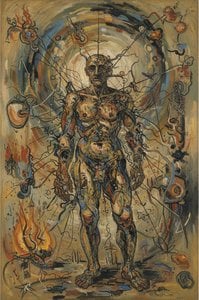
André Masson's "Panic," created in 1955, isn’t merely a painting; it’s an excavation. A visceral plunge into the turbulent depths of the human psyche, rendered with a frenetic energy that both unsettles and compels. This etching, executed on paper, captures a moment suspended between chaos and control, reflecting the anxieties simmering beneath the surface of post-war Europe – a period Masson himself deeply inhabited through his pioneering work in Surrealism and Automatism.
The composition immediately assaults the senses. A dominant teal background—a shade suggestive of both twilight and unease—is fractured by swirling, violently intertwined lines in shades of purple and magenta. These aren’t neat, controlled strokes; they are a deliberate act of disruption, mirroring the feeling of being overwhelmed by internal turmoil. The lack of a clear focal point forces the viewer's eye to dart across the surface, mimicking the restless, fragmented experience of panic itself. The overall effect is less about depicting a specific scene and more about conveying an intense emotional state – a raw, unfiltered expression of anxiety.
Automatism: A Journey Beyond Conscious Control
Masson’s technique—Automatism—was central to his artistic practice. Rejecting the constraints of rational thought and deliberate planning, he sought to tap into the unconscious mind through spontaneous action. In “Panic,” this manifests as a seemingly chaotic outpouring of lines, yet beneath the surface lies a carefully orchestrated process. Masson would often begin with sand drawings, allowing the subconscious to dictate the initial forms, then translate these images onto paper using various tools – in this case, etching techniques—to create the final image. This method aimed to bypass conscious control and reveal hidden emotions and associations.
The influence of Surrealism is undeniable, but Masson’s approach extends beyond simple dream imagery. He was deeply interested in primal emotions, exploring themes of violence, eroticism, and metamorphosis – all powerfully represented within the swirling forms of “Panic.” The piece echoes the work of artists like André Breton and Joan Miró, yet possesses a uniquely personal intensity, reflecting Masson's own struggles with psychological turmoil.
Symbolic Echoes: Violence, Repression, and the Unconscious
The imagery within "Panic" is rich in symbolic potential. The tangled lines can be interpreted as representing repressed emotions struggling to surface, a visual manifestation of internal conflict. The use of dark teal and vibrant purples and magentas creates a dramatic contrast, suggesting a battle between opposing forces – perhaps order versus chaos, reason versus instinct. Some viewers have noted the resemblance to organic forms—twisted limbs or distorted figures—suggesting a sense of fragmentation and loss of control.
Interestingly, Masson’s work frequently engaged with themes of violence, reflecting anxieties prevalent in post-war Europe. The piece can be seen as an exploration of the destructive potential within the human psyche – a warning against succumbing to overwhelming fear and losing oneself in the chaos of internal struggle. The title itself—"Panic"—underscores this central theme, encapsulating the feeling of being trapped within one’s own anxieties.
A Legacy of Raw Emotion: Masson's Enduring Impact
“Panic” stands as a powerful testament to André Masson’s innovative approach to art. It’s not a comfortable piece; it demands engagement and invites introspection. His exploration of Automatism, combined with his unflinching portrayal of psychological turmoil, cemented his place as a key figure in the Surrealist movement and beyond. Reproductions of this work continue to resonate today, offering a glimpse into the complexities of the human experience – a reminder that beneath the surface of everyday life, there often lies a turbulent landscape of anxieties and unresolved emotions.
Domande e risposte
In che modo "Panic" si inserisce nei temi e nello stile di André Masson?
"Panic" appartiene alla produzione Surrealist Automatic Drawing di André Masson, i cui temi ricorrenti includono surrealism, automatism, masson’s exploration, psychological turmoil, anxiety themes, war anxieties, social unrest”, “automatic drawing.
Da dove provengono i visitatori di "Panic" di André Masson?
La pagina Statistiche di "Panic" di André Masson presenta le statistiche delle visite pubbliche: il numero di visite mensili di quest'opera, un confronto con le opere dell'artista più visualizzate e la provenienza dei visitatori.
È possibile vedere una radiografia di "Panic" di André Masson?
La pagina Raggi X di "Panic" di André Masson è un visualizzatore interattivo che permette di esplorare undici livelli ottici dell'opera, inclusa una vista in stile raggi X.
Opere simili


Biografia dell'artista
André Masson: Una Vita nell'Arte
- Nato: Balagny-sur-Thérain, Francia (4 gennaio 1896)
- Morto: 1987
Primi Anni e Formazione Artistica
- Masson iniziò il suo percorso artistico all'età di undici anni, studiando all'Académie Royale des Beaux-Arts di Bruxelles sotto la guida di Constant Montald. Questa formazione iniziale fornì le basi per i suoi successivi esperimenti con vari stili.
- I suoi primi lavori dimostrarono un interesse per il Cubismo, evidenziando un precoce coinvolgimento nei movimenti artistici moderni.
Il Periodo Surrealista e il Disegno Automatico
- Masson divenne una figura chiave all'interno del movimento surrealista, abbracciando con entusiasmo il disegno automatico come tecnica. Questo consisteva nella creazione di opere d'arte senza controllo cosciente, permettendo all'inconscio di guidare la mano.
- Collaborò con altre figure di spicco dell'epoca come Antonin Artaud, Michel Leiris, Joan Miró, Georges Bataille, Jean Dubuffet e Georges Malkine, favorendo una vivace comunità artistica.
- Tecniche Notevoli:
- Disegni Automatici: Numerosi lavori a penna e inchiostro che mostrano il suo approccio innovativo all'arte.
- Sabbia e Colla su Tela: Sperimentazione con il lancio di sabbia e colla sulla tela, creando dipinti unici a olio basati sulle forme risultanti.
- I suoi lavori durante questo periodo esplorarono spesso temi violenti o erotici, riflettendo una rottura con le convenzioni artistiche tradizionali.
Evoluzione e Opere Successive
- Alla fine degli anni '20, Masson si allontanò dal Surrealismo, sviluppando uno stile più strutturato influenzato da artisti come André Derain. Questo è evidente nei suoi dipinti di paesaggio.
- Durante la Seconda Guerra Mondiale, le sue opere furono condannate come "degenerate" dai nazisti. Fuggì negli Stati Uniti con l'aiuto di Varian Fry, influenzando significativamente gli astrattisti espressionisti americani come Jackson Pollock.
- Dopo essere tornato in Francia, Masson si stabilì ad Aix-en-Provence e si concentrò sulla pittura di paesaggi, dimostrando un passaggio verso soggetti più naturalistici.
Eredità e Influenza
- Il lavoro pionieristico di André Masson nel Surrealismo e nel disegno automatico ha lasciato un'eredità duratura nel mondo dell'arte.
- La sua influenza può essere vista attraverso vari movimenti artistici, dal Cubismo all'Espressionismo Astratto, consolidando la sua posizione come figura fondamentale nella storia dell'arte moderna.
- L'esplorazione di Masson delle immagini subconscie e delle tecniche innovative continua a ispirare gli artisti oggi.

André Masson
1896 - 1987 , Francia
Dettagli rapidi
- Artisti Che Hanno Influenzato Questo Artista: ['André Derain']
- Artisti O Movimenti Influenzati Da Questo Artista:
- Jackson Pollock
- Espressionismo astratto
- Data Di Nascita: 4 gennaio 1896
- Luogo Di Nascita: Balagny-sur-Thérain, Francia
- Movimento Artistico O Stile:
- Surrealismo
- Cubismo
- Nazionalità: Francese
- Nome Completo: André Aimé René Masson
- Opere Notevoli:
- Oltre
- Con rocce
- Metamorfosi degli amanti
- Pigmaliòn
Articoli correlati

Unveiling Inner Worlds: Exploring Psychological Depth in 20th & 21st Century Art
Explore the profound psychological themes within 20th & 21st-century art. Discover Expressionism, Surrealism & more – and learn how to collect impactful pieces with confidence. Expert insights for discerning collectors.

Trasmutazione Emotiva nell'Arte Visiva: Colore, Forma e Trama per un’Espressione Profonda
Esplora come colore, forma e trama esprimono emozioni profonde nell'arte visiva. Scopri l'impatto psicologico del colore e trova la riproduzione perfetta per creare atmosfere uniche con ArtsDot.com.

Oltre la Rappresentazione: Decodificare Emozione e Significato nell'Arte Astratta Moderna
Esplora il mondo dell'arte astratta moderna con ArtsDot. Scopri le radici, i maestri e come scegliere l'opera perfetta per la tua casa o collezione. Guide esperte e acquisti sicuri.

The Architecture of Anxiety: Examining the Raw Emotional Intensity of Expressionism
Explore the raw psychological depth of Expressionism through Munch and Klee. Dive into the anatomy of anxiety today.
André Masson: Automatismo, Surrealismo e l'Espressione Primordiale nell'Arte del XX Secolo
Esplora l'universo artistico di André Masson, pioniere del Surrealismo e dell'Automatismo. Analisi approfondita delle sue tecniche, temi ricorrenti e influenza sull'Espressionismo Astratto americano. Scopri la sua eredità nell'arte contemporanea.


