

 Anteprima in scala reale
 Invia
Invia Condividi
 Dettagli opera
 Guida
Guida

 Scarica
 Simili
 Radiografia
 Slideshow
 Domande e risposte
 Statistiche
(30)

 Espandi i dettagli
Giclée / Stampe d'arte
Stampa giclée o su tela di qualità museale, con produzione rapida e diverse opzioni di finitura. ( Acquista il dipinto realizzato a mano Passa all'immagine digitale)




P118B €10

P118H €10

P118W €10

P438Z €10

P508JH €12

P508YH €12

P805H €10

P805Z €10

P919BZ €10

P919G €10

P919XJ €10

P959ZH €10

P968JZ €12

W106C €8

W218G €10

W218JH €8

W218Y €10

W307PJ €10

W316G €10

W316PJ €8

W316Y €10

W398PJ €8

W4111J €10

W500HY €15

W500JH €15

W692G €12

W849H €8

W940BG €15

W953PJ €8




Scegli tra le nostre dimensioni predefinite, che rispettano le proporzioni originali dell'opera d'arte.

Inserisci la larghezza e l'altezza desiderate, per adattarle alla tua cornice o alla tua parete. Una stampa può essere solo ritagliata, mai resa più grande dell'immagine originale; pertanto, un formato con una forma differente comporterà la perdita di una parte dell'opera. Ti invieremo un mockup digitale da approvare prima di procedere con la stampa. L'immagine mostrata in questa pagina non rappresenta il ritaglio reale — solo il mockup lo mostra.
Consegna in tutto il mondo () in 2 settimane invece delle normali 4/5 settimane. (15 Novembre)

Spedizione espressa gratuita in tutto il mondo

Tela in lino di alta qualità

Assicurazione completa sulla spedizione

Garanzia di rimborso dei dazi doganali

Garanzia di fedeltà cromatica assoluta

Politica di reso entro 100 giorni (solo per difetti di fabbricazione)

Garanzia di rimborso al 100%

Offerta per acquisti multipli
 L'opzione vetro è disponibile solo per dimensioni inferiori a 110 cm

(30)
Giclée / Stampe d'arte
Dimensioni riproduzione
-


Prezzo finale calcolato
€ 56
Alphonse Mucha’s “The Violinist”: A Symphony of Art Nouveau
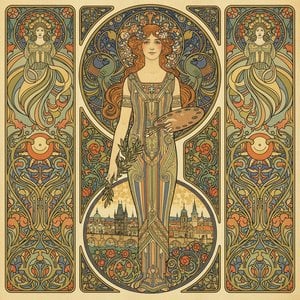
“The Violinist,” a captivating work by the master of Art Nouveau, Alphonse Mucha, transports us to a realm of delicate beauty and profound emotion. This painting, depicting a woman lost in the music she creates with her violin, is more than just a portrait; it’s an embodiment of Mucha's signature style – a harmonious blend of organic forms, flowing lines, and idealized femininity. The scene unfolds with a grace that speaks to the era’s fascination with nature, mythology, and the pursuit of aesthetic perfection. Mucha’s ability to capture movement and mood is particularly striking here; the violinist isn’t merely playing an instrument but seems utterly consumed by the experience, inviting the viewer into her world of sound.
A Masterclass in Art Nouveau Technique
Mucha's technique is instantly recognizable. Notice the meticulous rendering of fabric – the flowing robes ripple with a life of their own, achieved through layered washes and subtle gradations of color. The use of gold leaf, a hallmark of Mucha’s work, adds an ethereal quality to the piece, illuminating the woman’s face and highlighting the intricate details of her dress. The composition itself is carefully constructed, employing a pyramidal arrangement that draws the eye upwards towards the violinist's head, emphasizing her importance as the focal point. The cello, strategically placed in the background, isn’t just an accessory; it contributes to the depth and complexity of the scene, suggesting a performance setting or perhaps even a moment of reflection on the musician’s part.
Symbolism and the Idealized Woman
Mucha frequently employed symbolism within his Art Nouveau works, often drawing inspiration from classical mythology and folklore. The woman in “The Violinist” embodies many of these themes – she represents beauty, grace, and artistic expression. Her pose, with her head tilted slightly downwards as if lost in thought, is a common motif in Mucha’s paintings, conveying a sense of introspection and vulnerability. The flowing lines of her dress echo the natural world, reinforcing the connection between art and nature that was central to the Art Nouveau movement. The inclusion of the cello itself can be interpreted symbolically – music as a source of solace, inspiration, or even spiritual awakening.
Historical Context: Mucha’s Parisian Influence
Created during Mucha's time in Paris (1887-1910), “The Violinist” reflects the vibrant artistic and cultural landscape of the city at the turn of the 20th century. Mucha was deeply influenced by artists like Pierre-Auguste Renoir, known for his depictions of Parisian life, and Gustave Moreau, a leading figure in the Symbolist movement. His work directly challenged the prevailing academic styles of the time, advocating for a new aesthetic that prioritized beauty, emotion, and decorative elements. This painting exemplifies Mucha’s contribution to the rise of Art Nouveau as a distinct artistic style, one that would profoundly influence graphic design, illustration, and interior decoration worldwide.
A Timeless Piece for Your Collection
This hand-painted reproduction captures the essence of Mucha's genius, offering a stunning addition to any art collection or interior space. Its elegant composition, masterful technique, and rich symbolism ensure that “The Violinist” will continue to captivate viewers for generations to come. Whether you are an admirer of Art Nouveau, a collector of fine art, or simply seeking a piece of beauty to enhance your surroundings, this reproduction provides a unique opportunity to own a work by one of the most influential artists of the late 19th and early 20th centuries.
Domande e risposte
Che atmosfera dona "(30)" di Alphonse Maria Mucha a un ambiente?
"(30)" di Alphonse Maria Mucha emana un'atmosfera Romantic ed è ideale per un Living Room. Il mood rappresenta l'emozione che l'opera dona allo spazio circostante.
Quale colore domina la composizione di "(30)" di Alphonse Maria Mucha?
Il colore dominante di "(30)" di Alphonse Maria Mucha è Walnut (#612a1f).
È possibile visualizzare "(30)" di Alphonse Maria Mucha sotto diverse illuminazioni?
La pagina Raggi X di "(30)" di Alphonse Maria Mucha è un visualizzatore interattivo che permette di esplorare undici livelli ottici dell'opera, inclusa una vista in stile raggi X.
Opere simili


Biografia dell'artista
Primi Anni e Formazione
- Nato: 15 luglio 1860, a Ivanačice, Moravia (oggi parte della Repubblica Ceca)
- Dimostrò talento artistico fin da giovane età.
- Studiò all'Accademia di Belle Arti di Praga ma si disilluse degli approcci tradizionali.
- Si trasferì a Parigi nel 1887 per perseguire il suo stile.
Stile Artistico e Opere Notabili
- Conosciuto per lo distintivo stile Art Nouveau caratterizzato da linee fluide, forme organiche e un senso di movimento.
- Influenzato da artisti come Pierre-Auguste Renoir e Gustave Moreau.
- Opere Notabili:
- La Rivolta Slava - Mostra la fusione dei motivi tradizionali cechi con elementi moderni Art Nouveau.
- Salon des Cent
- Dipinti ispirati a opere come Le Figlie di Tespio di Gustave Moreau, e La Ribambelle des Gobelins di Piero Dorazio.
- Illustrazioni basate su Giovani Agricoltori che Filano il Lino di Sir Hubert von Herkomer.
- Frequentemente raffigurava donne idealizzate in abiti fluenti circondate da lussureggianti fiori.
Momenti Chiave della Carriera e Commissioni Importanti
- Collaborazione con Sarah Bernhardt: Creò poster e disegni per l'attrice Sarah Bernhardt, a partire dal poster per Gismonda (1894), che lanciò la sua carriera.
- Esposizione Universale di Parigi (1900): Il suo stile Art Nouveau ottenne riconoscimento internazionale in questa esposizione. Decorò il Padiglione della Bosnia ed Erzegovina e collaborò al Padiglione Austriaco.
- Patronato di Charles Richard Crane: Ricevette supporto da Charles Richard Crane, che gli permise di creare la monumentale serie La Gerarchia Slava (1912-30).
- Cecoslovacchia Indipendente: Progettò francobolli, banconote e documenti governativi per la Cecoslovacchia appena indipendente.
Influenze ed Eredità
- Influenzato dalle tradizioni artistiche ceche e dai movimenti artistici europei moderni.
- Il suo stile unico aprì la strada alle future generazioni di artisti nell'Art Nouveau e Secessionismo.
- Ha ispirato altri artisti come Eva Prokopcová.
- L'eredità si estende oltre le sue opere d'arte per influenzare il design e l'estetica.
Vita Successiva e Morte
- Sposò Maruska (Marie/Maria) Chytilová nel 1906.
- Visitò gli Stati Uniti dal 1906 al 1910, dove nacque la loro figlia Jaroslava.
- Morì il 14 luglio 1939 a Praga, Cecoslovacchia.

Alphonse Maria Mucha
1860 - 1939 , Repubblica Ceca
Dettagli rapidi
- Artisti Influenti:
- Pierre-Auguste Renoir
- Gustave Moreau
- Artisti Influenzati: ['Eva Prokopcová']
- Data Di Morte: 14 luglio 1939
- Data Di Nascita: 15 luglio 1860
- Luogo Di Nascita: Brno, Repubblica Ceca
- Movimento Artistico: Art Nouveau
- Nazionalità: Ceco
- Nome Completo: Alphonse Maria Mucha
- Opere Notevoli:
- La Rivolta Slava
- Salon des Cent
- Le figlie di Tespio
- Slav Epic
Articoli correlati

The Flowing Line & Flourishing Form: Exploring Art Nouveau's Aesthetic Legacy
Explore the captivating world of Art Nouveau! Discover its origins, key artists like Horta & Mucha, regional styles, innovative techniques, and lasting influence on architecture & design. A comprehensive guide for art enthusiasts.

Simon Vouet: A Baroque Master's Journey from Italian Influence to French Classicism
Explore the life & art of Simon Vouet, a pivotal French Baroque painter who introduced Italian styles to France. Discover his masterpieces and lasting influence on 17th-century art.

I 25 capolavori di Pierre-Auguste Renoir: l'essenza dell'Impressionismo
Scopri i 25 capolavori di Renoir e la magia dell'Impressionismo. Esplora la collezione completa su ArtsDot.com.
Alphonse Mucha: Un'Esplorazione Completa del Maestro dell'Art Nouveau e del Simbolismo Decorativo
Esplora la vita e l'opera di Alphonse Mucha, il maestro dell'Art Nouveau. Analisi approfondita del suo stile unico, dai manifesti iconici a 'Salomè'. Scopri l'eredità duratura di questo artista rivoluzionario.

Ivan Bilibin: A Synthesis of Folklore, Modernism & National Identity in Russian Illustration
Explore the enchanting world of Ivan Bilibin, a master Russian illustrator who synthesized folklore, Art Nouveau & national identity. Discover his iconic fairy tale illustrations and legacy with ArtsDot.


