


 Anteprima in scala reale
 Condividi
 Condividi
 Dettagli
 Guida stampabile

 Scarica
 Articoli simili
 Radiografia
 Slideshow
 Statistiche
Louis Pasteur
 Acrilico su tela
- Opere da parete
- Pittura Realista
 1885
1885- XIX Secolo
 154.0 x 126.0 cm
 Musée d'Orsay
 Leggi tutto
Riproduzione a olio fatta a mano
Olio su tela dipinto a mano nelle tue dimensioni e con la tua cornice, realizzato su ordinazione dai nostri artisti. ( Passa alle stampe Passa all'immagine digitale)




P118B €10

P118H €10

P118W €10

P438Z €10

P508JH €12

P508YH €12

P805H €10

P805Z €10

P919BZ €10

P919G €10

P919XJ €10

P959ZH €10

P968JZ €12

W106C €8

W218G €10

W218JH €8

W218Y €10

W307PJ €10

W316G €10

W316PJ €8

W316Y €10

W398PJ €8

W4111J €10

W500HY €15

W500JH €15

W692G €12

W849H €8

W940BG €15

W953PJ €8




Scegli tra le nostre dimensioni predefinite, che rispettano le proporzioni originali dell'opera d'arte.

Inserisci la larghezza e l'altezza di cui hai bisogno, per adattarle alla tua cornice o alla tua parete. Trattandosi di un'opera dipinta a mano, in caso di dimensioni con una forma differente, l'artista può dipingere un po' più oltre i bordi dell'immagine o ritagliare leggermente — la scelta spetta a te. Ti invieremo un mockup digitale da approvare prima che la pittura abbia inizio. L'immagine mostrata in questa pagina non rappresenta il risultato reale — solo il mockup lo fa.
Dopo l'ordine, il team di ArtsDot.com contatterà il cliente via e-mail per ricevere le istruzioni e fornirà un'anteprima del mockup
Consegna in tutto il mondo () in 3/4 settimane anziché nelle normali 5 settimane. (23 Ottobre). Nessun compromesso sulla qualità.

Spedizione espressa gratuita in tutto il mondo

Tela in lino di alta qualità

Assicurazione completa sulla spedizione

Garanzia di rimborso dei dazi doganali

Garanzia di perfetta fedeltà cromatica

Politica di reso entro 100 giorni (solo per difetti di fabbricazione)

Garanzia di rimborso al 100%

Sconto per acquisti multipli
 L'opzione vetro è disponibile solo per dimensioni inferiori a 110 cm

Louis Pasteur
Tecnica di riproduzione
Dimensioni della riproduzione
-


Prezzo totale
€ 231
The Genesis of a Masterpiece
Albert Edelfelt’s “Louis Pasteur,” painted in 1885, isn't merely a portrait; it’s a meticulously crafted distillation of an era – the burgeoning age of scientific discovery and the quiet revolution taking place within the laboratories of France. Commissioned during a period of intense intellectual ferment, this oil-on-canvas work transcends simple representation to embody Pasteur’s unwavering commitment to unraveling the mysteries of life and disease. Edelfelt, a Finnish artist deeply influenced by Northern European realism, chose to capture Pasteur not as a celebrated figure in public acclaim, but as a man profoundly engaged in his craft – a scientist immersed in the focused intensity of his laboratory.
The painting’s genesis lies within the context of Pasteur's groundbreaking work. His pioneering research into germ theory, vaccination against rabies and anthrax, and pasteurization were fundamentally reshaping medicine and public health. Edelfelt, keenly aware of this transformative impact, sought to immortalize not just Pasteur’s physical presence but also the spirit of relentless inquiry that defined his legacy. The choice of setting – a meticulously rendered laboratory filled with scientific instruments – immediately establishes this intellectual atmosphere, suggesting a space dedicated to observation, experimentation, and the pursuit of knowledge.
A Symphony of Detail: Technique and Style
Edelfelt’s masterful technique is evident in every brushstroke. He employs a rich, layered impasto—a thick application of paint—that lends texture and depth to the scene. The careful rendering of light and shadow creates a palpable sense of realism, drawing the viewer into Pasteur's world. Notice particularly the subtle gradations of color applied to the various glass bottles and scientific equipment; each element is rendered with painstaking detail, reflecting Edelfelt’s dedication to accuracy. The composition itself is carefully balanced, guiding the eye through the scene – from Pasteur himself, deeply absorbed in his work, to the surrounding apparatus that speaks volumes about his research.
- Color Palette: A muted palette of browns, greens, and blues dominates, reflecting the laboratory’s atmosphere.
- Brushwork: Edelfelt's brushstrokes are visible and deliberate, contributing to the painting's textured surface.
- Lighting: The use of chiaroscuro (strong contrasts between light and dark) emphasizes Pasteur’s figure and highlights the details of his workspace.
Symbolism and the Portrait of a Mind
Beyond its technical brilliance, “Louis Pasteur” is laden with symbolic meaning. The bottles scattered around the laboratory represent the countless experiments and observations that constitute Pasteur's scientific journey. The focused gaze of Pasteur himself embodies his intellectual rigor and unwavering dedication to his work. He’s not a triumphant hero; he’s a man consumed by curiosity, driven by an insatiable desire to understand the natural world. The inclusion of specific instruments—beakers, flasks, and retorts—are not merely decorative elements but rather visual cues that underscore Pasteur's scientific pursuits.
The painting subtly suggests the transformative power of science – a quiet revolution unfolding within the confines of the laboratory, with profound implications for humanity’s future.A Legacy Preserved: Emotional Resonance and Artistic Significance
“Louis Pasteur” is more than just a portrait; it's a testament to the enduring legacy of scientific innovation. It captures not only the likeness of a brilliant mind but also the spirit of inquiry that defines the modern era. The painting’s emotional resonance lies in its portrayal of focused concentration and unwavering dedication—qualities that continue to inspire scientists, artists, and thinkers today. It serves as a poignant reminder of the transformative power of knowledge and the profound impact one individual can have on the world. Reproductions of this iconic work offer a beautiful way to bring this powerful image into your home or office, celebrating both artistic mastery and scientific achievement.
Domande e risposte
Come posso visualizzare un'anteprima di una riproduzione di "Louis Pasteur" di Albert Edelfelt?
È disponibile un'anteprima di "Louis Pasteur" di Albert Edelfelt nella pagina Anteprima dell'opera.
A quale stile appartiene "Louis Pasteur"?
"Louis Pasteur" è un'opera di Pittura Realista. Il movimento indica la tradizione artistica di cui l'opera fa parte.
Quando è stata creata "Louis Pasteur" e a quale movimento appartiene?
"Louis Pasteur" è stata creata nel 1885 come opera del movimento Pittura Realista. La data e il movimento collocano l'opera all'interno della storia dell'arte.
Opere correlate


Biografia dell'artista
La Vita e l'Opera di Albert Edelfelt
Albert Gustaf Aristides Edelfelt (Porvoo, 21 luglio 1854 – Porvoo, 18 agosto 1905) è stato un pittore finlandese considerato uno dei più importanti artisti del suo paese e una figura chiave nel movimento realista finlandese. La sua opera si distingue per la combinazione di influenze francesi con una sensibilità nordica unica.
Primi Anni e Formazione
Nato in Finlandia da genitori di origine svedese, Edelfelt mostrò fin da giovane un talento eccezionale per l'arte. Il padre, Carl Albert Edelfelt, era architetto, mentre la madre, Alexandra Brandt, contribuì a sostenere gli interessi artistici del figlio. Dopo la morte prematura del padre, Edelfelt ricevette una formazione di base presso la Scuola di Disegno della Società Artistica Finlandese ad Helsinki. Nel 1873 ottenne una borsa di studio governativa che lo portò all'Accademia d'Arte di Anversa in Belgio, dove studiò pittura storica sotto la guida di Nicaise de Keyser.
- 1869: Inizia gli studi presso la Scuola di Disegno della Società Artistica Finlandese.
- 1873-1874: Studia all'Accademia d'Arte di Anversa, Belgio.
Periodo Parigino e Sviluppo Artistico
Nel 1874 Edelfelt si trasferì a Parigi, il centro artistico più importante dell'epoca, per frequentare l'École Nationale des Beaux-Arts sotto la guida di Jean-Léon Gérôme. Questo periodo fu cruciale per lo sviluppo del suo stile, influenzato dal realismo francese e dall'attenzione al dettaglio. A Parigi, Edelfelt si dedicò principalmente alla pittura di ritratti e scene storiche, ottenendo un notevole successo e riconoscimenti internazionali.
- 1874-1878: Studia all'École Nationale des Beaux-Arts a Parigi.
- Si dedica alla pittura di ritratti e scene storiche.
Opere Principali e Stile Artistico
Edelfelt è noto per i suoi ritratti realistici, che catturano non solo la somiglianza fisica dei soggetti ma anche la loro personalità e il loro stato d'animo. Tra le sue opere più celebri si annoverano:
- Ritratto di Louis Pasteur (1886): Un ritratto iconico che gli valse il riconoscimento della Legion d'Onore in Francia.
- Giovane donna nel suo boudoir: Un esempio magistrale della sua capacità di rappresentare la femminilità e l'intimità.
- Sotto i Betuli (1882): Una scena paesaggistica che celebra la bellezza della natura finlandese.
- Il Figlio dell'Artista Erik nel suo Carretto: Un’opera impressionista che cattura l'innocenza e la tranquillità.
Lo stile di Edelfelt si caratterizza per un realismo attento ai dettagli, una pennellata fluida e una luce soffusa che conferisce alle sue opere un'atmosfera malinconica e suggestiva.
Influenza e Legacy
Albert Edelfelt è considerato il padre dell'arte realista finlandese e ha avuto un'influenza significativa sulle generazioni successive di artisti finlandesi, tra cui Akseli Gallen-Kallela e Gunnar Berndtson. Il suo successo internazionale contribuì a portare l'attenzione sulla scena artistica finlandese e a promuovere la cultura del suo paese. La sua opera è oggi ammirata in numerosi musei in Finlandia e all'estero, testimoniando il suo ruolo fondamentale nella storia dell'arte.
- Ha influenzato Akseli Gallen-Kallela e Gunnar Berndtson.
- Le sue opere sono esposte in importanti musei finlandesi e internazionali.
Riconoscimenti Postumi
La figura di Edelfelt è stata celebrata anche dopo la sua morte. Nel 2004, la Banca della Finlandia ha emesso una moneta commemorativa da €100 per celebrare il suo 150° anniversario di nascita, a testimonianza del suo impatto duraturo sulla cultura finlandese.

Albert Edelfelt
1854 - 1905 , Finlandia
Informazioni rapide
- Artistic Movement Or Style: Realismo
- Artists Or Movements Influenced By This Artist:
- Akseli Gallen-Kallela
- Gunnar Berndtson
- Artists Who Influenced This Artist: ['Jean-Léon Gérôme']
- Date Of Birth: 21 luglio 1854
- Date Of Death: 18 agosto 1905
- Full Name: Albert Gustaf Aristides Edelfelt
- Nationality: Finlandese
- Notable Artworks:
- Ritratto di Louis Pasteur
- Giovane donna nel suo boudoir
- Sotto i betuli
- Place Of Birth (City And Country): Porvoo, Finlandia
Articoli correlati

Anne-Louis Girodet: Bridging Neoclassicism & Romanticism with Emotional Truth
Explore the captivating world of Anne-Louis Girodet, a pivotal figure bridging Neoclassicism & Romanticism. Discover his masterpieces and unique artistic vision with ArtsDot.

Morris Louis: Il Pioniere del Color Field e l'Eredità dell'Espressionismo Astratto
Esplora il rivoluzionario mondo di Morris Louis e del Color Field Painting. Analisi approfondite delle tecniche, opere chiave come Gamma Tau e l'eredità duratura di questo maestro dell'Espressionismo Astratto.

Albert Charles Lebourg: Un Maestro dell'Impressionismo Atmosferico e la Campagna Francese
Scopri Albert Lebourg, maestro dell'Impressionismo atmosferico. Analisi approfondita della sua tecnica 'en plein air', i paesaggi normanni e il dialogo con Monet. Esplora la storia di un artista chiave del movimento.
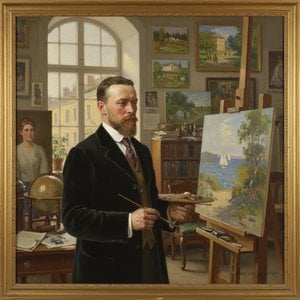
Albert Edelfelt: Un Pioniere del Realismo Finlandese e i Circoli Impressionisti Internazionali
Scopri la vita e le opere di Albert Edelfelt, pioniere del realismo finlandese e figura chiave dell'impressionismo europeo. Analisi approfondita della sua arte, dai ritratti alle scene di genere, e il suo contributo all'identità artistica finlandese.

Albert Goodwin: Capturing Victorian Light & Atmosphere – A Study in Landscape Painting
Explore the captivating landscapes of Albert Goodwin (1845-1932), a celebrated Victorian watercolourist influenced by Turner & Ruskin. Discover his techniques, prolific collection, and lasting legacy in British art history.


