A Citadel of Civic Pride: Exploring the Palazzo Pubblico
Rising from the famed Piazza del Campo in Siena, Italy, the Palazzo Pubblico is far more than a town hall; it’s a breathtaking embodiment of medieval Italian power and artistry, a visual narrative woven into stone and brick. Construction commenced in 1297, fueled by the burgeoning Republic of Siena's desire for a seat of governance worthy of its ambition. The very stones whisper tales of council meetings, political maneuvering, and the flourishing artistic spirit that defined the era. The building’s design is a masterclass in pragmatic elegance – robust stone forming the lower levels gives way to brickwork above, a deliberate choice reflecting both economic considerations and an opportunity for intricate detailing. Notice how the façade subtly curves inward, mirroring the outward sweep of the Piazza del Campo; it's a harmonious dialogue between structure and space, creating a captivating sense of unity. Crowning this architectural marvel is the bronze Christogram, added in 1425 as an expression of gratitude for Saint Bernardino’s intervention during times of social unrest – a poignant reminder of faith interwoven with civic life.
The Torre del Mangia: A Gaze Over Tuscany dominates the Sienese skyline. Completed between 1325 and 1344, it was intentionally designed to surpass the height of Florence’s own campanile, a bold statement of rivalry. For a time, it held the title of Italy’s tallest structure, its imposing presence visible for miles around. Climbing its winding staircase is an experience in itself – a physical ascent through history that culminates in breathtaking panoramic views of Siena and the rolling Tuscan landscape. From this vantage point, the city unfolds below like a medieval tapestry, revealing the intricate network of streets and rooftops that have witnessed centuries of Sienese life. The tower’s design has resonated throughout architectural history, inspiring campaniles across the globe, solidifying its legacy as an icon of Italian ingenuity.
Frescoes of Governance: A Rare Civic Vision
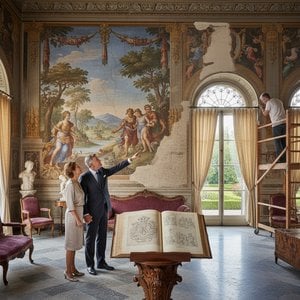
Stepping inside the Palazzo Pubblico is to enter a world where art served not religious devotion but civic purpose. The building houses the Civic Museum, renowned for its extraordinary collection of frescoes – works commissioned not by the Church, but by the governing body of Siena itself. This rarity in Italian art history elevates the Palazzo Pubblico; secular themes take precedence, offering a unique window into the Sienese worldview. Within the Sala della Pace, or Hall of the Nine, resides Ambrogio Lorenzetti’s masterpiece: “The Allegory of Good and Bad Government,” a monumental cycle that offers a profound meditation on political philosophy. “Allegory of Good Government” depicts Justice, Wisdom, and Virtue as guiding principles, illustrating how enlightened rule leads to prosperity and harmony for the citizenry. The accompanying panel, “Effects of Good Government on City Life,” showcases a thriving urban landscape filled with bustling markets, harmonious social interactions, and an overall sense of well-being. Conversely, "Allegory of Bad Government" presents a chilling vision of tyranny, corruption, and societal decay – a stark warning against the perils of misrule. These frescoes are not merely decorative; they are powerful statements about the ideals that underpinned Sienese society, offering invaluable insights into their political values.
Beyond Lorenzetti: A Tapestry of Artistic Expression. While Lorenzetti’s frescoes rightfully command attention, the Palazzo Pubblico's artistic treasures extend far beyond this singular masterpiece. Explore works by Simone Martini, whose elegant style graces the walls with depictions of chivalry and courtly life, such as “Guidoriccio da Fogliano at the siege of Montemassi.” Discover Lippo Vanni’s vibrant frescoes celebrating Sienese military victories, like "Victory of the Sienese Troops at Val di Chiana in 1363," offering a glimpse into the city's proud martial history. The Sala del Risorgimento showcases 19th-century frescoes by Cesare Maccari, commemorating Italian unification and its key figures. Each room within the Palazzo Pubblico reveals another layer of artistic expression, creating a rich tapestry that reflects Siena’s evolving identity over centuries.
Architectural Marvel and Historical Significance
The Palazzo Pubblico is more than just a museum or an architectural landmark; it's a living embodiment of Sienese history and civic pride. Its unique collection of secular frescoes, commissioned by a governing body rather than religious institutions, provides a rare window into the political and social values of 14th-century Italy. The harmonious blend of medieval and Gothic styles, coupled with its imposing presence on the Piazza del Campo, creates an unforgettable experience for art enthusiasts, history buffs, and anyone seeking to connect with the soul of Tuscany. The building’s construction began in 1297, a testament to Siena's ambition and political strength during that era. The deliberate use of stone and brick reflects not only economic realities but also a desire to showcase civic pride through architectural grandeur. The addition of the bronze Christogram in 1425 underscores this commitment to faith and public service.
A Journey Through Time: Exhibitions and Highlights
The Civic Museum within the Palazzo Pubblico offers a captivating journey through Sienese history and art. Key highlights include, of course, Ambrogio Lorenzetti’s “Allegory of Good and Bad Government,” a monumental cycle that provides unparalleled insight into medieval political thought. Visitors can also admire Simone Martini's elegant depictions of courtly life, Lippo Vanni’s vibrant portrayals of military victories, and the 19th-century frescoes celebrating Italian unification. The museum regularly hosts temporary exhibitions focusing on specific themes or artists, ensuring a constantly evolving experience for visitors. Don’t miss the Sala del Risorgimento, which offers a poignant reflection on Italy's path to unification.
A Unique Destination: Why Visit Palazzo Pubblico?
The Palazzo Pubblico is a truly unique destination – a place where art, history, and civic pride converge. It’s not simply a museum; it’s a tangible representation of Siena’s past, present, and aspirations. The building itself is an architectural masterpiece, while the collection of frescoes offers invaluable insights into medieval political philosophy and social values. And, of course, there's the opportunity to climb the Torre del Mangia for breathtaking panoramic views of the city – a truly unforgettable experience. A visit to the Palazzo Pubblico is more than just sightseeing; it’s an immersion in Sienese culture and history.