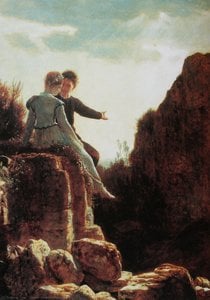
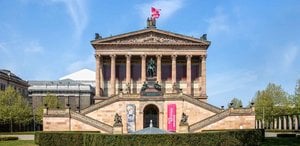
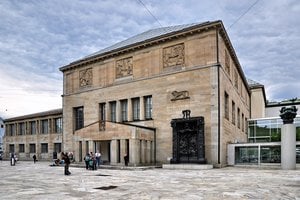
Portrait of Arnold Böcklin

Your Guide to the 100 Most Famous Arnold Böcklin Paintings

Updated október 2026 · ranked by our popularity score (searches, visits and orders for each work) · 233 works by Arnold Böcklin in our catalogue

In short

Arnold Böcklin's best-known piece is A halottak szigete (Első változat) (1880). You'll find it at the Öffentliche Kunstsammlung in Bazel. Next on the list are Önportré a halállel, aki hegedűvel játszik and A Háború (1896). We have 233 works by Arnold Böcklin in our catalogue; this guide picks out the 100 best known, with the year, the museum and the story of each piece.

1827 – 1901, Bázel Symbolist expressionism Most works: Alte Nationalgalerie

The 10 Arnold Böcklin paintings to know first

1
A halottak szigete (Első változat) (1880) by Arnold Böcklin

A halottak szigete (Első változat)

1880 · Olajfestmény vászonon · Öffentliche Kunstsammlung, Bazel

A művészettörténet csendes, árnyékos folyosóin kevés kép bír olyan lenyűgöző magnizmussal, mint Böcklin Arnold A halottak szigete (Első változat) című műve. Az 1880-es évek elején elkészült remekmű mély kapuként szolgál a szimbolista mozgalom felé, ahol az művész ecsetje nem a valóság tükrözésére törekszik, hanem a lélek megfoghatatlan suttogásainak felidézésére. Ahogy a néző a monumentális vászonra tekint, azonnal egy mély nyugalom és spektrális szépség birodalmába repül. A jelenzetet egy keserű, sziklás…

2
Önportré a halállel, aki hegedűvel játszik by Arnold Böcklin

Önportré a halállel, aki hegedűvel játszik

Olajfesték · Alte Nationalgalerie, Berlin

The air in the room feels heavy, thick with the scent of old wood and the weight of an impending silence. A man sits in formal attire, his suit and tie lending a sense of somber dignity to his presence. He holds a violin, but he is not the one leading the melody. Behind him, a skeletal figure emerges from the shadows, its bony fingers dancing across the strings. This…

3
A Háború (1896) by Arnold Böcklin

A Háború

1896 · Olajfestmény vászonon · Kunsthaus Zürich, Zürich

A konfliktus ereje: Arnold Böcklin „La Guerre” műve Tárgy és kompozíció Arnold Böcklin La Guerre (1896) című alkotása a konfliktus és a káosz drámai felfedezése. Ez a hatalmas szimbolista remekmű egy erőszakos jelenetet ábrázol, amely tele van emberi és valószínűleg szupernaturális alakokkal, akik harcba blemba. A kompozíció sűrű és rétegzett, központi részét egy intenzív cselekvésben részt vevő alakcsoport alkotja. Egy piros ruhás férfi felemelt kézzel tartja feszülten az ütőjét, készen…

4
The isle of the dead (Version 3) (1883) by Arnold Böcklin

The isle of the dead (Version 3)

1883 · Oil On Panel · Alte Nationalgalerie, Berlin

In the quietude of the late nineteenth century, few images captured the collective psyche of Europe as profoundly as Arnold Böcklin’s The Isle of the Dead. This particular version, a haunting masterpiece from 1883, serves as more than a mere landscape; it is a portal into the subconscious. As the viewer's eye meets the dark, mirror-like waters, there is an immediate sense of profound stillness, a hush that commands reverence.…

5
Island of the Dead (Version 5) (1886) by Arnold Böcklin

Island of the Dead (Version 5)

1886 · Acrylic On Canvas · Museum der bildenden Künste, Leipzig

The Haunting Beauty of Böcklin’s ‘Island of the Dead’ A Timeless Vision Arnold Böcklin's 'Island of the Dead (Version 5)' is more than just a painting; it’s an immersion into a realm of profound melancholy and enduring mystery. Completed in 1886, this iconic Symbolist work continues to captivate viewers with its stark beauty and unsettling serenity. Böcklin masterfully blends naturalistic elements – the rugged coastline, the imposing cypress trees –…

6
Island of the Dead (1880) by Arnold Böcklin

Island of the Dead

1880 · Oil On Panel · Metropolitan Művészeti Múzeum, New York

Introduction Arnold Böcklin's painting "Island of the Dead" is one of his most famous works, and it has been widely reproduced in prints. The painting depicts a desolate and rocky islet seen across an expanse of dark water, with a small rowboat carrying a shrouded figure approaching the shore. Size and Media The original painting measures 73.7 x 121.9 cm (29 x 48 in.) and is painted in oil on…

7
The Isle of the Dead (Version 2) (1880) by Arnold Böcklin

The Isle of the Dead (Version 2)

1880 · Oil On Board

The Isle of the Dead (Version 2) is an oil on board painting by the Swiss artist Arnold Böcklin. This specific work was executed in 1880. The physical dimensions of the panel measure 73.7 x 121.9 cms (29 x 47 ¾ ins).

8
L'Îlle des morts by Arnold Böcklin

L'Îlle des morts

Oil On Canvas · Museum der bildenden Künste, Leipzig

A rocky islet rises from a still, dark sea, its jagged silhouette defined by the presence of cypress trees. The composition centers on a small boat approaching the shore, carrying figures toward the silent, stony terrain. This scene, rendered in oil, captures a moment of profound stillness where the boundary between the physical world and the afterlife becomes porous. The atmosphere is heavy with the weight of transition, suggesting a…

9
Pont dans un paysage de montagne by Arnold Böcklin

Pont dans un paysage de montagne

Oil On Canvas · Alte Nationalgalerie, Berlin

Arnold Böcklin’s Pont dans un paysage de montagne is not merely a depiction of stone and foliage; it is an invitation—a sublime passage into a realm where the tangible world dissolves into myth and profound contemplation. This masterpiece, steeped in the evocative atmosphere of Symbolism, immediately draws the viewer across its painted threshold. One gazes upon a bridge, elegantly spanning a valley carved by time, set against a backdrop of…

10
L'Îlle des morts 1 by Arnold Böcklin

L'Îlle des morts 1

Oil On Canvas · Alte Nationalgalerie, Berlin

L'Îlle des morts 1 is a painting by the Swiss Symbolist painter Arnold Böcklin. Born in Basel, Switzerland, in 1827, the artist developed a visual language that explored the intersection of myth and mortality. He spent his final years in Italy, passing away in Fiesole in 1901.

Numbers 11 to 100: more Arnold Böcklin paintings

11Weeping at the Cross (1876) by Arnold BöcklinWeeping at the Cross1876 · Alte Nationalgalerie 12Portrait d´un jeune Romain by Arnold BöcklinPortrait d´un jeune Romain 13Sirens (1875) by Arnold BöcklinSirens1875 · Alte Nationalgalerie 14Nymph and Satyr (1871) by Arnold BöcklinNymph and Satyr1871 · Philadelphia Művészeti Múzeum 15sideboard (1874) by Arnold Böcklinsideboard1874 · Los Angeles County Museum of Art 16La peste 1 by Arnold BöcklinLa peste 1 17Le Voyage de noces by Arnold BöcklinLe Voyage de nocesStädel Múzeum 18Diana's Hunt by Arnold BöcklinDiana's Hunt 19La peste by Arnold BöcklinLa peste 20In springtime (1873) by Arnold BöcklinIn springtime1873 · National Gallery of Victoria 21Veritas (1881) by Arnold BöcklinVeritas1881 · Bavári Állami Festırménygyűjtemények 22The Honeymoon (1878) by Arnold BöcklinThe Honeymoon1878 · Alte Nationalgalerie 23Poverty and Sorrow (1890) by Arnold BöcklinPoverty and Sorrow1890 · Staatliche Kunsthalle Karlsruhe 24Nymph at a Spring (1855) by Arnold BöcklinNymph at a Spring1855 · Bavári Állami Festırménygyűjtemények 25Roman May Day (1872) by Arnold BöcklinRoman May Day1872 · Bavári Állami Festırménygyűjtemények 26Farmland in Early Spring / (1884) by Arnold BöcklinFarmland in Early Spring /1884 · Alte Nationalgalerie 27The Artist and his Wife (1863) by Arnold BöcklinThe Artist and his Wife1863 · Alte Nationalgalerie 28A Nymph at the Fountain (Pan, Chasing a Nymph) (1855) by Arnold BöcklinA Nymph at the Fountain (Pan, Chasing a Nymph)1855 · Thyssen-Bornemisza Múzeum 29Germans on the Boar Hunt (1858) by Arnold BöcklinGermans on the Boar Hunt1858 · Wallraf-Richartz Múzeum 30The painter Franz von Lenbach (1862) by Arnold BöcklinThe painter Franz von Lenbach1862 31Venus sending away Amor (1860) by Arnold BöcklinVenus sending away Amor1860 · Westfälisches Landesmuseum 32The sculptor Joseph von Kopf (1863) by Arnold BöcklinThe sculptor Joseph von Kopf1863 · Alte Nationalgalerie 33Portrait of a Woman (1871) by Arnold BöcklinPortrait of a Woman1871 34Fertur lux in tenebras (1881) by Arnold BöcklinFertur lux in tenebras1881 · Alte Nationalgalerie 35Old Roman wine tavern in spring (1865) by Arnold BöcklinOld Roman wine tavern in spring1865 · Bavári Állami Festırménygyűjtemények 36God father leading Adam into paradise (1871) by Arnold BöcklinGod father leading Adam into paradise1871 · Museum für Kunst und Kulturgeschichte 37Venus Anadyomene (1869) by Arnold BöcklinVenus Anadyomene1869 · Hessisches Landesmuseum 38Die Schaumgeborene / Grüne Venus (1871) by Arnold BöcklinDie Schaumgeborene / Grüne Venus1871 · Museum Wiesbaden 39Roman wine tavern (1867) by Arnold BöcklinRoman wine tavern1867 · Staatliche Kunsthalle Karlsruhe 40Triton carrying a nereid on his back (1875) by Arnold BöcklinTriton carrying a nereid on his back1875 41Triton blowing through a shell in the surf (1879) by Arnold BöcklinTriton blowing through a shell in the surf1879 · Niedersächsisches Landesmuseum 42Sea Idyll (1887) by Arnold BöcklinSea Idyll1887 43Susanna and the two old man (1888) by Arnold BöcklinSusanna and the two old man1888 44Playing in the Waves (1900) (1900) by Arnold BöcklinPlaying in the Waves (1900)1900 · Bavári Állami Festırménygyűjtemények 45The hermit (1863) by Arnold BöcklinThe hermit1863 · Bavári Állami Festırménygyűjtemények 46Honeymoon (1890) by Arnold BöcklinHoneymoon1890 · Städel Múzeum 47Ruine dans un paysage au clair de lune by Arnold BöcklinRuine dans un paysage au clair de lune 48Prometheus by Arnold BöcklinPrometheus 49Shepherdess (1864) by Arnold BöcklinShepherdess1864 · Bavári Állami Festırménygyűjtemények 50Ruin by the Sea (1881) by Arnold BöcklinRuin by the Sea1881 · Cleveland Museum of Art 51Centaur Watching Fish (1878) by Arnold BöcklinCentaur Watching Fish1878 · Kunsthaus Zürich 52Sappho (1862) by Arnold BöcklinSappho1862 · Philadelphia Művészeti Múzeum 53A Sacred Grove (1871) by Arnold BöcklinA Sacred Grove1871 · Bavári Állami Festırménygyűjtemények 54The Hermit (1884) by Arnold BöcklinThe Hermit1884 · Alte Nationalgalerie 55A Spring in a Narrow Gorge (1881) by Arnold BöcklinA Spring in a Narrow Gorge1881 · J. Paul Getty Múzeum 56Shield with Gorgon by Arnold BöcklinShield with GorgonGrand Palais 57A Cliff Face (1852) by Arnold BöcklinA Cliff Face1852 · National Gallery 58Ruine en bord de mer by Arnold BöcklinRuine en bord de mer 59La Chevauchée de la Mort (L'Automne et la Mort) by Arnold BöcklinLa Chevauchée de la Mort (L'Automne et la Mort)Bavári Állami Festırménygyűjtemények 60Villa by the Sea (1877) by Arnold BöcklinVilla by the Sea1877 · Staatsgalerie Stuttgart 61Centaurus and Nymph (1855) by Arnold BöcklinCentaurus and Nymph1855 · Alte Nationalgalerie 62Le Réveil du printemps by Arnold BöcklinLe Réveil du printempsKunsthaus Zürich 63Sous la tonnelle by Arnold BöcklinSous la tonnelle 64At Krazenbach in Unterwalden (1847) by Arnold BöcklinAt Krazenbach in Unterwalden1847 · Schloss Weimar 65Landscape in the Roman Campagna (1851) by Arnold BöcklinLandscape in the Roman Campagna1851 · Staatliche Kunsthalle Karlsruhe 66Roman Landscape (1850) by Arnold BöcklinRoman Landscape1850 67Villa by the Sea (1863) by Arnold BöcklinVilla by the Sea1863 · Bavári Állami Festırménygyűjtemények 68Bagpiper (1861) by Arnold BöcklinBagpiper1861 · Bavári Állami Festırménygyűjtemények 69Rocky landscape with a hunting centaur (1860) by Arnold BöcklinRocky landscape with a hunting centaur1860 · Schloss Weimar 70Pan Amongst the Reeds (1857) by Arnold BöcklinPan Amongst the Reeds1857 71Road to Emmaus (1870) by Arnold BöcklinRoad to Emmaus1870 · Bavári Állami Festırménygyűjtemények 72Landscape with Castle (1870) by Arnold BöcklinLandscape with Castle1870 · Statens Museum for Kunst 73nymphs bathing (1866) by Arnold Böcklinnymphs bathing1866 74elysian fields (1877) by Arnold Böcklinelysian fields1877 75Triton and Nereid (1877) by Arnold BöcklinTriton and Nereid1877 76Isle of the Dead (1884) by Arnold BöcklinIsle of the Dead1884 77The Summer's Day (1881) by Arnold BöcklinThe Summer's Day1881 78Centaur at the Village Blacksmith's Shop (1888) by Arnold BöcklinCentaur at the Village Blacksmith's Shop1888 · Szépművészeti Múzeum 79the sacred wood (1882) by Arnold Böcklinthe sacred wood1882 80Villa by the Sea III (1872) by Arnold BöcklinVilla by the Sea III1872 · Städel Múzeum 81Meerestille (Calm Sea) (1887) by Arnold BöcklinMeerestille (Calm Sea)1887 · Kunstmuseum Bern 82la sirene (1887) by Arnold Böcklinla sirene1887 83The hunt of Diana (1896) by Arnold BöcklinThe hunt of Diana1896 · Musée d'Orsay 84Vision at sea (1896) by Arnold BöcklinVision at sea1896 85Flora, Scattering Flowers by Arnold BöcklinFlora, Scattering FlowersMuseum Folkwang 86Étude de triton by Arnold BöcklinÉtude de triton 87Pan entre des colonnes 1 by Arnold BöcklinPan entre des colonnes 1 88Pan entre des colonnes by Arnold BöcklinPan entre des colonnes 89Victimes du choléra by Arnold BöcklinVictimes du choléra 90Esquisse pour 'Autoportrait dans l'atelier' by Arnold BöcklinEsquisse pour 'Autoportrait dans l'atelier' 91untitled (1785) by Arnold Böcklinuntitled (1785) 92tomb by Arnold BöcklintombStaatliche Kunsthalle Karlsruhe 93Pan dans les roseaux 1 by Arnold BöcklinPan dans les roseaux 1 94untitled (8093) by Arnold Böcklinuntitled (8093) 95Le Roi David (Panneau central) by Arnold BöcklinLe Roi David (Panneau central) 96Soirée de printemps by Arnold BöcklinSoirée de printemps 97Melancholia by Arnold BöcklinMelancholia 98Combat sur un pont by Arnold BöcklinCombat sur un pont 99Villa en bord de mer by Arnold BöcklinVilla en bord de merKunst Museum Winterthur 100Combat sur un pont 1 by Arnold BöcklinCombat sur un pont 1

Arnold Böcklin's paintings, period by period

What Arnold Böcklin painted most

The four subjects that come up most often in these pieces, each with its best-known example.

Where you can see Arnold Böcklin's paintings

The 8 museums that hold the most of the paintings on this page.

Museum City Works by Arnold Böcklin Paintings from this list
Alte Nationalgalerie, BerlinAlte Nationalgalerie Berlin 20 Önportré a halállel, aki hegedűvel játszik, The isle of the dead (Version 3), Pont dans un paysage de montagne
Bavári Állami Festırménygyűjtemények, MunchenBavári Állami Festırménygyűjtemények Munchen 25 Veritas, Nymph at a Spring, Roman May Day
Staatliche Kunsthalle Karlsruhe, KarlsruheStaatliche Kunsthalle Karlsruhe Karlsruhe 4 Poverty and Sorrow, Roman wine tavern, Landscape in the Roman Campagna
Kunsthaus Zürich, ZürichKunsthaus Zürich Zürich 5 A Háború, Centaur Watching Fish, Le Réveil du printemps
Städel Múzeum, FrankfurtStädel Múzeum Frankfurt 4 Le Voyage de noces, Honeymoon, Villa by the Sea III
Museum der bildenden Künste, LeipzigMuseum der bildenden Künste Leipzig 2 Island of the Dead (Version 5), L'Îlle des morts
Philadelphia Művészeti Múzeum, PhiladelphiaPhiladelphia Művészeti Múzeum Philadelphia 2 Nymph and Satyr, Sappho
Schloss Weimar, WeimarSchloss Weimar Weimar 2 At Krazenbach in Unterwalden, Rocky landscape with a hunting centaur

Decade by decade: the best-known Arnold Böcklin piece of each

Works per decade

Pick a decade to see its standout piece.

Arnold Böcklin: quick answers about the paintings

What is Arnold Böcklin's best-known painting?See the answer

Top of the list is A halottak szigete (Első változat) (1880), Öffentliche Kunstsammlung, Bazel. Right behind it: Önportré a halállel, aki hegedűvel játszik and A Háború (1896).

What age was Arnold Böcklin when creating A halottak szigete (Első változat)?See the answer

53 years old. Arnold Böcklin was born in 1827, and A halottak szigete (Első változat) dates from 1880.

What are Arnold Böcklin's top 10 paintings?See the answer

A halottak szigete (Első változat), Önportré a halállel, aki hegedűvel játszik, A Háború, The isle of the dead (Version 3), Island of the Dead (Version 5), Island of the Dead, The Isle of the Dead (Version 2), L'Îlle des morts, Pont dans un paysage de montagne and L'Îlle des morts 1. You'll find the year and the museum of each in the list above.

How many works by Arnold Böcklin are in your catalogue?See the answer

We have 233 works by Arnold Böcklin in our catalogue, dated 1847 to 1900.

In which museums can you see Arnold Böcklin's famous works?See the answer

You'll find most of them in Alte Nationalgalerie (Berlin), Bavári Állami Festırménygyűjtemények (Munchen) and Staatliche Kunsthalle Karlsruhe (Karlsruhe). The museum list above has the full breakdown.

When did Arnold Böcklin make the most famous pieces?See the answer

In 1870s, more than any other time: 20 of the 100 pieces on this page date from then, Weeping at the Cross among them.

What are Arnold Böcklin's first and last famous pieces?See the answer

The earliest piece here is At Krazenbach in Unterwalden (1847); the most recent is Playing in the Waves (1900) (1900).

Which subjects did Arnold Böcklin paint most often?See the answer

Trees (14), Sky (10) and Rocks (9), out of the 100 pieces on this page.

Which medium shows up most in Arnold Böcklin's paintings?See the answer

Oil On Canvas, used in 22 of the 100 pieces on this page.

What style or movement is Arnold Böcklin known for?See the answer

Symbolist expressionism, as you can see in the pieces on this page.

Which famous Arnold Böcklin paintings are at the Alte Nationalgalerie?See the answer

You can see 13 of the pieces on this page at the Alte Nationalgalerie, Berlin, including Önportré a halállel, aki hegedűvel játszik, The isle of the dead (Version 3) and Pont dans un paysage de montagne.

Where can I order a Arnold Böcklin reproduction?See the answer

Yes. Every painting on this page is available as a hand-painted oil reproduction or a print, in the size that suits you. Just open the painting's page to order.

Arnold Böcklin's story

A sziget árnyéka

A svájci Basel a kiindulópontja volt egy olyan életnek, amelyet a megfogatható és a szellemi világ közötti feszültség határozott meg. Christian Frederick Böcklin és Ursula Lippe gyermekeként 1827. október 16-án született a fiatalember, aki végül a fatheri selyereskereskedelmet meghagyva a Düsseldorf Akadémiája szigorú termelőit kereste meg. Schirmer irányítása alatt kezdte el elszívni a táj nyelvét – egy olyan készség, amelyet később az emberi lélek földrajzának feltérképezésére alkalmazott. Nem csupán tájképeket festett; olyan birodalokat teremtett, ahol a klasszikus és a makaber találkozik.

A düsseldorfi akadémiai fegyelemtől a párizsi fényekig és Róma ősi súlyáig vezető vándorlás alapvető fordulatot jelezett látásmódában. A Louvre múzeumban eláztatta a mesterek történelmi tudását, de az olasz léghold határozta meg igazán a kezet. 1862 és 1866 között tért vissza Rómába, egy olyan időszakban, amikor palettája kezdte a drámaibb, kifejezőbb színeket részesíteni előnyben. Ez nem a reneszánsz fényes, napsütötte Olaszvága volt, hanem a mély árnyékok és a mitológiai súly helyszíne. Művészete az allegóriai irányba kezdett el tolódni, az antik kérdéseket használva fel a halandóság nehéz, elkerülhetetlen jelenlétének felfedezésére.

Az ányok architektúrája

A 19. század végére hírneve egy specifikus, kísérteties megszállottsággal vált alapozottá. 1880 és 1886 között öt változatot alkotott az Halottak Szigete című művekből. Ezt a munkát a firenzei angol temető ihlette, amelyben lánya nyugomást talált, és a szimbolista mozgalom fókuszpontjává vált. A jelenet a mély nyugalom műve: egy szigetecske, sötét ciprusfák és egy csonya evezős, amely egy néma part felé halad. A festmény nem csupán egy helyszínt ábrázol; egy létaini állapotot tükröz. Az a képesség, amellyel az érhetetlent – az ányok suttogását és a túlvilág súlyát – képeste megörökíteni, a megújuló európai érzékenység középpontjába helyezte őt.

Technikai megközelítése gyakran alkalmazott sűrű, kifejező impastót, különösen az olyan alkotásokban, mint az La Guerre (1896). Ebben a műben a vászon a konfliktus káoszétől remeg. Elkerüli a traditionalizmus tiszta vonalait, helyette egy sűrű, rétegzett kompozíciót választ, ahol a alakok a romló építészeti elemektől körülvölve ütköznek egymással. Ez a pusztítás vizgalmas megtestesülése, ahol a mitoszt és a valóság közötti vályog feloldódik az árnyékok viharában. Stílusa metsződéssel kapcsolódott a pre-rafaelita művészethez, mégis egyedi maradt, egy olyan miszticizmusra összpontosítva, amely egyszerre érezte ősi és nyugtalanian modernnek.

A hatás öröksége

Képvilágának hatása messze túlnyúlt a vászon határain, elért a későromantikus zene hallásmódját is. Festményei vizuális stimulánst biztosítottak a zeneseknek, különösen a Gustav Mahler műveinek hangulatát befolyásolva. Képviselete a vizuális és a pszichológiai szakadék áthidalása miatt olyanoknál vált meghatározóvá, akik a tudatalatti megjelenítését keresték. Hatása több művészgenerációt is érintett:

  • Hans Thoma, egy fiatal művész, akit a szimbolikus mélység befolyásolt.
  • Giorgio de Chirico, aki Böcklin Arnold kompozícióinak izolációjában talált mély kapcsolódást.
  • Salvador Dalí és Max Ernst, akik a groteszk és a rémálom ötvözésének képességéből csorbáztak.
  • Marcel Duchamp, aki megjegyezte az artista jelentős hatását saját fejlődésére.

Fiesole-ben, Olaszországban hunyt el, hátra hagyva egy olyan műveket, amelyek nem voltak könnyen kategórizálhatók. A svájci táj, a római kocsma és a mitológiai erdő festője volt, mégis valódi témája a tudatlan, csendes és maradandó jelenlét maradt. Művei ma is fontos gyűjteményekben őrzik helyüket, többek között a bazeli Kunstmuseum és a zurichi Kunsthaus Zürich múzeumokban, mint forrásokat azok számára, akik a mitosz és a halandóság metszetpontját kutatják.

All 233 works by Arnold Böcklin →