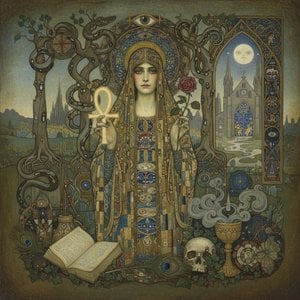
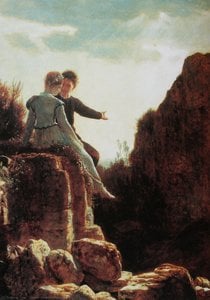
A sziget árnyéka
A svájci Basel a kiindulópontja volt egy olyan életnek, amelyet a megfogatható és a szellemi világ közötti feszültség határozott meg. Christian Frederick Böcklin és Ursula Lippe gyermekeként 1827. október 16-án született a fiatalember, aki végül a fatheri selyereskereskedelmet meghagyva a Düsseldorf Akadémiája szigorú termelőit kereste meg. Schirmer irányítása alatt kezdte el elszívni a táj nyelvét – egy olyan készség, amelyet később az emberi lélek földrajzának feltérképezésére alkalmazott. Nem csupán tájképeket festett; olyan birodalokat teremtett, ahol a klasszikus és a makaber találkozik.
A düsseldorfi akadémiai fegyelemtől a párizsi fényekig és Róma ősi súlyáig vezető vándorlás alapvető fordulatot jelezett látásmódában. A Louvre múzeumban eláztatta a mesterek történelmi tudását, de az olasz léghold határozta meg igazán a kezet. 1862 és 1866 között tért vissza Rómába, egy olyan időszakban, amikor palettája kezdte a drámaibb, kifejezőbb színeket részesíteni előnyben. Ez nem a reneszánsz fényes, napsütötte Olaszvága volt, hanem a mély árnyékok és a mitológiai súly helyszíne. Művészete az allegóriai irányba kezdett el tolódni, az antik kérdéseket használva fel a halandóság nehéz, elkerülhetetlen jelenlétének felfedezésére.
Az ányok architektúrája
A 19. század végére hírneve egy specifikus, kísérteties megszállottsággal vált alapozottá. 1880 és 1886 között öt változatot alkotott az Halottak Szigete című művekből. Ezt a munkát a firenzei angol temető ihlette, amelyben lánya nyugomást talált, és a szimbolista mozgalom fókuszpontjává vált. A jelenet a mély nyugalom műve: egy szigetecske, sötét ciprusfák és egy csonya evezős, amely egy néma part felé halad. A festmény nem csupán egy helyszínt ábrázol; egy létaini állapotot tükröz. Az a képesség, amellyel az érhetetlent – az ányok suttogását és a túlvilág súlyát – képeste megörökíteni, a megújuló európai érzékenység középpontjába helyezte őt.
Technikai megközelítése gyakran alkalmazott sűrű, kifejező impastót, különösen az olyan alkotásokban, mint az La Guerre (1896). Ebben a műben a vászon a konfliktus káoszétől remeg. Elkerüli a traditionalizmus tiszta vonalait, helyette egy sűrű, rétegzett kompozíciót választ, ahol a alakok a romló építészeti elemektől körülvölve ütköznek egymással. Ez a pusztítás vizgalmas megtestesülése, ahol a mitoszt és a valóság közötti vályog feloldódik az árnyékok viharában. Stílusa metsződéssel kapcsolódott a pre-rafaelita művészethez, mégis egyedi maradt, egy olyan miszticizmusra összpontosítva, amely egyszerre érezte ősi és nyugtalanian modernnek.
A hatás öröksége
Képvilágának hatása messze túlnyúlt a vászon határain, elért a későromantikus zene hallásmódját is. Festményei vizuális stimulánst biztosítottak a zeneseknek, különösen a Gustav Mahler műveinek hangulatát befolyásolva. Képviselete a vizuális és a pszichológiai szakadék áthidalása miatt olyanoknál vált meghatározóvá, akik a tudatalatti megjelenítését keresték. Hatása több művészgenerációt is érintett:
- Hans Thoma, egy fiatal művész, akit a szimbolikus mélység befolyásolt.
- Giorgio de Chirico, aki Böcklin Arnold kompozícióinak izolációjában talált mély kapcsolódást.
- Salvador Dalí és Max Ernst, akik a groteszk és a rémálom ötvözésének képességéből csorbáztak.
- Marcel Duchamp, aki megjegyezte az artista jelentős hatását saját fejlődésére.
Fiesole-ben, Olaszországban hunyt el, hátra hagyva egy olyan műveket, amelyek nem voltak könnyen kategórizálhatók. A svájci táj, a római kocsma és a mitológiai erdő festője volt, mégis valódi témája a tudatlan, csendes és maradandó jelenlét maradt. Művei ma is fontos gyűjteményekben őrzik helyüket, többek között a bazeli Kunstmuseum és a zurichi Kunsthaus Zürich múzeumokban, mint forrásokat azok számára, akik a mitosz és a halandóság metszetpontját kutatják.
Kérdések és válaszok
Milyen más nevét vagy álneveit használ még Arnold Böcklin?
Arnold Böcklin más néven is ismert: Arnold Boecklin.
Hol találhatók statisztikák Arnold Böcklin műveire vonatkozóan?
Arnold Böcklin számára elérhető egy Statisztikák oldal, amely statisztikákat mutat be a művész alkotmányairól a ez a weboldal felületén.
Honnan származik Arnold Böcklin?
Arnold Böcklin Svájc-ban született.