Jacob Andreas Ebersbach (1769 – 1831) remains a figure shrouded in relative obscurity within the annals of Danish art history, yet his singular contribution—the creation of ‘Sabbath Lamp’—continues to intrigue scholars and collectors alike. Born in Odense, Denmark, little is known about his formative years beyond establishing himself as a craftsman and artist in his hometown. Despite the paucity of biographical details, Ebersbach's artistic legacy speaks volumes about the burgeoning aesthetic sensibilities of the late 18th and early 19th centuries.
Early Life & Craftsmanship: Information regarding Ebersbach’s upbringing is scarce, suggesting a modest familial background focused on artisanal pursuits. His skill as a metalworker undoubtedly underpinned his artistic endeavors, providing him with both technical expertise and access to materials crucial for producing his sculptures.
The Sabbath Lamp – A Singular Vision: The centerpiece of Ebersbach’s oeuvre is ‘Sabbath Lamp,’ an enigmatic piece crafted sometime before 1831. Executed in metal—likely bronze or pewter—the sculpture depicts a stylized representation of a lamp, illuminated by a central flame. Its precise symbolism remains debated amongst historians, with interpretations ranging from Christian iconography referencing divine illumination to broader explorations of domestic tranquility and spiritual contemplation.
Style & Influences: Determining Ebersbach’s artistic style is challenging due to the limited surviving documentation. However, stylistic analysis suggests affinities with Neoclassical ideals prevalent during his time—characterized by restrained elegance and classical proportions—though infused with a distinctly personal vision. The influence of German Romanticism may also be discerned in the sculpture's emotive quality and its subtle suggestion of inner reflection.
Legacy & Significance: While Ebersbach’s output remains remarkably small, ‘Sabbath Lamp’ stands as a testament to Danish artistic innovation during a period marked by significant social and intellectual transformations. Its enduring appeal lies not merely in its technical accomplishment but also in its evocative depiction of faith and contemplation—themes that resonate powerfully across cultures and eras.
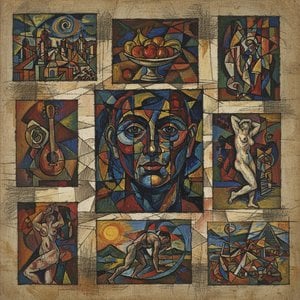
Fedezze fel a kubizmus és expresszionizmus 10 legjelentősebb remekművét! Picasso, Braque és más ikonikus művészek alkotásainak története – ArtsDot.com kínálatában minőségi reprodukciók és inspiráló otthon dekoráció. Böngéssze online gyűjteményünket!
Fedezze fel a holland barokk 10 legikonikusabb műalkotását! Rembrandt, Vermeer és más mesterek festményeinek története, technikája és időtálló szépsége. Művészeti reprodukciók prémium minőségben – ArtsDot.com.
Még szerzői jogi védelem alatt áll Jacob Andreas Ebersbach munkássága?
Nem, e művész alkotásai a jogi szabad tartományba tartoznak.
Honnan származik Jacob Andreas Ebersbach?
Denmark
Mikor halt meg Jacob Andreas Ebersbach?
1831
Hány Jacob Andreas Ebersbach festménye található a ArtsDot.com oldalon?
1
Mi a(z) legnépszerűbb Jacob Andreas Ebersbach festmény a ArtsDot.com oldalon?
Sabbath Lamp
Hol és mikor született Jacob Andreas Ebersbach?
1769, Odense, Denmark
Mely művészeti korszakba tartozott Jacob Andreas Ebersbach?
Early Modern
Ki Jacob Andreas Ebersbach?
A Quiet Pioneer of Danish Metal Sculpture
Jacob Andreas Ebersbach (1769 – 1831) remains a figure shrouded in relative obscurity within the annals of Danish art history, yet his singular contribution—the creation of ‘Sabbath Lamp’—continues to intrigue scholars and collectors alike. Born in Odense, Denmark, little is known about his formative years beyond establishing himself as a craftsman and artist in his hometown. Despite the paucity of biographical details, Ebersbach's artistic legacy speak
Mennyi ideig élt Jacob Andreas Ebersbach?
62 years (1769–1831)
Jacob Andreas Ebersbach műveit színek alapján is böngészhetem?