early life and training
elia naurizio, an italian painter, was born in trento, italy in 1589. he was a member of the naurizio family, known for their artistic contributions to the region of trentino.artistic contributions
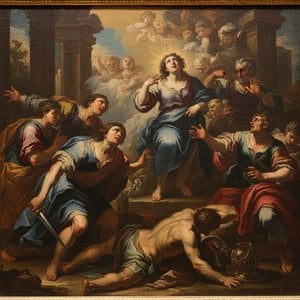
naurizio's work is characterized by its allegorical themes, particularly his masterpiece, the church triumphant, a singular propaganda image of the counter-reformation. this painting showcases naurizio's skill in capturing the essence of the catholic church's response to the protestant reformation.- key works:
- the church triumphant (counter-reformation allegory)
- portrait of cardinal ercole gonzaga (council of trent)
- museums featuring naurizio's work:
- trentino churches (trento, italy)
- ArtsDot.com: elia naurizio (online collection)
artistic style and influences
naurizio's style, while distinct, was influenced by the italian renaissance and the counter-reformation movement. his use of allegory to convey complex theological themes is reminiscent of mannerism, a period that emphasized intellectual sophistication over naturalism.legacy
elia naurizio's contributions to the art world are a testament to his skill as a painter and his commitment to the catholic church. his work can be seen in various churches throughout trentino, and his legacy continues to inspire artists and scholars alike.- related artists:
- caravaggio (michelangelo merisi)
- piero della francesca
- recommended readings:
- counter-reformation (wikipedia)
- art movements and styles (ArtsDot.com)
Gyakran Ismételt Kérdések
Látogathatom Elia Naurizio műveinek virtuális múzeumát?
Virtuális látogatás is lehetséges: Elia Naurizio 3D Múzeum oldala egy háromdimenziós galériában mutatja be a művész alkotásait.
Mely történelmi korszakban alkotott Elia Naurizio?
Elia Naurizio a Early Modern korszakban alkotott. Ez az időszak a művész tevékenységét a történelembe helyezi.
Hol tekinthetném meg Elia Naurizio munkásságának színprofilját?
Elia Naurizio Paletta Genom egy olyan oldal, amely bemutatja a művész életművének színes profilját.