Előnézet
 Megosztás
 Megosztás
 Részletek
 Útmutató

 Letöltés
 Hasonló darabok
 X-ray felvétel
 Diavetítés
 Statisztika
Untitled (23)


 Tovább olvasom
Az ezen az oldalon megjelenített műalkotások szerzői jogi védelem alatt állnak, ami azt jelenti, hogy törvényileg nem készíthetünk és nem adhatunk el belőlük pontos másolatokat. Ez a védelem olyan nemzetközi megállapodások alapján érvényesül, mint például a Berni Egyezmény és a nemzeti törvények által, beleértve azokat is, amelyeket meghatározott Az USA szerzői jogi törvénye – 17. cím.
Ez a módszer teljes mértékben megfelel a szerzői jogi szabályozásnak, mivel nem tartalmazza a védett műalkotás másolását vagy duplikálását. Ehelyett ez egy kreatív újinterpretáció – egy új festmény, amely az eredetivel való összefüggései miatt hatással van rá, de nem az az.
Giclée / Műnyomat
Múzeumi minőségű giclée vagy vászonnyomat, gyors gyártással és rugalmas finomítási lehetőségekkel. ( Kézzel festett másolat vásárlása Áttérés digitális képre)




P118B Ft10

P118H Ft10

P118W Ft10

P438Z Ft10

P508JH Ft12

P508YH Ft12

P805H Ft10

P805Z Ft10

P919BZ Ft10

P919G Ft10

P919XJ Ft10

P959ZH Ft10

P968JZ Ft12

W106C Ft8

W218G Ft10

W218JH Ft8

W218Y Ft10

W307PJ Ft10

W316G Ft10

W316PJ Ft8

W316Y Ft10

W398PJ Ft8

W4111J Ft10

W500HY Ft15

W500JH Ft15

W692G Ft12

W849H Ft8

W940BG Ft15

W953PJ Ft8




Válasszon előre meghatározott méreteink közül, amelyek megfelelnek a műalkotás eredeti arányainak.

Írja be a keretének vagy a falának megfelelő szélességet és magasságot. A nyomatot csak le lehet vágni, soha nem tehető nagyobbá, mint az eredeti kép, így egy eltérő alakú méretnél a kép egy része elveszik. Mielőtt bármit kinyatintanánk, küldünk egy digitális próbamodellt jóváhagyásra. Az oldalon látható kép nem tartalmazza a valós levágást — ezt csak a próbamodell mutatja meg.
Világszerte történő kiszállítás területére mindössze 2 hét alatt, a szokásos 4-5 hét helyett. (25 október)

Ingyenes globális expressz szállítás

Prémium minőségű len vászon

Teljes körű szállítási biztosítás

Vámvisszatérítési Garancia

Tökéletes színarányosság garancia

100 napos visszaküldési garancia (csak gyártási hibás termékek esetén)

100% pénzvisszatérítési garancia

Több darab vásárlásakor kedvezmény
 Az üvegkeretes opció csak 110 cm alatti méretben érhető el

Untitled (23)
Giclée / Műnyomat
Reprodukció méretei
-


Összesített ár
Ft 19873
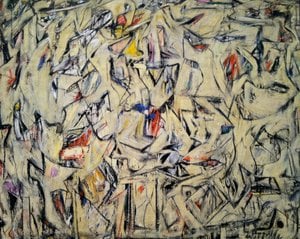
A Tempestuous Vision of Female Power: Examining Willem de Kooning’s Untitled (23)
The photograph captures a striking monochrome depiction of “Untitled (23),” a seminal work by Willem de Kooning, completed in 1968. This painting embodies the core tenets of Abstract Expressionism – raw emotion, dynamic gesture, and an uncompromising exploration of form—making it a cornerstone of American art history. The image itself is deliberately muted, prioritizing textural detail over vibrant color, mirroring the artist’s stylistic preference for conveying psychological intensity rather than literal representation.Subject Matter: Embodied Femininity
At its heart lies a woman figure dominating the canvas. De Kooning famously eschewed traditional portraiture conventions, opting instead to depict women as fragmented, turbulent entities—a deliberate rejection of idealized femininity prevalent in earlier artistic movements. The woman’s posture is defiant, her limbs outstretched and intertwined, conveying a palpable sense of struggle and vulnerability simultaneously. Her face remains largely obscured, furthering the ambiguity surrounding her identity and emphasizing the painting's focus on emotional experience rather than visual accuracy. Surrounding her are amorphous shapes—suggestive of drapery or perhaps even swirling currents—creating an atmosphere of dynamism and instability that reflects the artist’s inner turmoil.Style & Technique: Bold Brushwork and Energetic Gestures
De Kooning’s technique is instantly recognizable through its aggressive brushstrokes – thick, impasto layers of paint applied with forceful movements. This method wasn't merely about applying pigment; it was a deliberate attempt to capture the physicality of emotion itself. The artist utilized a palette knife extensively, pushing paint across the canvas with palpable energy, resulting in textured surfaces that pulsate with movement and contribute significantly to the painting’s expressive power. The absence of color reinforces this tactile quality, allowing viewers to engage directly with the artist's hand—a hallmark of Abstract Expressionism.Historical Context: The Crucible of Postwar Art
“Untitled (23)” emerged during a period of profound artistic upheaval following World War II. The postwar era witnessed a dramatic shift away from representational art towards abstraction, fueled by anxieties about societal change and a desire to express subjective experience in ways that bypassed rational thought. De Kooning’s work aligns perfectly with this movement's ethos, reacting against the perceived constraints of academic tradition and embracing spontaneity as a vehicle for conveying psychological depth. It stands alongside other iconic paintings from the period—such as Jackson Pollock’s drip canvases—establishing a visual vocabulary that continues to resonate today.Symbolism: Fragmentation and Resilience
The fragmented form of the woman figure speaks to broader themes of trauma and resilience. De Kooning's deliberate disruption of conventional compositional structures mirrors the psychological fragmentation experienced by individuals confronting existential crises. However, despite her apparent vulnerability, the woman’s posture exudes strength—a testament to the human spirit’s capacity for enduring hardship and maintaining inner integrity. The surrounding amorphous shapes symbolize the uncontrollable forces shaping our lives, while simultaneously suggesting an underlying order beneath the surface chaos.Emotional Impact: Confronting Darkness
Ultimately, “Untitled (23)” compels viewers to confront uncomfortable truths about the human condition. It eschews comforting illusions of beauty or harmony, presenting instead a visceral depiction of emotional struggle—a courageous assertion of feeling in defiance of artistic conventions. The painting’s enduring power lies in its ability to provoke contemplation and elicit responses rooted in personal experience—a testament to De Kooning's mastery of conveying profound psychological resonance through visual language.Gyakran Ismételt Kérdések
Ki készítette a(t): "Untitled (23)"?
A "Untitled (23)" alkotója Willem de Kooning. A mű Willem de Kooning nevére van katalógusozva.
Megtekinthetném a(z) „Untitled (23)”, Willem de Kooning alkotása röntgensugárzásos felvételét?
A „Untitled (23)” rétegről rétegre vizsgálható a mű alkotásának X-Ray felvétel oldalán, amely egy restaurátori fényasztal alapján készült interaktív néző, és tizenegyi optikai rétegben mutatja be a képet.
„Untitled (23)” művészeti alkotás mentes a szerzői jogoktól?
A szerzői jogokkal kapcsolatban a "Untitled (23)" mű még szerzői jogにより védi.
Hasonló műalkotások


A művész életrajza
A Life Forged in Abstraction
Willem de Kooning, a name synonymous with the raw energy and emotional depth of Abstract Expressionism, was born in Rotterdam, Netherlands, in 1904. His early life was marked by a familial split – his parents divorced when he was young – which perhaps instilled within him a sense of restless searching that would permeate his artistic journey. Leaving formal schooling at twelve, de Kooning apprenticed with a commercial art firm, laying the groundwork for his technical skill while simultaneously fueling a desire to break free from conventional constraints. Evening classes at the Academie van Beeldende Kunsten en Technische Wetenschappen in Rotterdam provided further foundational training, but it was a yearning for something more – a bolder, more expressive language – that ultimately propelled him towards America in 1926. His arrival wasn’t straightforward; he famously stowed away on a ship, embodying the spirit of an outsider seeking new horizons. New York City became his adopted home, and its vibrant, often gritty energy profoundly shaped his evolving style. He navigated various jobs – house painter, carpenter – all while relentlessly pursuing his artistic vision, absorbing the city’s pulse into his work.From Urban Scenes to Abstract Fury
De Kooning's early paintings reflected his immediate surroundings: urban landscapes and portraits that captured the dynamism of New York life. These works, often rendered in a realistic style, showcased the bustling streets, crowded tenements, and diverse faces of the city. However, these were merely stepping stones towards a more profound exploration of form and emotion. A pivotal moment came with his connection to Arshile Gorky, whose influence proved transformative. Gorky encouraged de Kooning’s experimentation with abstraction, fostering a willingness to dismantle traditional representation in pursuit of something deeper. De Kooning recognized the power of simplifying forms and focusing on essential elements – color, line, and gesture – rather than striving for photographic accuracy. This shift marked a significant departure from his earlier work and laid the foundation for his later abstract explorations. The 1930s saw de Kooning engage with social realism and mural projects through the Works Progress Administration (WPA), a period that honed his skills but also highlighted the limitations of purely representational art. He found himself drawn to the works of Stuart Davis and John Graham, artists who were pushing boundaries in their own right, experimenting with flattened perspectives and bold color palettes. This confluence of influences gradually steered him away from literal depiction and toward an increasingly abstract vocabulary. It wasn’t a sudden shift, but rather a slow burn – a deliberate dismantling of established norms fueled by intellectual curiosity and a relentless pursuit of artistic truth.The Woman Series: A Landmark Achievement
Following World War II, de Kooning emerged as a central figure in the burgeoning Abstract Expressionist movement. This period marked a turning point, culminating in his iconic “Woman” series (1950-1953). These paintings – including the monumental *Woman I*, *Woman II*, and *Woman III* – are not merely depictions of female figures; they are visceral explorations of femininity, sexuality, and the complexities of human emotion. Characterized by aggressive brushstrokes, fragmented forms, and a jarring juxtaposition of colors, the “Woman” series challenged conventional notions of beauty and representation. They were controversial, even shocking to some, but their power lay precisely in their refusal to conform. De Kooning wasn’t interested in creating idealized images; he sought to capture the raw, untamed essence of his subjects. The figures are often distorted, partially obscured, and imbued with a sense of unease – reflecting the anxieties and uncertainties of the post-war era. *Woman I*, in particular, is renowned for its unsettling depiction of female anatomy, prompting intense debate about its meaning and intent. Beyond the "Woman" series, works like *The Glazier* and *Excavation* further demonstrated his dynamic approach to painting, showcasing a masterful command of texture, color, and composition. He didn't shy away from chaos or ambiguity; instead, he embraced them as integral components of his artistic language.Evolving Landscapes and Enduring Legacy
In the 1960s and beyond, de Kooning’s style underwent another significant evolution. While abstraction remained central to his work, landscape elements began to play a more prominent role, often rendered with a brighter palette and a looser, more fluid brushstroke. He continued to experiment relentlessly throughout his life, exploring different techniques and materials – including collage and printmaking – never content to rest on his laurels. His later works demonstrate a remarkable ability to reinvent himself while remaining true to his core artistic principles. De Kooning’s historical significance is undeniable. He helped establish New York City as a global center for art, challenging the dominance of European traditions and paving the way for future generations of artists. His work continues to inspire awe and provoke debate, reminding us of the power of abstraction to convey profound emotional truths. Willem de Kooning passed away in 1997, leaving behind a vast and influential body of work that stands as a testament to his unwavering commitment to artistic innovation and his enduring legacy as one of the most important American artists of the 20th century. His impact resonates still.Key Works
Here are some of Willem de Kooning’s most celebrated paintings:- Woman I (1950-1953): A seminal work in the “Woman” series, known for its fragmented and unsettling depiction of female anatomy.
- The Glazier (1947): An early example of de Kooning’s abstract style, characterized by bold colors and dynamic brushstrokes.
- Excavation (1950): A complex and layered painting that reflects de Kooning's exploration of form and gesture.
- Sunday Afternoon on the Beach (1961): A vibrant and energetic depiction of a beach scene, showcasing de Kooning’s later style.
Influences
De Kooning’s artistic development was shaped by a diverse range of influences:- Arshile Gorky: Gorky's encouragement of abstraction proved crucial in de Kooning's transition to a more non-representational style.
- Stuart Davis and John Graham: These American artists, known for their flattened perspectives and bold color palettes, influenced de Kooning’s early abstract experiments.
- European Modernism (De Stijl): De Kooning was deeply interested in the principles of geometric abstraction espoused by the Dutch movement De Stijl.

Willem de Kooning
1904 - 1997 , Holland
Gyors információk
- Artistic Movement Or Style: Ábrázattal keleti
- Artists Or Movements Influenced By This Artist: ['New York School']
- Artists Who Influenced This Artist:
- Arshile Gorky
- Stuart Davis
- John Graham
- Date Of Birth: Április 24, 1904
- Date Of Death: Március 19, 1997
- Full Name: Willem de Kooning
- Nationality: Hollandi-amerikai
- Notable Artworks:
- Nő I
- Marilyn Monroe
- Ültetés
- A Szemlélő Ajtó
- Place Of Birth: Rotterdam, Holland
Kapcsolódó cikkek

Beyond Representation: Exploring the Emotional Landscape of Abstract Expressionism
Explore the profound emotional world of Abstract Expressionism with ArtsDot. Discover key artists like Pollock & Rothko, learn about collecting, and find museum-quality reproductions to inspire your space.

Absztrakt Expresszionizmus Mesterei: 10 alkotás, ami meghatározta a művészetet | ArtsDot.com
Fedezze fel a 10 legikonikusabb absztrakt expresszionista alkotást! Ismerje meg Jackson Pollock, Mark Rothko és más mesterek történetét. Művészeti reprodukciók prémium minőségben – ArtsDot.com.

Kandinsky Mesterművei: 25 Lenyűgöző Festmény a Modern Művészet Gyöngyszemeiből | ArtsDot
Fedezze fel Wassily Kandinsky 25 legikonikusabb művét! Merüljön el az absztrakt művészet világában, ismerje meg a színek és formák lenyűgöző történetét. Prémium minőségű reprodukciók és inspiráló dekorötletek a ArtsDot.com-on.

Willem de Kooning: Abstraction, Gesture & the Evolution of Post-War American Painting
Explore the evolution of Willem de Kooning's iconic Abstract Expressionist paintings. Discover his signature style, key themes & investment potential with expert insights for discerning art collectors.

Goya Mesterművei: A Spanyol Lélek 25 Legikonikus Képe – ArtsDot
Fedezze fel Goya 25 leglenyűgözőbb mesterművét! Ismerje meg a spanyol festő életművét, portréit és ikonikus képeit. Vásároljon prémium minőségű reprodukciókat a ArtsDot.com-on, és teremtsen egyedi otthoni dekorációt klasszikus művészettel! Explore the full collection online.