Megtekintés
 Küldés
 Megosztás
 Részletek
 Útmutató

 Letöltés
 Hasonló darabok
 X-ray felvétel
 Diavetítés
 Kérdések és válaszok
 Statisztika
Easter Monday


 Összes részlet megjelenítése
Az ezen az oldalon megjelenített műalkotások szerzői jogi védelem alatt állnak, ami azt jelenti, hogy törvényileg nem készíthetünk és nem adhatunk el belőlük pontos másolatokat. Ez a védelem olyan nemzetközi megállapodások alapján érvényesül, mint például a Berni Egyezmény és a nemzeti jogszabályok által, beleértve azokat is, amelyeket meghatározott Az USA szerzői jogi törvénye – 17. cím.
Ez a módszer teljes mértékben megfelel a szerzői jogi szabályozásnak, mivel nem tartalmazza a védett műalkotás másolását vagy duplikálását. Ehelyett ez egy kreatív újinterpretáció – egy új festmény, amely az eredetivel való összefüggései miatt hatással van rá, de nem az az.
Giclée / Műnyomat
Múzeumi minőségű giclée vagy vászonnyomat, gyors gyártással és rugalmas finomítási lehetőségekkel. ( Kézzel festett másolat rendelése Áttérés digitális képre)




P118B Ft10

P118H Ft10

P118W Ft10

P438Z Ft10

P508JH Ft12

P508YH Ft12

P805H Ft10

P805Z Ft10

P919BZ Ft10

P919G Ft10

P919XJ Ft10

P959ZH Ft10

P968JZ Ft12

W106C Ft8

W218G Ft10

W218JH Ft8

W218Y Ft10

W307PJ Ft10

W316G Ft10

W316PJ Ft8

W316Y Ft10

W398PJ Ft8

W4111J Ft10

W500HY Ft15

W500JH Ft15

W692G Ft12

W849H Ft8

W940BG Ft15

W953PJ Ft8




Válasszon előre meghatározott méreteink közül, amelyek megfelelnek a műalkotás eredeti arányainak.

Írja be a keretének vagy a falának megfelelő szélességet és magasságot. A nyomatot csak le lehet vágni, soha nem tehető nagyobbá, mint az eredeti kép, így egy eltérő alakú méretnél a kép egy része elveszik. Mielőtt bármit kinyatintanánk, küldünk egy digitális próbamodellt jóváhagyásra. Az oldalon látható kép nem tartalmazza a valós levágást — ezt csak a próbamodell mutatja meg.
Világszerte történő kiszállítás területére mindössze 2 hét alatt, a szokásos 4-5 hét helyett. (11 november)

Ingyenes globális expressz szállítás

Prémium minőségű len vászon

Teljes körű szállítási biztosítás

Vámvisszatérítési Garancia

Hiteles színarányosság garancia

100 napos visszaküldési lehetőség (csak hibás termékek esetén)

100% pénzvisszatérítési garancia

Több darab vásárlásakor kedvezmény
 Az üvegkeretes opció csak 110 cm alatti méretben érhető el

Easter Monday
Giclée / Műnyomat
Reprodukció mérete
-


Összesített ár
Ft 20590
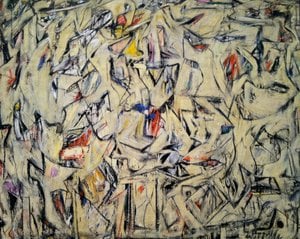
A Study in Contrast: De Kooning’s ‘Easter Monday’
Willem de Kooning's 1956 painting, “Easter Monday,” is not merely a depiction of faces; it’s an intensely psychological exploration rendered with the artist’s signature blend of aggression and vulnerability. The work immediately confronts the viewer with two figures, dramatically differentiated in scale and presence. One face, boldly positioned and adorned with a white hat, dominates the canvas, its gaze direct and seemingly challenging. This figure embodies a forceful assertion, a deliberate engagement that draws us into the painting’s turbulent emotional landscape. The other face, partially obscured and wearing spectacles, offers a quieter, more contemplative response – a subtle acknowledgement of the dominant presence. This juxtaposition immediately establishes a dynamic tension, reflecting perhaps the complexities of human interaction and the struggle for self-expression.
De Kooning's Abstract Expressionist Technique
Executed in oil on canvas, “Easter Monday” exemplifies de Kooning’s mastery of Abstract Expressionism. His technique is characterized by broad, gestural brushstrokes – thick impasto applied with a raw energy that suggests both control and unrestrained emotion. The painting isn't about precise representation; instead, it utilizes fragmented forms and distorted perspectives to convey feeling rather than objective reality. Notice the layering of paint, particularly around the prominent face, creating a sense of depth and texture that adds to the work’s visceral impact. De Kooning’s use of color is equally significant – muted tones punctuated by flashes of white and darker shades contribute to the painting's overall mood of unease and intensity. The horse heads, seemingly placed almost arbitrarily, further disrupt any potential for serene observation, adding another layer of unsettling symbolism.
Symbolism and Context within De Kooning’s Oeuvre
Created during a pivotal period in de Kooning’s career, “Easter Monday” reflects his ongoing exploration of the human figure – often rendered with a deliberately confrontational style. The painting's title, ‘Easter Monday,’ while seemingly straightforward, adds another layer of complexity. Easter, traditionally associated with rebirth and renewal, is juxtaposed with the raw emotional intensity of the scene. This tension speaks to de Kooning’s broader concerns about identity, alienation, and the anxieties of modern life. His work during this period was heavily influenced by Surrealism, particularly its exploration of the subconscious and dreamlike imagery, though he rejected the movement's emphasis on automatic drawing.
A Legacy of Emotional Intensity
“Easter Monday” stands as a powerful example of de Kooning’s ability to translate personal turmoil into universally resonant art. Its enduring appeal lies in its unflinching portrayal of human vulnerability and conflict. The bicycle, a symbol of freedom and movement, adds an element of irony to the composition, suggesting perhaps a futile attempt to escape internal struggles. This painting is more than just a reproduction; it’s a window into the mind of one of America's most influential artists – a testament to his relentless pursuit of emotional truth through bold, expressive brushwork. A hand-painted reproduction offers an unparalleled opportunity to experience the full force of de Kooning’s vision.
Kérdések és válaszok
Mikor készült a(z) „Easter Monday”, Willem De Kooning alkotása?
A „Easter Monday”, Willem De Kooning alkotása alkotása 1956-ben készült.
Milyen helyet foglal el a művészettörténetben a „Easter Monday”, Willem De Kooning alkotása?
A „Easter Monday”, Willem De Kooning alkotása a Abstract Expressionism irányzat alkotása, a Modern korszakból. Ezek együtt adják meg a mű helyét a művészettörténetben.
Mennyire erős a kontraszt a(z) „Easter Monday”, Willem De Kooning alkotása alkotásban?
A "Easter Monday" fény-sötét kontrasztja Statement értéket mutat. A kontraszt azt írja le, mennyire térnek el egymástól a világos és sötét részek.
Hasonló műalkotások


Kapcsolódó cikkek

Absztrakt Expresszionizmus Mesterei: 10 alkotás, ami meghatározta a művészetet | ArtsDot.com
Fedezze fel a 10 legikonikusabb absztrakt expresszionista alkotást! Ismerje meg Jackson Pollock, Mark Rothko és más mesterek történetét. Művészeti reprodukciók prémium minőségben – ArtsDot.com.

Willem de Kooning: Abstraction, Gesture & the Evolution of Post-War American Painting
Explore the evolution of Willem de Kooning's iconic Abstract Expressionist paintings. Discover his signature style, key themes & investment potential with expert insights for discerning art collectors.

Kandinsky Mesterművei: 25 Lenyűgöző Festmény a Modern Művészet Gyöngyszemeiből | ArtsDot
Fedezze fel Wassily Kandinsky 25 legikonikusabb művét! Merüljön el az absztrakt művészet világában, ismerje meg a színek és formák lenyűgöző történetét. Prémium minőségű reprodukciók és inspiráló dekorötletek a ArtsDot.com-on.

Goya Mesterművei: A Spanyol Lélek 25 Legikonikus Képe – ArtsDot
Fedezze fel Goya 25 leglenyűgözőbb mesterművét! Ismerje meg a spanyol festő életművét, portréit és ikonikus képeit. Vásároljon prémium minőségű reprodukciókat a ArtsDot.com-on, és teremtsen egyedi otthoni dekorációt klasszikus művészettel! Explore the full collection online.

Beyond Representation: Exploring the Emotional Landscape of Abstract Expressionism
Explore the profound emotional world of Abstract Expressionism with ArtsDot. Discover key artists like Pollock & Rothko, learn about collecting, and find museum-quality reproductions to inspire your space.