


 Megtekintés
 Küldés
 Megosztás
 Részletek

 Letöltés
 Hasonló darabok
 X-ray felvétel
 Diavetítés
Silvia


 Összes részlet megjelenítése
Giclée / Műnyomat
Múzeumi minőségű giclée vagy vászonnyomat, gyors gyártással és rugalmas finomítási lehetőségekkel. ( Kézzel festett másolat rendelése Kép letöltése)




P118B $10

P118H $10

P118W $10

P438Z $10

P508JH $12

P508YH $12

P805H $10

P805Z $10

P919BZ $10

P919G $10

P919XJ $10

P959ZH $10

P968JZ $12

W106C $8

W218G $10

W218JH $8

W218Y $10

W307PJ $10

W316G $10

W316PJ $8

W316Y $10

W398PJ $8

W4111J $10

W500HY $15

W500JH $15

W692G $12

W849H $8

W940BG $15

W953PJ $8




Válasszon előre meghatározott méreteink közül, amelyek megfelelnek a műalkotás eredeti arányainak.

Megadhat saját méreteket is egy konkrét kerethez vagy helyszínhez igazítva. Amennyiben a kiválasztott méret nem egyezik az eredeti kép arányokkal, a műalkotást le fogjuk vágni, vagy kiegészítjük a képet tükrözött vagy egyszínű szélekkel. A gyártás megkezdése előtt egy digitális tervezetet küldünk jóváhagyásra.
Kérjük, vegye figyelembe, hogy a képernyőn látható előnézet nem tükrözi a tényleges levágást vagy kiegészítést. Csak a tervezet mutatja pontosan a végső kompozíciót.
Bár az egyedi méretek is elérhetőek, az eredeti arányok megőrzése érdekében azt javasoljuk, hogy válasszon a előre meghatározott listából származó méretet.
Világszerte történő kiszállítás területére mindössze 2 hét alatt, a szokásos 4-5 hét helyett. (23 augusztus)

Ingyenes globális expressz szállítás

Prémium minőségű len vászon

Teljes körű szállítási biztosítás

Vámvisszatérítési Garancia

Hiteles színpontosság garancia

60 napos visszaküldési lehetőség (csak hibás termékek esetén)

100% pénzvisszatérítési garancia

Több darab vásárlása esetén kedvezmény
 Az üvegkeretes opció csak 110 cm alatti méretben érhető el

Silvia
Giclée / Műnyomat
Reprodukció mérete
-


Összesített ár
$ 62
Gyűjthető leírása
A Fragmented Vision of Modernity
In the quiet intensity of Umberto Boccioni’s 1915 masterpiece, “Silvia,” we encounter more than a mere portrait; we witness the very heartbeat of the Futurist movement. At a time when the world stood on the precipice of monumental change, Boccioni sought to dismantle the stagnant traditions of academic realism to capture the electric pulse of a new era. This striking monochrome work does not simply depict a woman named Silvia; it serves as a profound assertion of artistic liberation, where the boundaries between the human form and the surrounding environment begin to dissolve into a rhythmic dance of light and shadow.
The composition centers on Silvia’s face and upper body, yet she is far from a static subject. Positioned against a backdrop of chairs and cushions, these elements are transformed from simple domestic props into active participants in a larger narrative of motion. Boccioni utilizes a masterful technique of graphite and charcoal, employing intricate hatching and cross-hatching to build volume and texture. Through these deliberate strokes, the artist creates a sense of depth that paradoxically feels both grounded and ethereal, inviting the viewer to look beyond the surface and into the vibrating energy of the subject's very existence.
The Symphony of Line and Light
To gaze upon “Silvia” is to experience the raw power of the monochrome palette. By stripping away the distraction of color, Boccioni forces our attention toward the dramatic interplay of black, white, and varying shades of gray. This starkness heightens the emotional impact of the piece, lending it a somber yet vital intensity. The true genius of the work, however, lies in its use of line. Rather than smooth, continuous contours, the artist employs energetic, angular, and deliberately fractured lines that seem to pulsative with life. These lines mirror the Futurist obsession with speed and mechanical dynamism, suggesting that even in a moment of seated repose, there is an underlying current of unstoppable movement.
For the discerning collector or interior designer, this artwork offers a sophisticated focal point that bridges the gap between classical elegance and avant-garde edge. The organic shapes of the human figure are subtly interrupted by geometric fragmentation, creating a visual tension that keeps the eye moving across the paper. This interplay of textures—the implied softness of skin against the structured grain of wood or fabric—provides a rich sensory experience that can anchor a modern gallery wall or add a layer of intellectual depth to a contemporary living space.
A Legacy of Transformation
Historically, “Silvia” was birthed during an era of intense social upheaval, on the eve of World War I. It embodies the spirit of Filippo Tommaso Marinetti’s Futurist manifesto, which celebrated technology, violence, and the rejection of the past. In this drawing, we see the tension of that era: a contemplative, introspective gaze captured within a framework of radical deconstruction. The subject's turned head suggests a moment of profound observation, perhaps reflecting the artist's own attempt to reconcile the human soul with the encroaching machine age.
Owning a high-quality reproduction of this work allows one to bring a piece of art history’s most revolutionary movement into the home. It is an invitation to contemplate the beauty found in fragmentation and the strength found in motion. Whether viewed as a study in light or a manifesto of modernism, “Silvia” remains a timeless testament to Boccioni’s ability to capture the fleeting essence of life through the lens of a changing world.
Hasonló műalkotások


A művész életrajza
A Life Forged in Motion: The Revolutionary Vision of Umberto Boccioni
Umberto Boccioni, born in Reggio Calabria in 1882, was a figurehead of the Italian Futurist movement—a force that sought to shatter artistic conventions and embrace the dynamism of the modern world. His life, though tragically cut short at just thirty-three, became a testament to this fervent belief in progress, speed, and the intoxicating energy of the machine age. Boccioni’s early years were marked by constant relocation due to his father's civil service position, an upbringing that exposed him to diverse landscapes and instilled within him a restless spirit. This nomadic existence eventually led him to Rome, where he initially pursued studies in decorative arts before gravitating towards painting, absorbing influences from the Liberty style poster artists of the time. However, it was his encounter with Futurism, ignited by the writings of Filippo Tommaso Marinetti, that truly set his artistic trajectory ablaze.Embracing the Whirlwind: The Rise of a Futurist
The year 1910 proved pivotal for Boccioni. He signed the *Manifesto dei Pittori Futuristi*, solidifying his commitment to a movement that celebrated technology, velocity, and even violence as emblems of modernity. This wasn’t merely an aesthetic choice; it was a philosophical rebellion against the weight of tradition, a desire to capture the very essence of a world hurtling towards an uncertain future. Boccioni quickly became one of Futurism's most articulate theorists, expanding upon Marinetti’s initial pronouncements and applying them to the visual arts. He argued for a complete break from representational accuracy, advocating instead for paintings that conveyed not just *what* things looked like, but *how* they felt in motion—the sensation of speed, the fragmentation of form, the overwhelming energy of urban life. His early works, while still hinting at Impressionist and Divisionist influences, began to demonstrate this burgeoning obsession with dynamism. Paintings such as *The City Rises* (1910-1911) are monumental in scale and ambition, depicting the chaotic construction of a modern metropolis—a swirling vortex of human figures, buildings, and machinery that embodies the Futurist ideal. The painting is not simply a depiction of a city; it’s an embodiment of its relentless energy and transformation.Deconstructing Reality: Technique and Themes
Boccioni’s artistic development was characterized by an increasingly radical approach to form. He moved away from traditional notions of perspective and composition, embracing fragmentation as a means of conveying movement and energy. Objects were broken down into their constituent parts, lines of force radiated outwards, and colors blended in swirling patterns—all designed to create a sense of visual vibration. This deconstruction wasn’t merely stylistic; it was rooted in Boccioni's belief that reality itself was fluid and constantly changing. He sought to represent not the static appearance of things, but their dynamic essence. Key themes emerged throughout his oeuvre: dynamism, the celebration of modernity, and a fascination with the human body as a vehicle for expressing energy and motion. This is powerfully illustrated in works like *Dynamism of a Human Body* (1913), where a figure is depicted not as a solid form but as a series of fragmented shapes suggesting movement through space. The painting captures the fleeting moment of action, conveying a sense of speed and power through its distorted forms and vibrant colors. He experimented with new materials and techniques, pushing the boundaries of traditional art practices. His sculptures, such as *Unique Forms of Continuity in Space* (1913), further explored these ideas, creating three-dimensional representations that captured the sensation of movement and dynamism.Influences and Artistic Journey
Boccioni’s artistic journey was shaped by a diverse range of influences. Initially, he studied drawing and portraiture, absorbing the techniques of Giacomo Balla, a key figure in the Divisionist movement. This early training instilled in him an appreciation for meticulous detail and careful observation—skills that would later inform his Futurist work. He also spent time in Paris, where he encountered the works of Impressionists and Post-Impressionists, including Seurat and Signac, whose use of pointillism influenced his own approach to color and composition. His travels through Russia exposed him to new artistic ideas and perspectives. Importantly, Boccioni’s early life, marked by frequent relocations due to his father's work, fostered a sense of restlessness and curiosity—qualities that undoubtedly contributed to his revolutionary vision. He was deeply influenced by the writings of Nietzsche, whose philosophy of dynamism and rejection of traditional values resonated with the Futurist ethos.Legacy and Lasting Impact
Boccioni’s untimely death in 1916, during World War I, tragically cut short a brilliant career. However, his ideas and artworks continued to resonate long after his passing. He profoundly influenced not only subsequent Futurist artists but also movements like Constructivism and Abstract Expressionism. His exploration of motion, dynamism, and the representation of modern life paved the way for new forms of artistic expression, challenging traditional notions of beauty and representation. Boccioni’s work remains a powerful testament to the transformative potential of art—a celebration of speed, technology, and the ever-changing nature of reality. His paintings are not just images; they are experiences – glimpses into a world in constant motion.- Influences: Giacomo Balla’s Divisionist techniques, Cubism's fragmentation of form, Nietzsche’s philosophy.
- Notable Works: *Dynamism of a Human Body*, *Unique Forms of Continuity in Space*, *The City Rises*, *Dynamism of a Cyclist*.
- Historical Significance: A pivotal figure in 20th-century art, Boccioni challenged artistic conventions and helped shape the course of modern art. His theories on dynamism and the representation of motion continue to inspire artists today.

Boccioni
1882 - 1916 , Olaszország
A művészről röviden
- Artistic Movement Or Style: Futurizmus
- Artists Or Movements Influenced By This Artist:
- Konstruktivizmus
- Képzeletművészet
- Artists Who Influenced This Artist:
- Giacomo Balla
- Divizionizmus
- Kubizmus
- Date Of Birth: 1882-10-19
- Date Of Death: 1916-08-17
- Full Name: Umberto Boccioni
- Nationality: Olasz
- Notable Artworks:
- A Humán Test Dinamizmusa
- Egyedi Formák Folytathatóságában
- A Város Emelkedik
- Place Of Birth: Reggio Calabria, Olaszország
Kapcsolódó cikkek

10 Iconic Charcoal Masterpieces That Redefined Art History
Journey through history with 10 legendary charcoal masterpieces. Explore the dramatic techniques and emotive power of iconic monochrome art. Find museum-quality reproductions and curated decor inspiration for your space. Discover all masterpieces on ArtsDot.com.

Paul Cézanne 25 Mesterműve: A Modern Művészet Úttörői | ArtsDot
Fedezze fel Paul Cézanne 25 legikonikusabb művét! Ismerje meg a posztimpresszionizmus úttörőjének festményeit, technikáját és inspirációit. Vászonképek, portrék, tájképfestmények – minden otthonba. Böngéssze gyűjteményünket a ArtsDot-on!

The Art of the Line: Discover Captivating Drawings to Transform Your Home with Sophisticated Minimalist Elegance
Elevate your home with the profound elegance of fine art drawings. From soulful charcoal sketches to minimalist line art, discover how captivating textures and masterful contours can transform your interior design. Explore expert curation for a sophisticated, meaningful living space.

Fernand Léger Mesterművei: A 25 Legikonikusabb Kép a Modern Művészetben | ArtsDot
Fedezze fel Fernand Léger 25 legikonikusabb műalkotását! Ismerje meg a kubizmus, a tubizmus mesterét és a gépi kor lenyűgöző festményeit. Múzeumi minőségű vászonképek és poszterek a ArtsDot-on. Explore the full collection online!
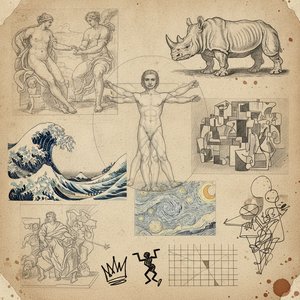
10 Iconic Drawings That Revolutionized the World of Art
Journey through history with 10 legendary drawings that redefined art. From Renaissance sketches to iconic charcoal works, explore the stories behind these timeless masterpieces. Find museum-quality reproductions and decor inspiration at ArtsDot.com. Discover all masterpieces online.



