

- 36.0 x 46.0 cm

A kép az Ön választásai alapján készült: , .
A gyűjtemény leírása
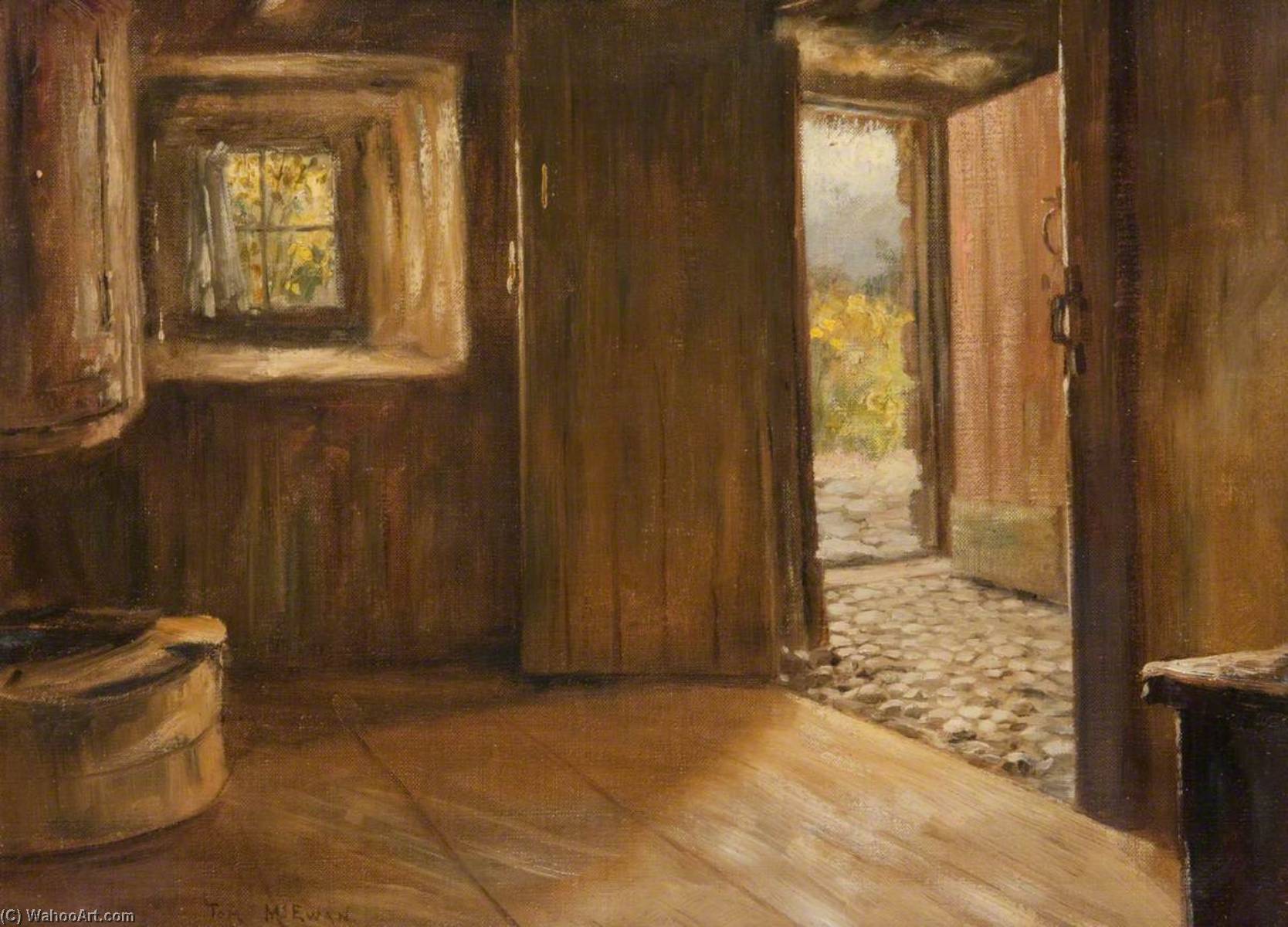
Discover 'Cottage Interior, Benderloch' by Thomas McEwan – a realistic oil painting of rustic domesticity & rural beauty. Explore its Dutch Golden Age influence & serene atmosphere.
A művész életrajza
Discover the evocative landscapes & rural life scenes of Thomas McEwan (1846-1914), a British artist known for his detailed depictions of countryside and everyday moments.
 Összes részlet megjelenítése
Kézzel készített olajfestmény reprodukció
Kézzel festett olajvastú vászon, az Ön által választott méretben és keretben, művészeink készítik meglévőre. ( Váltás nyomtatványra Áttérés digitális képre)
Több információ erről a festményről
 Megtekintés
 Küldés
 Megosztás
 Részletek
 Útmutató

 Letöltés
 Hasonló darabok
 X-ray felvétel
 Diavetítés
 Kérdések és válaszok
 Statisztika
Rendelje meg festményét négy egyszerű lépésben
Ne siessen! Bármely választ módosítható; az rendelési összesítőben megjelenő ár minden egyes döntésre reagál.
1 Az első lépés négyből
Melyik méretet szeretné?
Ezek a méretek megőrzik az eredeti festmény arányait. A rajz bemutatja a választott méretet egy falon, egy kétszáz centiméteres kanapé felett.
Vagy adja meg a saját méreteit
Válasszon előre meghatározott méreteink közül, amelyek megfelelnek a műalkotás eredeti arányainak.

Írja be a kívánt szélességet és magasságot, hogy illeszkedjen a keretéhez vagy a falához. Mivel ez kézzel festett alkotás, egy eltérő formájú méret esetén a művész akár festhet is valamivel többet a kép körül, vagy korolathat is belőle — az Ön döntésének megfelelően. A festés megkezdése előtt küldünk egy digitális tervezetet jóváhagyásra. Az oldalon látható kép nem tartalmazza a végeredményt — csak a tervezet mutatja meg a valódi eredményt.
2 A négy lépésből a második
Hogyan kívánja előkészíteni: feltekercselve, vászonra feszítve vagy keretezve?
Az alábbi árak az első lépésben választott méretre vonatkoznak.
Válaszd ki a feszített vászon széleit
Válassza ki a keretet

Fehér Ft1

Elmosódott szélek Ft1

Kiterjesztett Ft1

P118B Ft10

P118H Ft10

P118W Ft10

P438Z Ft10

P508JH Ft12

P508YH Ft12

P805H Ft10

P805Z Ft10

P919BZ Ft10

P919G Ft10

P919XJ Ft10

P959ZH Ft10

P968JZ Ft12

W106C Ft8

W218G Ft10

W218JH Ft8

W218Y Ft10

W307PJ Ft10

W316G Ft10

W316PJ Ft8

W316Y Ft10

W398PJ Ft8

W4111J Ft10

W500HY Ft15

W500JH Ft15

W692G Ft12

W849H Ft8

W940BG Ft15

W953PJ Ft8

H24-GOLD Ft30

H24-SILVER Ft30

H36-GOLD Ft45

H36-SILVER Ft45
Keretezett
Keretprofil: . A kerettel együtt vett teljes méret: .
3 A négy lépésből a harmadik
Szeretne változtatni valamit a festményen?
A legtöbb ember nemet mond erre. Mivel minden festmény kézzel készül, művészünk képes az Ön igényei szerint is átalakítani azt.
A megrendelést követően a ArtsDot.com csapat e-mailt küld a vásárlónak az instrukciókkal, és biztosítja a tervezeti előnézetet
4 A négy lépés közül a negyedik
Néhány felületfinisz
Mindegyik opcionális. A már kiválasztott válaszok nem jelentnek plusz költséget.
Ki festette?
Világszerte elérhető szállítás () 3-4 hét alatt a szokásos 5 hét helyett. (3 november). A minőség nem kérdőjelezhető.
Egy felirat, mint egy múzeumban?
A gravírozott bronztábla részletei
This elegant plaque features the artist's name and the title of the artwork, finely engraved for a timeless presentation.
It is made from bronze with a refined, elegant finish. The text is precisely laser-engraved for a sharp and permanent result. Measuring 9x2 cm, the plaque is compact yet easy to read. It's built to be durable and scratch-resistant, offering a professional, museum-quality look. Mounting is simple thanks to the included adhesive backing.
Átlátszó akril tábla részletei
The plaque includes essential engraved details such as the artist's name, the title of the artwork, the date it was created, the type of media used-like oil on canvas or watercolor-a brief description of the piece, and a QR code that links to the complete artwork information.
It is crafted from clear acrylic, offering a sleek, modern appearance. The text is UV-engraved in black to ensure strong visual contrast. With a size of 10x15 cm, it ensures optimal readability. It comes equipped with two metal hooks for secure wall mounting. The plaque is designed to be weather-resistant, making it suitable for various environments, and it includes interactive features that work seamlessly with smartphone scanning.
Fekete akril tábla részletei
This elegant plaque includes engraved information such as the artist's name, the title of the artwork, the date it was created, the type of media used (like oil on canvas or watercolor), a short description of the artwork, and a QR code for quick access to more information.
The plaque itself is made from refined black acrylic with a premium finish. The text is laser-engraved in white for high contrast and readability. Its size is 10x15 cm, designed to be easy to read. It comes with two metal hooks for professional mounting. The design is sleek and fits any interior style. It is also weather-resistant and durable, with built-in digital integration for mobile compatibility.
Egy védőréteg?
Mikor lenne szüksége rá?
✓ Ellenőrizés és rendelés
Az Ön által megrendelt festmény

Cottage Interior, Benderloch
Reprodukciós technika
Reprodukció mérete
-

Kiváló mesterművész
Nagyobb részletesség, finomság és bővített gyártási idő
-

Reprodukció keretezése
-
-
A bármely oldalsó méretét túlszálaló 105 cm (kb. 41 hüvelyk) meghaladó műalkotások vagy reprodukciók esetében a keret összeszerelhető készletként, szétszerelve kerül szállításra. Ez a módszer biztosítja a biztonságos szállítást, és megakadályozza a szállítás során fellépő sérüléseket.
Szakmész összeszerelést igényel – ez nem DIY (önösszeszerelhető) termék.
A készletet egy tapasztalt keretező szakembernek kell összeszerelnie és a vásznat feszítenie kell, fa ragasztó (nem tartalmazza a csomag), vásznfeszítő fogó és szorítók használatával, amelyek a ragasztó száradásáig a keretrészeket egymáshoz vuôngjba tartják. A helytelen összeszerelés vagy a nem egyenletes vásznfeszítés maradandó károsíthatja a műalkotást, és ez nem része a garanciánknak.
 A bármely oldalsó méretét túlszálaló 105 cm (kb. 41 hüvelyk) meghaladó műalkotások vagy reprodukciók esetében a keret összeszerelhető készletként, szétszerelve kerül szállításra. Ez a módszer biztosítja a biztonságos szállítást, és megakadályozza a szállítás során fellépő sérüléseket.
A készlet tartalmazza az összes tömörfa rudat, pontosan méretre vágva.
A mellékelt csavarokkal, valamint a sarokszerekhez szükséges faütő ragasztóval kell összeszerelnie (ez nem tartalmazható a csomagban), így a keretrendezőnek külön kell beszereznie.
A csomag nem tartalmazza a szükséges professzionális eszközöket: egy vászonfeszítőt és klipseket a rácsok vízszintes tartásához a ragasztó megszáradásáig.
Fontos:
A sarokcsatlakozásokhoz fánylagra van szükség, a keretrudakat szorítókapcsokkal kell rögzíteni, amíg a rag teljesen meg nem szárad, a kész keretre feszített vászonhoz pedig vászonfeszítő fogat szükséges. Ezek egyike sem található meg a készletben. Kérjük, rendelés előtt győződjön meg róla, hogy rendelkezik tapasztalt keretező szakemberrel.

Névtábla
-
-

Védőréteg (Lakk)
Fényes lakk (intenzívabb színek, védelem a fény és a nedvesség hatása ellen)
-

Műalkotásom egyedi igényre szabása
Példák a módosíthatóságra: az arc kicserélése az ügyfél fotójára; háziállat hozzáadása (pl. macska helyett kutya); rejtett üzenet elhelyezése a háttérben; a háttér tájainak vagy elemeinek megváltoztatása.
-

Sürgős
Világszerte szóló szállítás () mindössze 3-4 hét alatt, a szokásos 5 hét helyett. (3 november). A minőség nem kérdőjelezhető.
-
Express szállítás
Világszerte elérhető szállítás területre 5 héten belül. (10 november).
A szállítás díja tartalmazza
Összesített ár
Ft 86168
Az üvegkeretes opció csak 110 cm alatti méretben érhető el
Minden rendelés mellé tartalmazva
- Ingyenes globális expressz szállítás
- Prémium minőségű len vászon
- Teljes körű szállítási biztosítás
- Vámvisszatérítési Garancia
- Hiteles színarányosság garancia
- 100 napos visszaküldési lehetőség (csak hibás termékek esetén)
- 100% pénzvisszatérítési garancia
- Több darab vásárlásakor kedvezmény


Hasonló műalkotások


Thomas Mcewan
1846 - 1914
A művész életrajza
Thomas McEwan (1846–1914): A Painter of Rural Life and Domestic Tranquility
The work of Thomas McEwan, a Scottish painter active primarily in the late 19th and early 20th centuries, offers a poignant glimpse into the rhythms of rural life and the quiet beauty of domestic interiors. Often overlooked by the grand narratives of Victorian art, McEwan’s paintings—characterized by their meticulous detail, soft light, and understated emotion—capture a world of simple pleasures and enduring traditions. He wasn't a revolutionary figure, nor did he seek fame or fortune; instead, McEwan dedicated his artistic life to quietly documenting the everyday experiences of his community, creating a body of work that speaks volumes about the values and sensibilities of his time.
Born near Glasgow in 1846 into a family with a modest but artistic lineage—his father was an amateur artist and a friend of James Docherty, a landscape painter—McEwan’s early exposure to art fostered a lifelong passion. He began his formal training at the Glasgow School of Art under Robert Greenlees, absorbing influences from both the burgeoning Scottish art scene and the more established traditions of Dutch masters like Jozef Israëls, whose emphasis on realistic depictions of working-class life resonated deeply with McEwan’s own artistic sensibilities. His early works demonstrate a clear debt to Israëls, particularly in their careful observation of light and shadow and their focus on portraying ordinary people engaged in everyday activities.
McEwan's subject matter primarily revolved around scenes from rural Scotland—farmsteads, shepherd’s cottages, and the daily routines of villagers. He frequently depicted women engaged in domestic tasks: spinning wool, mending clothes, preparing meals, or caring for children. These weren’t idealized representations; McEwan presented these women with a remarkable honesty, capturing their weariness, resilience, and quiet dignity. He was particularly fond of portraying his own family members as models, imbuing his paintings with a sense of personal connection and familial warmth. His compositions often feature elements of the natural world—rolling hills, grazing livestock, and glimpses of the Scottish landscape—creating a harmonious blend of human activity and rural beauty.
The Language of Detail: Technique and Style
McEwan’s technical skill is evident in his meticulous attention to detail. He employed a refined brushstroke, layering paint with remarkable precision to create textures that evoke the feel of wool, wood, and fabric. His use of light is particularly noteworthy—he masterfully captured the soft, diffused glow of sunlight filtering through windows or illuminating dusty interiors. McEwan’s palette was generally muted, dominated by earthy tones—browns, greens, and grays—which contributed to the paintings' sense of realism and tranquility. He avoided dramatic contrasts in color, opting instead for subtle gradations that enhanced the overall atmosphere.
While influenced by Dutch Realism, McEwan’s style developed its own distinctive character. His compositions are often framed within a traditional format—a close-up view of a domestic scene or a carefully arranged landscape—creating a sense of intimacy and immediacy. He avoided overtly sentimental or melodramatic gestures, instead focusing on capturing the quiet dignity and understated beauty of everyday life. McEwan’s paintings aren't about grand narratives; they are about small moments, simple pleasures, and the enduring values of community and family.
Influences and Context
McEwan’s artistic development was shaped by several factors—his exposure to Dutch Realism, his training at the Glasgow School of Art, and the social and cultural context of late Victorian Scotland. The period saw a growing interest in documenting rural life and portraying the working class, driven by both humanitarian concerns and aesthetic interests. The rise of photography also influenced artists like McEwan, who sought to capture the essence of their subjects with greater accuracy and nuance than could be achieved through a photograph.
Furthermore, McEwan’s artistic practice was deeply rooted in his own community. He lived and worked in Helensburgh, a coastal town on the west coast of Scotland, where he had access to a wealth of subject matter—the surrounding countryside, the local villagers, and the rhythms of rural life. His paintings reflect not only his personal observations but also the broader social and cultural values of his time.
Legacy and Recognition
Despite not achieving widespread fame during his lifetime, Thomas McEwan’s work has gained increasing recognition in recent years. Art historians and collectors have come to appreciate the quiet beauty and understated emotion of his paintings—a testament to their enduring appeal. His works are now held in several public collections, including the Glasgow Life Museums, and continue to be exhibited at galleries across Scotland and beyond.
McEwan’s legacy lies not in revolutionary innovation but in his ability to capture the essence of everyday life with remarkable skill and sensitivity. He reminds us that beauty can be found in the simplest of moments—a spinning wheel, a loaf of bread, or a shared glance between family members—and that art has the power to connect us to our past and to one another.
Kapcsolódó cikkek

Thomas Stuart Smith: A Study in British Impressionism & the Poetic Landscape
Explore the captivating world of Thomas Stuart Smith (1815-1869), a Scottish painter bridging Romantic realism and British Impressionism. Discover his genre scenes, philanthropic legacy & stunning interiors.

Sir Alfred James Munnings legszebb 25 festménye – A vidéki Anglia és a lovak mestere | ArtsDot
Fedezze fel Sir Alfred James Munnings 25 legszebb festményét! Ismerje meg a vidéki Anglia és a lovak mesterének életművét, technikáját és inspirációit. Vásároljon exkluzív reprodukciókat a ArtsDot.com-on – múzeumi minőségben!

A Hollandi Aranykor 10 Mesterműve: Festmények, Amelyek Megváltoztatták a Világot | ArtsDot.com
Fedezze fel a Hollandi Aranykor 10 legikonikusabb műalkotását! Rembrandt, Vermeer és más mesterek festményeinek történeteit olvassa el. Barokk stílus, klasszikus művészet – inspirálódjon otthon dekorációjához a ArtsDot.com-on! Fedezze fel a teljes gyűjteményt online.