


 Előnézet
 Megosztás
 Megosztás
 Részletek
 Útmutató

 Letöltés
 Hasonló darabok
 X-ray felvétel
 Diavetítés
 Statisztika
Midi Landscape
 Oil
Oil- WallArt
- Neo-Impressionism
 1910
1910- 19th Century
 24.0 x 19.0 cm
 Tovább olvasom
Giclée / Műnyomat
Múzeumi minőségű giclée vagy vászonnyomat, gyors gyártással és rugalmas finomítási lehetőségekkel. ( Kézzel festett másolat vásárlása Áttérés digitális képre)




P118B $10

P118H $10

P118W $10

P438Z $10

P508JH $12

P508YH $12

P805H $10

P805Z $10

P919BZ $10

P919G $10

P919XJ $10

P959ZH $10

P968JZ $12

W106C $8

W218G $10

W218JH $8

W218Y $10

W307PJ $10

W316G $10

W316PJ $8

W316Y $10

W398PJ $8

W4111J $10

W500HY $15

W500JH $15

W692G $12

W849H $8

W940BG $15

W953PJ $8




Válasszon előre meghatározott méreteink közül, amelyek megfelelnek a műalkotás eredeti arányainak.

Megadhat saját méreteket is egy konkrét kerethez vagy helyszínhez igazítva. Amennyiben a kiválasztott méret nem egyezik az eredeti kép arányokkal, a műalkotást le fogjuk vágni, vagy kiegészítjük a képet tükrözött vagy egyszínű szélekkel. A gyártás megkezdése előtt egy digitális tervezetet küldünk jóváhagyásra.
Kérjük, vegye figyelembe, hogy a képernyőn látható előnézet nem tükrözi a tényleges levágást vagy kiegészítést. Csak a tervezet mutatja pontosan a végső kompozíciót.
Bár az egyedi méretek is elérhetőek, az eredeti arányok megőrzése érdekében azt javasoljuk, hogy válasszon a előre meghatározott listából származó méretet.
Világszerte történő kiszállítás területére mindössze 2 hét alatt, a szokásos 4-5 hét helyett. (26 szeptember)

Ingyenes globális expressz szállítás

Prémium minőségű len vászon

Teljes körű szállítási biztosítás

Vámvisszatérítési Garancia

Tökéletes színarányosság garancia

100 napos visszaküldési garancia (csak gyártási hibás termékek esetén)

100% pénzvisszatérítési garancia

Több darab vásárlásakor kedvezmény
 Az üvegkeretes opció csak 110 cm alatti méretben érhető el

Midi Landscape
Giclée / Műnyomat
Reprodukció méretei
-


Összesített ár
$ 62
A Symphony of Light and Serenity
In the delicate dance between land and sea, Theo van Rysselberghe’s Midi Landscape emerges as a breathtaking testament to the tranquility of the natural world. Painted in 1910, this exquisite work invites the viewer into a coastal sanctuary where the vibrant energy of life meets the profound stillness of the ocean. The composition is anchored by a striking tree in the foreground, its leaves ablaze with warm orange hues that provide a brilliant, fiery contrast to the cool, expansive blues of the Mediterranean horizon. This interplay of complementary colors does more than just please the eye; it creates a rhythmic pulse within the frame, capturing a fleeting moment of seasonal transition where the warmth of autumn meets the eternal calm of the sea.
As your gaze wanders through the canvas, the artist reveals a world rich with subtle narratives. Beyond the immediate brilliance of the autumnal foliage, the scene unfolds into a soft, atmospheric distance where two figures linger near the water's edge, their presence adding a touch of human intimacy to the vast landscape. A solitary boat drifts upon the gentle swells, and a lone bird glides through the sky above the tree, weaving together elements of movement and repose. These small, poetic details transform the painting from a mere depiction of scenery into a profound meditation on existence, suggesting a harmonious coexistence between humanity and the untamed beauty of the earth.
The Mastery of Neo-Impressionist Technique
Van Rysselberghe, a master who bridged the gap between traditional realism and the revolutionary spirit of Neo-Impressionism, utilizes his technical prowess to manipulate light itself. In Midi Landscape, one can observe the artist's sophisticated command over color theory. Rather than relying on heavy, opaque strokes, the work breathes through a delicate application of pigment that mimics the shimmering quality of sunlight reflecting off moving water. The technique allows the blue tones of the ocean to feel deep and immersive, while the lush greenery and orange accents appear to glow from within, as if caught in the golden hour of a late afternoon.
For the discerning collector or interior designer, this piece offers an unparalleled opportunity to introduce a sense of sophisticated calm into a living space. The painting’s ability to balance vibrant, energetic colors with a soothing, atmospheric depth makes it a versatile masterpiece for high-end decor. Whether placed in a sun-drenched gallery or a quiet study, a high-quality reproduction of this work serves as a window into a more peaceful era. It is not merely an object of decoration, but an emotional anchor—a piece that commands attention through its brilliance while simultaneously inviting the soul to rest in its serene, sun-soaked embrace.
Hasonló műalkotások


A művész életrajza
A Pioneer of Light: The Life and Art of Théo van Rysselberghe
Théophile “Théo” van Rysselberghe, born in Ghent, Belgium, in 1862, stands as a pivotal figure bridging the gap between Impressionism and Neo-Impressionism. His artistic journey wasn’t one of immediate stylistic conformity but rather an evolving exploration fueled by travel, intellectual exchange, and a profound dedication to capturing the essence of light itself. Rooted in a comfortably bourgeois French-speaking family, van Rysselberghe's initial artistic training unfolded at the Ghent Academy under Theo Canneel, followed by rigorous studies at the prestigious Académie Royale des Beaux-Arts in Brussels – institutions that instilled within him a foundational understanding of traditional realism, vividly reflected in early works such as *Self-Portrait with Pipe* (1880). Even within these formative pieces, subtle hints of burgeoning sensitivity to light and color began to emerge, foreshadowing the vibrant, luminous style he would later cultivate. A particularly significant work from this period, *Child in an Open Spot of the Forest* (1880), marked a nascent departure, suggesting a shift towards brighter palettes and looser brushwork—a prelude to his future artistic trajectory.Moroccan Impressions: The Birth of a New Vision
A transformative chapter unfolded during van Rysselberghe’s extended sojourns in Morocco between 1882 and 1888. These prolonged immersions plunged him into a world saturated with intense sunlight, vibrant colors, and exotic landscapes—a stark contrast to the subdued tones of his earlier Belgian work. Paintings like *Arabian Street Cobbler* (1882), *Arabian Boy* (1882), and *Resting Guard* (1883) vividly demonstrate a burgeoning fascination with capturing the effects of light upon form, moving away from strict realism towards a more impressionistic sensibility. This wasn’t merely an act of visual observation; it was a profound cultural immersion that broadened his artistic horizons and instilled in him a lifelong appreciation for travel. The Moroccan experience fundamentally reshaped his perception of color and composition, laying the groundwork for his later innovations. These paintings, imbued with the warmth and intensity of the North African sun, became cornerstones of his evolving style.The Formation of Les XX: A Crucible of Innovation
Returning to Brussels in 1888, van Rysselberghe played a crucial role in establishing *Les XX* (Les Vingt), an influential group of artists and writers dedicated to challenging the conservative norms of the Belgian art establishment. Founded alongside Octave Maus and Émile Verhaeren, *Les XX* represented a radical departure from academic traditions, embracing avant-garde movements like Impressionism and Symbolism. The group’s exhibitions served as vital platforms for showcasing these new trends, introducing them to a Belgian audience largely unfamiliar with such innovations. Van Rysselberghe's involvement in *Les XX* was instrumental in shaping his artistic development, exposing him to the work of leading European artists—including Claude Monet, Pierre-Auguste Renoir, and James McNeill Whistler—and fostering a spirit of experimentation and intellectual exchange. The group’s emphasis on dialogue and collaboration created an environment where artistic boundaries were constantly being pushed and redefined.Embracing Neo-Impressionism: A Scientific Approach to Color
The true turning point in van Rysselberghe's artistic evolution arrived with his encounter with Georges Seurat's *A Sunday on La Grande Jatte* at the eighth Impressionist exhibition in Paris in 1886. Initially skeptical of Seurat’s meticulous “pointillist” technique—the systematic application of tiny dots of pure color—van Rysselberghe gradually came to appreciate its scientific basis and potential for achieving luminous effects. He began experimenting with divisionism, the Neo-Impressionist method of separating colors into their constituent parts and allowing the viewer’s eye to blend them optically. This wasn't simply a technical shift; it represented a fundamental change in his approach to painting—a move towards a more analytical and objective representation of light and color. He forged close friendships with other Neo-Impressionist painters like Paul Signac, traveling with him along the French Riviera and exchanging ideas about technique and theory. Van Rysselberghe distinguished himself within the movement by applying pointillism not only to landscapes but also to portraiture, creating strikingly vibrant and psychologically insightful likenesses of his family and friends—works such as *Madame Charles Maus* (1890) are prime examples.A Lasting Legacy: Beyond Pointillism
While deeply committed to Neo-Impressionism for a significant period, van Rysselberghe eventually moved beyond its strict tenets in the late 1890s. He sought greater freedom in his brushwork and compositions, exploring new ways to express emotion and atmosphere. He continued to be a prolific artist, working in various media including furniture design, book illustration, and decorative arts. His influence extended far beyond Belgium, impacting artists like Piet Mondrian and Jan Toorop who were inspired by his innovative use of color and light. Van Rysselberghe’s legacy lies not only in his beautiful paintings but also in his role as a catalyst for artistic change—a champion of modernism who helped introduce new ideas and techniques to the Belgian art world. His works are now held in prominent museum collections worldwide, including the Musée du Luxembourg in Paris and the Museum voor Schone Kunsten in Ghent, ensuring that his contribution to the history of art continues to be celebrated and appreciated by generations to come. His dedication to exploring the interplay of light, color, and form cemented his place as a true pioneer of modern painting.
Théo van Rysselberghe
1862 - 1926 , Belgium
Gyors információk
- Artistic Movement Or Style: Neo-Impressionista
- Artists Or Movements Influenced By This Artist:
- Mondrian
- Toorop
- Artists Who Influenced This Artist:
- Portaels
- Seurat
- Signac
- Date Of Birth: 1862. nov. 23.
- Date Of Death: 1926. dec. 14.
- Full Name: Théophile van Rysselberghe
- Nationality: Belgiumi
- Notable Artworks:
- Arabian Phantasia
- Sevillan Nő
- A szülőhazai gyermek
- Place Of Birth: Ghent, Belgium
Kapcsolódó cikkek
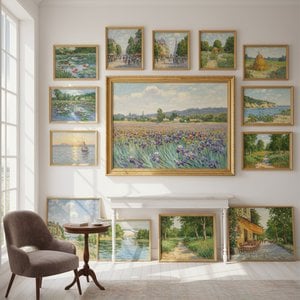
A 10 legikonikus impresszionista tájkép: Művészeti remekművek otthonába – ArtsDot.com
Fedezze fel a 10 legikonikus impresszionista tájkép festményt! Monet, Renoir és más mesterek alkotásainak története. Olajfestmények, vászonképek otthonába – ArtsDot.com kínálatából. Explore the full collection online!

Claude Monet 25 Mesterműve: A Fény és a Szín Zsenialitása – ArtsDot.com
Fedezze fel Claude Monet 25 legikonikusabb mesterművét! Ismerje meg az impresszionizmus zseniális festőjének történetét, a fény és szín varázsát. Vásároljon exkluzív reprodukciókat otthona dekorációjához a ArtsDot.com-on!

The Allure of Azure: Exploring the Symbolic & Aesthetic Depths of Blue in Art History
Explore the rich history of blue in art! Discover its symbolism, from ancient pigments to modern masterpieces by Kandinsky & Seurat. Uncover the psychological impact and cultural meanings behind this captivating hue.

Renoir Mesterek: A 25 Leglenyűgözőbb Kép a Francia Impresszionizmus Gyöngyszemeiből | ArtsDot
Fedezze fel Pierre-Auguste Renoir 25 legszebb művét! Ismerje meg az impresszionizmus gyöngyszemeit, a színek és fény játékát. Vásároljon exkluzív Renoir reprodukciókat otthonába a ArtsDot.com kínálatából – minőségi faliképek és inspiráló dekoráció.

A kék árnyalatai: 10 ikonikus festmény a Slate Blue szín jegyében | ArtsDot.com
Fedezze fel a 10 legikonikusabb festményt, melyeket a Slate Blue szín ural! Monet, Renoir és más mesterek művei inspirálnak. Vászonképek eladás, otthon dekoráció tippek a ArtsDot.com-on. Explore the full collection online!

