
- Főoldal

- Olajfestmény reprodukció
- Suzanne Valadon
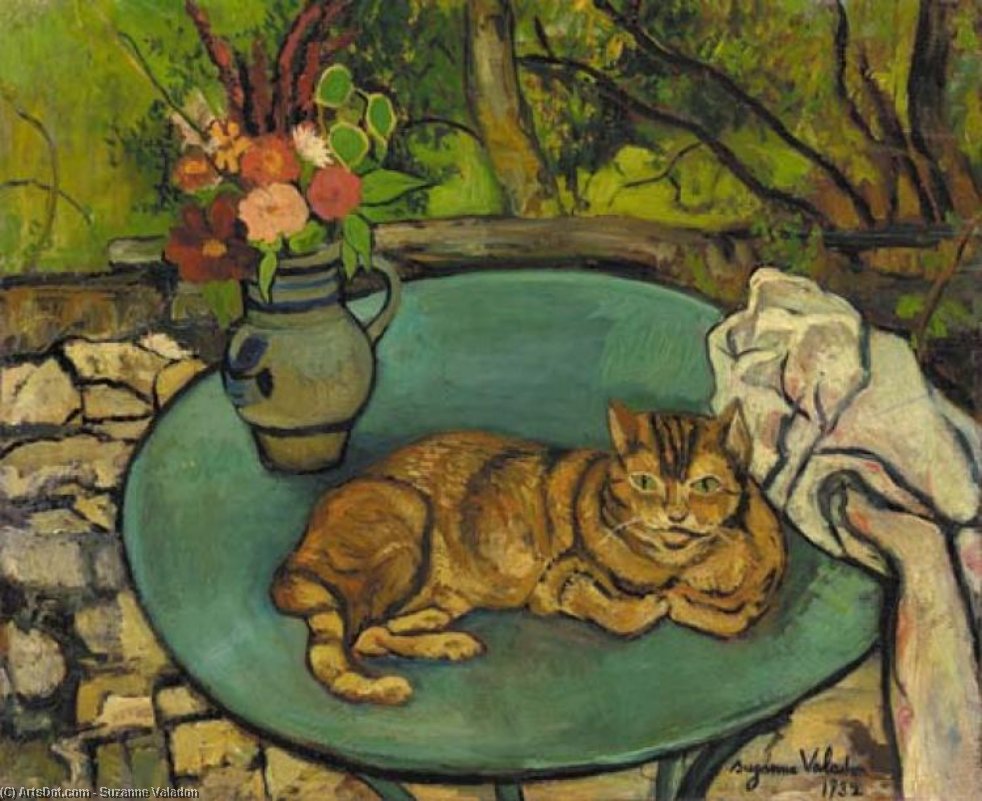
- Raminou and pitcher with carnations
 Nyomat vásárlása Kép letöltése
 Megosztás
 Megosztás
 Details
 Kedvencekhez ad

 Letöltés
 Hasonló alkotások
 X-Ray
X-Ray
 Diavetítés
Raminou and pitcher with carnations


Kézzel készített olajfestmény reprodukció
Kézzel festett olajvastú vászon, az Ön által választott méretben és keretben, művészeink készítik meglévőre.




































 Olvasson tovább
Válasszon előre meghatározott méreteink közül, amelyek megfelelnek a műalkotás eredeti arányainak.

Ön megadhat saját méreteket egy adott kerethez vagy térhez igazításhoz. Ha a kiválasztott méret nem egyezik az eredeti kép arányával, akkor a műalkotást levágjuk, vagy további kézzel festett elemekkel meghosszabbítjuk a festményt. A gyártás megkezdése előtt küldünk Önnek egy digitális előnézetet jóváhagyásra.
Kérjük, vegye figyelembe, hogy a képernyőn megjelenő előnézet nem tükrözi a tényleges vágást vagy kiterjesztést. Csak az előnézet fog pontosan mutatni a végső kompozíciót.
Bár egyedi méretek állnak rendelkezésre, javasoljuk, hogy válasszon egy méretet az előre meghatározott listából az eredeti arányok megőrzése érdekében.
A rendelést követően a ArtsDot.com csapata e-mailt küld az ügyfélnek az instrukciókért, és biztosít egy előnézeti képet (mockup).
Világszerte elérhető szállítás () 3-4 hét alatt a szokásos 5 hét helyett. (1 július). A minőség nem kérdőjelezhető.

Ingyenes globális expressz szállítás

Prémium minőségű len vászon

Teljes szállítási biztosítás

Vámvisszatérítési Garancia

Tökéletes színpontosság garancia

60 napos visszaküldési lehetőség (csak gyártási hibák esetén)

100%-os pénzvisszatérítési garancia

Kedvezmény több termény esetén
 Az üvegkeretes opció csak 110 cm alatti méretben érhető el

Raminou and pitcher with carnations
Reprodukciós technika
A reprodukció mérete
-


Összesített ár
-
Hasonló műalkotások


A művész életrajza
A Life Forged in Montmartre: The Trailblazing Art of Suzanne Valadon
Suzanne Valadon, born Marie-Clémentine Valadon in 1865 amidst the rural landscapes of Bénesse-sur-Gartempe, France, carved a singular path through the late 19th and early 20th century art world. Her story is one of remarkable resilience, defying societal constraints and artistic conventions to emerge as a pioneering Post-Impressionist painter. Unlike many of her contemporaries who benefited from formal training and privileged backgrounds, Valadon’s education was born of observation, necessity, and an unwavering spirit. Growing up in poverty with her mother in Montmartre—a district then blossoming into the bohemian heart of Paris—she navigated a life of hardship, taking on various jobs to survive: waitress, factory worker, even a brief stint as a circus acrobat after a fall ended that career path. This early exposure to the vibrant, often gritty realities of Parisian life would profoundly shape her artistic vision. It was within this milieu that she first entered the art world, not as a creator, but as a muse.From Model to Master: A Unique Artistic Development
For nearly a decade, Valadon worked as an artist’s model, posing for prominent figures like Pierre-Auguste Renoir, Henri de Toulouse-Lautrec, and Edgar Degas. These sessions weren't merely financial transactions; they were immersive lessons in technique, composition, and the artistic process itself. She absorbed knowledge by watching masters at work, studying their methods, and engaging in conversations about art. Toulouse-Lautrec, recognizing her innate talent and striking appearance, encouraged her to pursue drawing, and it was Degas who provided more formal guidance, solidifying her foundational skills. This period of modeling proved pivotal; Valadon wasn’t simply a passive subject but an active observer, dissecting the artistic gaze and internalizing its principles. She began to draw prolifically, initially focusing on scenes from her everyday life—her mother, her son Maurice Utrillo (whose paternity remains uncertain, though Miguel Utrillo later acknowledged him), and intimate domestic settings. Her style quickly developed a distinctive character: bold lines, expressive brushwork, and an unflinching honesty in portraying the human form. She rejected the delicate, idealized depictions of women prevalent at the time, instead offering raw, unvarnished portrayals that captured their strength, vulnerability, and lived experiences. Her early drawings often featured a dark outline, reminiscent of Egon Schiele’s work – a stylistic choice indicative of her passionate and energetic approach to art.Challenging Conventions and Embracing Boldness
Valadon's artistic style is immediately recognizable for its directness and emotional intensity. Her paintings are characterized by a masterful use of line and color, creating compositions that are both visually striking and psychologically compelling. She became particularly renowned for her female nudes, which were revolutionary in their time. Unlike the mythological or allegorical nudes favored by many male artists, Valadon’s figures were often depicted with a sense of realism and psychological depth rarely seen before. She presented women not as objects of desire but as complex individuals with their own thoughts, feelings, and desires. Works like Nu à la draperie blanche (Nude with White Drapery) and Nu debout (Standing Nude) exemplify this approach, showcasing the female body with a frankness that challenged prevailing societal norms. Her subject matter extended beyond nudes to include portraits, still lifes, and landscapes, all imbued with her unique perspective and technical skill. She wasn’t afraid to tackle difficult themes—aging, sexuality, loneliness—with an unflinching gaze. Her work often reflected the realities of working-class life in Paris, a stark contrast to the idealized depictions common in academic art circles.Key Influences and Artistic Evolution
Valadon's artistic development was shaped by a confluence of factors. Her early modeling experiences provided invaluable insight into the techniques and processes employed by leading artists. The influence of Degas is particularly evident in her attention to detail, precise compositions, and use of line. Toulouse-Lautrec’s encouragement fostered her confidence as an artist, while Renoir's work exposed her to a broader range of color palettes and brushwork styles. However, Valadon ultimately forged her own distinctive voice, blending these influences with her personal experiences and observations. She was deeply affected by the poverty and hardship she witnessed in Montmartre, which informed her depictions of working-class life and imbued her art with a sense of social awareness. Her later work, particularly during the 1920s, shows a shift towards greater abstraction and emotional intensity, reflecting the influence of Expressionism – a movement she shared with artists like Paula Modersohn-Becker and Käthe Kollwitz.Legacy and Lasting Impact
Suzanne Valadon's achievements extended beyond her artistic innovations. In 1894, she became the first woman painter admitted to the prestigious Société Nationale des Beaux-Arts, a significant milestone in breaking down barriers for female artists. Her work paved the way for future generations of women to pursue their creative ambitions and challenge the male-dominated art world. Art historians like Patricia Mathews have recognized Valadon’s crucial contribution to the Post-Impressionist movement, highlighting her unique perspective and stylistic originality. She is now considered a precursor to feminist art movements, with her honest and empowering depictions of women resonating deeply with contemporary audiences. Her legacy continues to inspire artists today, not only for her technical skill but also for her courage in defying convention and embracing her own artistic vision. Valadon’s story serves as a powerful reminder that true artistry transcends social boundaries and celebrates the diversity of human experience. She died in 1938, leaving behind a body of work that continues to captivate and challenge viewers, solidifying her place as a truly groundbreaking figure in art history.
Suzanne Valadon
1865 - 1938 , Franciaország
Rövid tények
- Artistic Movement Or Style: Post-Impressionizmus
- Artists Or Movements Influenced By This Artist:
- Feminist Art
- Post-Impressionizmus
- Artists Who Influenced This Artist:
- Toulouse-Lautrec
- Degas
- Date Of Birth: 1865
- Date Of Death: 1938
- Full Name: Suzanne Valadon
- Nationality: Francia
- Notable Artworks:
- Le Canard
- Nu à la draperie blanche
- Nu debout
- Place Of Birth: Bénesse-sur-Gartempe, Franciaország
Kapcsolódó cikkek

Családi Emlékek Változnak Művészlélekké: Egyedülálló Festmények a ArtsDot-nál
Egyedi kézfestett olajfestmények a ArtsDot-nál! Családi emlékeket, vendéglátóhelyeket varázsolnak művészlélekké. Prémium minőségű reprodukciók, személyre szabott alkotások – bízza ránk a legdrágább pillanatait!


The Bountiful Still Life: Symbolism & Artistic Representation of Fruit Across Art History
Explore the rich history of still life painting & the symbolism of fruit across art movements. Discover masterpieces from Caravaggio to Cézanne with ArtsDot – expert guidance & museum-quality reproductions.

Severin Roesen: Evoking National Identity Through American Still Life Painting
Explore the captivating world of Severin Roesen, a major American still life painter influenced by Dutch masters. Discover his lush compositions and the symbolism within his art – a window into 19th-century America.

Silent Narratives: Exploring the Enduring Appeal of Still Life Painting Across Centuries
Explore the rich history of still life painting with ArtsDot. Discover Dutch Masters, decode vanitas symbolism & learn about collecting timeless art. Expert insights and museum-quality reproductions.

A klasszikus természetélettől a kortárs absztrakcióig: A művészeti reprodukcióval emelt villák vendéglátótereinek stílusa
Említse meg luxusvillája vendéglátótereit klasszikus és kortárs művészeti reprodukciókkal! Szakértői tanácsadás, prémium minőségű képmásolatok. Fedezze fel a tökéletes stílust a ArtsDot-tal!


