
 Oil On Canvas
- WallArt
 1920
1920- Modern
 99.0 x 90.0 cm
 Muzeum Narodowe w Pozaniu

The picture follows your choices: , .
A gyűjtemény leírása
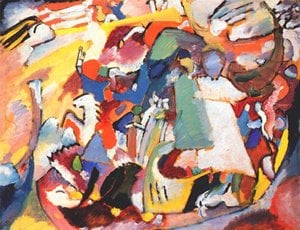
A vibrant and chaotic scene of social leisure unfolds in General Confusion by Polish Modernist master Stanisław Ignacy Witkiewicz, offering a unique opportunity to bring this 1920 masterpiece into your collection.
A művész életrajza
"Hungarian Meta Description": "Witkacy (Stanisław Ignacy Witkiewicz) – a Polish visionary painter & theorist! Explore his surrealist symbolism, avant-garde theatre ideas & powerful works like 'Fight'. A key figure of interwar Poland's art scene."
 Összes részlet megjelenítése
Kézzel készített olajfestmény reprodukció
Kézzel festett olajvastú vászon, az Ön által választott méretben és keretben, művészeink készítik meglévőre. ( Váltás nyomtatványra Áttérés digitális képre)
More about this painting
 Megtekintés
 Küldés
 Megosztás
 Részletek
 Útmutató

 Letöltés
 Hasonló darabok
 X-ray felvétel
 Diavetítés
 Q&A
Q&A Statisztika
Order your painting in four simple steps
Take your time. You can change any answer; the price in your order card follows each choice.
1 Step one of four
Which size would you like?
These sizes keep the proportions of the original painting. The drawing shows your choice on a wall, above a two-metre sofa.
Or give your own measurements
Válasszon előre meghatározott méreteink közül, amelyek megfelelnek a műalkotás eredeti arányainak.

Írja be a kívánt szélességet és magasságot, hogy illeszkedjen a keretéhez vagy a falához. Mivel ez kézzel festett alkotás, egy eltérő formájú méret esetén a művész akár festhet is valamivel többet a kép körül, vagy korolathat is belőle — az Ön döntésének megfelelően. A festés megkezdése előtt küldünk egy digitális tervezetet jóváhagyásra. Az oldalon látható kép nem tartalmazza a végeredményt — csak a tervezet mutatja meg a valódi eredményt.
2 Step two of four
How should it be prepared: rolled, stretched or framed?
The prices below are for the size you chose in step one.
Choose the edges of the stretched canvas
Choose your frame

White Ft1

Blurside Ft1

Extended Ft1

P118B Ft10

P118H Ft10

P118W Ft10

P438Z Ft10

P508JH Ft12

P508YH Ft12

P805H Ft10

P805Z Ft10

P919BZ Ft10

P919G Ft10

P919XJ Ft10

P959ZH Ft10

P968JZ Ft12

W106C Ft8

W218G Ft10

W218JH Ft8

W218Y Ft10

W307PJ Ft10

W316G Ft10

W316PJ Ft8

W316Y Ft10

W398PJ Ft8

W4111J Ft10

W500HY Ft15

W500JH Ft15

W692G Ft12

W849H Ft8

W940BG Ft15

W953PJ Ft8

H24-GOLD Ft30

H24-SILVER Ft30

H36-GOLD Ft45

H36-SILVER Ft45
Keretezett
Moulding: . Overall size with the frame: .
3 Step three of four
Would you like anything changed in the painting?
Most people answer no. Because each painting is made by hand, our artist can also adapt it for you.
After order, ArtsDot.com team will email client for instructions and provide a mockup preview
4 Step four of four
A few finishing options
All of them are optional. The answers already selected cost nothing extra.
Who paints it?
Világszerte elérhető szállítás () 3-4 hét alatt a szokásos 5 hét helyett. (29 október). A minőség nem kérdőjelezhető.
A nameplate, as in a museum?
A gravírozott bronztábla részletei
This elegant plaque features the artist's name and the title of the artwork, finely engraved for a timeless presentation.
It is made from bronze with a refined, elegant finish. The text is precisely laser-engraved for a sharp and permanent result. Measuring 9x2 cm, the plaque is compact yet easy to read. It's built to be durable and scratch-resistant, offering a professional, museum-quality look. Mounting is simple thanks to the included adhesive backing.
Átlátszó akril tábla részletei
The plaque includes essential engraved details such as the artist's name, the title of the artwork, the date it was created, the type of media used-like oil on canvas or watercolor-a brief description of the piece, and a QR code that links to the complete artwork information.
It is crafted from clear acrylic, offering a sleek, modern appearance. The text is UV-engraved in black to ensure strong visual contrast. With a size of 10x15 cm, it ensures optimal readability. It comes equipped with two metal hooks for secure wall mounting. The plaque is designed to be weather-resistant, making it suitable for various environments, and it includes interactive features that work seamlessly with smartphone scanning.
Fekete akril tábla részletei
This elegant plaque includes engraved information such as the artist's name, the title of the artwork, the date it was created, the type of media used (like oil on canvas or watercolor), a short description of the artwork, and a QR code for quick access to more information.
The plaque itself is made from refined black acrylic with a premium finish. The text is laser-engraved in white for high contrast and readability. Its size is 10x15 cm, designed to be easy to read. It comes with two metal hooks for professional mounting. The design is sleek and fits any interior style. It is also weather-resistant and durable, with built-in digital integration for mobile compatibility.
A protective varnish?
When do you need it?
✓ Check and order
Your painting, as you ordered it

General Confusion
Reprodukciós technika
Reprodukció mérete
-

Kiváló mesterművész
Nagyobb részletesség, finomság és bővített gyártási idő
-

Reprodukció keretezése
-
-
A bármely oldalsó méretét túlszálaló 105 cm (kb. 41 hüvelyk) meghaladó műalkotások vagy reprodukciók esetében a keret összeszerelhető készletként, szétszerelve kerül szállításra. Ez a módszer biztosítja a biztonságos szállítást, és megakadályozza a szállítás során fellépő sérüléseket.
Szakmész összeszerelést igényel – ez nem DIY (önösszeszerelhető) termék.
A készletet egy tapasztalt keretező szakembernek kell összeszerelnie és a vásznat feszítenie kell, fa ragasztó (nem tartalmazza a csomag), vásznfeszítő fogó és szorítók használatával, amelyek a ragasztó száradásáig a keretrészeket egymáshoz vuôngjba tartják. A helytelen összeszerelés vagy a nem egyenletes vásznfeszítés maradandó károsíthatja a műalkotást, és ez nem része a garanciánknak.
 A bármely oldalsó méretét túlszálaló 105 cm (kb. 41 hüvelyk) meghaladó műalkotások vagy reprodukciók esetében a keret összeszerelhető készletként, szétszerelve kerül szállításra. Ez a módszer biztosítja a biztonságos szállítást, és megakadályozza a szállítás során fellépő sérüléseket.
A készlet tartalmazza az összes tömörfa rudat, pontosan méretre vágva.
A mellékelt csavarokkal, valamint a sarokszerekhez szükséges faütő ragasztóval kell összeszerelnie (ez nem tartalmazható a csomagban), így a keretrendezőnek külön kell beszereznie.
A csomag nem tartalmazza a szükséges professzionális eszközöket: egy vászonfeszítőt és klipseket a rácsok vízszintes tartásához a ragasztó megszáradásáig.
Fontos:
A sarokcsatlakozásokhoz fánylagra van szükség, a keretrudakat szorítókapcsokkal kell rögzíteni, amíg a rag teljesen meg nem szárad, a kész keretre feszített vászonhoz pedig vászonfeszítő fogat szükséges. Ezek egyike sem található meg a készletben. Kérjük, rendelés előtt győződjön meg róla, hogy rendelkezik tapasztalt keretező szakemberrel.

Névtábla
-
-

Védőréteg (Lakk)
Fényes lakk (intenzívabb színek, védelem a fény és a nedvesség hatása ellen)
-

Műalkotásom egyedi igényre szabása
Példák a módosíthatóságra: az arc kicserélése az ügyfél fotójára; háziállat hozzáadása (pl. macska helyett kutya); rejtett üzenet elhelyezése a háttérben; a háttér tájainak vagy elemeinek megváltoztatása.
-

Sürgős
Világszerte szóló szállítás () mindössze 3-4 hét alatt, a szokásos 5 hét helyett. (29 október). A minőség nem kérdőjelezhető.
-
Express szállítás
Világszerte elérhető szállítás területre 5 héten belül. (5 november).
A szállítás díja tartalmazza
Összesített ár
Ft 84973
Az üvegkeretes opció csak 110 cm alatti méretben érhető el
Included with every order
- Ingyenes globális expressz szállítás
- Prémium minőségű len vászon
- Teljes körű szállítási biztosítás
- Vámvisszatérítési Garancia
- Hiteles színarányosság garancia
- 100 napos visszaküldési lehetőség (csak hibás termékek esetén)
- 100% pénzvisszatérítési garancia
- Több darab vásárlásakor kedvezmény


Hasonló műalkotások




Witkacy
1885 - 1939, Lengyelország
A művész életrajza
A Visionary of Polish Modernism: The Life and Art of Stanisław Ignacy Witkiewicz
Stanisław Ignacy Witkiewicz, a name synonymous with artistic rebellion and profound introspection, remains one of the most enigmatic figures in 20th-century Polish art. Born in Warsaw in 1885 into an artistic family—his father, Stanisław Witkiewicz, was a renowned painter, architect, and theorist—the younger Witkiewicz inherited not only a creative lineage but also a stimulating intellectual environment that profoundly shaped his multifaceted career. He wasn’t simply a painter; he was a philosopher, playwright, novelist, photographer, and art theorist – a true polymath whose work reflected the turbulent currents of interwar Poland and foreshadowed many of the artistic concerns that would dominate the latter half of the century. His life, tragically cut short in 1939 with the outbreak of World War II, was dedicated to exploring the boundaries of form, perception, and the very nature of reality itself.Early Influences and Artistic Development
Witkiewicz’s early artistic training unfolded within the nurturing embrace of his family's creative circle. He absorbed his father’s aesthetic principles—a blend of Polish Romanticism with a distinctly modern sensibility—and developed a deep appreciation for the rich traditions of Zakopane, the mountain resort town where his family resided. However, he quickly diverged from conventional paths, demonstrating an independent spirit and a relentless pursuit of originality. A pivotal experience occurred in 1914 when, following the outbreak of World War I, Witkiewicz embarked on an anthropological expedition to Australia alongside Bronisław Malinowski. This journey, though abruptly curtailed by the war’s escalation, exposed him to radically different cultures and visual languages – sparking a lifelong fascination with primitive art and non-Western aesthetics. The subsequent upheaval of war—his experiences as a reserve officer in the Russian Army during the Revolution—left an indelible mark on his psyche, fostering a profound sense of disillusionment and premonition about the fragility of civilization. This feeling permeated much of his later work, manifesting as a pervasive catastrophism that viewed modern society as hurtling towards inevitable collapse. Returning to Poland after the war, he settled in Zakopane, establishing a studio and dedicating himself to artistic exploration.A Synthesis of Styles: Painting, Theory, and the Theatre
Witkiewicz’s artistic output is remarkably diverse, defying easy categorization. Initially influenced by Symbolism and Expressionism, his paintings evolved into a unique synthesis of abstraction and figuration. He sought to capture not merely the likeness of his subjects but also their inner states – often portraying them as fragmented or alienated figures, reflecting the anxieties of modern life. His portraits are particularly striking for their distorted forms, vibrant colors, and psychological intensity. He developed what he termed “Pure Form” in painting—a theoretical approach that emphasized the autonomy of artistic elements—line, color, composition—over representational accuracy. This pursuit of pure form extended to his theatrical theories, outlined in *Introduction to the Theory of Pure Form in the Theatre* (1921). He envisioned a theatre that rejected psychological realism and embraced artificiality, grotesque exaggeration, and deliberate disruption of conventional dramatic structures – ideas that foreshadowed the later development of the Theatre of the Absurd. His plays, often characterized by their bizarre plots, illogical dialogues, and unsettling atmosphere, were intended to shock audiences out of complacency and confront them with the absurdity of existence.Major Works and Lasting Legacy
Among Witkiewicz’s most celebrated works are paintings like *Fight* (1922), a dynamic depiction of a man battling animals that embodies his sense of existential struggle, and *Creating the World* (c. 1930), a vibrant and chaotic composition reflecting his philosophical explorations. His numerous portraits, including *Portrait of Helena Białynicka-Birula*, showcase his mastery of pastel and oil techniques while revealing his unique psychological insight. He also created the “Portrait Company,” a series of photographs where he would photograph people in various poses and expressions, creating composite portraits that captured multiple facets of their personality. Witkiewicz’s influence on Polish art and theatre is undeniable. His theoretical writings continue to be studied by artists and scholars, and his plays are still performed internationally. He anticipated many of the key concerns of modernism—the alienation of the individual, the breakdown of traditional values, the search for new forms of expression—making him a remarkably prescient figure whose work resonates powerfully with contemporary audiences. His tragic death in 1939, upon learning of the Soviet invasion of Poland, cemented his status as a symbol of artistic integrity and resistance against oppressive forces.Exploring Witkacy Further
- Museum Collections: His works can be found in prominent Polish museums, notably the Muzeum Narodowe w Warszawie (National Museum in Warsaw), which holds an extensive collection of European paintings.
- Online Resources: ArtsDot.com and ArtsDot.com offer reproductions and detailed information about his artworks.
- Further Reading: Explore resources like Britannica and Culture.pl for in-depth biographical details and critical analyses of his work.


Kapcsolódó cikkek

Claude Monet 25 Mesterműve: A Fény és a Szín Zsenialitása – ArtsDot.com
Fedezze fel Claude Monet 25 legikonikusabb mesterművét! Ismerje meg az impresszionizmus zseniális festőjének történetét, a fény és szín varázsát. Vásároljon exkluzív reprodukciókat otthona dekorációjához a ArtsDot.com-on!

Sir Alfred James Munnings legszebb 25 festménye – A vidéki Anglia és a lovak mestere | ArtsDot
Fedezze fel Sir Alfred James Munnings 25 legszebb festményét! Ismerje meg a vidéki Anglia és a lovak mesterének életművét, technikáját és inspirációit. Vásároljon exkluzív reprodukciókat a ArtsDot.com-on – múzeumi minőségben!

Stanisław Wyspiański: Symbolism, National Identity & the Polish Secession
Explore the life & work of Stanisław Wyspiański, a pivotal figure in Polish Symbolism and the Young Poland movement. Discover his iconic paintings, dramas, and stained glass designs reflecting national identity & artistic innovation.