


 Megtekintés
 Küldés
 Megosztás
 Részletek

 Letöltés
 Hasonló darabok
 X-ray felvétel
 Diavetítés
The Enemy Sowing Tares


 Összes részlet megjelenítése
Giclée / Műnyomat
Múzeumi minőségű giclée vagy vászonnyomat, gyors gyártással és rugalmas finomítási lehetőségekkel. ( Kézzel festett másolat rendelése Kép letöltése)




P118B $10

P118H $10

P118W $10

P438Z $10

P508JH $12

P508YH $12

P805H $10

P805Z $10

P919BZ $10

P919G $10

P919XJ $10

P959ZH $10

P968JZ $12

W106C $8

W218G $10

W218JH $8

W218Y $10

W307PJ $10

W316G $10

W316PJ $8

W316Y $10

W398PJ $8

W4111J $10

W500HY $15

W500JH $15

W692G $12

W849H $8

W940BG $15

W953PJ $8




Válasszon előre meghatározott méreteink közül, amelyek megfelelnek a műalkotás eredeti arányainak.

Megadhat saját méreteket is egy konkrét kerethez vagy helyszínhez igazítva. Amennyiben a kiválasztott méret nem egyezik az eredeti kép arányokkal, a műalkotást le fogjuk vágni, vagy kiegészítjük a képet tükrözött vagy egyszínű szélekkel. A gyártás megkezdése előtt egy digitális tervezetet küldünk jóváhagyásra.
Kérjük, vegye figyelembe, hogy a képernyőn látható előnézet nem tükrözi a tényleges levágást vagy kiegészítést. Csak a tervezet mutatja pontosan a végső kompozíciót.
Bár az egyedi méretek is elérhetőek, az eredeti arányok megőrzése érdekében azt javasoljuk, hogy válasszon a előre meghatározott listából származó méretet.
Világszerte történő kiszállítás területére mindössze 2 hét alatt, a szokásos 4-5 hét helyett. (27 augusztus)

Ingyenes globális expressz szállítás

Prémium minőségű len vászon

Teljes körű szállítási biztosítás

Vámvisszatérítési Garancia

Hiteles színpontosság garancia

60 napos visszaküldési lehetőség (csak hibás termékek esetén)

100% pénzvisszatérítési garancia

Több darab vásárlása esetén kedvezmény
 Az üvegkeretes opció csak 110 cm alatti méretben érhető el

The Enemy Sowing Tares
Giclée / Műnyomat
Reprodukció mérete
-


Összesített ár
$ 62
Gyűjthető leírása
A Landscape of Sin and Remorse: Millais’s “The Enemy Sowing Tares”
Sir John Everett Millais's "The Enemy Sowing Tares," painted in 1865, is more than just a depiction of a biblical scene; it’s a profound meditation on sin, exile, and the enduring consequences of transgression. This monumental canvas, now housed at Birmingham Museums Trust, immediately draws the viewer into a desolate world dominated by a solitary figure – believed to be Cain – traversing a bleak, windswept landscape under a sky choked with storm clouds. The painting’s power lies not merely in its realistic portrayal of nature and human form but also in the potent symbolism woven throughout, reflecting the anxieties and moral complexities of Victorian England.
Millais, a key figure in the Pre-Raphaelite Brotherhood, rejected the idealized forms and artificiality of much contemporary art. He championed a return to direct observation, meticulous detail, and a deep engagement with medieval sources – particularly the passage from Matthew 13:24-25 which describes Satan as “the enemy who sows tares among the wheat.” This biblical narrative provided the foundation for Millais’s artistic exploration, prompting him to create an image that captured not just the literal story but also its underlying spiritual and psychological weight. The painting's genesis involved a lengthy period of outdoor sketching by Millais and his model, Elizabeth Siddal, who endured harsh weather conditions to achieve the desired realism – a testament to the artist’s commitment to truthfulness in representation.
A Symphony of Light and Shadow: Technique and Style
The painting's remarkable quality stems from Millais’s masterful command of technique. He employed a highly detailed, almost photographic style, meticulously rendering every texture – the rough bark of the trees, the worn fabric of Cain’s clothing, the swirling patterns of the clouds. The use of *impasto*, particularly noticeable in the foreground elements, creates a tangible sense of physicality and depth. Millais's palette is dominated by earthy reds and browns, mirroring the desolate landscape and conveying a feeling of decay and despair. However, these somber tones are punctuated by flashes of cooler blues and grays in the distance, suggesting both the vastness of the world and the potential for redemption. The dramatic lighting, originating from an unseen source above, casts long, stark shadows that emphasize Cain’s isolation and vulnerability.
The composition itself is carefully orchestrated to draw the viewer's eye towards the central figure. Millais utilizes a flattened perspective, prioritizing emotional impact over strict realism – a hallmark of Pre-Raphaelite art. The lines are strong and deliberate, defining the contours of the figure, the terrain, and the turbulent sky. This creates a sense of dynamism and movement, mirroring Cain’s arduous journey across the landscape. The inclusion of the small bag he carries hints at his past transgressions and perhaps a meager attempt to carry the burden of his sin.
Symbolism and Interpretation
Beyond its biblical narrative, “The Enemy Sowing Tares” is rich in symbolic meaning. Cain’s solitary figure represents humanity's fallen state – alienated from God and burdened by guilt. The desolate landscape symbolizes a world ravaged by sin, while the tares (weeds) represent evil and corruption subtly infiltrating the ‘wheat’ of innocence. The storm clouds overhead foreshadow impending judgment and the consequences of wrongdoing. Some art historians have interpreted the painting as an allegory for Victorian society's anxieties about social unrest and moral decay – themes prevalent during the mid-19th century.
Elizabeth Siddal, Millais’s model, endured considerable discomfort while posing outdoors for extended periods. This experience undoubtedly informed the painting’s somber mood and the figure’s palpable sense of suffering. The image powerfully conveys a feeling of isolation, remorse, and the inescapable weight of past actions – themes that continue to resonate with viewers today.
A Timeless Masterpiece: Relevance Today
"The Enemy Sowing Tares" remains a compelling work of art due to its enduring exploration of universal human themes. Its depiction of sin, guilt, and redemption speaks to our deepest anxieties about morality, responsibility, and the consequences of our choices. Whether viewed as a religious allegory or a psychological portrait, Millais’s masterpiece continues to provoke contemplation and offer a poignant reflection on the complexities of the human condition. Reproductions of this iconic painting are highly sought after by collectors and interior designers alike, who appreciate its dramatic beauty, rich symbolism, and historical significance.
Hasonló műalkotások


A művész életrajza
A Prodigy of the Pre-Raphaelites: The Life and Art of Sir John Everett Millais
Born in Southampton in 1829, John Everett Millais entered the Royal Academy Schools at the astonishing age of eleven—the youngest student ever admitted. This early demonstration of prodigious talent foreshadowed a career that would not only define an artistic movement but also capture the Victorian imagination with its breathtaking realism and emotional depth. From his earliest days, Millais possessed a remarkable gift for observation, a quality that would become the cornerstone of his artistic style. He wasn’t merely painting what he saw; he was meticulously recreating it, imbuing each brushstroke with an almost photographic fidelity. This dedication to truth in representation set him apart and ultimately led him to challenge the established conventions of British art.The Birth of a Brotherhood and Artistic Rebellion
Millais’s artistic trajectory took a pivotal turn in 1848 when, alongside Dante Gabriel Rossetti and William Holman Hunt, he founded the Pre-Raphaelite Brotherhood. This wasn't simply an aesthetic choice; it was a deliberate rebellion against what they perceived as the artificiality of academic art—art that had strayed too far from the natural world and the sincerity of early Renaissance masters, those working *before* Raphael. The Pre-Raphaelites sought to revive the clarity, detail, and vibrant color palettes of artists like Jan van Eyck and Fra Angelico. Their manifesto was one of truth to nature, a rejection of idealized forms, and an embrace of subjects drawn from literature, mythology, and everyday life. Millais’s early works, such as *Isabella*, immediately showcased this new approach—a meticulous attention to detail combined with a narrative intensity that captivated and often provoked audiences. His most controversial work during this period, Christ in the House of His Parents (1849-50), depicted the Holy Family not as ethereal beings but as ordinary working-class people, sparking outrage among critics who found its realism unsettling and even blasphemous. The painting’s depiction of a young boy bathing in a stream, with his mother unaware, was considered shockingly unidealized for religious art at the time.Evolving Styles and Victorian Sensibilities
The mid-1850s marked a period of significant change for Millais, both personally and artistically. His marriage to Effie Gray, following the annulment of her marriage to John Ruskin, profoundly influenced his work. He moved away from the intensely detailed, symbolic style of his early Pre-Raphaelite paintings towards a broader, more atmospheric realism. This shift wasn’t simply a matter of stylistic preference; it reflected a growing engagement with contemporary life and a desire to capture the fleeting beauty of the natural world. Paintings like *Autumn Leaves* exemplify this new direction—a serene depiction of a group of young women drifting leaves on a river, imbued with a sense of melancholy and nostalgia. He also found considerable success as a portraitist, capturing the likenesses of prominent Victorian figures, including John Gladstone and Benjamin Disraeli. This period saw Millais achieve widespread popularity and financial security, but it also drew criticism from some who felt he had compromised his artistic principles.Major Works & Collections
- Christ in the House of His Parents (1849-1850): Tate Britain, London – A controversial masterpiece that exemplifies early Pre-Raphaelite realism.
- Ophelia (1851-1852): Tate Britain, London – Perhaps his most famous work, renowned for its haunting beauty and symbolic depth.
- A Huguenot (1851-1852): Private Collection – A dramatic depiction of religious conflict and forbidden love.
- Mariana (1850-1851): Manchester Art Gallery – Inspired by Shakespeare and Tennyson, showcasing Millais’s skill in capturing mood and atmosphere.
- Autumn Leaves (1855-1856): City of Manchester Art Galleries – A serene and evocative painting that reflects his evolving style.
Legacy and Lasting Influence
Despite these criticisms, Sir John Everett Millais remains one of the most important figures in 19th-century British art. His influence extends far beyond the Pre-Raphaelite Brotherhood; he helped to redefine the standards of realism and narrative painting, inspiring generations of artists. His iconic images—*Ophelia*, with its haunting beauty and symbolic richness, A Huguenot, depicting a moment of poignant drama, and countless others—continue to resonate with audiences today. Millais’s ability to blend meticulous observation with emotional depth, his mastery of color and composition, and his willingness to challenge artistic conventions cemented his place as a true innovator. In 1896, he was elected President of the Royal Academy, a testament to his enduring legacy—though sadly, he passed away only months later. His work continues to be celebrated in museums and collections worldwide, ensuring that the beauty and power of his art will endure for generations to come.
Millais, John Everett
1829 - 1896 , Egyesült Királyföld
A művészről röviden
- Artistic Movement Or Style: Pre-Raffaello
- Artists Or Movements Influenced By This Artist: ['Pre-Raffaello']
- Artists Who Influenced This Artist: ['Raffaello']
- Date Of Birth: 8 czerwca 1829
- Date Of Death: 13 augusztus 1896
- Full Name: Sir John Everett Millais
- Nationality: Angol
- Notable Artworks:
- Ophelia
- Christ...
- A Huguenot
- Place Of Birth: Southampton, Anglia
Kapcsolódó cikkek

Dante Gabriel Rossetti 25 Mesterműve: Szépség és Lelkiség a Vásznon – ArtsDot
Fedezze fel Dante Gabriel Rossetti 25 legszebb művészeti alkotását! Ismerje meg a prerafaeliták titkait, a viktoriánus festészet szépségét és a romantikus szimbolizmus mélységeit. Prémium minőségű art reprodukciók a ArtsDot-on – inspiráció otthonába!

Sir John Everett Millais: Pre-Raphaelite Rebellion & Victorian Narrative Detail
Explore the revolutionary art of Sir John Everett Millais & the Pre-Raphaelite Brotherhood. Discover their radical realism, symbolic narratives, and lasting impact on Victorian aesthetics. A deep dive into 19th-century masterpieces.
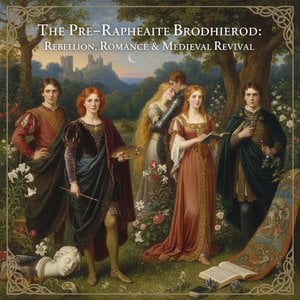
The Pre-Raphaelite Brotherhood: Rebellion, Romance & Medieval Revival
Explore the captivating world of the Pre-Raphaelite Brotherhood! Discover their rebellious spirit, iconic masterpieces & lasting influence on art history. Learn about Rossetti, Millais & more.

Escape into Beauty: A Curated Guide to the Dreamy World of Pre-Raphaelite Romanticism
Embark on a visual journey through Pre-Raphaelite Romanticism. Discover the vivid details, mythic narratives, and luminous colors of this iconic era, and learn how to bring this timeless, dreamy beauty into your home with museum-quality art reproductions.

Arthur Hughes: Pre-Raphaelite Visions of Beauty & Melancholy
Explore the captivating world of Arthur Hughes (1832-1915), a leading Pre-Raphaelite painter. Discover his dreamy landscapes, poetic narratives & iconic Victorian artworks. Learn about his life, style & collecting today.



