


 Megtekintés
 Küldés
 Megosztás
 Részletek

 Letöltés
 Hasonló darabok
 X-ray felvétel
 Diavetítés
Pity
 Acrylic On Canvas
- WallArt
- Early Renaissance
 1490
1490 140.0 x 207.0 cm
 Összes részlet megjelenítése
Giclée / Műnyomat
Múzeumi minőségű giclée vagy vászonnyomat, gyors gyártással és rugalmas finomítási lehetőségekkel. ( Kézzel festett másolat rendelése Kép letöltése)




P118B $10

P118H $10

P118W $10

P438Z $10

P508JH $12

P508YH $12

P805H $10

P805Z $10

P919BZ $10

P919G $10

P919XJ $10

P959ZH $10

P968JZ $12

W106C $8

W218G $10

W218JH $8

W218Y $10

W307PJ $10

W316G $10

W316PJ $8

W316Y $10

W398PJ $8

W4111J $10

W500HY $15

W500JH $15

W692G $12

W849H $8

W940BG $15

W953PJ $8




Válasszon előre meghatározott méreteink közül, amelyek megfelelnek a műalkotás eredeti arányainak.

Megadhat saját méreteket is egy konkrét kerethez vagy helyszínhez igazítva. Amennyiben a kiválasztott méret nem egyezik az eredeti kép arányokkal, a műalkotást le fogjuk vágni, vagy kiegészítjük a képet tükrözött vagy egyszínű szélekkel. A gyártás megkezdése előtt egy digitális tervezetet küldünk jóváhagyásra.
Kérjük, vegye figyelembe, hogy a képernyőn látható előnézet nem tükrözi a tényleges levágást vagy kiegészítést. Csak a tervezet mutatja pontosan a végső kompozíciót.
Bár az egyedi méretek is elérhetőek, az eredeti arányok megőrzése érdekében azt javasoljuk, hogy válasszon a előre meghatározott listából származó méretet.
Világszerte történő kiszállítás területére mindössze 2 hét alatt, a szokásos 4-5 hét helyett. (29 augusztus)

Ingyenes globális expressz szállítás

Prémium minőségű len vászon

Teljes körű szállítási biztosítás

Vámvisszatérítési Garancia

Hiteles színpontosság garancia

60 napos visszaküldési lehetőség (csak hibás termékek esetén)

100% pénzvisszatérítési garancia

Több darab vásárlása esetén kedvezmény
 Az üvegkeretes opció csak 110 cm alatti méretben érhető el

Pity
Giclée / Műnyomat
Reprodukció mérete
-


Összesített ár
$ 62
Lamentation over the Dead Christ (Botticelli, Munich)
“Lamentation over the Dead Christ” stands as a poignant emblem of Renaissance piety and artistic innovation—a masterpiece executed by Sandro Botticelli around 1490-1492. Currently housed in the Alte Pinakothek museum in Munich, Germany, this painting transcends mere depiction; it embodies an emotional depth that continues to resonate with viewers centuries later.
Botticelli’s stylistic approach firmly anchors itself within the Early Renaissance tradition, characterized by graceful lines and idealized forms—a deliberate departure from the more rigid conventions of Gothic art. Influenced profoundly by humanist ideals emerging in Florence during Lorenzo de' Medici’s reign, Botticelli sought to convey spiritual contemplation through meticulously crafted imagery.
The composition centers on the crucified Christ, positioned at the heart of a sorrowful tableau populated by figures representing grief and compassion. Mary Magdalene dominates the foreground, cradling Jesus’s lifeless body with unwavering tenderness—a gesture laden with symbolism reflecting maternal devotion and profound sorrow. Surrounding her are St. Peter, St. John the Evangelist, St. Jerome and St. Paul, each rendered in a similarly expressive manner.
Botticelli's masterful technique employed tempera on wood panel, a medium favored for its luminosity and ability to capture subtle tonal variations. The artist’s meticulous attention to detail—evident in the drapery folds, facial expressions, and anatomical accuracy—demonstrates his unwavering commitment to realism tempered by artistic idealism. This careful rendering underscores Botticelli's desire to portray not merely what was seen but also what was felt.
Beyond its aesthetic beauty, “Lamentation” carries significant theological weight. It reflects the Christian belief in resurrection and commemorates the sacrifice of Jesus Christ—a central pillar of faith. The painting’s emotive power derives from Botticelli's ability to capture the universal experience of grief and loss—themes that continue to inspire artists and viewers alike. Its enduring legacy testifies to Botticelli’s profound understanding of human emotion and his mastery of artistic expression.
Consider commissioning a museum-quality reproduction of “Lamentation over the Dead Christ” by Sandro Botticelli – available at ArtsDot.
Hasonló műalkotások


A művész életrajza
Early Life and Florentine Beginnings
Sandro Botticelli, born Alessandro di Mariano di Vanni Filipepi around 1445 in Florence, Italy, emerged during a period of extraordinary cultural ferment—the Early Renaissance. His life was deeply rooted in the city’s artistic and social fabric; he never strayed far from his neighborhood of Ognissanti, a testament to both familial ties and the vibrant creative ecosystem that nurtured him. His father, Mariano Filipepi, initially a goldsmith and later a tanner, provided an early exposure to craftsmanship and meticulous detail—qualities that would profoundly influence Botticelli’s artistic approach. Though initial reports suggested training as a goldsmith, he soon found his calling under the tutelage of Fra Filippo Lippi, a leading painter of the time. This apprenticeship proved pivotal, immersing him in the techniques and aesthetics of the Florentine school while also connecting him to influential patrons like the Medici family. Botticelli’s nickname, ‘Botticelló,’ is believed to have originated from his small stature – a fitting description for the artist who would later create works of such monumental beauty.A Style Defined by Grace and Myth
Botticelli’s artistic style is instantly recognizable for its lyrical beauty, characterized by elegant linearity, flowing contours, and a delicate use of color. He masterfully bridged the gap between the late Gothic traditions and the burgeoning Renaissance aesthetic, absorbing influences from masters like Fra Angelico and Paolo Uccello yet forging a uniquely personal vision. His figures possess an ethereal quality, often depicted with elongated proportions and graceful poses that convey both serenity and a subtle melancholy. A defining feature of his work is the frequent incorporation of classical mythology—a reflection of the humanist interests sweeping through Renaissance Florence. He didn’t merely illustrate these ancient tales; he imbued them with new layers of meaning, exploring themes of love, beauty, and spiritual longing. Botticelli's technique was innovative for its time. He often employed a silverpoint drawing method underpainting his canvases, contributing to the luminosity and delicate detail seen in his finished works. His use of tempera paint allowed for precise rendering and vibrant colors, while his later experiments with oil paints broadened his expressive possibilities.Iconic Masterpieces and Artistic Development
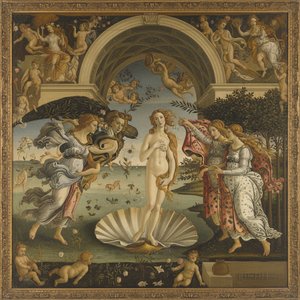
Botticelli’s legacy rests upon a handful of iconic paintings that continue to captivate audiences centuries later. The Birth of Venus, completed around 1486, stands as perhaps his most celebrated work—an allegorical depiction of the goddess emerging from a seashell, embodying Renaissance ideals of beauty and harmony. The painting’s graceful composition, delicate color palette, and evocative symbolism have made it an enduring symbol of the era. Equally renowned is Primavera, created around 1482, a complex and enigmatic painting celebrating spring and love, populated with symbolic figures drawn from classical mythology. These works showcase Botticelli’s mastery of composition, his ability to create atmospheric depth, and his profound understanding of human emotion. His early work often focused on religious subjects, honing his technical skills and establishing a reputation for skillful execution. The 1480s marked the peak of his creative powers, with the creation of these mythological masterpieces. However, the late 1490s witnessed a shift in his style, influenced by the fervent preaching of Girolamo Savonarola—a Dominican friar who condemned what he saw as the decadence and moral corruption of Florence. This period resulted in more austere and emotionally charged works, reflecting a growing spiritual intensity.Historical Significance and Rediscovery
Following his death in 1510, Botticelli’s reputation gradually faded into obscurity. For nearly three centuries, his work was largely forgotten, overshadowed by the achievements of High Renaissance masters like Leonardo da Vinci and Michelangelo. However, a remarkable rediscovery occurred in the late 19th century with the rise of the Pre-Raphaelite Brotherhood—a group of English artists who rejected academic conventions and sought inspiration in the art of the early Italian Renaissance. They were captivated by Botticelli’s linear grace, vibrant colors, and poetic sensibility, recognizing him as a kindred spirit. This renewed appreciation sparked a widespread reassessment of his work, establishing him as one of the most important artists of the Early Renaissance. Today, Botticelli is celebrated for his unique artistic vision, his masterful technique, and his enduring ability to evoke beauty, emotion, and spiritual contemplation. His influence can be seen in subsequent generations of artists who have sought to capture the same sense of grace and elegance in their own work. He remains a symbol of Florentine artistic achievement and a testament to the power of Renaissance humanism.Major Works
- The Birth of Venus (c. 1486): An iconic depiction embodying Renaissance ideals of beauty.
- Primavera (c. 1482): A complex allegorical painting celebrating spring and love.
- Adoration of the Magi (1475-1476): Demonstrates early mastery of composition and perspective.
- Mystic Nativity (1501): Reflects a shift towards spiritual themes in his later career.

Botticelli
1445 - 1510 , Olaszország
A művészről röviden
- Artistic Movement Or Style: Korai reneszánsza
- Artists Or Movements Influenced By This Artist: ['Pre-Raffaellit']
- Artists Who Influenced This Artist:
- Fra Filippo Lippi
- Paolo Uccello
- Date Of Birth: 1445 körül
- Date Of Death: 1510
- Full Name: Alessandro di Mariano Filipepi
- Nationality: Olasz
- Notable Artworks:
- Születés Zeppirinnél
- Tavasz
- Szentek imádása
- Place Of Birth: Firenze, Olaszország
Kapcsolódó cikkek
Botticelli Mesterművek: A 25 Leglenyűgözőbb Kép a Reneszánsz Gyöngyszemeiből | ArtsDot
Fedezze fel Sandro Botticelli 25 legpazarabb műalkotását! Merüljön el a reneszánsz festészet világában, ismerje meg a Primavera és Vénusz születése történetét. Museum-minőségű reprodukciók és inspiráló dekorációs ötletek a ArtsDot.com oldalon.

Fra Angelico Mesterek: A 25 Legszebb Műalkotás a Lelki Békeért – ArtsDot.com
Fedezze fel Fra Angelico 25 legszebb műalkotását! Reneszánsz festmények, angyalok és spirituális ikonfestészet a firenzei iskola mesterétől. Vásároljon exkluzív olajfestmény reprodukciókat otthonába a ArtsDot.com-on. Explore the full collection online!

A Firenze Uffizi Galéria 25 Mesterműve: Reneszánsz Győgyöngyök a Ház Falain
Fedezze fel a Firenze Uffizi Galéria 25 legikonikusabb műalkotását! Leonardo, Michelangelo, Botticelli és más reneszánsz mesterek festményeinek története. Művészeti reprodukciók otthonába – ArtsDot.com.

A Reneszánsz Korai Gyöngyszemei: 10 Mestermű, Ami Megváltoztatta a Világot
Fedezze fel a korai reneszánsz 10 legikonikusabb műalkotását! Leonardo, Michelangelo és Botticelli remekművei elmesélnek egy új korszak történetét. Vászonképek, faliképek – inspirálódjon ArtsDot.com-on!

Giotto di Bondone 25 Mesterműve: A Reneszánsz Előhírnöke a Falakon – ArtsDot
Fedezze fel Giotto di Bondone 25 legpárásabb műalkotását! Ismerje meg a reneszánsz előhírnökét, festményeit és freskóit. Vásároljon exkluzív reprodukciókat otthona díszítésére a ArtsDot.com-on – múzeumi minőségben!




