
- Főoldal

- Olajfestmény reprodukció
- Samuel van Hoogstraten
- Self-Portrait

 Nyomat vásárlása Kép letöltése
 Megosztás
 Megosztás
 Details
 Kedvencekhez ad

 Letöltés
 Hasonló alkotások
 X-Ray
X-Ray
 Diavetítés
Self-Portrait
 Acrylic On Canvas
- WallArt
- Baroque Style
 1647
1647 102.0 x 79.0 cm
 Hermitázsmúzeum
Kézzel készített olajfestmény reprodukció
Kézzel festett olajvastú vászon, az Ön által választott méretben és keretben, művészeink készítik meglévőre.




P118B $10

P118H $10

P118W $10

P438Z $10

P508JH $12

P508YH $12

P805H $10

P805Z $10

P919BZ $10

P919G $10

P919XJ $10

P959ZH $10

P968JZ $12

W106C $8

W218G $10

W218JH $8

W218Y $10

W307PJ $10

W316G $10

W316PJ $8

W316Y $10

W398PJ $8

W4111J $10

W500HY $15

W500JH $15

W692G $12

W849H $8

W940BG $15

W953PJ $8




 Olvasson tovább
Válasszon előre meghatározott méreteink közül, amelyek megfelelnek a műalkotás eredeti arányainak.

Ön megadhat saját méreteket egy adott kerethez vagy térhez igazításhoz. Ha a kiválasztott méret nem egyezik az eredeti kép arányával, akkor a műalkotást levágjuk, vagy további kézzel festett elemekkel meghosszabbítjuk a festményt. A gyártás megkezdése előtt küldünk Önnek egy digitális előnézetet jóváhagyásra.
Kérjük, vegye figyelembe, hogy a képernyőn megjelenő előnézet nem tükrözi a tényleges vágást vagy kiterjesztést. Csak az előnézet fog pontosan mutatni a végső kompozíciót.
Bár egyedi méretek állnak rendelkezésre, javasoljuk, hogy válasszon egy méretet az előre meghatározott listából az eredeti arányok megőrzése érdekében.
A rendelést követően a ArtsDot.com csapata e-mailt küld az ügyfélnek az instrukciókért, és biztosít egy előnézeti képet (mockup).
Világszerte elérhető szállítás () 3-4 hét alatt a szokásos 5 hét helyett. (1 július). A minőség nem kérdőjelezhető.

Ingyenes globális expressz szállítás

Prémium minőségű len vászon

Teljes szállítási biztosítás

Vámvisszatérítési Garancia

Tökéletes színpontosság garancia

60 napos visszaküldési lehetőség (csak gyártási hibák esetén)

100%-os pénzvisszatérítési garancia

Kedvezmény több termény esetén
 Az üvegkeretes opció csak 110 cm alatti méretben érhető el

Self-Portrait
Reprodukciós technika
A reprodukció mérete
-


Összesített ár
-
A műalkotás leírása
A Window into Genius: Examining Samuel Dirksz van Hoogstraten’s Self Portrait
Samuel Dirksz van Hoogstraten, a luminary of the Dutch Golden Age (1627-1678), stands as a testament to artistic ambition and intellectual prowess. More than merely capturing his likeness on canvas, he undertook a profound exploration of perception itself—a characteristic hallmark of his era and a cornerstone of his enduring legacy. This meticulously crafted self-portrait, completed in 1647, transcends the conventions of portraiture, presenting us with an image brimming with symbolic resonance and technical brilliance that continues to captivate viewers centuries later.The Baroque Vision: Style and Technique
Van Hoogstraten’s artistic approach firmly rooted him within the Baroque movement—a stylistic paradigm defined by dramatic contrasts of light and shadow, opulent ornamentation, and a fervent desire to evoke emotion. The painting employs trompe-l'oeil techniques with masterful precision, blurring the boundaries between reality and illusion. Notice how the artist skillfully renders the window frame and its reflection as if it were an actual architectural element within the composition—a technique designed not just for visual spectacle but also to heighten the viewer’s sense of depth and immersion. Brushstrokes are deliberate and controlled, conveying a palpable energy while simultaneously achieving remarkable smoothness and tonal gradation. The pigment choices – predominantly reds and browns – contribute to the painting's rich palette and underscore its solemn mood.A Reflection on Observation: Composition and Symbolism
The composition itself is carefully considered—a balanced arrangement that draws the eye inward toward the central figure. Positioned slightly off-center, Van Hoogstraten gazes out of the window, suggesting contemplation and introspection. The inclusion of two books – one prominent in the foreground and another nestled amongst the folds of his robe – speaks to the artist’s intellectual pursuits and underscores the importance of knowledge within his worldview. These symbols aren't merely decorative; they represent Van Hoogstraten’s engagement with humanist ideals prevalent during his time—a preoccupation with reason, observation, and understanding the complexities of human experience. The chair behind him serves as a grounding element, anchoring the figure amidst the expansive vista beyond the windowpane.Historical Context: Dordrecht and Artistic Innovation
Created in Dordrecht, Netherlands, during the height of Dutch mercantile prosperity and artistic flourishing, this self-portrait reflects the broader cultural landscape of its time. Van Hoogstraten’s formative years were spent within his father's workshop—a crucible for honing fundamental artistic skills—before embarking on a journey to Amsterdam, where he immersed himself in the vibrant artistic milieu of the Golden Age. He was influenced by Rembrandt’s masterful use of chiaroscuro and sought to emulate his ability to convey psychological depth through visual representation. This painting stands as an exemplar of Dutch Baroque artistry—a genre characterized by its dramatic flair and intellectual sophistication.Emotional Resonance: Beyond Mere Representation
Ultimately, ‘Self Portrait’ transcends the limitations of a simple likeness. It communicates a profound sense of solitude and thoughtfulness—a glimpse into the artist's inner life as he confronts the world outside his window. The gaze is direct yet melancholic, inviting viewers to contemplate their own perceptions and experiences. Van Hoogstraten’s achievement lies not merely in replicating visual reality but in capturing its emotional essence—a feat that cements his place among the most influential artists of his era and ensures that this captivating image continues to inspire admiration for generations to come.Hasonló műalkotások


A művész életrajza
A Master of Illusion and Intellect: The World of Samuel Dirksz van Hoogstraten
Samuel Dirksz van Hoogstraten, a name resonating with the ingenuity of the Dutch Golden Age, was far more than simply a painter. Born in Dordrecht in 1627 and passing away there in 1678, he embodied the era’s spirit of intellectual curiosity, artistic innovation, and burgeoning mercantile power. He wasn't merely recording reality on canvas; he was dissecting it, playing with perception, and exploring the very nature of representation itself. Van Hoogstraten distinguished himself not only through his skillful brushwork but also as a poet and a profound art theorist, leaving behind a legacy that extends beyond the visual realm into the world of ideas. His journey began within the family workshop of his father, Dirk van Hoogstraten, laying a foundational understanding of artistic principles before venturing to Amsterdam – the beating heart of Dutch artistry in the 17th century. It was there he entered the esteemed studio of Rembrandt van Rijn, an experience that would indelibly shape his early style and approach to light and shadow.From Rembrandt’s Shadow to Independent Vision
The influence of Rembrandt is undeniably present in Van Hoogstraten's initial works. A portrait from 1645, now residing in the Liechtenstein collection in Vienna, serves as a clear testament to this apprenticeship. However, unlike many students who remained tethered to their master’s style, Van Hoogstraten possessed an insatiable desire for experimentation and a restless spirit that propelled him beyond imitation. He wasn't content to simply replicate Rembrandt’s chiaroscuro; he sought to deconstruct it, analyze its effects, and ultimately forge his own unique artistic voice. This pursuit led him on extensive travels throughout Europe – to Vienna, Rome, and London – exposing him to diverse artistic traditions and fueling his intellectual growth. These journeys weren't merely sightseeing expeditions; they were immersive studies in architecture, perspective, and the prevailing aesthetic sensibilities of each locale. Upon returning to Dordrecht, he married in 1656 and assumed a civic role as provost of the mint, demonstrating a multifaceted talent that extended beyond the artistic sphere. This period saw him further refine his skills, moving towards an increasingly sophisticated understanding of illusionism and spatial representation.Trompe-l’œil, Perspective Boxes, and the Art of Deception
Van Hoogstraten's artistic prowess truly blossomed in his mastery of trompe-l’œil, a technique that translates to “deceive the eye.” His still lifes weren’t simply arrangements of objects; they were meticulously crafted illusions designed to blur the boundaries between reality and representation. He imbued seemingly haphazard collections with deeper symbolic meanings, inviting viewers to contemplate the transient nature of life and the deceptive allure of material possessions. Simultaneously, he became renowned for his creation of “peepshows” or "perspective boxes"—ingenious devices that offered immersive three-dimensional views into miniature worlds. One such box, currently housed at the National Gallery in London, recreates the interior of a typical Dutch house with astonishing realism when viewed through strategically placed peepholes. These weren’t mere novelties; they were sophisticated explorations of perspective and spatial illusion, demonstrating Van Hoogstraten's profound understanding of how the human eye perceives depth and dimension. His architectural paintings, such as his 1652 view of the Vienna Hofburg, further showcased his technical skill and attention to detail. He was a master of creating convincing illusions, often incorporating elements that seemed to float or extend beyond the confines of the canvas, challenging the viewer’s perception of space.A Theorist’s Legacy: ‘Inleyding tot de hooge schoole der schilderkonst’
However, Samuel van Hoogstraten's contribution extends far beyond his paintings and perspective boxes. He was a dedicated art theorist who sought to codify the principles of painting in his magnum opus, Inleyding tot de hooge schoole der schilderkonst: anders de zichtbaere werelt (Introduction to the Academy of Painting, or The Visible World), published in 1678. This ambitious treatise stands as one of the most comprehensive and intellectually rigorous explorations of art theory produced in the Dutch Republic during the 17th century. Van Hoogstraten delved into issues of pictorial persuasion, illusionism, the moral responsibilities of the artist, and the relationship between painting and philosophy, drawing upon a vast range of ancient and modern sources. He built upon the foundations laid by Karel van Mander in his earlier work, *Het Schilder-Boeck*, seeking to create a systematic framework for understanding and practicing the art of painting. His writings reflect both international influences gleaned from his travels and contemporary debates within Dutch artistic circles. The treatise wasn’t merely a technical manual; it was a philosophical meditation on the nature of art and its role in society, arguing that painters should strive not only to represent reality accurately but also to convey moral truths and evoke emotional responses in their viewers. It was this dedication to articulating the principles behind his craft that cemented his place as a pivotal figure in the history of art theory.A Lasting Influence
Van Hoogstraten’s influence resonated through subsequent generations of artists, notably through his pupils – including his brother Jan van Hoogstraten, Aert de Gelder, Cornelis van der Meulen, and Godfried Schalcken. His legacy is further preserved in the writings of Arnold Houbraken, one of his students who penned a biography of the artist that serves as a primary source of information about his life and work. Samuel Dirksz van Hoogstraten was not simply a painter; he was a polymath—an artist, poet, theorist, and administrator—who embodied the intellectual ferment of the Dutch Golden Age. His innovative techniques, profound insights into perception, and dedication to articulating the principles of art continue to captivate and inspire audiences today, solidifying his position as a master of illusion and intellect whose work transcends time.Useful Links
- Samuel van Hoogstraten: Wikipedia
- Samuel Dirksz van Hoogstraten - 41 artworks - painting - WikiArt: WikiArt
- Hoogstraten, Samuel van (1627-1678): Global Anabaptist Mennonite Encyclopedia Online
- Samuel Dirksz van Hoogstraten - Wikipedia: Wikipedia (English)
Quick Facts
- Artistic movement or style: Dutch Golden Age, Baroque
- Artists or movements influenced by this artist: Aert de Gelder, Cornelis van der Meulen, Godfried Schalcken, Rembrandt van Rijn
- Artists who influenced this artist: Dirk van Hoogstraten
- Date of birth: August 2, 1627
- Date of death: October 19, 1678
- Full name: Samuel Dirksz van Hoogstraten
- Nationality: Dutch
- Notable artworks: Portrait of Mathys van den Brouck, The Anemic Lady, View of a Corridor, Man at a Window, Vanitas
- Place of birth: Dordrecht, Netherlands
Quizzes
- Question: What was Samuel van Hoogstraten’s primary occupation besides painting? Choices: Sculptor and architect, Poet and art theorist, Musician and playwright
- Question: Which famous artist's workshop did Samuel van Hoogstraten initially train in? Choices: Johannes Vermeer, Rembrandt van Rijn, Frans Hals
- Question: What position did Van Hoogstraten hold later in his life? Choices: City architect of Dordrecht, Provost of the mint, Headmaster of a local school
- Question: Van Hoogstraten was known for creating “peepshows”. What were these? Choices: Small, detailed landscape paintings, Perspective boxes with 3D views, Portraits of wealthy patrons
- Question: What was the title of Van Hoogstraten’s major theoretical work on painting? Choices: The Art of Illusion, Introduction to the Academy of Painting, Reflections on Color and Light

Samuel van Hoogstraten
1627 - 1678 , Holland
Rövid tények
- Artistic Movement Or Style: Hollandia aranykora
- Artists Or Movements Influenced By This Artist: ['Karel van Mander']
- Artists Who Influenced This Artist: ['Rembrandt van Rijn']
- Date Of Birth: Augusztus 2, 1627
- Date Of Death: Október 19, 1678
- Full Name: Samuel Dirksz van Hoogstraten
- Nationality: Hollandi
- Notable Artworks:
- A Lady Reading a Letter
- The Anemic Lady
- Vienna Hofburg
- Place Of Birth: Dordrecht, Holland
Kapcsolódó cikkek

A Rijksmuseum Gyöngyszemei: 25 Mestermű Élő Történelme – ArtsDot.com
Fedezze fel a Rijksmuseum 25 legikonikusabb műalkotását! Rembrandt, Vermeer és más holland mesterek történeteit olvashatja el. Vászonképek, faliképek – inspirálódjon otthoni dekorációjához a ArtsDot.com-on!


A 17. század mesterművei: 10 ikonikus festmény, ami inspirál (ArtsDot)
Fedezze fel a 17. század legikonikusabb festményeit! Rembrandt, Vermeer és Caravaggio remekművei barokk stílusban. Művészeti történelem, inspiráció otthonába – ArtsDot.com kínálatában exkluzív reprodukciókat talál.
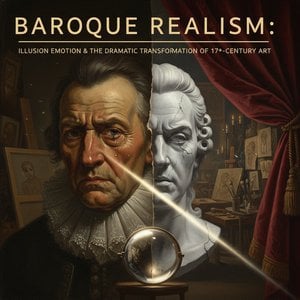
Baroque Realism: Illusion, Emotion & the Dramatic Transformation of 17th-Century Art
Explore the dramatic world of Baroque Realism! Discover iconic artists like Caravaggio & Rubens, their techniques, and the movement's lasting impact on art history. Expert insights for collectors & enthusiasts.

Golden Age Reflections: Dutch Baroque Painting & Cultural Innovation
Explore the Dutch Golden Age of painting! Discover key artists like Vermeer & ter Borch, their innovative techniques, and the rich cultural context behind these Baroque masterpieces. Learn about collecting & appreciating this iconic art period.
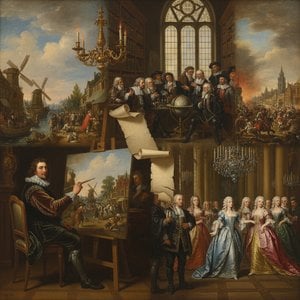
Illuminating a Century of Change: Artistic Expression & Societal Shifts in 17th-Century Europe
Explore the artistic brilliance of the 17th-century Dutch Golden Age & Baroque period. Discover Rembrandt, genre painting, and chiaroscuro techniques. Expert insights for art lovers & collectors.



