

 Megtekintés
 Küldés
 Megosztás
 Részletek
 Útmutató

 Letöltés
 Hasonló darabok
 X-ray felvétel
 Diavetítés
 Kérdések és válaszok
 Statisztika
Drawing the Eel

- 75.0 x 106.0 cm


 Összes részlet megjelenítése
Giclée / Műnyomat
Múzeumi minőségű giclée vagy vászonnyomat, gyors gyártással és rugalmas finomítási lehetőségekkel. ( Kézzel festett másolat rendelése Áttérés digitális képre)




P118B Ft10

P118H Ft10

P118W Ft10

P438Z Ft10

P508JH Ft12

P508YH Ft12

P805H Ft10

P805Z Ft10

P919BZ Ft10

P919G Ft10

P919XJ Ft10

P959ZH Ft10

P968JZ Ft12

W106C Ft8

W218G Ft10

W218JH Ft8

W218Y Ft10

W307PJ Ft10

W316G Ft10

W316PJ Ft8

W316Y Ft10

W398PJ Ft8

W4111J Ft10

W500HY Ft15

W500JH Ft15

W692G Ft12

W849H Ft8

W940BG Ft15

W953PJ Ft8




Válasszon előre meghatározott méreteink közül, amelyek megfelelnek a műalkotás eredeti arányainak.

Írja be a keretének vagy a falának megfelelő szélességet és magasságot. A nyomatot csak le lehet vágni, soha nem tehető nagyobbá, mint az eredeti kép, így egy eltérő alakú méretnél a kép egy része elveszik. Mielőtt bármit kinyatintanánk, küldünk egy digitális próbamodellt jóváhagyásra. Az oldalon látható kép nem tartalmazza a valós levágást — ezt csak a próbamodell mutatja meg.
Világszerte történő kiszállítás területére mindössze 2 hét alatt, a szokásos 4-5 hét helyett. (4 november)

Ingyenes globális expressz szállítás

Prémium minőségű len vászon

Teljes körű szállítási biztosítás

Vámvisszatérítési Garancia

Hiteles színarányosság garancia

100 napos visszaküldési lehetőség (csak hibás termékek esetén)

100% pénzvisszatérítési garancia

Több darab vásárlásakor kedvezmény
 Az üvegkeretes opció csak 110 cm alatti méretben érhető el

Drawing the Eel
Giclée / Műnyomat
Reprodukció mérete
-


Összesített ár
Ft 20456
A Window Into Seventeenth Century Holland
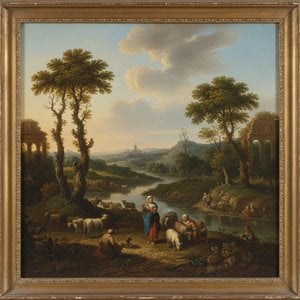
In the heart of the Dutch Golden Age, amidst a period of unprecedented maritime prosperity and cultural flowering, Salomon van Ruysdael captured more than just scenery; he captured the very soul of a nation. His masterpiece, Drawing the Eel, completed around 1650, serves as an exquisite meditation on light, observation, and the subtle grandeur found within the rhythms of everyday life. While many of his contemporaries sought to overwhelm the viewer with dramatic, idealized vistas, Ruysdael championed a remarkably restrained and intimate approach. He possessed a singular ability to render the precise nuances of natural light—particularly that soft, diffused glow filtering through an overcast sky—a technique that transforms a simple village scene into a breathing, atmospheric experience.
The painting unfolds across a wide horizontal expanse, inviting the eye to wander through a tranquil landscape where a river meanders gracefully toward the horizon. The composition is anchored by a substantial house, likely the residence of a wealthy landowner, which stands prominently on the right, its architecture reflecting the stability and burgeoning wealth of the era. Surrounding this structure, trees laden with fruit create a rich tapestry of textures, their leaves catching the light in a way that demonstrates Ruysdael’s meticulous mastery of detail. This is not merely a landscape, but a carefully constructed stage where the elements of nature and human industry exist in a delicate, harmonious balance.
The Pulse of Village Life and Festive Tradition
Beyond its serene landscape, Drawing the Eel is a vibrant chronicle of social history. The canvas is alive with the movement of a community engaged in the seasonal festivities of a clear winter day. Scattered throughout the scene are figures that breathe life into the Dutch countryside: villagers tending to livestock, children playing near the riverbank, and groups gathered around carts in moments of shared greeting. At the center of this social tapestry lies the depiction of palingtrekken, or "eel pulling," a traditional Dutch festival pastime that adds a layer of cultural depth to the work.
Every brushstroke serves to document the textures of 17th-century life, from the heavy folds of woolen clothing to the shimmering reflections on the water’s surface. The presence of boats on the river hints at the vital commerce and trade that fueled the Dutch economy, while the inclusion of cows and horses underscores the essential connection between the people and their land. For the discerning collector or interior designer, this painting offers a profound sense of narrative richness; it is a piece that rewards repeated viewing, revealing new details of human interaction and rural industry with every encounter.
A Timeless Aesthetic for the Modern Interior
For those seeking to infuse a space with historical elegance and emotional depth, a high-quality reproduction of this work offers unparalleled inspiration. The color palette—dominated by verdant greens, earthy tones, and the luminous blues of a fair-weather sky—is both soothing and sophisticated, making it an ideal centerpiece for a variety of interior styles, from classical traditionalism to contemporary organic modernism. The painting’s ability to evoke a sense of tranquility and nostalgia allows it to act as a "window," expanding the perceived boundaries of a room and bringing the peaceful spirit of the Dutch countryside indoors.
Owning a piece that echoes the mastery of Salomon van Ruysdael is an opportunity to celebrate the enduring power of observation. This artwork does not demand attention through grandiosity, but rather earns it through its quiet, persistent beauty. It remains a testament to a time when art was used to find the extraordinary within the ordinary, making it a timeless acquisition for anyone who appreciates the profound impact of light, landscape, and the human story.
Kérdések és válaszok
Milyen helyet foglal el a művészettörténetben a „Drawing the Eel”, Salomon Van Ruysdael alkotása?
Történelmileg a "Drawing the Eel" a szélesebb körű Early Modern korszak Dutch Golden Age alkotása.
Hol vásárolhatom meg „Drawing the Eel”, Salomon Van Ruysdael alkotása digitális képét?
A „Drawing the Eel”, Salomon Van Ruysdael alkotása digitális fájljának megvásárlása érdekében magas felbontású digitális kép letöltése az alábbi oldalon: Digitális alkotás.
Milyen nyomtatási méretet és vízszességet javasol a „Drawing the Eel”, Salomon Van Ruysdael alkotása?
A „Drawing the Eel”, Salomon Van Ruysdael alkotása egyik nyomatásához a Large méretű, Landscape elrendezésű nyomtatást javasoljuk.
Hasonló műalkotások


A művész életrajza
A holland tájfestészet finom mestere: Salomon van Ruysdael élete
A seventeenth századi Holland aranykorában, az a korszakban, amelyet példátlan jólét és művészeti virágzás határozott meg, Salomon van Ruysdael a mély légköri érzékenységű festőként emelkedett ki. Naardenban született körülbelül 1602-ben, élete szorosan összefonódott a holland aranykor szövetével. Bár a történelem gyakran hosszabb árnyékot vet fűvére, a híresebb Jacob van Ruisdael fölé, Salomon képes volt egy különálló és helyettesíthetetlen rést kialakítani a tájfestészet kanonján belül. Művészete nem csupán a földet ábrázolja; megörökíti a holland vidék lélegző esszenciáját, ahol a fény és a víz néma, örök táncot jár a vászonon.
Művészetének alapjai egy olyan családban fektetődtek le, ahol a mesterségesség és a precizitás minden volt. Édesapja, Jacob Jansz de Gooyer, okos faiparos volt, aki az éra legértékesebb tükreinek és festényeinek díszes ebony kereteinek készítésében jártas. A keretek apró részleteivel való ez korai találkozás valószínűleg egész életen át átívelő tiszteletet ébresztett Salomonban a textúrák és a szerkezeti integritás iránt. Bár formális izgatottsága meglepően széles körű volt – magában foglalva a latin nyelv összetettségét és akár a gyógyászat tudományát is –, szíve a vizuális világhoz ragadt maradva maradt. 1623-ban a tekintélyes haarlemiek Szent Lőrenc-ceh加盟ével belépett a alkotók elit köré, közvetlen hatása alá kerülve olyan mestereket, mint Jan Porcellis és
A víz és a fény szimfóniája
Salomon van Ruysdael valódi mestersége abban rejlik, hogy képes megörökíteni a holland légkör vergényességét. Ellentétben sok kortársával, akik drámai, hatalmas tájképeket vagy viharos jeleneteket kerestek, Salomon a belső vizek csendjében találta legnagyobb inspirációját. Kompozíciói gyakran a folyók ritmusos áramlására és a tavak nyugodt kiterjedésére összpontosítanak, ahol az égbolt és a víz egyetlen, láthatatlan átmenetben találkozik, tompított tónusokkal és lágy fényekkel. Remekműveiben, mint például a River View near Develter, megfigyelhető, hogyan használ finom palettát a holland nedves, hűvös levegözés idézésére, meghívva a nézőt egy mély nyugalom pillanatába.
Technikai tudása különösen érvényes a tengeri és folyami témák feldolgozásában. Olyan alkotásokban, mint a Sailing Vessels on an Inland Body of Water, példátlan képességgel mutatja be a nyugodt áramlatokban haladó csónakok súlyát és mozgását. Az emberi elemek integrációja – például a halászok finom jelenléte a River with Fishermen című műben – sosem zavaró; inkább méretarányt és a táj élettel teli valóságát adja meg. Ecsetje által a víz nem csupán egy felületé, hanem egy tükörré válik, amely visszaveri az változó felhőket és azt a lágy, diffúz fényt, amely a holland égboltot jellemzi.
Örökség és művészeti jelentőség
Salomon van Ruysdael történelmi jelentősége a légköri tájfestészet úttörőjeként töltött szerepében rejlik. Távolított vonulást a korábbi érasok merev, topográfiai ábrázolásától egy érzelmesebb, érzékszervi természetélmény felé. Képes volt ötvözni a stillelife elemek precizitását a tájfestészet nagyságával, létrehozva egy olyan egyedülálló esztétikát, amely a holland polgárság számára is megszólalt, hiszen ők olyan művészetet kerestek, amely saját békés, szorgalmas környezetüket tükrözte.
Napjainkban öröksége néhány a világ legbecsültebb intézményeiben él tovább, többek között a Museo Thyssen-Bornemisza múzeumokban. Egy Van Ruysdael művét tanulmányozni türelem és megfigyelés tanítása. Művészete marad egy tanúságtétel az alázatban rejlő szépségre, emlékeztetve minket arra, hogy a legmélyebb művészi igazságok gyakran egy folyó legcsendesebb tükrében vagy a távozó nap leglágyabb fényében találhatók. Részere a holland aranykorból egy elválaszthatatlan fejezetben marad abban a történetben, hogyan tanult az emberiség nemcsak azt látni, amilyen a világ, hanem azt is, amilyen az érez.

Salomon Van Ruysdael
1602 - 1670 , Holland
Rövid információk
- Artistic Movement Or Style: Holland aranykor művészeti stílusa (tájképfestészet)
- Artists Or Movements Influenced By This Artist: ['Jacob Van Ruisdael']
- Artists Who Influenced This Artist:
- Jan Porcellis
- Esaias van de Velde
- Date Of Birth: Naarden, Hollandia (1602)
- Date Of Death: 1670. november 3.
- Full Name: Salomon van Ruysdael
- Nationality: Holland
- Notable Artworks:
- Folyói táj
- Komp Gorinchem közelében
- Kilátás Deventerről
- Place Of Birth: Naarden
Kapcsolódó cikkek

Golden Age Reflections: Dutch Baroque Painting & Cultural Innovation
Explore the Dutch Golden Age of painting! Discover key artists like Vermeer & ter Borch, their innovative techniques, and the rich cultural context behind these Baroque masterpieces. Learn about collecting & appreciating this iconic art period.

A Hollandi Aranykor 10 Mesterműve: Festmények, Amelyek Megváltoztatták a Világot | ArtsDot.com
Fedezze fel a Hollandi Aranykor 10 legikonikusabb műalkotását! Rembrandt, Vermeer és más mesterek festményeinek történeteit olvassa el. Barokk stílus, klasszikus művészet – inspirálódjon otthon dekorációjához a ArtsDot.com-on! Fedezze fel a teljes gyűjteményt online.
Nicolaes Berchem: Dutch Golden Age Pastoralism & the Evolution of Landscape Painting
Explore the captivating world of Nicolaes Berchem, a leading Dutch Golden Age painter. Discover his idyllic landscapes, masterful technique & lasting influence on art history. Learn more at ArtsDot.

Charles Leickert: Capturing the Dutch Golden Age Light – A Comprehensive Study of Technique, Context, and Legacy
Explore the captivating winter landscapes of Charles Leickert, a master of Dutch Golden Age light & atmosphere. Discover his techniques, symbolism, and lasting legacy – a comprehensive study for art enthusiasts and collectors.

Golden Light & Dutch Skies: Bringing the Magic of Dutch Golden Age Landscapes into Your Home
Transform your home with the breathtaking light of Dutch Golden Age landscapes. Discover how hand-painted oil reproductions of masterworks like Ruisdael and Vermeer bring timeless elegance, atmosphere, and soulful texture to modern interiors. Elevate your space with museum-quality art.