


A kép az Ön választásai alapján készült: , .
A gyűjtemény leírása
Explore René Magritte’s ‘The Return,’ a surrealist masterpiece featuring a floating cloud & enigmatic nest. Discover this iconic 1940 oil painting's dreamlike beauty.
 Összes részlet megjelenítése
A művész életrajza
Magritte: A szürrealista festő, aki a valóságot megkérdőjelezte! Képei a 'Szívszorító csók', 'A lovagló' és más ikonikus művekkel kihívják az elképzeléseinket. Nézze meg a szokatlan világát!
Kézzel készített olajfestmény reprodukció
Kézzel festett olajvastú vászon, az Ön által választott méretben és keretben, művészeink készítik meglévőre. ( Váltás nyomtatványra Áttérés digitális képre)
Ez a műalkotás szerzői jogi védelem alatt áll
Az ezen az oldalon megjelenített műalkotások szerzői jogi védelem alatt állnak, ami azt jelenti, hogy törvényileg nem készíthetünk és nem adhatunk el belőlük pontos másolatokat. Ez a védelem olyan nemzetközi megállapodások alapján érvényesül, mint például a Berni Egyezmény és a nemzeti jogszabályok által, beleértve azokat is, amelyeket meghatározott Az USA szerzői jogi törvénye – 17. cím.
Mint tiszteletes és törvényes alternatívát, olyan egyedi, kézzel festett alkotásokat kínálunk, amelyek az eredetiből merítnek inspirációt. Tapasztalt és professzionális művészeink alaposan tanulmányozzák az eredeti stílusát, hangulatát és művészeti esszenciáját, hogy egy olyan új, egyedi alkotást hozzunk létre, amely ugyanazt az érzést kelti – miközben önálló, eredeti alkotásként létezik.
Ez a módszer teljes mértékben megfelel a szerzői jogi szabályozásnak, mivel nem tartalmazza a védett műalkotás másolását vagy duplikálását. Ehelyett ez egy kreatív újinterpretáció – egy új festmény, amely az eredetivel való összefüggései miatt hatással van rá, de nem az az.
Több információ erről a festményről
 Megtekintés
 Küldés
 Megosztás
 Részletek
 Útmutató

 Letöltés
 Hasonló darabok
 X-ray felvétel
 Diavetítés
 Kérdések és válaszok
 Statisztika
Rendelje meg festményét négy egyszerű lépésben
Ne siessen! Bármely választ módosítható; az rendelési összesítőben megjelenő ár minden egyes döntésre reagál.
1 Az első lépés négyből
Melyik méretet szeretné?
Ezek a méretek megőrzik az eredeti festmény arányait. A rajz bemutatja a választott méretet egy falon, egy kétszáz centiméteres kanapé felett.
Vagy adja meg a saját méreteit
Válasszon előre meghatározott méreteink közül, amelyek megfelelnek a műalkotás eredeti arányainak.

Írja be a kívánt szélességet és magasságot, hogy illeszkedjen a keretéhez vagy a falához. Mivel ez kézzel festett alkotás, egy eltérő formájú méret esetén a művész akár festhet is valamivel többet a kép körül, vagy korolathat is belőle — az Ön döntésének megfelelően. A festés megkezdése előtt küldünk egy digitális tervezetet jóváhagyásra. Az oldalon látható kép nem tartalmazza a végeredményt — csak a tervezet mutatja meg a valódi eredményt.
2 A négy lépésből a második
Hogyan kívánja előkészíteni: feltekercselve, vászonra feszítve vagy keretezve?
Az alábbi árak az első lépésben választott méretre vonatkoznak.
Válaszd ki a feszített vászon széleit
Válassza ki a keretet

Fehér Ft1

Elmosódott szélek Ft1

Kiterjesztett Ft1

P118B Ft10

P118H Ft10

P118W Ft10

P438Z Ft10

P508JH Ft12

P508YH Ft12

P805H Ft10

P805Z Ft10

P919BZ Ft10

P919G Ft10

P919XJ Ft10

P959ZH Ft10

P968JZ Ft12

W106C Ft8

W218G Ft10

W218JH Ft8

W218Y Ft10

W307PJ Ft10

W316G Ft10

W316PJ Ft8

W316Y Ft10

W398PJ Ft8

W4111J Ft10

W500HY Ft15

W500JH Ft15

W692G Ft12

W849H Ft8

W940BG Ft15

W953PJ Ft8

H24-GOLD Ft30

H24-SILVER Ft30

H36-GOLD Ft45

H36-SILVER Ft45
Keretezett
Keretprofil: . A kerettel együtt vett teljes méret: .
3 A négy lépésből a harmadik
Szeretne változtatni valamit a festményen?
A legtöbb ember nemet mond erre. Mivel minden festmény kézzel készül, művészünk képes az Ön igényei szerint is átalakítani azt.
A megrendelést követően a ArtsDot.com csapat e-mailt küld a vásárlónak az instrukciókkal, és biztosítja a tervezeti előnézetet
4 A négy lépés közül a negyedik
Néhány felületfinisz
Mindegyik opcionális. A már kiválasztott válaszok nem jelentnek plusz költséget.
Ki festette?
Világszerte elérhető szállítás () 3-4 hét alatt a szokásos 5 hét helyett. (4 november). A minőség nem kérdőjelezhető.
Egy felirat, mint egy múzeumban?
A gravírozott bronztábla részletei
This elegant plaque features the artist's name and the title of the artwork, finely engraved for a timeless presentation.
It is made from bronze with a refined, elegant finish. The text is precisely laser-engraved for a sharp and permanent result. Measuring 9x2 cm, the plaque is compact yet easy to read. It's built to be durable and scratch-resistant, offering a professional, museum-quality look. Mounting is simple thanks to the included adhesive backing.
Átlátszó akril tábla részletei
The plaque includes essential engraved details such as the artist's name, the title of the artwork, the date it was created, the type of media used-like oil on canvas or watercolor-a brief description of the piece, and a QR code that links to the complete artwork information.
It is crafted from clear acrylic, offering a sleek, modern appearance. The text is UV-engraved in black to ensure strong visual contrast. With a size of 10x15 cm, it ensures optimal readability. It comes equipped with two metal hooks for secure wall mounting. The plaque is designed to be weather-resistant, making it suitable for various environments, and it includes interactive features that work seamlessly with smartphone scanning.
Fekete akril tábla részletei
This elegant plaque includes engraved information such as the artist's name, the title of the artwork, the date it was created, the type of media used (like oil on canvas or watercolor), a short description of the artwork, and a QR code for quick access to more information.
The plaque itself is made from refined black acrylic with a premium finish. The text is laser-engraved in white for high contrast and readability. Its size is 10x15 cm, designed to be easy to read. It comes with two metal hooks for professional mounting. The design is sleek and fits any interior style. It is also weather-resistant and durable, with built-in digital integration for mobile compatibility.
Egy védőréteg?
Mikor lenne szüksége rá?
✓ Ellenőrizés és rendelés
Az Ön által megrendelt festmény

The Return
Reprodukciós technika
Reprodukció mérete
-

Kiváló mesterművész
Nagyobb részletesség, finomság és bővített gyártási idő
-

Reprodukció keretezése
-
-
A bármely oldalsó méretét túlszálaló 105 cm (kb. 41 hüvelyk) meghaladó műalkotások vagy reprodukciók esetében a keret összeszerelhető készletként, szétszerelve kerül szállításra. Ez a módszer biztosítja a biztonságos szállítást, és megakadályozza a szállítás során fellépő sérüléseket.
Szakmész összeszerelést igényel – ez nem DIY (önösszeszerelhető) termék.
A készletet egy tapasztalt keretező szakembernek kell összeszerelnie és a vásznat feszítenie kell, fa ragasztó (nem tartalmazza a csomag), vásznfeszítő fogó és szorítók használatával, amelyek a ragasztó száradásáig a keretrészeket egymáshoz vuôngjba tartják. A helytelen összeszerelés vagy a nem egyenletes vásznfeszítés maradandó károsíthatja a műalkotást, és ez nem része a garanciánknak.
 A bármely oldalsó méretét túlszálaló 105 cm (kb. 41 hüvelyk) meghaladó műalkotások vagy reprodukciók esetében a keret összeszerelhető készletként, szétszerelve kerül szállításra. Ez a módszer biztosítja a biztonságos szállítást, és megakadályozza a szállítás során fellépő sérüléseket.
A készlet tartalmazza az összes tömörfa rudat, pontosan méretre vágva.
A mellékelt csavarokkal, valamint a sarokszerekhez szükséges faütő ragasztóval kell összeszerelnie (ez nem tartalmazható a csomagban), így a keretrendezőnek külön kell beszereznie.
A csomag nem tartalmazza a szükséges professzionális eszközöket: egy vászonfeszítőt és klipseket a rácsok vízszintes tartásához a ragasztó megszáradásáig.
Fontos:
A sarokcsatlakozásokhoz fánylagra van szükség, a keretrudakat szorítókapcsokkal kell rögzíteni, amíg a rag teljesen meg nem szárad, a kész keretre feszített vászonhoz pedig vászonfeszítő fogat szükséges. Ezek egyike sem található meg a készletben. Kérjük, rendelés előtt győződjön meg róla, hogy rendelkezik tapasztalt keretező szakemberrel.

Névtábla
-
-

Védőréteg (Lakk)
Fényes lakk (intenzívabb színek, védelem a fény és a nedvesség hatása ellen)
-

Műalkotásom egyedi igényre szabása
Példák a módosíthatóságra: az arc kicserélése az ügyfél fotójára; háziállat hozzáadása (pl. macska helyett kutya); rejtett üzenet elhelyezése a háttérben; a háttér tájainak vagy elemeinek megváltoztatása.
-

Sürgős
Világszerte szóló szállítás () mindössze 3-4 hét alatt, a szokásos 5 hét helyett. (4 november). A minőség nem kérdőjelezhető.
-
Express szállítás
Világszerte elérhető szállítás területre 5 héten belül. (11 november).
A szállítás díja tartalmazza
Összesített ár
Ft 86168
Az üvegkeretes opció csak 110 cm alatti méretben érhető el
Minden rendelés mellé tartalmazva
- Ingyenes globális expressz szállítás
- Prémium minőségű len vászon
- Teljes körű szállítási biztosítás
- Vámvisszatérítési Garancia
- Hiteles színarányosság garancia
- 100 napos visszaküldési lehetőség (csak hibás termékek esetén)
- 100% pénzvisszatérítési garancia
- Több darab vásárlásakor kedvezmény


A Dreamscape of Potential: Exploring René Magritte’s ‘The Return’
‘The Return’ (1940) by René Magritte is a quintessential example of Surrealist painting, inviting viewers into a world where the familiar becomes unsettlingly strange. This captivating piece transcends simple representation, prompting contemplation on perception, reality, and the fragile beauty of existence.Subject Matter & Composition
The artwork presents a striking juxtaposition of natural and artificial elements. A large, cloud-like form dominates the upper portion of the canvas, rendered in cool shades of blue with subtle white accents that suggest atmospheric depth. Below this ethereal shape rests a small, meticulously depicted nest containing three eggs – symbols of potential life and nascent beginnings. The composition is grounded by a dark silhouette of trees along the horizon line, providing a sense of spatial recession while simultaneously enhancing the dreamlike quality. Magritte masterfully flattens perspective, creating an ambiguous space that feels both expansive and contained.Style & Technique
‘The Return’ embodies the core tenets of Surrealism – illogical juxtapositions, unexpected scale shifts, and a deliberate disruption of conventional reality. Magritte's technique is characterized by smooth, precise brushstrokes and meticulous rendering. He achieves a polished finish that belies the unsettling nature of his subject matter. The use of oil paint on canvas allows for rich color saturation and subtle tonal variations, contributing to the painting’s atmospheric depth. Lines are primarily geometric and defined, contrasting with the amorphous shapes of the cloud and nest.Historical Context & Artistic Influences
Created in 1940, during a period of global upheaval leading up to and including World War II, ‘The Return’ can be interpreted as reflecting anxieties about fragility and renewal. Magritte's artistic journey began with Impressionism before evolving through Cubism and Futurism, ultimately culminating in his signature Surrealist style. He rejected the purely abstract tendencies of some contemporaries, instead grounding his fantastical imagery in recognizable forms. His work often engages with philosophical questions regarding representation and reality – a hallmark of the Surrealist movement’s exploration of the subconscious mind.Symbolism & Interpretation
The symbolism within ‘The Return’ is layered and open to interpretation. The cloud, simultaneously natural and seemingly constructed, could represent the ephemeral nature of thought or the illusionary quality of perception. The nest and eggs are potent symbols of hope, vulnerability, and the cycle of life. Their placement beneath the imposing cloud suggests a delicate balance between potential and threat. Some scholars suggest the painting explores themes of return – perhaps to innocence, to origins, or to a state of pre-conscious awareness. The overall effect is one of quiet contemplation, inviting viewers to project their own meanings onto the scene.Emotional Impact & Aesthetic Appeal
‘The Return’ evokes a sense of both wonder and unease. Its dreamlike atmosphere and ambiguous imagery create a lingering emotional resonance. The painting's cool color palette and precise execution contribute to its sophisticated aesthetic, making it a compelling addition to any art collection or interior space. Its subtle yet powerful symbolism invites ongoing engagement, rewarding repeated viewing with new insights and interpretations. This artwork is not merely a visual experience; it’s an invitation to explore the depths of the imagination and question the nature of reality itself.Collecting & Reproduction
- Original works by René Magritte are highly sought after by collectors worldwide.
- High-quality reproductions allow art enthusiasts to experience the beauty and intrigue of ‘The Return’ in their homes or offices.
- This piece complements a variety of interior design styles, from modern minimalist to eclectic bohemian.
- Consider pairing it with neutral color palettes to enhance its visual impact.
Kérdések és válaszok
Hány éves volt Magritte, amikor megalkotta a "The Return" című alkotást?
Magritte 42 éves korában festette a „The Return” című művét. A művész 1898 született, a alkotás dátuma pedig 1940.
Hol tudok nyomtatványt vásárolni a(z) „The Return”, Magritte alkotása alkotásból?
A „The Return”, Magritte alkotása nyomata közvetlenül a következő oldalon rendelhető meg: Művészeti nyomtatvány: minőségi giclée nyomat pamutvászonon vagy archiváló vászonpapíron.
Milyen hangulatot kölcsönözne a "The Return" egy térnek?
A „The Return”, Magritte alkotása Ethereal hangulata tökéletesen illeszkedik a javasolt helyszínhez: egy Living Room.
Hasonló műalkotások


Magritte
1898 - 1967, Belgium
A művész életrajza
Early Life and the Seeds of Surrealism
René Magritte, born René François Ghislain Magritte on November 21, 1898, in Lessines, Belgium, emerged into a world that would profoundly shape his enigmatic artistic vision. His early years were marked by an unsettling event – the suicide of his mother when he was just thirteen. The image of her body being recovered from the River Sambre, with her dress obscuring her face, became a haunting motif that would subtly permeate his later work, manifesting in veiled figures and a persistent exploration of hidden realities. This early trauma instilled within him a fascination with mystery, loss, and the unsettling power of what remains unseen. While details of his childhood remain somewhat elusive, it’s clear this formative experience laid the groundwork for his lifelong questioning of perception and representation. He began drawing lessons at age ten, revealing an innate inclination towards visual expression, but initially explored Impressionism before embarking on a path that would lead him to become one of the most significant figures in Surrealist art.Artistic Development and Influences
Magritte’s artistic journey was not immediate or straightforward. He studied at the Académie Royale des Beaux-Arts in Brussels, yet found its traditional methods stifling. His early work experimented with Futurism and Cubism, absorbing elements of these avant-garde movements but ultimately rejecting their purely formal concerns. It wasn't until encountering Giorgio de Chirico’s painting *The Song of Love* in 1922 that Magritte discovered a resonance that would irrevocably alter his artistic course. De Chirico’s dreamlike landscapes and unsettling juxtapositions unlocked within Magritte a new way of seeing – a world where the familiar could be rendered strange, and the ordinary imbued with profound mystery. This encounter sparked his commitment to Surrealism, though he often maintained a unique distance from its more overtly psychological or automatic approaches. He preferred a meticulous, almost clinical precision in his painting, using realistic techniques to depict illogical scenarios.The Heart of Surrealism: Challenging Reality
By 1926, Magritte had fully embraced the tenets of Surrealism, producing *Le Jockey Perdu (The Lost Jockey)*, widely considered his first truly surrealist work. However, his brand of Surrealism was distinct. He wasn’t interested in exploring the subconscious through free association or dream imagery in the manner of some of his contemporaries. Instead, Magritte sought to challenge viewers' perceptions of reality by presenting ordinary objects in unexpected contexts, forcing them to question their assumptions about the world around them. Iconic works like *The Treachery of Images (This is not a pipe)* (1929) brilliantly deconstructs the relationship between image and object, reminding us that a representation is never the thing itself. *Les Amants (The Lovers)* (1927-1928), with its shrouded figures, echoes the trauma of his mother’s death while simultaneously exploring themes of concealment and intimacy. *Time Transfixed* (1938) presents a locomotive bursting through a brick wall, disrupting our sense of space and time. And *The Human Condition* (1933), a canvas within a canvas, blurs the boundaries between representation and reality, prompting us to consider how we perceive and interpret the world.Later Life, Recognition, and Enduring Legacy
Despite initial struggles for recognition, Magritte’s work gradually gained prominence, particularly in the United States with exhibitions in 1936 and later retrospective shows at the Museum of Modern Art (1965) and the Metropolitan Museum of Art (1992). He remained politically engaged throughout his life, advocating for artistic autonomy. He continued to refine his signature style, exploring themes of repetition, illusion, and the power of language in paintings that are both intellectually stimulating and visually arresting. Magritte died on August 15, 1967, leaving behind a body of work that continues to captivate and challenge audiences worldwide. His influence extends far beyond the realm of painting, impacting pop art, minimalist art, conceptual art, and even advertising and film. Today, his paintings are held in major museum collections around the globe, including the Musées royaux des beaux-arts de Belgique in Brussels, which houses the Magritte Museum – dedicated entirely to his work and boasting the world’s largest collection of his creations.- Museum Collections: Musées royaux des beaux-arts de Belgique, Brussels; Magritte Museum.


Kapcsolódó cikkek

A szürrealizmus 10 legikonikusabb mesterműve – Vásároljon művészetet online a ArtsDot-on!
Fedezze fel a szürrealizmus 10 legmeghatározóbb műalkotását! Salvador Dalí, René Magritte és más ikonikus festők álomképei. Vásároljon exkluzív reprodukciókat a ArtsDot-on – otthona elegáns dekorációjához!

A kék árnyalatai: 10 ikonikus festmény a Slate Blue szín jegyében | ArtsDot.com
Fedezze fel a 10 legikonikusabb festményt, melyeket a Slate Blue szín ural! Monet, Renoir és más mesterek művei inspirálnak. Vászonképek eladás, otthon dekoráció tippek a ArtsDot.com-on. Explore the full collection online!
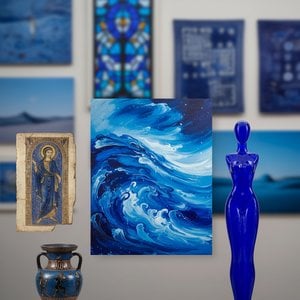
The Allure of Azure: Exploring the Symbolic & Aesthetic Depths of Blue in Art History
Explore the rich history of blue in art! Discover its symbolism, from ancient pigments to modern masterpieces by Kandinsky & Seurat. Uncover the psychological impact and cultural meanings behind this captivating hue.