

 Megtekintés
 Küldés
 Megosztás
 Részletek
 Útmutató

 Letöltés
 Hasonló darabok
 X-ray felvétel
 Diavetítés
 Kérdések és válaszok
 Statisztika
Console With Two Windows


 Összes részlet megjelenítése
Giclée / Műnyomat
Múzeumi minőségű giclée vagy vászonnyomat, gyors gyártással és rugalmas finomítási lehetőségekkel. ( Kézzel festett másolat rendelése Áttérés digitális képre)




P118B Ft10

P118H Ft10

P118W Ft10

P438Z Ft10

P508JH Ft12

P508YH Ft12

P805H Ft10

P805Z Ft10

P919BZ Ft10

P919G Ft10

P919XJ Ft10

P959ZH Ft10

P968JZ Ft12

W106C Ft8

W218G Ft10

W218JH Ft8

W218Y Ft10

W307PJ Ft10

W316G Ft10

W316PJ Ft8

W316Y Ft10

W398PJ Ft8

W4111J Ft10

W500HY Ft15

W500JH Ft15

W692G Ft12

W849H Ft8

W940BG Ft15

W953PJ Ft8




Válasszon előre meghatározott méreteink közül, amelyek megfelelnek a műalkotás eredeti arányainak.

Írja be a keretének vagy a falának megfelelő szélességet és magasságot. A nyomatot csak le lehet vágni, soha nem tehető nagyobbá, mint az eredeti kép, így egy eltérő alakú méretnél a kép egy része elveszik. Mielőtt bármit kinyatintanánk, küldünk egy digitális próbamodellt jóváhagyásra. Az oldalon látható kép nem tartalmazza a valós levágást — ezt csak a próbamodell mutatja meg.
Világszerte történő kiszállítás területére mindössze 2 hét alatt, a szokásos 4-5 hét helyett. (4 november)

Ingyenes globális expressz szállítás

Prémium minőségű len vászon

Teljes körű szállítási biztosítás

Vámvisszatérítési Garancia

Hiteles színarányosság garancia

100 napos visszaküldési lehetőség (csak hibás termékek esetén)

100% pénzvisszatérítési garancia

Több darab vásárlásakor kedvezmény
 Az üvegkeretes opció csak 110 cm alatti méretben érhető el

Console With Two Windows
Giclée / Műnyomat
Reprodukció mérete
-


Összesített ár
Ft 20641
A Symphony in Color: Exploring Dufy's Console With Two Windows
To stand before Raoul Dufy’s Console With Two Windows is to step directly into a sun-drenched moment of Parisian leisure, a breath of pure, unadulterated joy. This painting, executed in 1948, is not merely an depiction of an interior space; it is an immersion into the very spirit of French *joie de vivre*. Dufy, whose career was marked by an almost irresistible attraction to light and color, captures here a scene vibrating with energy yet steeped in serene balance. The composition immediately draws the eye across the central console table, flanked symmetrically by two inviting windows that frame glimpses of an imagined, vibrant world beyond.
The Luminous Language of Fauvism
Technically, this work is a masterful testament to Dufy’s enduring connection to the decorative arts while firmly rooting itself in the expressive power of Fauvism. The characteristic bold colors—the electric blues of the window panes, the warm glow emanating from the central yellow wall, and the contrasting accents of green and red on the flanking doors—do not simply decorate; they sing. Dufy employs loose brushstrokes that lend an undeniable sense of movement to every surface. One can almost hear the chatter and feel the warmth of the Mediterranean sun reflected in the paint. This vibrant application of pigment transforms what might be a static architectural study into a dynamic, breathing tableau.
Symbolism of Openings and Connection
The structure itself—the console mediating between two windows—is rich with subtle symbolism. Windows, universally understood as portals, here suggest the permeable boundary between private sanctuary and public life. The view through these panes offers tantalizing glimpses of a cityscape, hinting at stories unfolding just beyond the frame. Furthermore, the inclusion of distinct doors, one green and one red, adds layers of narrative possibility. These openings invite contemplation: what lies on the other side? Dufy masterfully uses color contrast to suggest choice, passage, and the continuous dialogue between interior comfort and exterior adventure.
Bringing Parisian Vibrancy Home
For the collector or designer seeking to infuse a space with artistic soul, this piece offers unparalleled emotional resonance. It is an antidote to muted modernism, demanding that one acknowledge color as both structure and emotion. Reproducing Dufy’s vision allows one to curate not just a wall hanging, but a mood—one of sophisticated exuberance. The combination of ornate detail on the console with the spontaneity of the brushwork ensures that the piece feels both timelessly classical and thrillingly contemporary. It is an artwork designed to be lived with, celebrated in conversation, and admired for its sheer, glorious chromatic energy.
Kérdések és válaszok
Milyen kontraszt jellemzi a „Console With Two Windows”, Dufy Raoul alkotása alkotást?
A "Console With Two Windows" fény-sötét kontrasztja Bold értéket mutat. A kontraszt azt írja le, mennyire térnek el egymástól a világos és sötét részek.
Megtekinthetném „Console With Two Windows”, Dufy Raoul alkotása alkotást más megvilágítás mellett is?
A „Console With Two Windows”, Dufy Raoul alkotása X-ray felvétel oldala egy interaktív nézegető, amely lehetővé teszi a mű alkotásának eleven optikai rétegei közötti görgetést, beleértve az röntgenszerű felvételt is.
Melyik évben készült a „Console With Two Windows”, Dufy Raoul alkotása?
A „Console With Two Windows”, Dufy Raoul alkotása alkotásának éve 1948.
Hasonló műalkotások


A művész életrajza
A Life Immersed in Color and Light
Raoul Dufy, born in the bustling port city of Le Havre, Normandy, on June 3, 1877, was an artist whose name became inextricably linked with joy, vibrant color, and a distinctly French *joie de vivre*. His artistic journey wasn’t forged amidst the traditional tools of a painter – palettes and easels – but rather within the practical realities of his early life. After leaving school at just fourteen, he found work in a coffee-importing company, a far cry from the world of art, yet it was during these years that the seeds of his passion were sown. Even amidst the daily grind, Dufy’s innate artistic sensibility refused to be suppressed; evening classes at Le Havre's École des Beaux-Arts ignited a flame within him, forging friendships with fellow artists Raimond Lecourt and Othon Friesz – companions who shared a studio in Montmartre and a mutual desire to explore new visual languages. These formative years were deeply influenced by the Impressionists, particularly the luminous landscapes of Claude Monet and Camille Pissarro, providing a foundational understanding of light, color, and composition that would inform his later artistic development. He was awarded a scholarship to study at the École Nationale supérieure des Beaux-Arts in Paris, further refining his skills and immersing himself in the dynamic artistic environment of the capital city.Embracing Fauvism and Finding His Voice
The early 20th century presented Dufy with a rapidly evolving art world. Initially, he experimented with Cubism, but it was Henri Matisse’s groundbreaking *Luxe, Calme et Volupté* at the 1905 Salon des Indépendants that proved to be a pivotal moment. The sheer audacity of color and expressive freedom unleashed by Matisse and his fellow “Fauves” – those wild beasts – resonated profoundly with Dufy, propelling him towards a style characterized by bold hues and liberated brushwork. However, Dufy didn’t simply mimic; he absorbed the energy of Fauvism and distilled it into something uniquely his own. He deliberately moved away from strict adherence to the movement's tenets, developing a more decorative and fluid approach. This period saw him experimenting with diverse mediums – illustration, textile design for Paul Poiret (a collaboration that brought vibrant color and pattern to fashion), even ceramics – demonstrating an impressive versatility that extended beyond the confines of traditional painting. His designs weren’t merely superficial ornamentation; they were integral expressions of his artistic vision, bringing a dynamic energy to everyday objects. Dufy's early engagement with the Fauves was documented in 1906 and 1907 at the Salon des Indépendants, solidifying his place within this revolutionary movement.A Stenographic Style: Capturing Modern Life
By the 1920s, Dufy had fully blossomed into a master of what became known as his “stenographic” style. This distinctive technique involved rapidly applying thin washes of color over skeletal structures – outlines that suggested form without detailed rendering – creating an impression of movement and spontaneity. It was a method perfectly suited to capturing the energy of modern life: yachting regattas, bustling city scenes, elegant social gatherings on the French Riviera, and the vibrant atmosphere of jazz clubs. Dufy wasn’t interested in meticulous detail; he sought to convey atmosphere, emotion, and the fleeting beauty of a moment. His paintings became celebrations of leisure, pleasure, and the spirited pulse of contemporary society. He painted orchestras, racecourses, and seascapes with an effervescent quality that captured the spirit of the Jazz Age. This period also saw him undertaking large-scale commissions, including the monumental *La Fée Electricité* for the 1937 Exposition Internationale in Paris – a vast work celebrating electricity’s impact on modern life, executed with remarkable speed and ingenuity using a new quick-drying medium. The sheer scale of this project showcased Dufy's ability to synthesize artistic vision with practical considerations.Influences and Artistic Development
Dufy’s artistic journey was shaped by a diverse range of influences. Initially, the Impressionists – Monet, Pissarro, and others – provided him with a foundational understanding of light, color, and landscape painting. The Fauves, particularly Matisse, liberated him from traditional constraints, encouraging him to embrace bold colors and expressive brushwork. Later, he found inspiration in Paul Cézanne’s emphasis on structure and form, incorporating these principles into his own style. Furthermore, the decorative arts – textile design and ceramics – profoundly influenced his approach, leading to a distinctive blend of artistic expression and functional design. Throughout his career, Dufy remained open to experimentation, constantly refining his technique and exploring new subjects. His work evolved organically, reflecting both his personal experiences and the changing cultural landscape of his time.Legacy and Enduring Appeal
Despite facing health challenges later in life due to rheumatoid arthritis, Raoul Dufy continued to paint with unwavering dedication until his death on March 23, 1953, in Forcalquier. His work is now held in prestigious collections worldwide – including the Musée d’Orsay in Paris, the Hermitage Museum in St. Petersburg, The Museum of Modern Art in New York, and the Art Institute of Chicago – a testament to his enduring artistic significance. Dufy's influence extends beyond painting; his designs continue to inspire textile and decorative arts. He left behind an impressive body of work – thousands of paintings, watercolors, drawings, prints, and applied art pieces – that collectively represent a vibrant celebration of life, color, and the beauty of the everyday. Raoul Dufy wasn’t merely a painter; he was a chronicler of his time, capturing the spirit of an era with a unique blend of Fauvist energy, decorative flair, and a distinctly optimistic vision. His art remains profoundly relevant today, offering a vibrant escape and a reminder to embrace the *joie de vivre* that permeated his life and work.Key Characteristics of Dufy’s Art
- Vibrant Color Palette: Dufy was renowned for his use of bright, saturated colors, often applied in thin washes.
- Dynamic Composition: His paintings frequently feature energetic compositions that convey a sense of movement and spontaneity.
- Decorative Style: A strong decorative element is present throughout his work, influenced by his designs for textiles and ceramics.
- Celebration of Modern Life: Dufy’s art often depicts scenes of leisure, social gatherings, and the pleasures of contemporary society.
- Stenographic Technique: His signature style involved rapidly applying thin washes of color over skeletal structures.

Dufy Raoul
1877 - 1953 , Franciaország
Rövid információk
- Artistic Movement Or Style: Fauvizmus
- Artists Or Movements Influenced By This Artist:
- Textil design
- Ceramika
- Artists Who Influenced This Artist:
- Monet
- Matisse
- Cézanne
- Date Of Birth: 1877. 6. 3.
- Date Of Death: 1953. 3. 23.
- Full Name: Raoul Dufy
- Nationality: Francia
- Notable Artworks:
- La Fée Electricité
- The Thoroughbred
- Portrét Mme. Dufy
- Place Of Birth: Le Havre, Francia
Kapcsolódó cikkek

Merész Művészet: 10 Klasszikus Kép, Amik Bátorítanak és Inspirálnak – ArtsDot.com
Fedezze fel a 10 legmerészebb műalkotást! Van Gogh, Munch és Picasso remekművei inspirálnak. Expresszionizmus, absztrakt festmények – online képkereső és minőségi reprodukciók a ArtsDot.com-on. Otthoni dekorációhoz vagy művészeti gyűjteményébe! Fedezze fel az összes mesterművet a ArtsDot.com oldal

Henri Matisse 25 Mesterműve: Színek és Érzések Világa - ArtsDot
Fedezze fel Henri Matisse 25 legikonikusabb művét! Ismerje meg a fauvizmus színeit, az expresszionizmus formáit és a modern művészet mesterének életművét. Vászonképek, nyomatok – inspiráció otthonába a ArtsDot.com-on!

Tactile Maximalism: The Expert Guide to Styling Bold Pop Art for Dopamine Decor Interiors
Master the art of Dopamine Decor with our expert guide to Tactile Maximalism. Learn how to professionally style bold Pop Art through texture, color theory, and curated layers to create a joyful, high-end interior that inspires.

Fernand Léger Mesterművei: A 25 Legikonikusabb Kép a Modern Művészetben | ArtsDot
Fedezze fel Fernand Léger 25 legikonikusabb műalkotását! Ismerje meg a kubizmus, a tubizmus mesterét és a gépi kor lenyűgöző festményeit. Múzeumi minőségű vászonképek és poszterek a ArtsDot-on. Explore the full collection online!
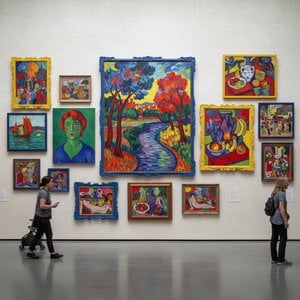
A Fauvizmus 10 Mesterműve: Színek és Érzések a Modern Művészetben | ArtsDot.com
Fedezze fel a Fauvizmus 10 legikonikusabb műalkotását! Matisse, Derain és más festők színes világa várja Önt. Ismerje meg a modern művészet történetét és inspirálódjon otthona dekorációjához. ArtsDot.com - Múzeumi minőségű reprodukciók online!