


 Megtekintés
 Küldés
 Megosztás
 Részletek

 Letöltés
 Hasonló darabok
 X-ray felvétel
 Diavetítés
Untitled


 Összes részlet megjelenítése
Kézzel készített olajfestmény reprodukció
Kézzel festett olajvastú vászon, az Ön által választott méretben és keretben, művészeink készítik meglévőre. ( Nyomat rendelése Kép letöltése)




P118B $10

P118H $10

P118W $10

P438Z $10

P508JH $12

P508YH $12

P805H $10

P805Z $10

P919BZ $10

P919G $10

P919XJ $10

P959ZH $10

P968JZ $12

W106C $8

W218G $10

W218JH $8

W218Y $10

W307PJ $10

W316G $10

W316PJ $8

W316Y $10

W398PJ $8

W4111J $10

W500HY $15

W500JH $15

W692G $12

W849H $8

W940BG $15

W953PJ $8




Válasszon előre meghatározott méreteink közül, amelyek megfelelnek a műalkotás eredeti arányainak.

Ön megadhat saját méreteket egy adott kerethez vagy térhez igazításhoz. Ha a kiválasztott méret nem egyezik az eredeti kép arányával, akkor a műalkotást levágjuk, vagy további kézzel festett elemekkel meghosszabbítjuk a festményt. A gyártás megkezdése előtt küldünk Önnek egy digitális előnézetet jóváhagyásra.
Kérjük, vegye figyelembe, hogy a képernyőn megjelenő előnézet nem tükrözi a tényleges vágást vagy kiterjesztést. Csak az előnézet fog pontosan mutatni a végső kompozíciót.
Bár egyedi méretek állnak rendelkezésre, javasoljuk, hogy válasszon egy méretet az előre meghatározott listából az eredeti arányok megőrzése érdekében.
A rendelést követően a ArtsDot.com csapata e-mailt küld az ügyfélnek az instrukciókért, és biztosít egy előnézeti képet (mockup).
Világszerte elérhető szállítás () 3-4 hét alatt a szokásos 5 hét helyett. (17 augusztus). A minőség nem kérdőjelezhető.

Ingyenes globális expressz szállítás

Prémium minőségű len vászon

Teljes körű szállítási biztosítás

Vámvisszatérítési Garancia

Hiteles színpontosság garancia

60 napos visszaküldési lehetőség (csak hibás termékek esetén)

100% pénzvisszatérítési garancia

Több darab vásárlása esetén kedvezmény
 Az üvegkeretes opció csak 110 cm alatti méretben érhető el

Untitled
Reprodukciós technika
Reprodukció mérete
-


Összesített ár
$ 263
A műalkotás leírása
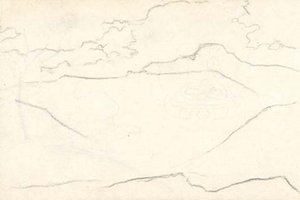
A Symphony of Clouds: Unveiling Roerich’s “Untitled” (1913)
Nicholas Roemerich's "Untitled," painted in 1913, is more than just a landscape; it’s an immersive experience, a testament to the artist’s profound connection with nature and his exploration of spiritual themes. This monochromatic work, dominated by swirling clouds and a brooding mountain range, immediately evokes a sense of vastness – a feeling that resonates deeply within the viewer, prompting contemplation on humanity's place in the face of overwhelming natural forces. The grainy texture of the photograph itself contributes to this effect, mimicking the tactile quality of charcoal or pastel, materials Roerich frequently employed to achieve his distinctive style.
Echoes of Symbolism and Early Modernism
"Untitled" firmly resides within the currents of early 20th-century Symbolism and its nascent embrace by Modernist movements. Unlike the prevailing artistic trends of realism, Roerich wasn't interested in simply depicting what he saw; instead, he sought to capture an *impression*, a feeling, a spiritual essence. The deliberate ambiguity of the composition – the indistinct mountain base, the shifting clouds – encourages individual interpretation and invites the viewer to project their own emotions and experiences onto the scene. This focus on subjective experience was revolutionary for its time, foreshadowing later developments in abstract art.
Technique and Materials: A Layered Approach
The artwork’s remarkable depth and textural richness are achieved through a masterful layering of tonal values – a technique central to Roerich's artistic practice. It is highly likely that the original piece was created using charcoal, graphite, or perhaps pastel on paper or canvas. The artist meticulously built up these tones, blending them seamlessly to create the illusion of voluminous clouds and the dense weight of the mountain range. The visible brushstrokes, or rather, the deliberate marks of the medium, contribute to the artwork’s raw energy and sense of movement. This layering technique wasn't merely a technical exercise; it was an integral part of Roerich’s philosophical approach – representing the layers of reality, the spiritual dimensions hidden beneath the surface of the material world.
Symbolism and Emotional Resonance
The subject matter itself is laden with symbolic meaning. The dramatic cloud formations, often interpreted as representations of the soul’s journey or the forces of nature, evoke feelings of awe, mystery, and perhaps even spiritual transcendence. Roerich was deeply interested in exploring themes of cosmic unity and the interconnectedness of all things – ideas that were influenced by his extensive travels and studies of ancient cultures. The ambiguous perspective further enhances this sense of wonder, suggesting a limitless horizon and inviting the viewer to contemplate the infinite possibilities beyond our immediate perception. This piece speaks to a fundamental human desire for connection with something larger than ourselves.
A Legacy of Vision
Nicholas Roerich’s “Untitled” (1913) stands as a powerful example of his artistic vision – a synthesis of meticulous technique, profound symbolism, and an unwavering commitment to exploring the spiritual dimensions of existence. Its enduring appeal lies in its ability to transport us beyond the confines of the everyday, inviting us to contemplate the beauty, mystery, and ultimately, the sublime nature of the world around us. ArtsDot offers meticulously crafted hand-painted reproductions that faithfully capture the essence of this iconic work, allowing you to experience Roerich’s vision firsthand.
Hasonló műalkotások


A művész életrajza
A Life Immersed in Art and Spirit
Nicholas Roerich, born October 9, 1874, in the vibrant cultural heart of Saint Petersburg, Russia, was a figure whose life transcended the boundaries of artistic expression. He wasn’t merely a painter; he was an archaeologist, a writer, a philosopher, and a tireless advocate for peace and cultural preservation. His upbringing, steeped in both intellectual rigor – his father was a notary public – and artistic appreciation thanks to his mother, laid the foundation for a remarkably multifaceted career. Roerich simultaneously pursued studies in law and art at St. Petersburg University and the Imperial Academy of Arts beginning in 1893, demonstrating an early commitment to a broad understanding of the world. This dual path wasn’t contradictory for him; rather, it reflected a belief that artistic vision needed grounding in historical context and intellectual discipline. He received his artist designation in 1897 and completed his law degree the following year, setting the stage for a life dedicated to both creative exploration and reasoned action.The Allure of Symbolism and Theatrical Innovation
Roerich’s artistic development was profoundly shaped by the currents of Russian Symbolism, a movement that sought to evoke emotional and spiritual depths through evocative imagery and suggestive forms. He quickly became involved with Sergei Diaghilev's influential “World of Art” society, eventually assuming its presidency from 1910 to 1916. This association proved pivotal, exposing him to a network of innovative artists, composers, and thinkers who were redefining the landscape of Russian art. His early work revealed a fascination with archaeology and stage design, leading to groundbreaking collaborations with Diaghilev’s Ballets Russes. Roerich's designs for productions like Alexander Borodin's *Prince Igor* (1909) and, most famously, Igor Stravinsky’s revolutionary *The Rite of Spring* (1913), were not simply backdrops; they were integral components of the theatrical experience. He blended meticulous historical research with a bold imaginative vision, creating visually stunning environments that amplified the emotional power of the music and choreography. These designs weren't merely decorative; they were attempts to evoke primordial forces and ancient rituals, reflecting the Symbolist interest in myth and spirituality. His work was also influenced by apocrypha and medieval sectarian writings like the Dove Book, adding layers of esoteric meaning to his artistic creations.A Journey Towards Mysticism and Himalayan Visions
As Roerich’s career progressed, his paintings underwent a significant transformation, increasingly embracing mystical and spiritual themes. This shift was fueled by his growing interest in Theosophy and Eastern religions, philosophies that emphasized the interconnectedness of all things and the pursuit of inner wisdom. His *Architectural Studies* series (1904–1905) showcased not only his architectural skill but also a deep commitment to preserving cultural heritage, foreshadowing his later advocacy for protecting art during times of conflict. Recurring motifs began to emerge in his work: majestic landscapes, ancient cities shrouded in mystery, and figures imbued with spiritual significance like St. Panteleimon and Kuan Yin. He embarked on extensive travels throughout Central Asia, conducting archaeological research and documenting ancient cultures, experiences that deeply informed his artistic vision and reinforced his belief in the importance of cultural understanding. The Himalayas became a central subject in his paintings, representing not just a geographical location but a realm of profound spiritual power and enlightenment.Key Works & Continuing Relevance
- Saint Nicholas: A detailed monochrome mural showcasing medieval art and heraldic symbolism.
- City: Evocative depictions of ancient urban landscapes, reflecting his archaeological interests.
- Lake of the Nagas: A tempera painting blending symbolism and nature, exemplifying his unique artistic vision.
A Pioneer of Cultural Preservation
Beyond his artistic achievements, Nicholas Roerich was a passionate advocate for the protection of cultural treasures. Recognizing the devastating impact of war on art and architecture, he dedicated much of his life to promoting international cooperation in safeguarding these invaluable legacies. He spearheaded the creation of the Roerich Pact in 1935 – an international treaty designed to prevent the destruction of cultural objects during armed conflicts. This initiative garnered him widespread recognition and numerous nominations for the Nobel Peace Prize, underscoring his profound humanitarianism and commitment to a world where culture is valued and protected. His tireless efforts stand as a testament to the belief that art and heritage are essential components of human civilization, deserving of our utmost care and respect.
Roerich, Nicholas
1874 - 1947 , Oroszország
A művészről röviden
- Artistic Movement Or Style: Szimbolizmus, Spirituális művészet
- Artists Or Movements Influenced By This Artist: ['Orosz szimbolizmus']
- Artists Who Influenced This Artist:
- Diaghilev
- Stasov
- Date Of Birth: 1874. okt. 9.
- Date Of Death: 1947. dec. 13.
- Full Name: Nicholas Roerich
- Nationality: Orosz
- Notable Artworks:
- Szent Miklós
- Város
- Nagas-tavaszi tó
- Place Of Birth: Szentpétervár, Oroszország
Kapcsolódó cikkek

The Bountiful Still Life: Symbolism & Artistic Representation of Fruit Across Art History
Explore the rich history of still life painting & the symbolism of fruit across art movements. Discover masterpieces from Caravaggio to Cézanne with ArtsDot – expert guidance & museum-quality reproductions.

A 10 legérzelmesebb műalkotás: Drámák a vásznon – ArtsDot.com
Fedezze fel a 10 legdrámaibb műalkotást! Munch, Rembrandt, Goya és más mesterek érzelmes festményeinek története. Klasszikus és modern művészet online – ArtsDot.com kínálatában megtalálja tökéletes faliképét. Explore the full collection online!

Cultivating Ambiance: A Curatorial Guide to Art Selection for Wine Cellars and Tasting Rooms – Enhancing Oenological Experience Through Landscape, Symbolism, and Interior Harmony
Elevate your wine cellar or tasting room with curated art! Expert guidance on landscape paintings, symbolism & lighting to enhance the oenological experience. Discover how art transforms spaces and tells your winery's story.

A Szimbolizmus 10 Mesterműve: A Lélek Rejtélyes Világa a Falakon – ArtsDot.com
Fedezze fel a Szimbolizmus 10 legikonikusabb műalkotását! Gustave Moreau, Klimt és más szimbolista festők rejtélyes világa – történetek, technikák és inspirációk. Vásároljon exkluzív art reprodukciókat otthona számára a ArtsDot.com-on!

Nicholas Roerich: Mysticism, Mountains & the Search for Ageless Wisdom in Art
Explore the captivating art of Nicholas Roerich – a visionary painter whose Himalayan landscapes blend spiritual mysticism with cultural preservation. Discover his legacy & symbolism.



