


 Megtekintés
 Küldés
 Megosztás
 Részletek
 Útmutató

 Letöltés
 Hasonló darabok
 X-ray felvétel
 Diavetítés
 Statisztika
Everest
 Acrylic
- WallArt
- Russian Symbolism
 1931
1931 30.0 x 46.0 cm
 Összes részlet megjelenítése
Kézzel készített olajfestmény reprodukció
Kézzel festett olajvastú vászon, az Ön által választott méretben és keretben, művészeink készítik meglévőre. ( Váltás nyomtatványra Áttérés digitális képre)




P118B Ft10

P118H Ft10

P118W Ft10

P438Z Ft10

P508JH Ft12

P508YH Ft12

P805H Ft10

P805Z Ft10

P919BZ Ft10

P919G Ft10

P919XJ Ft10

P959ZH Ft10

P968JZ Ft12

W106C Ft8

W218G Ft10

W218JH Ft8

W218Y Ft10

W307PJ Ft10

W316G Ft10

W316PJ Ft8

W316Y Ft10

W398PJ Ft8

W4111J Ft10

W500HY Ft15

W500JH Ft15

W692G Ft12

W849H Ft8

W940BG Ft15

W953PJ Ft8




Válasszon előre meghatározott méreteink közül, amelyek megfelelnek a műalkotás eredeti arányainak.

Írja be a kívánt szélességet és magasságot, hogy illeszkedjen a keretéhez vagy a falához. Mivel ez kézzel festett alkotás, egy eltérő formájú méret esetén a művész akár festhet is valamivel többet a kép körül, vagy korolathat is belőle — az Ön döntésének megfelelően. A festés megkezdése előtt küldünk egy digitális tervezetet jóváhagyásra. Az oldalon látható kép nem tartalmazza a végeredményt — csak a tervezet mutatja meg a valódi eredményt.
A rendelést követően a ArtsDot.com csapata e-mailt küld az ügyfélnek az instrukciókért, és biztosít egy előnézeti képet (mockup).
Világszerte elérhető szállítás () 3-4 hét alatt a szokásos 5 hét helyett. (27 október). A minőség nem kérdőjelezhető.

Ingyenes globális expressz szállítás

Prémium minőségű len vászon

Teljes körű szállítási biztosítás

Vámvisszatérítési Garancia

Hiteles színarányosság garancia

100 napos visszaküldési lehetőség (csak hibás termékek esetén)

100% pénzvisszatérítési garancia

Több darab vásárlásakor kedvezmény
 Az üvegkeretes opció csak 110 cm alatti méretben érhető el

Everest
Reprodukciós technika
Reprodukció mérete
-


Összesített ár
Ft 84906
A Symphony in Blue and Crimson: Exploring Nicholas Roerich’s Everest
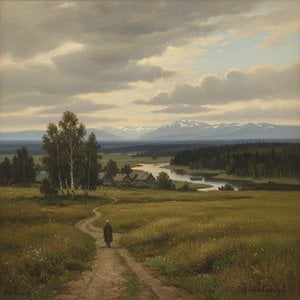
Nicholas Roerich's 'Everest,' completed in 1931, stands as a poignant emblem of Russian Symbolism—a movement that sought to transcend literal representation and delve into the realm of spiritual experience. Measuring 30 x 46 cm, this tempera on panel artwork isn’t simply a depiction of the Himalayan mountain range; it's an invitation to contemplate its grandeur and imbue it with profound meaning. The painting captures a breathtaking vista of snow-capped peaks bathed in hues of azure and scarlet—colors deliberately chosen to evoke feelings of serenity and majesty, mirroring Roerich’s unwavering belief in the interconnectedness of humanity and nature.Technique and Medium: Tempera's Enduring Legacy
Roerich skillfully employed tempera paint—a technique favored by artists throughout history—known for its luminosity and durability. Unlike oil paints which require solvents and can darken over time, tempera adheres to the surface without cracking or peeling, ensuring that ‘Everest’ retains its vibrancy and beauty for generations to come. This meticulous approach reflects Roerich's dedication to preserving his artistic vision and honoring the traditions of Russian art. The layering of thin glazes contributes to the painting’s ethereal quality, capturing the subtle nuances of light and shadow on the mountain slopes—a testament to Roerich’s mastery of color and texture.Symbolism Rooted in Eastern Philosophy
The composition itself is laden with symbolic resonance. Positioned near a body of water – likely representing the subconscious mind – the mountain range embodies resilience, aspiration, and the pursuit of spiritual enlightenment. Roerich drew heavily from Hindu and Buddhist cosmology, incorporating motifs reminiscent of sacred mountains and celestial realms into his artwork. The dominant blues symbolize tranquility, wisdom, and the boundless expanse of consciousness, while reds convey passion, vitality, and the transformative power of inner transformation. These colors aren’t merely decorative; they are conduits for conveying profound spiritual concepts.Historical Context: Roerich's Vision Amidst Artistic Movements
‘Everest’ emerged during a period of significant artistic experimentation in Russia—the Symbolist movement—which reacted against realism and championed subjective experience as paramount. Artists like Roerich sought to express inner truths rather than outward appearances, utilizing evocative imagery and symbolic language to communicate spiritual ideas. Alongside Zarathustra and Bhagavan, ‘Everest’ exemplifies Roerich's broader artistic philosophy: a harmonious blend of observation and intuition aimed at fostering understanding and reverence for the natural world. Its presence in the State Museum of Oriental Art underscores its importance as a cornerstone of Russian Symbolism and continues to inspire admiration for its beauty and depth.Emotional Resonance: A Window into Roerich’s Soul
Ultimately, ‘Everest’ transcends mere visual representation; it speaks to the viewer's emotions—inspiring contemplation on themes of perseverance, faith, and the sublime grandeur of existence. Like many of Roerich’s works, this painting invites us to reconnect with our inner selves and appreciate the profound beauty inherent in the natural world. It serves as a reminder that art can illuminate not only what we see but also what we feel—a legacy that resonates powerfully even today.Kérdések és válaszok
Megtekinthetném „Everest”, Roerich, Nicholas alkotása alkotást más megvilágítás mellett is?
A „Everest”, Roerich, Nicholas alkotása X-ray felvétel oldala egy interaktív nézegető, amely lehetővé teszi a mű alkotásának eleven optikai rétegei közötti görgetést, beleértve az röntgenszerű felvételt is.
Milyen hangulatot áraszt egy enteriőrben „Everest”, Roerich, Nicholas alkotása?
A „Everest”, Roerich, Nicholas alkotása Serene hangulatot áraszt, és egy Living Room helyiségbe ajánlott. A hangulat az az érzés, amelyet a mű közvetít a környezetében lévő tér felé.
Elérhető diaporáma a(z) „Everest”, Roerich, Nicholas alkotása alkotáshoz?
Elérhető egy diaváltó: a Diaváltás oldala a(z) „Everest”, Roerich, Nicholas alkotása alkotáshoz.
Hasonló műalkotások


A művész életrajza
A Life Immersed in Art and Spirit
Nicholas Roerich, born October 9, 1874, in the vibrant cultural heart of Saint Petersburg, Russia, was a figure whose life transcended the boundaries of artistic expression. He wasn’t merely a painter; he was an archaeologist, a writer, a philosopher, and a tireless advocate for peace and cultural preservation. His upbringing, steeped in both intellectual rigor – his father was a notary public – and artistic appreciation thanks to his mother, laid the foundation for a remarkably multifaceted career. Roerich simultaneously pursued studies in law and art at St. Petersburg University and the Imperial Academy of Arts beginning in 1893, demonstrating an early commitment to a broad understanding of the world. This dual path wasn’t contradictory for him; rather, it reflected a belief that artistic vision needed grounding in historical context and intellectual discipline. He received his artist designation in 1897 and completed his law degree the following year, setting the stage for a life dedicated to both creative exploration and reasoned action.The Allure of Symbolism and Theatrical Innovation
Roerich’s artistic development was profoundly shaped by the currents of Russian Symbolism, a movement that sought to evoke emotional and spiritual depths through evocative imagery and suggestive forms. He quickly became involved with Sergei Diaghilev's influential “World of Art” society, eventually assuming its presidency from 1910 to 1916. This association proved pivotal, exposing him to a network of innovative artists, composers, and thinkers who were redefining the landscape of Russian art. His early work revealed a fascination with archaeology and stage design, leading to groundbreaking collaborations with Diaghilev’s Ballets Russes. Roerich's designs for productions like Alexander Borodin's *Prince Igor* (1909) and, most famously, Igor Stravinsky’s revolutionary *The Rite of Spring* (1913), were not simply backdrops; they were integral components of the theatrical experience. He blended meticulous historical research with a bold imaginative vision, creating visually stunning environments that amplified the emotional power of the music and choreography. These designs weren't merely decorative; they were attempts to evoke primordial forces and ancient rituals, reflecting the Symbolist interest in myth and spirituality. His work was also influenced by apocrypha and medieval sectarian writings like the Dove Book, adding layers of esoteric meaning to his artistic creations.A Journey Towards Mysticism and Himalayan Visions
As Roerich’s career progressed, his paintings underwent a significant transformation, increasingly embracing mystical and spiritual themes. This shift was fueled by his growing interest in Theosophy and Eastern religions, philosophies that emphasized the interconnectedness of all things and the pursuit of inner wisdom. His *Architectural Studies* series (1904–1905) showcased not only his architectural skill but also a deep commitment to preserving cultural heritage, foreshadowing his later advocacy for protecting art during times of conflict. Recurring motifs began to emerge in his work: majestic landscapes, ancient cities shrouded in mystery, and figures imbued with spiritual significance like St. Panteleimon and Kuan Yin. He embarked on extensive travels throughout Central Asia, conducting archaeological research and documenting ancient cultures, experiences that deeply informed his artistic vision and reinforced his belief in the importance of cultural understanding. The Himalayas became a central subject in his paintings, representing not just a geographical location but a realm of profound spiritual power and enlightenment.Key Works & Continuing Relevance
- Saint Nicholas: A detailed monochrome mural showcasing medieval art and heraldic symbolism.
- City: Evocative depictions of ancient urban landscapes, reflecting his archaeological interests.
- Lake of the Nagas: A tempera painting blending symbolism and nature, exemplifying his unique artistic vision.
A Pioneer of Cultural Preservation
Beyond his artistic achievements, Nicholas Roerich was a passionate advocate for the protection of cultural treasures. Recognizing the devastating impact of war on art and architecture, he dedicated much of his life to promoting international cooperation in safeguarding these invaluable legacies. He spearheaded the creation of the Roerich Pact in 1935 – an international treaty designed to prevent the destruction of cultural objects during armed conflicts. This initiative garnered him widespread recognition and numerous nominations for the Nobel Peace Prize, underscoring his profound humanitarianism and commitment to a world where culture is valued and protected. His tireless efforts stand as a testament to the belief that art and heritage are essential components of human civilization, deserving of our utmost care and respect.
Roerich, Nicholas
1874 - 1947 , Oroszország
Rövid információk
- Artistic Movement Or Style: Szimbolizmus, Spirituális művészet
- Artists Or Movements Influenced By This Artist: ['Orosz szimbolizmus']
- Artists Who Influenced This Artist:
- Diaghilev
- Stasov
- Date Of Birth: 1874. okt. 9.
- Date Of Death: 1947. dec. 13.
- Full Name: Nicholas Roerich
- Nationality: Orosz
- Notable Artworks:
- Szent Miklós
- Város
- Nagas-tavaszi tó
- Place Of Birth: Szentpétervár, Oroszország
Kapcsolódó cikkek

Vasily Polenov: A Pioneer of Landscape Impressionism & Russian National Identity
Explore the captivating landscapes of Vasily Polenov, a pivotal figure in Russian art history. Discover his lyrical realism, biblical series & influence on Impressionism. Learn about the 'Knight of Beauty' and his enduring legacy.

Evocations of Place: A Historical Journey Through Landscape Art
Explore the rich history of landscape art with ArtsDot. Discover renowned artists, movements like Impressionism & Romanticism, and expert guidance for collecting timeless pieces. Find your perfect serene escape today!
Fyodor Vasilyev: A Poetic Vision of Russian Landscape – Life, Legacy, and the Transience of Nature
Explore the captivating world of Fyodor Vasilyev, a pioneering Russian landscape painter. Discover his lyrical style, influential works like 'Clouds' & lasting legacy. Learn about his life, artistic journey & impact on Russian art history.

Nicholas Roerich: Mysticism, Mountains & the Search for Ageless Wisdom in Art
Explore the captivating art of Nicholas Roerich – a visionary painter whose Himalayan landscapes blend spiritual mysticism with cultural preservation. Discover his legacy & symbolism.

A Romantikus Tájképfestészet 10 Legikonikusabb Műalkotása – ArtsDot.com
Fedezze fel a romantikus tájképfestészet 10 legikonikusabb műalkotását! Caspar David Friedrich, J.M.W. Turner és más mesterek festményeinek története – inspiráló olajfestmények otthonába. ArtsDot.com: múzeumi minőségű reprodukciók és egyedi dekorációk online.


