

 Megtekintés
 Küldés
 Megosztás
 Részletek
 Útmutató

 Letöltés
 Hasonló darabok
 X-ray felvétel
 Diavetítés
 Q&A
Q&A Statisztika
Bum-Erdeni

- 94.0 x 124.0 cm


 Összes részlet megjelenítése
Giclée / Műnyomat
Múzeumi minőségű giclée vagy vászonnyomat, gyors gyártással és rugalmas finomítási lehetőségekkel. ( Kézzel festett másolat rendelése Áttérés digitális képre)




P118B Ft10

P118H Ft10

P118W Ft10

P438Z Ft10

P508JH Ft12

P508YH Ft12

P805H Ft10

P805Z Ft10

P919BZ Ft10

P919G Ft10

P919XJ Ft10

P959ZH Ft10

P968JZ Ft12

W106C Ft8

W218G Ft10

W218JH Ft8

W218Y Ft10

W307PJ Ft10

W316G Ft10

W316PJ Ft8

W316Y Ft10

W398PJ Ft8

W4111J Ft10

W500HY Ft15

W500JH Ft15

W692G Ft12

W849H Ft8

W940BG Ft15

W953PJ Ft8




Válasszon előre meghatározott méreteink közül, amelyek megfelelnek a műalkotás eredeti arányainak.

Írja be a keretének vagy a falának megfelelő szélességet és magasságot. A nyomatot csak le lehet vágni, soha nem tehető nagyobbá, mint az eredeti kép, így egy eltérő alakú méretnél a kép egy része elveszik. Mielőtt bármit kinyatintanánk, küldünk egy digitális próbamodellt jóváhagyásra. Az oldalon látható kép nem tartalmazza a valós levágást — ezt csak a próbamodell mutatja meg.
Világszerte történő kiszállítás területére mindössze 2 hét alatt, a szokásos 4-5 hét helyett. (3 november)

Ingyenes globális expressz szállítás

Prémium minőségű len vászon

Teljes körű szállítási biztosítás

Vámvisszatérítési Garancia

Hiteles színarányosság garancia

100 napos visszaküldési lehetőség (csak hibás termékek esetén)

100% pénzvisszatérítési garancia

Több darab vásárlásakor kedvezmény
 Az üvegkeretes opció csak 110 cm alatti méretben érhető el

Bum-Erdeni
Giclée / Műnyomat
Reprodukció mérete
-


Összesített ár
Ft 20306
Nicholas Roerich’s *Bum-Erdeni*: A Battle of Spirits
Nicholas Roerich's 1947 tempera painting, *Bum-Erdeni*, is more than just a depiction of a heroic struggle; it’s a profound meditation on the eternal conflict between good and evil, rendered with the artist’s signature Symbolist intensity. Measuring 94 x 124 cm, this artwork immediately draws the viewer into a vibrant, dynamic scene – a man mounted upon a powerful steed confronts a fearsome dragon amidst a mountainous landscape teeming with life. The composition is deliberately theatrical, designed to evoke a sense of adventure and spiritual urgency, reflecting Roerich’s deep-seated belief in the interconnectedness of art, science, and human consciousness.
- Subject Matter: The central narrative revolves around a courageous warrior battling a monstrous dragon. This imagery is deeply rooted in ancient mythology and folklore, representing a universal struggle against chaos and destruction.
- Style & Technique: Executed in tempera on canvas, *Bum-Erdeni* showcases Roerich’s masterful control of color and texture. The application of paint is thick and expressive, creating a palpable sense of movement and energy. His use of vibrant hues – rich reds, blues, and golds – contributes significantly to the painting's dramatic impact.
- Historical Context: Created in 1947, the painting reflects Roerich’s evolving Symbolist style, influenced by his extensive travels and research into ancient cultures and spiritual traditions. The post-war period saw a renewed interest in mythology and symbolism as people sought meaning and hope amidst global uncertainty.
Symbolism and Spiritual Resonance
*Bum-Erdeni* is saturated with symbolic meaning, reflecting Roerich’s complex worldview. The horse and rider are potent emblems of courage, strength, and spiritual fortitude – qualities central to the artist's philosophy. Conversely, the dragon embodies chaos, destruction, and the forces that threaten human order. The surrounding mountains aren't merely a backdrop; they represent the enduring power of nature and the wisdom of ages. The inclusion of birds adds another layer of symbolism, often associated with messengers or spiritual guides. Roerich frequently incorporated these elements into his work to convey deeper philosophical ideas about the relationship between humanity and the cosmos.
- The Horse & Rider: Representing bravery, nobility, and a connection to primal forces.
- The Dragon: Symbolizing destructive chaos, temptation, and the need for spiritual vigilance.
- Mountains: Representing stability, wisdom, and the enduring presence of nature’s power.
Emotional Impact & Artistic Legacy
Roerich's *Bum-Erdeni* possesses a captivating emotional resonance that continues to engage viewers today. The painting’s dynamic composition, coupled with its rich symbolism, invites contemplation on themes of heroism, faith, and the ongoing battle within ourselves. It is a testament to Roerich’s artistic vision and his profound belief in the power of art to inspire spiritual growth. This piece exemplifies Roerich's dedication to exploring universal human experiences through a distinctly Symbolist lens, solidifying his place as one of the 20th century’s most significant artists.
Size:** 94 x 124 cm Date:** 1947Kérdések és válaszok
Milyen hangulatot árasztana egy szobában egy „Bum-Erdeni”, Roerich, Nicholas alkotása reprodukció?
A Mystical hangulatával a "Bum-Erdeni" című alkotás egy Living Room helyiségbe is javasolt.
Hol vásárolható „Bum-Erdeni”, Roerich, Nicholas alkotása képmű kézzel festett másolata?
A „Bum-Erdeni”, Roerich, Nicholas alkotása kézzel festett másolataival a ez a weboldal oldalon találkozhat, kézzel festett olajfesték reprodukció lino vászonon formában, melyet a(z) Kézzel festett másolat oldalon lehet megrendelni.
Milyen stílusba tartozik a "Bum-Erdeni"?
A „Bum-Erdeni”, Roerich, Nicholas alkotása a Symbolism painting irányzat része. Ez az irányzat adja a mű stilisztikai kontextusát.
Hasonló műalkotások


A művész életrajza
A Life Immersed in Art and Spirit
Nicholas Roerich, born October 9, 1874, in the vibrant cultural heart of Saint Petersburg, Russia, was a figure whose life transcended the boundaries of artistic expression. He wasn’t merely a painter; he was an archaeologist, a writer, a philosopher, and a tireless advocate for peace and cultural preservation. His upbringing, steeped in both intellectual rigor – his father was a notary public – and artistic appreciation thanks to his mother, laid the foundation for a remarkably multifaceted career. Roerich simultaneously pursued studies in law and art at St. Petersburg University and the Imperial Academy of Arts beginning in 1893, demonstrating an early commitment to a broad understanding of the world. This dual path wasn’t contradictory for him; rather, it reflected a belief that artistic vision needed grounding in historical context and intellectual discipline. He received his artist designation in 1897 and completed his law degree the following year, setting the stage for a life dedicated to both creative exploration and reasoned action.The Allure of Symbolism and Theatrical Innovation
Roerich’s artistic development was profoundly shaped by the currents of Russian Symbolism, a movement that sought to evoke emotional and spiritual depths through evocative imagery and suggestive forms. He quickly became involved with Sergei Diaghilev's influential “World of Art” society, eventually assuming its presidency from 1910 to 1916. This association proved pivotal, exposing him to a network of innovative artists, composers, and thinkers who were redefining the landscape of Russian art. His early work revealed a fascination with archaeology and stage design, leading to groundbreaking collaborations with Diaghilev’s Ballets Russes. Roerich's designs for productions like Alexander Borodin's *Prince Igor* (1909) and, most famously, Igor Stravinsky’s revolutionary *The Rite of Spring* (1913), were not simply backdrops; they were integral components of the theatrical experience. He blended meticulous historical research with a bold imaginative vision, creating visually stunning environments that amplified the emotional power of the music and choreography. These designs weren't merely decorative; they were attempts to evoke primordial forces and ancient rituals, reflecting the Symbolist interest in myth and spirituality. His work was also influenced by apocrypha and medieval sectarian writings like the Dove Book, adding layers of esoteric meaning to his artistic creations.A Journey Towards Mysticism and Himalayan Visions
As Roerich’s career progressed, his paintings underwent a significant transformation, increasingly embracing mystical and spiritual themes. This shift was fueled by his growing interest in Theosophy and Eastern religions, philosophies that emphasized the interconnectedness of all things and the pursuit of inner wisdom. His *Architectural Studies* series (1904–1905) showcased not only his architectural skill but also a deep commitment to preserving cultural heritage, foreshadowing his later advocacy for protecting art during times of conflict. Recurring motifs began to emerge in his work: majestic landscapes, ancient cities shrouded in mystery, and figures imbued with spiritual significance like St. Panteleimon and Kuan Yin. He embarked on extensive travels throughout Central Asia, conducting archaeological research and documenting ancient cultures, experiences that deeply informed his artistic vision and reinforced his belief in the importance of cultural understanding. The Himalayas became a central subject in his paintings, representing not just a geographical location but a realm of profound spiritual power and enlightenment.Key Works & Continuing Relevance
- Saint Nicholas: A detailed monochrome mural showcasing medieval art and heraldic symbolism.
- City: Evocative depictions of ancient urban landscapes, reflecting his archaeological interests.
- Lake of the Nagas: A tempera painting blending symbolism and nature, exemplifying his unique artistic vision.
A Pioneer of Cultural Preservation
Beyond his artistic achievements, Nicholas Roerich was a passionate advocate for the protection of cultural treasures. Recognizing the devastating impact of war on art and architecture, he dedicated much of his life to promoting international cooperation in safeguarding these invaluable legacies. He spearheaded the creation of the Roerich Pact in 1935 – an international treaty designed to prevent the destruction of cultural objects during armed conflicts. This initiative garnered him widespread recognition and numerous nominations for the Nobel Peace Prize, underscoring his profound humanitarianism and commitment to a world where culture is valued and protected. His tireless efforts stand as a testament to the belief that art and heritage are essential components of human civilization, deserving of our utmost care and respect.
Roerich, Nicholas
1874 - 1947 , Oroszország
Rövid információk
- Artistic Movement Or Style: Szimbolizmus, Spirituális művészet
- Artists Or Movements Influenced By This Artist: ['Orosz szimbolizmus']
- Artists Who Influenced This Artist:
- Diaghilev
- Stasov
- Date Of Birth: 1874. okt. 9.
- Date Of Death: 1947. dec. 13.
- Full Name: Nicholas Roerich
- Nationality: Orosz
- Notable Artworks:
- Szent Miklós
- Város
- Nagas-tavaszi tó
- Place Of Birth: Szentpétervár, Oroszország
Kapcsolódó cikkek

Giclée Prints: Archival Quality & Aesthetic Nuances for the Discerning Collector
Explore the world of giclée prints with ArtsDot. Learn about archival quality, aesthetic nuances & investment potential. Expert guidance for discerning art collectors seeking museum-quality reproductions and lasting value.

Echoes of Time: Exploring the Enduring Appeal & Historical Context of Vintage Art Prints
Explore the captivating world of vintage art prints! Discover their history, collecting tips & enduring appeal. Expert insights on chromolithography and building a legacy collection with ArtsDot.
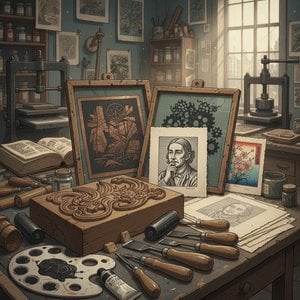
The Enduring Legacy of Printmaking: Techniques, Themes & Artistic Innovation Across Centuries
Explore the rich history of printmaking with ArtsDot. Discover techniques from intaglio to lithography, learn about collecting valuable prints & find museum-quality reproductions. Expert insights for art enthusiasts and collectors.

Nicholas Roerich: Mysticism, Mountains & the Search for Ageless Wisdom in Art
Explore the captivating art of Nicholas Roerich – a visionary painter whose Himalayan landscapes blend spiritual mysticism with cultural preservation. Discover his legacy & symbolism.

The Enduring Legacy of Fine Art Prints: Technique, History & Aesthetic Impact
Explore the rich history & techniques of fine art prints. Discover investment potential, assess authenticity, and learn how to preserve your collection with expert guidance. Trusted insights for discerning collectors.


