


The picture follows your choices: , .
A gyűjtemény leírása
Explore Mark Rothko’s ‘Entombment II,’ a textured abstract masterpiece of grey & brown hues. A pivotal Abstract Expressionist work, rich in layered impasto and emotional depth.
 Összes részlet megjelenítése
A művész életrajza
Fedezd fel Mark Rothko ikonikus Color Field festményeit és az absztrakt ekspresszionizmus új dimenzióját! Mély érzelmekkel és egyeteműséggel tarkított művészi örökségét ismerd meg!
Kézzel készített olajfestmény reprodukció
Kézzel festett olajvastú vászon, az Ön által választott méretben és keretben, művészeink készítik meglévőre. ( Váltás nyomtatványra Áttérés digitális képre)
Ez a műalkotás szerzői jogi védelem alatt áll
Az ezen az oldalon megjelenített műalkotások szerzői jogi védelem alatt állnak, ami azt jelenti, hogy törvényileg nem készíthetünk és nem adhatunk el belőlük pontos másolatokat. Ez a védelem olyan nemzetközi megállapodások alapján érvényesül, mint például a Berni Egyezmény és a nemzeti jogszabályok által, beleértve azokat is, amelyeket meghatározott Az USA szerzői jogi törvénye – 17. cím.
Mint tiszteletes és törvényes alternatívát, olyan egyedi, kézzel festett alkotásokat kínálunk, amelyek az eredetiből merítnek inspirációt. Tapasztalt és professzionális művészeink alaposan tanulmányozzák az eredeti stílusát, hangulatát és művészeti esszenciáját, hogy egy olyan új, egyedi alkotást hozzunk létre, amely ugyanazt az érzést kelti – miközben önálló, eredeti alkotásként létezik.
Ez a módszer teljes mértékben megfelel a szerzői jogi szabályozásnak, mivel nem tartalmazza a védett műalkotás másolását vagy duplikálását. Ehelyett ez egy kreatív újinterpretáció – egy új festmény, amely az eredetivel való összefüggései miatt hatással van rá, de nem az az.
More about this painting
 Megtekintés
 Küldés
 Megosztás
 Részletek
 Útmutató

 Letöltés
 Hasonló darabok
 X-ray felvétel
 Diavetítés
 Q&A
Q&A Statisztika
Order your painting in four simple steps
Take your time. You can change any answer; the price in your order card follows each choice.
1 Step one of four
Which size would you like?
These sizes keep the proportions of the original painting. The drawing shows your choice on a wall, above a two-metre sofa.
Or give your own measurements
Válasszon előre meghatározott méreteink közül, amelyek megfelelnek a műalkotás eredeti arányainak.

Írja be a kívánt szélességet és magasságot, hogy illeszkedjen a keretéhez vagy a falához. Mivel ez kézzel festett alkotás, egy eltérő formájú méret esetén a művész akár festhet is valamivel többet a kép körül, vagy korolathat is belőle — az Ön döntésének megfelelően. A festés megkezdése előtt küldünk egy digitális tervezetet jóváhagyásra. Az oldalon látható kép nem tartalmazza a végeredményt — csak a tervezet mutatja meg a valódi eredményt.
2 Step two of four
How should it be prepared: rolled, stretched or framed?
The prices below are for the size you chose in step one.
Choose the edges of the stretched canvas
Choose your frame

White Ft1

Blurside Ft1

Extended Ft1

P118B Ft10

P118H Ft10

P118W Ft10

P438Z Ft10

P508JH Ft12

P508YH Ft12

P805H Ft10

P805Z Ft10

P919BZ Ft10

P919G Ft10

P919XJ Ft10

P959ZH Ft10

P968JZ Ft12

W106C Ft8

W218G Ft10

W218JH Ft8

W218Y Ft10

W307PJ Ft10

W316G Ft10

W316PJ Ft8

W316Y Ft10

W398PJ Ft8

W4111J Ft10

W500HY Ft15

W500JH Ft15

W692G Ft12

W849H Ft8

W940BG Ft15

W953PJ Ft8

H24-GOLD Ft30

H24-SILVER Ft30

H36-GOLD Ft45

H36-SILVER Ft45
Keretezett
Moulding: . Overall size with the frame: .
3 Step three of four
Would you like anything changed in the painting?
Most people answer no. Because each painting is made by hand, our artist can also adapt it for you.
After order, ArtsDot.com team will email client for instructions and provide a mockup preview
4 Step four of four
A few finishing options
All of them are optional. The answers already selected cost nothing extra.
Who paints it?
Világszerte elérhető szállítás () 3-4 hét alatt a szokásos 5 hét helyett. (29 október). A minőség nem kérdőjelezhető.
A nameplate, as in a museum?
A gravírozott bronztábla részletei
This elegant plaque features the artist's name and the title of the artwork, finely engraved for a timeless presentation.
It is made from bronze with a refined, elegant finish. The text is precisely laser-engraved for a sharp and permanent result. Measuring 9x2 cm, the plaque is compact yet easy to read. It's built to be durable and scratch-resistant, offering a professional, museum-quality look. Mounting is simple thanks to the included adhesive backing.
Átlátszó akril tábla részletei
The plaque includes essential engraved details such as the artist's name, the title of the artwork, the date it was created, the type of media used-like oil on canvas or watercolor-a brief description of the piece, and a QR code that links to the complete artwork information.
It is crafted from clear acrylic, offering a sleek, modern appearance. The text is UV-engraved in black to ensure strong visual contrast. With a size of 10x15 cm, it ensures optimal readability. It comes equipped with two metal hooks for secure wall mounting. The plaque is designed to be weather-resistant, making it suitable for various environments, and it includes interactive features that work seamlessly with smartphone scanning.
Fekete akril tábla részletei
This elegant plaque includes engraved information such as the artist's name, the title of the artwork, the date it was created, the type of media used (like oil on canvas or watercolor), a short description of the artwork, and a QR code for quick access to more information.
The plaque itself is made from refined black acrylic with a premium finish. The text is laser-engraved in white for high contrast and readability. Its size is 10x15 cm, designed to be easy to read. It comes with two metal hooks for professional mounting. The design is sleek and fits any interior style. It is also weather-resistant and durable, with built-in digital integration for mobile compatibility.
A protective varnish?
When do you need it?
✓ Check and order
Your painting, as you ordered it

Entombment II
Reprodukciós technika
Reprodukció mérete
-

Kiváló mesterművész
Nagyobb részletesség, finomság és bővített gyártási idő
-

Reprodukció keretezése
-
-
A bármely oldalsó méretét túlszálaló 105 cm (kb. 41 hüvelyk) meghaladó műalkotások vagy reprodukciók esetében a keret összeszerelhető készletként, szétszerelve kerül szállításra. Ez a módszer biztosítja a biztonságos szállítást, és megakadályozza a szállítás során fellépő sérüléseket.
Szakmész összeszerelést igényel – ez nem DIY (önösszeszerelhető) termék.
A készletet egy tapasztalt keretező szakembernek kell összeszerelnie és a vásznat feszítenie kell, fa ragasztó (nem tartalmazza a csomag), vásznfeszítő fogó és szorítók használatával, amelyek a ragasztó száradásáig a keretrészeket egymáshoz vuôngjba tartják. A helytelen összeszerelés vagy a nem egyenletes vásznfeszítés maradandó károsíthatja a műalkotást, és ez nem része a garanciánknak.
 A bármely oldalsó méretét túlszálaló 105 cm (kb. 41 hüvelyk) meghaladó műalkotások vagy reprodukciók esetében a keret összeszerelhető készletként, szétszerelve kerül szállításra. Ez a módszer biztosítja a biztonságos szállítást, és megakadályozza a szállítás során fellépő sérüléseket.
A készlet tartalmazza az összes tömörfa rudat, pontosan méretre vágva.
A mellékelt csavarokkal, valamint a sarokszerekhez szükséges faütő ragasztóval kell összeszerelnie (ez nem tartalmazható a csomagban), így a keretrendezőnek külön kell beszereznie.
A csomag nem tartalmazza a szükséges professzionális eszközöket: egy vászonfeszítőt és klipseket a rácsok vízszintes tartásához a ragasztó megszáradásáig.
Fontos:
A sarokcsatlakozásokhoz fánylagra van szükség, a keretrudakat szorítókapcsokkal kell rögzíteni, amíg a rag teljesen meg nem szárad, a kész keretre feszített vászonhoz pedig vászonfeszítő fogat szükséges. Ezek egyike sem található meg a készletben. Kérjük, rendelés előtt győződjön meg róla, hogy rendelkezik tapasztalt keretező szakemberrel.

Névtábla
-
-

Védőréteg (Lakk)
Fényes lakk (intenzívabb színek, védelem a fény és a nedvesség hatása ellen)
-

Műalkotásom egyedi igényre szabása
Példák a módosíthatóságra: az arc kicserélése az ügyfél fotójára; háziállat hozzáadása (pl. macska helyett kutya); rejtett üzenet elhelyezése a háttérben; a háttér tájainak vagy elemeinek megváltoztatása.
-

Sürgős
Világszerte szóló szállítás () mindössze 3-4 hét alatt, a szokásos 5 hét helyett. (29 október). A minőség nem kérdőjelezhető.
-
Express szállítás
Világszerte elérhető szállítás területre 5 héten belül. (5 november).
A szállítás díja tartalmazza
Összesített ár
Ft 84973
Az üvegkeretes opció csak 110 cm alatti méretben érhető el
Included with every order
- Ingyenes globális expressz szállítás
- Prémium minőségű len vászon
- Teljes körű szállítási biztosítás
- Vámvisszatérítési Garancia
- Hiteles színarányosság garancia
- 100 napos visszaküldési lehetőség (csak hibás termékek esetén)
- 100% pénzvisszatérítési garancia
- Több darab vásárlásakor kedvezmény


A Descent into Grey and Shadow: Unpacking the Power of Rothko’s Entombment II
Mark Rothko's Entombment II isn’t a painting that immediately shouts for attention. It doesn’t demand to be deciphered with a quick glance. Instead, it invites a prolonged engagement, a quiet contemplation born from the sheer density of texture and the profound emotional weight held within its muted palette. Created between 1964 and 1970, during a period when Rothko was deeply invested in creating spaces for reflection and spiritual experience – most notably at the Rothko Chapel in Houston – this work embodies his signature style: vast fields of color stacked upon one another, layered with an almost sculptural quality. The dominant hues are shades of grey and brown, punctuated by a subtle, ethereal blue that seems to emerge from the depths of the composition. It’s a world stripped bare of representational imagery, reduced to its most elemental components – color, texture, and form—a deliberate move away from the more overtly expressive gestures of his earlier Abstract Expressionist peers.
The painting's surface is a chaotic yet meticulously controlled landscape. Thick impasto strokes build up layers upon layers, creating an intensely tactile experience. Scratches and scrapes deliberately disrupt the smooth expanse of paint, adding to the sense of unease and fragmentation. These aren’t random marks; they are integral to Rothko’s process, acting as a way to both control and release energy within the canvas. The composition itself is deliberately flattened, eschewing traditional perspective in favor of a spatial ambiguity that draws the viewer inward. Lines, though not sharply defined, intersect and overlap, creating a dynamic tension that suggests movement and instability. It's a deliberate rejection of clarity, mirroring perhaps the artist’s own internal struggles with mortality and existential questions.
The Roots of Discomfort: Rothko’s Early Life and Artistic Vision
To truly appreciate Entombment II, it’s crucial to understand the context of Mark Rothko's life. Born Markus Yakovlevich Rothkowitz in Dvinsk (now Daugavpils), Latvia, in 1903, his early years were marked by a profound sense of displacement and anxiety. His family, Jewish immigrants fleeing persecution in the Russian Empire, faced constant challenges – poverty, discrimination, and the ever-present threat of violence. This formative experience instilled within him a deep sensitivity to human suffering, a theme that would become a recurring motif throughout his oeuvre. The loss of his father early in life, coupled with the difficulties of assimilation in America, fueled a lifelong exploration of themes like mortality, trauma, and the search for meaning – questions that resonate powerfully within this painting. Rothko’s artistic journey was thus deeply intertwined with his personal history, shaped by a profound awareness of the fragility of human existence.
Color as Emotion: Decoding the Symbolism
While Rothko famously resisted definitive interpretations of his work, it's clear that color played a central role in conveying emotion and spiritual experience. The dominant grey and brown tones evoke feelings of melancholy, loss, and perhaps even grief – echoes of his own childhood experiences. However, the subtle blue element introduces an element of hope or transcendence, suggesting a potential for solace amidst the darkness. The rectangular forms themselves are not meant to be easily defined; they’re more akin to emotional zones, areas of feeling rather than concrete objects. Some art historians suggest that these shapes represent tombs, referencing the painting's title and hinting at themes of death and resurrection. The layering of colors creates a sense of depth and complexity, inviting the viewer to lose themselves within the painting’s immersive atmosphere.
A Legacy of Quiet Intensity: Rothko’s Enduring Impact
Mark Rothko's work continues to captivate audiences with its raw emotional power and deceptively simple forms. Entombment II stands as a testament to his unique approach to abstraction, prioritizing feeling over representation. Its enduring appeal lies in its ability to evoke a profound sense of introspection, prompting viewers to confront their own anxieties and contemplate the mysteries of existence. Reproductions of this piece offer a remarkable opportunity to experience Rothko’s vision firsthand, bringing the intensity of his studio into your space. Consider commissioning a hand-painted reproduction from ArtsDot.com to bring this powerful work into your home or office – a tangible reminder of the enduring legacy of one of modern art's most enigmatic and influential figures.
Kérdések és válaszok
Milyen témát és hangulatot ötvöz a „Entombment II”, Mark Rothko alkotása?
A "Entombment II" című alkotás abstract, texture, layers, fragmentation, unease, machine, gray tones, depth témákat ábrázol, hangulata pedig Dramatic.
Hol vásárolhatok egy nyomtatványt a(z) „Entombment II”, Mark Rothko alkotása alkotásból?
A „Entombment II”, Mark Rothko alkotása nyomata közvetlenül a következő oldalon rendelhető meg: Művészeti nyomtatvány: minőségi giclée nyomat pamutvászonon vagy archiváló vászonpapíron.
Milyen érzelmi hangulatot áraszt a „Entombment II”, Mark Rothko alkotása?
A „Entombment II”, Mark Rothko alkotása művészeti alkotás érzelmi tónusa Melancholic. Ez foglalja össze a mű által kifejezett érzést.
Hasonló műalkotások


Mark Rothko
1903 - 1970, Lettország
A művész életrajza
Korai Évek és a Művészi Látás Magvai
Mark Rothko, eredeti nevén Markus Yakovlevich Rothkowitz 1903-ban született Dvinszkben (ma Daugavpils, Lettország), egy olyan érzéssel tele, amely mélyen formálta művészeti útját. Gyermekéveit a zsidó családok bizonytalansága jellemezte, melyekre a Települési Sáv árnyékai vetődtek, pogromokkal és politikai nyugtalanságokkal terhelve. Ez a légkör mély együttérzést ébresztett benne az emberi szenvedéssel szemben, egy olyan témával, amely egész életművén végigvonult. Az 1913-as Portlandbe (Oregon) való kivándorlás nem csupán földrajzi változást jelentett Rothkó számára, hanem kulturális felfordulást is. Apja, egy szocialista gondolkodású gyógyszerész, otthont teremtett a viták és a tanulásnak, azonban Jacob Rothkowitz halála rövid idővel megérkezésük után mély árnyékot vetett rájuk. Ez a korai veszteségélmény, valamint az asszimiláció kihívásai élethosszig tartó létezési kérdések feltárásához vezetett – a halandóság, a trauma és a kaotikus világban való értelmes kereséshez. Bár kiemelkedő tanulmányi eredményeket ért el Yale Egyetemen, Rothko inkább New York City vibráló energiájába vonzódott, feladva formális tanulmányait, hogy szenvedélyét kövesse a Art Students League-ben. Ezek az alakuló évek vetették meg annak a művészi látásnak az alapjait, amely végül kihívást jelentett a festészet hagyományos fogalmaival és átformálta a szín érzelmi erejét.Figuratív Kezdetei és Az Absztrakt Expresszionizmushoz Való Út
Rothko korai művészi kísérletei szilárdan gyökereztek a realizmusban, városi jeleneteket és portrékat ábrázolva éles szemmel a részletek iránt. Ezek a korai alkotások azonban már sejtették azt a pszichológiai mélységet, amely később védjegyévé vált. A 1940-es években, ahogy a világ küzdött a második világháború borzalmaival, Rothko művészete drámai átalakuláson ment keresztül. A szürrealizmus és a mitológia hatására elmozdult az ábrázolásos képektől, és inkább egyetemes emberi érzelmek kifejezésére törekedett szimbolikus formákon keresztül. Ebben az időszakban jelentek meg többformás festményei – vásznakon elhelyezkedő homályos, biomorf alakzatok, amelyek a figuráció és az absztrakció között lebegtek. Ezek a művek nem csupán formai kísérletek voltak; mélyen átélt válaszok a háborús világ bizonytalanságára és szorongásaira. Az 1940-es évek végére Rothko megérkezett sajátos stílusához: nagyméretű vásznakra festett, egymással rezonáló téglalap alakú színtömbökkel. Minden felismerhető ábrázolástól megszabadult, és a szín és forma tiszta érzelmi hatására koncentrált. Ez jelentős pillanatot jelzett az Absztrakt Expresszionizmus fejlődésében, és Rothkót ennek a forradalmi mozgalomnak vezető alakjává tette.A Színmezők és a Transzcendencia Törekedése
Rothko érett munkáit definiálja az úgynevezett "Színmező" festészet – hatalmas, ragyogó színekkel borított területek, amelyek magukba foglalják a nézőt. Ezek a festmények nem arról szólnak, *mit* ábrázolnak, hanem *hogyan* éreztetik magukat. Rothko hitt abban, hogy a művészetnek érzelmileg kell elköteleznie a nézőt, megkerülve az intellektuális elemzést és közvetlenül a szívhez szólva. Aprólékosan rétegezett vékony festésrétegeket használt, finom árnyalatbeli változásokat hozva létre, amelyek belülről látszottak sugárzani a vászonból. Téglalap alakú formáinak szélei gyakran elmosódottak, lehetővé téve, hogy keveredjenek és kölcsönhatásba lépjenek egymással, mélység- és mozgásérzetet keltve. Rothko szándékosan kerülte a számokon túli címeket – "No. 1", "No. 6" – bátorítva a nézőket, hogy előítéletek nélkül álljanak szembe a festményekkel, és saját érzelmi reakcióik vezessenek. Egy kontempláció terét akart teremteni, egy szent helyet, ahol a nézők kapcsolatba léphetnek valami nagyobb dologgal. Ambíciója nem kevesebb volt, mint mély spirituális élmények kiváltása a szín nyelvén keresztül.Főbb Eredményei és Tartós Öröksége
Rothko legjelentősebb alkotásai közé tartozik a "No. 10 (1950)", egy kulcsfontosságú munka, amely illusztrálja fejlődő stílusát, valamint a Seagram Murals (1958). A New York City Four Seasons éttermébe rendelt falműveket végül Rothko elutasította, mivel úgy érezte, hogy a tervezett környezet kompromittálná őket. Ehelyett adományozta azokat a Tate Gallerynek Londonban, ahol ma is csodálatot és elmélkedést váltanak ki. Talán legambiciózusabb projektje a Rothko Chapel (1971) Houstonban, Texasban – egy nem felekezetű szentély tizennégy festményével. Csendes elmélkedés helyeként megtervezett kápolnát sokan szent helynek tekintik, megtestesítve Rothko hitét a művészet spirituális erejében. Rothko utókorra gyakorolt hatása hatalmas volt. Útja nyitotta meg az utat a Minimalista művészet számára, és továbbra is inspirálja a kortárs festőket, akik felfedezik az absztrakció érzelmi lehetőségeit. Bár élete során depresszióval küzdött, ami 1970-ben tragikus öngyilkosságához vezetett, Mark Rothko máig az egyik legfontosabb és legbefolyásosabb művész a 20. században – egy színmester, akinek munkássága továbbra is rezonál a világ közönségével.A Mély Érzelmi Rezonancia Tartós Ereje
- Rothko festményeit ünneplik azért, hogy képesek az emberi érzelmek univerzális skáláját közvetíteni – tragédiát, extázist, kétségbeesést és reményt.
- A szín kifejezésének eszközeként való felfedezése forradalmasította az absztrakt festészetet.
- A Rothko Chapel tanúbizonyság a művészet spirituális erejébe vetett hitének.
- Továbbra is kulcsfontosságú alakja az Absztrakt Expresszionizmusnak és jelentős hatással van a kortárs művészekre.


Kapcsolódó cikkek
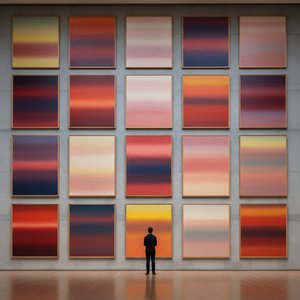
Mark Rothko 25 Mesterműve: Érzelmek és Színek a Modern Művészetben | ArtsDot
Fedezze fel Mark Rothko 25 legikonikusabb művét! Ismerje meg az absztrakt expresszionizmus mesterének érzelmi világát, színeit és technikáit. Múzeumi minőségű reprodukciók a ArtsDot-on – inspirálja otthonát egyedi faliképekkel! Explore the full collection online.

The Sublimity of Color: Exploring the Emotional Landscapes of Mark Rothko's Abstract Expressionism
Explore the profound emotional depth of Mark Rothko's abstract expressionism. Discover the history, techniques & lasting impact of this pivotal Color Field painter. Expert insights for collectors and art enthusiasts.

Beyond Representation: Exploring the Emotional Landscape of Abstract Expressionism
Explore the profound emotional world of Abstract Expressionism with ArtsDot. Discover key artists like Pollock & Rothko, learn about collecting, and find museum-quality reproductions to inspire your space.