

- 42.0 x 37.0 cm


A kép az Ön választásai alapján készült: , .
A gyűjtemény leírása
Lucas Cranach the Elder, born in Kronach, Germany around 1472, stands as a pivotal figure of the German Renaissance. His life unfolded during a period of immense religious and political upheaval, and his art became inextricably linked to both the burgeoning Protestant Reformation and the opulent courts he served.
 Összes részlet megjelenítése
A művész életrajza
Fedezze fel Lucas Cranach időközépkori német festőjét! Kiemelkedett portréiban, a reformáció művészetében és mitológiai képeiben. Egy igazi mesterművész!
Kézzel készített olajfestmény reprodukció
Kézzel festett olajvastú vászon, az Ön által választott méretben és keretben, művészeink készítik meglévőre. ( Váltás nyomtatványra Áttérés digitális képre)
Több információ erről a festményről
 Megtekintés
 Küldés
 Megosztás
 Részletek
 Útmutató

 Letöltés
 Hasonló darabok
 X-ray felvétel
 Diavetítés
 Kérdések és válaszok
 Statisztika
Rendelje meg festményét négy egyszerű lépésben
Ne siessen! Bármely választ módosítható; az rendelési összesítőben megjelenő ár minden egyes döntésre reagál.
1 Az első lépés négyből
Melyik méretet szeretné?
Ezek a méretek megőrzik az eredeti festmény arányait. A rajz bemutatja a választott méretet egy falon, egy kétszáz centiméteres kanapé felett.
Vagy adja meg a saját méreteit
Válasszon előre meghatározott méreteink közül, amelyek megfelelnek a műalkotás eredeti arányainak.

Írja be a kívánt szélességet és magasságot, hogy illeszkedjen a keretéhez vagy a falához. Mivel ez kézzel festett alkotás, egy eltérő formájú méret esetén a művész akár festhet is valamivel többet a kép körül, vagy korolathat is belőle — az Ön döntésének megfelelően. A festés megkezdése előtt küldünk egy digitális tervezetet jóváhagyásra. Az oldalon látható kép nem tartalmazza a végeredményt — csak a tervezet mutatja meg a valódi eredményt.
2 A négy lépésből a második
Hogyan kívánja előkészíteni: feltekercselve, vászonra feszítve vagy keretezve?
Az alábbi árak az első lépésben választott méretre vonatkoznak.
Válaszd ki a feszített vászon széleit
Válassza ki a keretet

Fehér Ft1

Elmosódott szélek Ft1

Kiterjesztett Ft1

P118B Ft10

P118H Ft10

P118W Ft10

P438Z Ft10

P508JH Ft12

P508YH Ft12

P805H Ft10

P805Z Ft10

P919BZ Ft10

P919G Ft10

P919XJ Ft10

P959ZH Ft10

P968JZ Ft12

W106C Ft8

W218G Ft10

W218JH Ft8

W218Y Ft10

W307PJ Ft10

W316G Ft10

W316PJ Ft8

W316Y Ft10

W398PJ Ft8

W4111J Ft10

W500HY Ft15

W500JH Ft15

W692G Ft12

W849H Ft8

W940BG Ft15

W953PJ Ft8

H24-GOLD Ft30

H24-SILVER Ft30

H36-GOLD Ft45

H36-SILVER Ft45
Keretezett
Keretprofil: . A kerettel együtt vett teljes méret: .
3 A négy lépésből a harmadik
Szeretne változtatni valamit a festményen?
A legtöbb ember nemet mond erre. Mivel minden festmény kézzel készül, művészünk képes az Ön igényei szerint is átalakítani azt.
A megrendelést követően a ArtsDot.com csapat e-mailt küld a vásárlónak az instrukciókkal, és biztosítja a tervezeti előnézetet
4 A négy lépés közül a negyedik
Néhány felületfinisz
Mindegyik opcionális. A már kiválasztott válaszok nem jelentnek plusz költséget.
Ki festette?
Világszerte elérhető szállítás () 3-4 hét alatt a szokásos 5 hét helyett. (6 november). A minőség nem kérdőjelezhető.
Egy felirat, mint egy múzeumban?
A gravírozott bronztábla részletei
This elegant plaque features the artist's name and the title of the artwork, finely engraved for a timeless presentation.
It is made from bronze with a refined, elegant finish. The text is precisely laser-engraved for a sharp and permanent result. Measuring 9x2 cm, the plaque is compact yet easy to read. It's built to be durable and scratch-resistant, offering a professional, museum-quality look. Mounting is simple thanks to the included adhesive backing.
Átlátszó akril tábla részletei
The plaque includes essential engraved details such as the artist's name, the title of the artwork, the date it was created, the type of media used-like oil on canvas or watercolor-a brief description of the piece, and a QR code that links to the complete artwork information.
It is crafted from clear acrylic, offering a sleek, modern appearance. The text is UV-engraved in black to ensure strong visual contrast. With a size of 10x15 cm, it ensures optimal readability. It comes equipped with two metal hooks for secure wall mounting. The plaque is designed to be weather-resistant, making it suitable for various environments, and it includes interactive features that work seamlessly with smartphone scanning.
Fekete akril tábla részletei
This elegant plaque includes engraved information such as the artist's name, the title of the artwork, the date it was created, the type of media used (like oil on canvas or watercolor), a short description of the artwork, and a QR code for quick access to more information.
The plaque itself is made from refined black acrylic with a premium finish. The text is laser-engraved in white for high contrast and readability. Its size is 10x15 cm, designed to be easy to read. It comes with two metal hooks for professional mounting. The design is sleek and fits any interior style. It is also weather-resistant and durable, with built-in digital integration for mobile compatibility.
Egy védőréteg?
Mikor lenne szüksége rá?
✓ Ellenőrizés és rendelés
Az Ön által megrendelt festmény

Lucretia
Reprodukciós technika
Reprodukció mérete
-

Kiváló mesterművész
Nagyobb részletesség, finomság és bővített gyártási idő
-

Reprodukció keretezése
-
-
A bármely oldalsó méretét túlszálaló 105 cm (kb. 41 hüvelyk) meghaladó műalkotások vagy reprodukciók esetében a keret összeszerelhető készletként, szétszerelve kerül szállításra. Ez a módszer biztosítja a biztonságos szállítást, és megakadályozza a szállítás során fellépő sérüléseket.
Szakmész összeszerelést igényel – ez nem DIY (önösszeszerelhető) termék.
A készletet egy tapasztalt keretező szakembernek kell összeszerelnie és a vásznat feszítenie kell, fa ragasztó (nem tartalmazza a csomag), vásznfeszítő fogó és szorítók használatával, amelyek a ragasztó száradásáig a keretrészeket egymáshoz vuôngjba tartják. A helytelen összeszerelés vagy a nem egyenletes vásznfeszítés maradandó károsíthatja a műalkotást, és ez nem része a garanciánknak.
 A bármely oldalsó méretét túlszálaló 105 cm (kb. 41 hüvelyk) meghaladó műalkotások vagy reprodukciók esetében a keret összeszerelhető készletként, szétszerelve kerül szállításra. Ez a módszer biztosítja a biztonságos szállítást, és megakadályozza a szállítás során fellépő sérüléseket.
A készlet tartalmazza az összes tömörfa rudat, pontosan méretre vágva.
A mellékelt csavarokkal, valamint a sarokszerekhez szükséges faütő ragasztóval kell összeszerelnie (ez nem tartalmazható a csomagban), így a keretrendezőnek külön kell beszereznie.
A csomag nem tartalmazza a szükséges professzionális eszközöket: egy vászonfeszítőt és klipseket a rácsok vízszintes tartásához a ragasztó megszáradásáig.
Fontos:
A sarokcsatlakozásokhoz fánylagra van szükség, a keretrudakat szorítókapcsokkal kell rögzíteni, amíg a rag teljesen meg nem szárad, a kész keretre feszített vászonhoz pedig vászonfeszítő fogat szükséges. Ezek egyike sem található meg a készletben. Kérjük, rendelés előtt győződjön meg róla, hogy rendelkezik tapasztalt keretező szakemberrel.

Névtábla
-
-

Védőréteg (Lakk)
Fényes lakk (intenzívabb színek, védelem a fény és a nedvesség hatása ellen)
-

Műalkotásom egyedi igényre szabása
Példák a módosíthatóságra: az arc kicserélése az ügyfél fotójára; háziállat hozzáadása (pl. macska helyett kutya); rejtett üzenet elhelyezése a háttérben; a háttér tájainak vagy elemeinek megváltoztatása.
-

Sürgős
Világszerte szóló szállítás () mindössze 3-4 hét alatt, a szokásos 5 hét helyett. (6 november). A minőség nem kérdőjelezhető.
-
Express szállítás
Világszerte elérhető szállítás területre 5 héten belül. (13 november).
A szállítás díja tartalmazza
Összesített ár
Ft 86019
Az üvegkeretes opció csak 110 cm alatti méretben érhető el
Minden rendelés mellé tartalmazva
- Ingyenes globális expressz szállítás
- Prémium minőségű len vászon
- Teljes körű szállítási biztosítás
- Vámvisszatérítési Garancia
- Hiteles színarányosság garancia
- 100 napos visszaküldési lehetőség (csak hibás termékek esetén)
- 100% pénzvisszatérítési garancia
- Több darab vásárlásakor kedvezmény


A Haunting Vision of Virtue: Lucas Cranach the Elder’s Lucretia
In the quiet, somber depths of Lucas Cranach the Elder’s 1532 masterpiece, Lucretia, viewers are invited into a moment of profound psychological and spiritual intensity. This work is far more than a mere depiction of a classical tragedy; it is a haunting testament to the intersection of Renaissance humanism and the religious anxieties that defined Reformation Germany. As one gazes upon the figure, there is an immediate sense of being transported to a period where the boundaries between personal morality and divine will were being violently redrawn. Cranach, a master of the Northern Renaissance, utilizes a strikingly restrained approach, eschewing the vibrant, distracting palettes of his contemporaries in favor of a monochrome-leaning aesthetic that demands solemn contemplation.
The composition is masterfully understated, focusing the viewer's attention on the raw emotional gravity of the scene. Lucretia is presented with a vulnerability that is both heartbreaking and empowering. Her gaze, fixed upward toward an unseen heavens, suggests a soul caught in the midst of an agonizing transition—a refusal to succumb to the darkness of her trauma and an acceptance of her tragic fate. Beside her, the presence of Collatinus provides a poignant contrast; his kneeling posture and attempt to offer solace highlight the human struggle to find comfort amidst insurmountable grief. The starkness of the palette, dominated by muted shades of grey, ochre, and bone, amplifies this sense of mourning, creating an atmosphere where every subtle tonal gradation carries the weight of a heavy heart.
Symbolism and the Mastery of Light
Beyond the immediate narrative of the Roman legend, Cranach weaves a rich tapestry of symbolism that resonates with both mythological and theological depth. The rocky outcrop upon which Lucretia rests serves as more than just a physical setting; it represents the harsh, unyielding realities of earthly existence and the trials of the human spirit. Through his expert use of chiaroscuro, Cranach creates dramatic contrasts between light and shadow that do not merely define form, but illuminate the internal struggle of his subject. The light seems to catch the edges of her grief, emphasizing her physical vulnerability while simultaneously suggesting a flicker of divine resilience.
For the discerning collector or interior designer, this painting offers an unparalleled opportunity to introduce a piece of profound intellectual and emotional depth into a space. The technique of tempera on panel allows for a precision and a matte finish that lends the work an antique, timeless quality, making it a sophisticated focal point for any curated collection. It is a work that does not merely decorate a room but transforms it, inviting conversation about history, ethics, and the enduring strength of the human character. To possess a high-quality reproduction of this piece is to hold a fragment of the Northern Renaissance—a window into an era where art served as the ultimate mirror for the complexities of the human soul.
Kérdések és válaszok
Hogyan találhatok olyan műalkotásokat, amelyek stílusában hasonlítanak a(z) „Lucretia”, Lucas Cranach idős alkotása alkotásra?
A „Lucretia”, Lucas Cranach idős alkotása alkotással hasonló műalkotások a(z) Hasonló alkotások oldalon találhatók.
Elérhető-e a "Lucretia" nagy felbontású letöltése?
A „Lucretia”, Lucas Cranach idős alkotása digitális képét a következő oldalon vásárolhatja meg: Digitális alkotás: magas felbontású digitális kép letöltése.
A „Lucretia” Lucas Cranach idős pályájának mely szakaszát képviseli?
Lucas Cranach idős pályaművében a „Lucretia” a Mature Period korszakba tartozik. Ez az időszak segít összehasonlíthatóvá tenni a művet a művész többi alkotásával.
Hasonló műalkotások


Lucas Cranach idős
1472 - 1553, Németország
A művész életrajza
A Renaissance Master of Saxony: The Life and Art of Lucas Cranach the Elder
Lucas Cranach the Elder, born in Kronach, Germany around 1472, stands as a pivotal figure of the German Renaissance. His life unfolded during a period of immense religious and political upheaval, and his art became inextricably linked to both the burgeoning Protestant Reformation and the opulent courts he served. Initially trained by his father, Hans Maler, Cranach’s early artistic development remains somewhat shrouded in mystery, though influences from South German masters are evident in his evolving style. He quickly distinguished himself not merely as a skilled craftsman but as an artist capable of capturing psychological depth alongside technical precision – qualities that would soon draw the attention of powerful patrons. In 1504, he entered the service of Frederick III, Elector of Saxony, a relationship that would define much of his career and provide him with both stability and access to influential circles. This appointment as court painter in Wittenberg wasn’t simply about producing decorative works; it placed Cranach at the very heart of one of the most transformative movements in European history.- Early Years and Training: Cranach's formative years were spent primarily in Kronach, under the tutelage of his father, Hans Maler, a respected local artist. While details about this early training are scarce, it’s believed he absorbed fundamental techniques and artistic principles from his father, laying the groundwork for his future development.
- Vienna Period (1502-1504): A crucial period in Cranach's artistic journey occurred during his brief sojourn in Vienna. Here, he encountered a vibrant intellectual environment, engaging with humanists and scholars at the university. This exposure significantly broadened his horizons and influenced his approach to art, particularly evident in his early woodcuts which were strongly influenced by the graphic art of Albrecht Dürer.
- Court Painter in Wittenberg: Cranach’s appointment as court painter to Frederick III in 1505 marked a turning point. Wittenberg became his base of operations, where he served not only as an artist but also as a diplomat, administrator, and even a town council member – a testament to his influence within the region.
Patronage, Reformation, and Artistic Innovation
Cranach's position within the Saxon court proved crucial not only for his livelihood but also for his artistic development. He wasn’t merely documenting events; he was actively shaping visual narratives during a time of profound change. His most enduring legacy is arguably his close association with Martin Luther, the central figure of the Protestant Reformation. Cranach created no fewer than eleven portraits of Luther, each offering a unique glimpse into the reformer's personality and evolving role. These weren’t simply likenesses; they were carefully constructed images designed to project authority, piety, and intellectual strength – essential qualities for a leader challenging the established religious order. The portrait of Luther as ‘Junker Jorg’, depicting him in secular attire, cleverly subverted traditional representations of religious figures, aligning him with the common people and emphasizing his commitment to reform. Beyond portraiture, Cranach translated Reformation theology into visual form, producing woodcuts and paintings that disseminated Protestant ideas widely. His depictions of biblical scenes moved away from traditional Catholic iconography, emphasizing direct engagement with scripture and fostering a more personal relationship between the viewer and faith. The Annunciation to Joachim, for example, radiates a joyful spirit, reflecting the new emphasis on individual piety within the reformed church. This innovative approach extended beyond religious subjects; Cranach’s mythological paintings, such as depictions of Venus and other classical figures, often carried allegorical meanings relevant to contemporary political and social issues.- Luther Portraits: These portraits are not merely representations of Luther but carefully constructed images designed to project a specific image of the reformer – one of strength, piety, and intellectual authority. Cranach’s skill in capturing psychological depth is particularly evident in these works.
- Visualizing Reformation Theology: Cranach's woodcuts and paintings served as powerful tools for disseminating Protestant ideas, reaching a wider audience than traditional sermons or theological treatises.
A Workshop Dynasty: Style and Technique
Lucas Cranach the Elder was not a solitary artist working in isolation. He ran a remarkably productive workshop, employing numerous assistants and apprentices who contributed significantly to his output. This collaborative approach meant that many works attributed to Cranach were actually produced under his direction or by members of his circle – including his son, Lucas Cranach the Younger. The Cranach workshop became known for its distinctive style: elegant figures with elongated proportions, vibrant colors, and meticulous attention to detail. His technique involved a combination of oil painting, woodcut, and engraving, allowing him to reach a broad audience through both original artworks and affordable prints. Stag Hunt of Elector Friedrich III the Wise, exemplifies his mastery of Northern Renaissance style, showcasing detailed realism alongside noble symbolism. The composition is dynamic, capturing the energy of the hunt while simultaneously conveying the power and status of the elector. Cranach’s use of light and shadow creates a sense of depth and atmosphere, drawing the viewer into the scene. His portraits are equally compelling, characterized by their psychological insight and refined execution.- Workshop Production: The scale of the Cranach workshop was immense, producing a vast quantity of artworks – paintings, woodcuts, engravings, and decorative elements for court celebrations.
- Technological Versatility: Cranach’s mastery of various techniques—oil painting, woodcut, and engraving—allowed him to adapt his style and reach different audiences through diverse media.
Legacy and Enduring Influence
Lucas Cranach the Elder died in 1553, leaving behind an extraordinary artistic legacy that continues to resonate today. He was a master of portraiture, a skilled interpreter of religious themes, and a shrewd businessman who understood the power of visual communication. His work not only reflects the cultural and intellectual currents of his time but also helped shape them. The Cranach workshop continued to flourish after his death, ensuring that his style and techniques were perpetuated for generations. His influence can be seen in the works of numerous subsequent artists, and his paintings remain highly sought-after by collectors and museums worldwide. From the iconic portraits of Martin Luther to the captivating mythological scenes, Cranach’s art offers a fascinating window into the world of the German Renaissance – a world marked by both profound spiritual questioning and artistic innovation. His ability to blend religious fervor, political savvy, and artistic talent cemented his place as one of the most important artists of his era, and his contributions continue to inspire and captivate audiences centuries later.


Kapcsolódó cikkek

Bartolomeo Pinelli: Neoclassical Linearity & Roman Topography of Memory
Explore the captivating world of Bartolomeo Pinelli, a master Italian engraver renowned for his evocative Roman scenes & historical narratives. Discover his art and legacy with ArtsDot.

The Northern Renaissance: A Flourishing of Realism, Religious Reform & Artistic Innovation
Explore the Northern Renaissance! Discover Jan van Eyck's innovations, religious shifts, & key artists of this influential period. Expert analysis and insights into Early Netherlandish painting at ArtsDot.
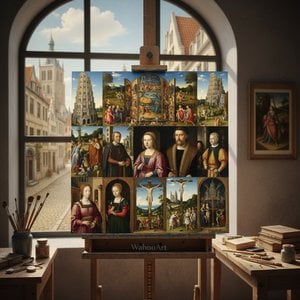
A Reneszánsz Észak csodái: 10 mestermű, melyek meghatározták a művészetet – ArtsDot.com
Fedezze fel a reneszánsz Észak legpálcásabb művészeti remekműveit! Ismerje meg Jan van Eyck, Dürer és Bosch festményeinek történetét. Vászonképek, reprodukciók – ArtsDot.com.